

Cycling Uniform Fabric Guide for Competitive Riders Competitive cycling demands precision, endurance, and efficiency. Every detail matters — including what riders wear. The right apparel is not just about comfort; it directly affects speed, aerodynamics, and long-distance performance. This cycling uniform fabric guide for competitive riders explains how modern materials are engineered to support professional cyclists and how teams can select the right fabrics when sourcing uniforms in bulk. What Makes Cycling Fabrics Different Cycling uniforms are designed to reduce drag while supporting continuous body movement. Unlike general sportswear, cycling apparel must stay tight to the body without restricting motion. According to Union Cycliste Internationale, professional cycling apparel is optimized to improve aerodynamic efficiency, which can significantly impact race performance over long distances. This is why fabric selection is one of the most critical decisions for teams and brands. Core Fabric Technologies Used in Cycling Uniforms Instead of relying on a single material, most cycling kits combine multiple fabrics strategically across the garment. Aerodynamic Polyester Microfibers These fabrics are engineered to minimize air resistance. They are: lightweight smooth-textured designed to reduce drag at high speeds Cyclists benefit from improved efficiency, especially during competitive races. Elastane (Stretch Performance Fabric) Elastane, often blended with polyester, provides flexibility. It allows: close body fit unrestricted pedaling motion long-term shape retention This ensures the jersey and bib shorts stay in place during extended rides. Moisture-Wicking Fabrics Sweat management is essential in cycling, especially in endurance events. Advanced fabrics: pull sweat away from the skin dry quickly prevent overheating Research highlighted by International Sports Engineering Association shows that moisture-wicking textiles significantly improve thermal comfort in endurance sports. Mesh Ventilation Panels Not all parts of a cycling uniform require the same fabric. Mesh panels are often placed in: underarms side panels back sections These zones improve airflow and regulate body temperature during intense rides. Why Fabric Placement Matters More Than Fabric Type In high-performance cycling apparel, where the fabric is placed is just as important as what fabric is used. For example: aerodynamic fabrics are used on front panels stretch fabrics are used on sides and joints mesh is used in heat zones This combination creates a uniform that performs efficiently under racing conditions. Teams sourcing bulk uniforms should always confirm whether manufacturers follow panel-based construction techniques, as this directly impacts performance. Durability and Bulk Production Considerations Competitive cycling uniforms go through frequent washing and heavy usage. For teams and cycling clubs ordering in bulk, durability becomes a major factor. High-quality fabrics should maintain: elasticity after repeated use color consistency across batches resistance to fading and wear Industry textile insights from Textile Exchange emphasize the importance of high-performance synthetic blends for long-term durability in sportswear. Teams looking to scale production or maintain consistent uniform quality across seasons can explore structured manufacturing solutions here: https://ghcsportswear.com/custom-wholesale-sports-uniforms/ Comfort vs Performance — Finding the Balance Some cycling teams prioritize comfort, while others focus purely on performance. The best uniforms combine both. A well-designed cycling kit should: feel lightweight during long rides maintain a second-skin fit prevent chafing or irritation support airflow and sweat control This balance is essential for competitive riders who spend hours on the road. Final Thoughts Cycling apparel is built around performance science. The right combination of aerodynamic fabrics, stretch materials, and moisture control technologies allows riders to perform at their best. For teams, clubs, and brands, selecting the right fabrics during bulk sourcing ensures long-term value, consistent performance, and professional-level quality. For custom cycling uniforms and bulk production inquiries: WhatsApp: https://wa.me/ghcsportswear Email: info@ghcsportswar.com

Cycling Uniform Fabric Guide for Competitive Riders

Cycling Uniform Fabric Guide for Competitive Riders

Competitive cycling demands precision, endurance, and efficiency. Every detail matters — including what riders wear. The right apparel is not just about comfort; it directly affects speed, aerodynamics, and long-distance performance.

This cycling uniform fabric guide for competitive riders explains how modern materials are engineered to support professional cyclists and how teams can select the right fabrics when sourcing uniforms in bulk.


What Makes Cycling Fabrics Different

Cycling uniforms are designed to reduce drag while supporting continuous body movement. Unlike general sportswear, cycling apparel must stay tight to the body without restricting motion.

According to Union Cycliste Internationale, professional cycling apparel is optimized to improve aerodynamic efficiency, which can significantly impact race performance over long distances.

This is why fabric selection is one of the most critical decisions for teams and brands.


Core Fabric Technologies Used in Cycling Uniforms

Instead of relying on a single material, most cycling kits combine multiple fabrics strategically across the garment.

Aerodynamic Polyester Microfibers

These fabrics are engineered to minimize air resistance.

They are:

  • lightweight
  • smooth-textured
  • designed to reduce drag at high speeds

Cyclists benefit from improved efficiency, especially during competitive races.


Elastane (Stretch Performance Fabric)

Elastane, often blended with polyester, provides flexibility.

It allows:

  • close body fit
  • unrestricted pedaling motion
  • long-term shape retention

This ensures the jersey and bib shorts stay in place during extended rides.


Moisture-Wicking Fabrics

Sweat management is essential in cycling, especially in endurance events.

Advanced fabrics:

  • pull sweat away from the skin
  • dry quickly
  • prevent overheating

Research highlighted by International Sports Engineering Association shows that moisture-wicking textiles significantly improve thermal comfort in endurance sports.


Mesh Ventilation Panels

Not all parts of a cycling uniform require the same fabric.

Mesh panels are often placed in:

  • underarms
  • side panels
  • back sections

These zones improve airflow and regulate body temperature during intense rides.


Why Fabric Placement Matters More Than Fabric Type

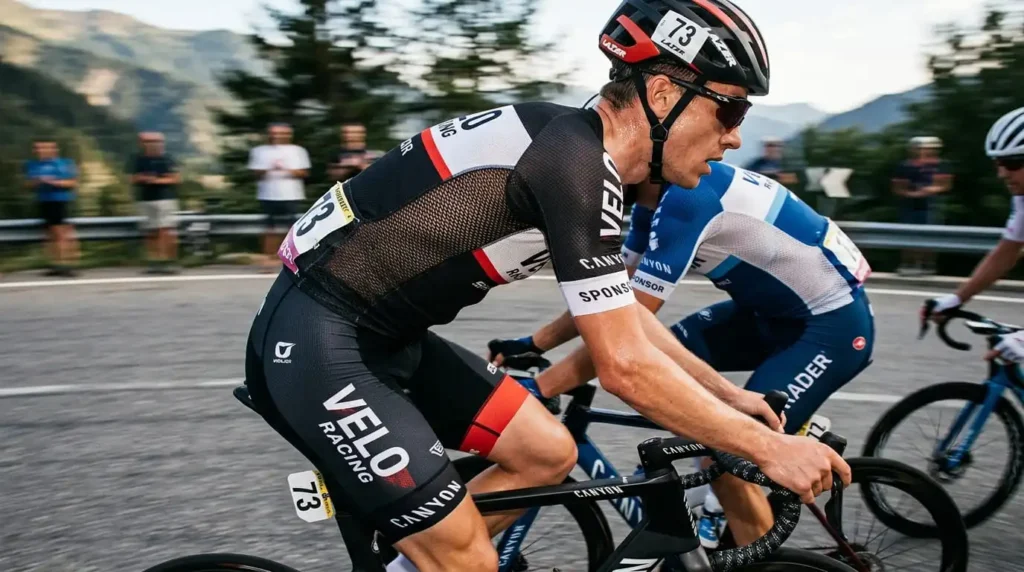
In high-performance cycling apparel, where the fabric is placed is just as important as what fabric is used.

For example:

  • aerodynamic fabrics are used on front panels
  • stretch fabrics are used on sides and joints
  • mesh is used in heat zones

This combination creates a uniform that performs efficiently under racing conditions.

Teams sourcing bulk uniforms should always confirm whether manufacturers follow panel-based construction techniques, as this directly impacts performance.


Durability and Bulk Production Considerations

Competitive cycling uniforms go through frequent washing and heavy usage. For teams and cycling clubs ordering in bulk, durability becomes a major factor.

High-quality fabrics should maintain:

  • elasticity after repeated use
  • color consistency across batches
  • resistance to fading and wear

Industry textile insights from Textile Exchange emphasize the importance of high-performance synthetic blends for long-term durability in sportswear.

Teams looking to scale production or maintain consistent uniform quality across seasons can explore structured manufacturing solutions here.


Comfort vs Performance — Finding the Balance

Some cycling teams prioritize comfort, while others focus purely on performance. The best uniforms combine both.

A well-designed cycling kit should:

  • feel lightweight during long rides
  • maintain a second-skin fit
  • prevent chafing or irritation
  • support airflow and sweat control

This balance is essential for competitive riders who spend hours on the road.


Final Thoughts

Cycling apparel is built around performance science. The right combination of aerodynamic fabrics, stretch materials, and moisture control technologies allows riders to perform at their best.

For teams, clubs, and brands, selecting the right fabrics during bulk sourcing ensures long-term value, consistent performance, and professional-level quality.

For custom cycling uniforms and bulk production inquiries:

WhatsApp: https://wa.me/ghcsportswear
Email: info@ghcsportswar.com

Leave a Comment

Your email address will not be published. Required fields are marked *

Scroll to Top
Top Equestrian Exhibitions 2026