Why Leather Tack Cracks So Fast: Causes, Care Mistakes, and How to Stop It
If you are wondering why leather tack cracks, the answer is usually simple: leather does not fail randomly. It breaks down because of moisture loss, sweat, dirt, heat, poor storage, weak material quality, heavy use, and inconsistent maintenance.
Cracked leather tack is not only a cosmetic problem. It can affect durability, safety, comfort, resale value, riding-school standards, and long-term cost. A dry bridle, cracked stirrup leather, stiff breastplate, weakened girth strap, or damaged saddle flap can become a serious equipment issue if ignored.
A practical rule for riders and equestrian businesses is:
“Leather tack lasts longer when it is cleaned, conditioned, stored correctly, and inspected before damage becomes failure.”
For individual riders, good care protects investment.
For riding schools, it reduces replacement costs.
For equestrian retailers and private label brands, it protects customer trust.
For B2B buyers, it proves why quality material selection and controlled production matter from the start.
GHC Sportswear® supports custom equestrian gear manufacturing, bulk equestrian gear manufacturing, leather and synthetic tack discussions, saddle pads, bridles, halters, horse rugs, riding apparel, private label equestrian products, and scalable production for B2B buyers worldwide.
Direct Answer: Why Leather Tack Cracks
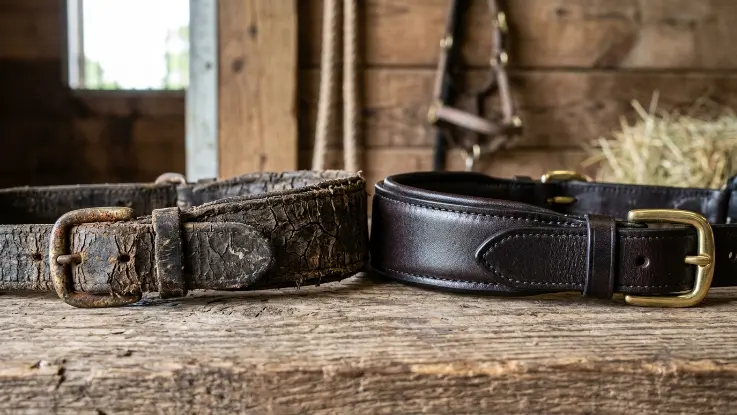
The main reason why leather tack cracks is loss of flexibility. Leather needs balanced moisture, correct conditioning, proper cleaning, and suitable storage. When leather dries out, stiffens, absorbs sweat salts, sits in heat, stays damp, or is made from weak material, the fibres lose strength and the surface begins to crack.
Common causes include:
- Lack of cleaning
- Lack of conditioning
- Sweat and salt buildup
- Direct sunlight
- Heat exposure
- Very dry storage
- Damp storage
- Poor ventilation
- Low-quality leather
- Weak finishing
- Over-oiling or wrong products
- Poor tack-room storage
- Heavy daily use
- No inspection routine
- Leaving dirt inside folds, billet areas, buckles, and stitching zones
The fix is not only applying oil after cracks appear. The real solution is prevention: clean, condition, store, inspect, and buy better-quality tack from the beginning.
Why Leather Tack Cracking Matters
Leather tack connects directly with the horse and rider. When it cracks, it may lose strength and comfort.
Cracked leather can affect:
| Area | Why It Matters |
|---|---|
| Bridle straps | Can rub, weaken, or break |
| Reins | Poor grip and safety risk |
| Stirrup leathers | High stress area under rider weight |
| Girth straps | Stability and safety issue |
| Breastplates | Can fail under pressure |
| Halters | Handling risk |
| Saddle flaps | Comfort and resale value |
| Buckle holes | Stretching, tearing, or cracking |
| Stitching areas | Weakness under load |
The British Horse Society states that taking care of tack through regular cleaning and proper storage is essential to keep it in good condition and support longevity.
That is the basic principle: leather care is not decoration. It is maintenance.
The Science Behind Cracking: Moisture Balance
Leather is a natural material. It reacts to moisture, heat, dryness, humidity, sweat, dirt, and storage conditions.
The Canadian Conservation Institute explains that very dry conditions below 30% relative humidity can cause leather to lose moisture and become brittle. It also notes that humidity above 65% can encourage mould growth and degradation of leather fibres.
This matters because many tack rooms are not controlled environments.
A tack room may be:
- Too hot in summer
- Too damp in winter
- Poorly ventilated
- Exposed to sunlight
- Close to heaters
- Full of wet saddle pads and rugs
- Dirty from dust, sweat, mud, and bedding
Leather reacts to all of that.
1. Lack of Conditioning
The number one reason why leather tack cracks is lack of conditioning.
When leather is not conditioned:
- It becomes dry
- It loses flexibility
- It stiffens
- It forms stress marks
- It cracks around bends
- It weakens near holes and buckles
- It becomes uncomfortable for the horse
Conditioning helps replace flexibility and supports the surface, but it must be done correctly.
The Leather Research Laboratory explains that leather conditioners are often used to replace moisture lost through evaporation and also recommends testing conditioner compatibility with the specific leather product.
What riders get wrong
Many riders either do not condition at all or apply too much product at once. Both can create problems. Dry leather cracks, while overloaded leather can become sticky, attract dirt, or feel unstable.
Better approach
Use a suitable leather conditioner or balm in small, controlled amounts. Follow the tack maker’s care guidance where available.
2. Sweat and Salt Buildup
Horse tack is exposed to sweat, body heat, dust, rain, arena surface, mud, and daily handling.
Sweat is especially important because it leaves salt behind. When sweat dries on leather, it can leave a stiff, rough surface and pull moisture from the leather over time.
High-risk areas include:
- Reins
- Nosebands
- Crownpieces
- Girth straps
- Stirrup leathers
- Saddle flaps
- Billet straps
- Breastplate straps
- Areas under rider leg
- Areas touching horse sweat
What riders get wrong
They wipe the visible parts but ignore hidden contact areas.
Better approach
After sweaty rides, wipe tack with a slightly damp cloth, especially areas that contact the horse and rider. Let leather dry naturally before conditioning.
3. Direct Sunlight and Heat
Heat and sunlight speed up leather damage.
The Canadian Conservation Institute leather care guidance explains that heat-producing lighting can create localized low humidity, causing leather to lose internal moisture. It also notes that leather can shrink, distort, or tear if under tension.
For tack, this means sunlight and heat can lead to:
- Fading
- Stiffness
- Surface cracking
- Dry edges
- Weak bends
- Shrinking
- Distortion
- Brittle buckle holes
Common storage mistakes
- Hanging bridles in direct sunlight
- Leaving saddles near windows
- Storing tack near heaters
- Leaving leather in a hot car
- Drying wet tack too fast
- Keeping tack in a closed, hot trailer
Better approach
Store leather tack in a cool, dry, ventilated area away from direct sunlight and strong heat.
4. Poor Storage Conditions
Storage is one of the biggest hidden causes of leather tack cracking.
Bad storage includes:
- Damp rooms
- Very dry rooms
- Poor air circulation
- Tack stored in plastic bags
- Saddles left unsupported
- Bridles bent sharply
- Tack touching wet rugs
- Dirty tack stored after use
- Leather folded under pressure
- Buckles pressing into straps
The Canadian Conservation Institute mould guidance says mould growth is promoted by relative humidity between 65% and 100%, warm temperatures, and poor air circulation.
That is exactly why damp tack rooms create problems.
Better approach
Use proper saddle racks, bridle hooks, ventilation, and a cleaning routine. Do not store damp leather in closed bags or tight boxes.
5. Low-Quality Leather
Not all leather is equal.
Low-quality leather may crack faster because of:
- Weak fibre structure
- Poor tanning
- Thin material
- Heavy surface coating
- Poor finishing
- Weak dye quality
- Inconsistent thickness
- Dry feel from the start
- Poor flexibility
- Weak strap edges
- Bad cutting direction
Cheap leather can look acceptable in photos but fail under real riding conditions.
For a deeper cost comparison, read Cheap Tack vs Quality Tack.
6. Wrong Cleaning Products
Wrong products can also damage leather tack.
Avoid using:
- Harsh detergents
- Too much water
- Household cleaners
- Strong alcohol-based cleaners
- Bleach
- Products not designed for leather
- Heavy oil applied without control
- Sticky conditioner layers
- Excessive saddle soap residue
The goal is to clean dirt and sweat without stripping, soaking, or overloading the leather.
Better approach
Use tack-safe cleaning products. Test a small hidden area when using a new product. Follow manufacturer care instructions where available.
7. No Inspection Routine
Leather tack often fails gradually.
Small cracks start near:
- Buckle holes
- Billet holes
- Stitching
- Folded areas
- Rein stops
- Stress points
- Edges
- Straps under tension
- Areas exposed to sweat
If riders never inspect tack, small damage becomes major damage.
Monthly inspection checklist
| Tack Area | What to Check |
| Bridle | Cracks, stiff straps, loose stitching |
| Reins | Grip, stretching, splits |
| Stirrup leathers | Cracks, stretching, hole damage |
| Girth straps | Weakness, splitting, buckle stress |
| Breastplate | Stitching and strap flexibility |
| Saddle | Billets, flaps, panels, leather dryness |
| Halter | Buckles, crown strap, cheek straps |
| Saddle pad straps | Stitching and fabric wear |
| Hardware | Rust, bending, sharp edges |
| Storage area | Dampness, heat, mould, dust |
If cracks appear in high-stress areas, stop using the item until it is checked.
Leather Damage Comparison Table
| Cause | Effect on Leather | Long-Term Risk |
| No conditioning | Dryness and stiffness | Cracking and early failure |
| Sweat buildup | Salt residue and surface damage | Brittle contact areas |
| Sun exposure | Oil and moisture loss | Fading and cracking |
| Heat exposure | Drying and distortion | Weak fibres |
| Damp storage | Mould risk | Fibre degradation and odour |
| Very dry storage | Moisture loss | Embrittlement |
| Low-quality leather | Weak structure | Short lifespan |
| Wrong products | Stripping or residue | Surface breakdown |
| No inspection | Hidden damage grows | Safety risk |
Leather Care Routine for Riders
A good leather tack routine does not need to be complicated.
| Step | Action | Practical Frequency |
| Wipe down | Remove sweat and dirt | After sweaty or dirty rides |
| Light clean | Use tack-safe cleaner | As needed |
| Condition | Apply suitable conditioner | Based on dryness and use |
| Deep clean | Take bridle apart and inspect | Monthly or before shows |
| Inspect | Check cracks and stitching | Monthly |
| Store | Dry, ventilated area | Always |
| Repair | Fix damage early | Immediately when found |
The correct frequency depends on climate, use, product type, and leather condition. A humid climate needs different care from a dry climate.
Hot and Humid Climate Tack Care
Hot and humid environments create a special problem. Leather can become mouldy, damp, dirty, and weak if care is inconsistent.
The UF/IFAS Extension saddle and tack care guide recommends simple daily care such as wiping tack down with a cloth and storing it properly in the tack room. It also notes that areas such as the back of fenders, stirrup leathers, and rigging areas are often missed during maintenance.
For hot and humid climates:
- Wipe sweat quickly
- Keep tack dry before storage
- Improve tack-room airflow
- Avoid closed damp cupboards
- Separate wet saddle pads from leather
- Clean mould safely
- Inspect stitching more often
- Avoid over-oiling damp leather
- Use breathable storage
Dry Climate Tack Care
Dry climates cause a different problem: leather loses flexibility faster.
In dry conditions:
- Condition lightly but regularly
- Avoid direct heat
- Do not leave tack in sun
- Store away from heaters
- Check strap bends often
- Watch buckle holes
- Keep leather flexible without overloading it
Very dry leather should be handled carefully because cracks can worsen when straps are bent sharply.
Over-Oiling Can Also Damage Tack
Some riders try to save dry leather by adding heavy oil repeatedly. This can create new problems.
Over-oiling may:
- Darken leather heavily
- Make tack greasy
- Attract dirt
- Weaken stitching
- Create a sticky surface
- Reduce grip
- Make leather feel unstable
- Cause residue transfer to clothing or horse coat
Leather care should be controlled, not extreme.
Can Cracked Leather Tack Be Saved?
It depends on the crack.
| Crack Type | Can It Be Fixed? | Recommended Action |
| Light surface dryness | Often manageable | Clean and condition |
| Small surface cracking | Sometimes improved | Condition and monitor |
| Deep cracks | Usually structural risk | Professional repair check |
| Cracks at buckle holes | High risk | Stop using until checked |
| Cracked stirrup leathers | Serious safety issue | Replace or repair professionally |
| Cracked girth straps | Serious safety issue | Stop using |
| Cracked reins | Safety issue | Replace or repair professionally |
| Old brittle leather | High risk | Replace if unsafe |
Conditioner can improve dry leather, but it cannot rebuild broken fibres. Deep cracking must be treated as a safety issue.
Safety Rule: When to Stop Using Cracked Tack
Stop using leather tack if you see:
- Deep cracks
- Splitting
- Loose stitching
- Weak buckle holes
- Stretching around stress points
- Cracks in stirrup leathers
- Cracks in girth straps
- Reins starting to split
- Leather that feels brittle
- Hardware pulling through leather
- Any damage in load-bearing areas
When in doubt, ask a qualified saddler or tack repair professional.
Cost Comparison: Maintenance vs Replacement
Exact costs vary by country, product type, leather grade, and repair service. This table shows the cost logic.
| Approach | Upfront Cost | Long-Term Cost | Risk |
| No cleaning routine | Low | High | Cracking and early replacement |
| Wipe after use | Low | Low | Better lifespan |
| Regular conditioning | Low to medium | Lower | Better flexibility |
| Proper storage | Medium setup | Lower | Less mould and dryness |
| Professional repair | Medium | Controlled | Extends safe use when suitable |
| Ignoring cracks | No cost now | High later | Safety risk |
| Buying cheap leather repeatedly | Low each time | High over time | Frequent failure |
| Buying better leather + care | Higher upfront | Better value | Longer use |
Good maintenance is cheaper than replacing failed tack.
Bulk Buyer Risk: Why Leather Tack Cracks Become Expensive at Scale
For one rider, cracked tack is frustrating.
For businesses, it becomes costly.
Riding schools, retailers, distributors, wholesalers, and private label brands may lose money through:
- High replacement rates
- Customer complaints
- Refund requests
- Poor reviews
- Inconsistent sizing
- Weak leather batches
- Returned products
- Brand reputation damage
- Extra repair costs
- Safety concerns
- Inventory write-offs
This is why bulk buyers should approve materials, stitching, hardware, and samples before full production.
B2B Material and Production Checklist
Before ordering leather or synthetic tack in bulk, check:
| Production Area | What to Confirm |
| Material | Leather grade or synthetic specification |
| Thickness | Consistent strap strength |
| Flexibility | Not stiff or brittle |
| Stitching | Reinforced stress points |
| Hardware | Strong, smooth, rust-resistant where needed |
| Edges | Finished and smooth |
| Buckle holes | Clean and reinforced |
| Lining | Comfortable against horse |
| Samples | Tested before bulk |
| Packaging | Breathable where suitable |
| Care label | Clear cleaning/storage instructions |
| Reorder file | Same specs for future batches |
A low unit price is not useful if the product cracks early.
Leather vs Synthetic Tack: Which Cracks Faster?
The answer depends on material quality.
| Factor | Leather Tack | Synthetic Tack |
| Main risk | Drying, cracking, mould | Webbing wear, coating damage, heat weakness |
| Maintenance | Needs cleaning and conditioning | Usually easier cleaning |
| Feel | Traditional and premium | Lightweight and practical |
| Repairability | Often repairable | Depends on construction |
| Wet climate use | Needs more care | Often practical |
| Dry climate use | Needs conditioning | Depends on material |
| Premium look | Strong | Varies |
| Bulk use | Good if quality is controlled | Good if technical material is controlled |
A good synthetic tack item can outperform poor leather. A good leather tack item can last years with proper care. The real answer is specification, fit, use, and maintenance.
How to Stop Leather Tack from Cracking
Use this practical routine:
- Clean sweat and dirt before it dries heavily.
- Condition leather when it starts feeling dry.
- Store tack away from heat and direct sunlight.
- Keep tack rooms ventilated.
- Avoid damp storage.
- Do not store wet saddle pads against leather.
- Use proper saddle racks and bridle hooks.
- Inspect buckle holes and stitching monthly.
- Do not over-oil.
- Use leather-safe products.
- Repair small issues early.
- Replace unsafe tack immediately.
Riding School Tack Maintenance System
Riding schools should not rely on random cleaning habits.
A better system includes:
- Horse-specific tack labels
- Bridle and saddle records
- Cleaning schedule
- Weekly inspection routine
- Monthly deep inspection
- Repair log
- Replacement log
- Staff tack-care training
- Separate storage for wet items
- Ventilated tack room
- Approved care products
- Safety check before lessons
This keeps tack safer and reduces preventable waste.
Product Categories Supported by GHC Sportswear®
GHC Sportswear® supports custom equestrian products for riders, clubs, academies, retailers, wholesalers, distributors, and private label brands.
Supported categories include:
- Bridles
- Halters
- Lead ropes
- Martingales
- Breastplates
- Saddle pads
- Ear bonnets
- Fly masks
- Horse rugs
- Stable rugs
- Turnout rugs
- Cooler rugs
- Saddle covers
- Equestrian bags
- Riding jackets
- Show jackets
- Breeches
- Jodhpurs
- Riding leggings
- Base layers
- Competition shirts
- Polo shirts
- Gilets
- Hoodies
- Gloves
- Private label equestrian apparel
- Club and academy equestrian gear
Customization options include:
- Leather or synthetic material direction
- Fabric selection
- Quilting patterns
- Embroidery
- Sublimation
- Heat transfer
- Woven labels
- Rubber badges
- Hardware selection
- Colour matching
- Private label packaging
- Sample development
- Bulk production
- Reorder planning
Explore GHC Sportswear® products, GHC Sportswear® services, custom equestrian gear manufacturing, and equestrian gear manufacturing.
What to Send for Custom Leather or Synthetic Tack Production
For accurate product development, send:
- Product category
- Quantity
- Leather or synthetic preference
- Material thickness target
- Colour requirement
- Size range
- Hardware preference
- Stitching colour
- Padding requirement
- Logo file
- Branding method
- Packaging requirement
- Care label requirement
- Reference photos
- Target market
- Everyday or competition use
- Delivery country
- Sample requirement
- Reorder plan
Example:
“Need 120 private label bridles and 150 matching saddle pads for retail and riding school use, black and brown colourways, durable hardware, clean stitching, branded packaging, delivery to UK, sample required before bulk.”
Clear details help reduce sampling errors and improve bulk consistency.
Contact and Project Information
For custom equestrian gear, leather or synthetic tack, saddle pads, bridles, horse rugs, riding apparel, wholesale equestrian products, or private label equestrian collections, buyers can contact GHC Sportswear® with product details, reference photos, quantity, and target deadline.
Contact GHC Sportswear® through WhatsApp, email info@ghcsportswear.com, or the GHC Sportswear® contact page.
GHC Sportswear® Official Profiles and Business Links
Buyers can connect with GHC Sportswear® through the official website, social media channels, community platforms, directory listings, and B2B trade profiles.
Visit the GHC Sportswear® official website for custom sportswear, team uniforms, equestrian gear, motorbike gear, yoga wear, and private label manufacturing.
Follow GHC Sportswear® on TikTok, Threads, Instagram, Instagram Channel, Pinterest, LinkedIn, YouTube, Facebook, Medium, Quora, X, Bluesky, and the WhatsApp Channel.
GHC Sportswear® is also listed on B2BMAP, Alibaba TrustPass, EC21, Blinx, and Wikidata.
FAQ: Why Leather Tack Cracks
Why does leather tack crack so fast?
Leather tack cracks because it loses flexibility through dryness, sweat buildup, heat, sunlight, poor storage, low-quality leather, wrong cleaning products, or lack of conditioning.
Can cracked leather tack be repaired?
Light surface dryness can sometimes be improved with cleaning and conditioning. Deep cracks, splits, cracks at buckle holes, cracked stirrup leathers, and cracked girth straps should be checked by a qualified repair professional or replaced if unsafe.
Does leather tack need conditioning?
Yes, leather tack usually needs conditioning to maintain flexibility, but the amount depends on leather type, use, climate, and product condition. Over-conditioning can also create problems, so use controlled amounts.
How often should I clean leather tack?
Wipe sweat and dirt after sweaty or dirty rides. Deep cleaning and inspection can be done monthly or more often for daily-use tack, riding schools, and competition gear.
Is sunlight bad for leather tack?
Yes. Direct sunlight and heat can dry leather, fade colour, reduce flexibility, and increase cracking risk.
Can damp storage damage leather tack?
Yes. Damp storage can encourage mould growth and fibre degradation, especially when combined with poor ventilation and warm temperatures.
Is synthetic tack better than leather tack?
Not always. High-quality synthetic tack can be practical and easy to clean, while high-quality leather tack can last years with correct care. Poor-quality versions of either can fail early.
Why does cheap leather tack crack faster?
Cheap leather may have weaker fibre structure, poor finishing, inconsistent thickness, and less flexibility. It may look acceptable at first but crack under daily use.
What is the best way to stop leather tack from cracking?
Clean sweat and dirt regularly, condition when needed, store tack in a dry ventilated place, avoid heat and sunlight, inspect stress points, and use quality leather or technical materials.
Can GHC Sportswear® support custom leather or synthetic equestrian gear?
Yes. GHC Sportswear® supports custom equestrian gear, leather or synthetic tack direction, saddle pads, bridles, horse rugs, riding apparel, private label packaging, samples, bulk production, and international delivery coordination.
Conclusion
Understanding why leather tack cracks helps riders and businesses prevent avoidable damage.
Most leather tack cracks because of dryness, sweat, salt, heat, sunlight, poor storage, weak material quality, wrong products, or lack of inspection. Cracks are not only visual defects. They can become durability, safety, and comfort problems.
For riders, the solution is consistent cleaning, controlled conditioning, safe storage, and regular inspection.
For riding schools, the solution is a tack-care system with labels, records, repairs, and replacement planning.
For equestrian brands, the solution starts with better materials and production control.
For B2B buyers, the solution is sample testing, quality standards, and repeatable manufacturing.
GHC Sportswear® supports custom equestrian gear, tack accessories, saddle pads, bridles, horse rugs, riding apparel, private label products, sample development, bulk manufacturing, and global delivery coordination.
Leather tack does not crack overnight.
It cracks when care, storage, material quality, and inspection are ignored for too long.