

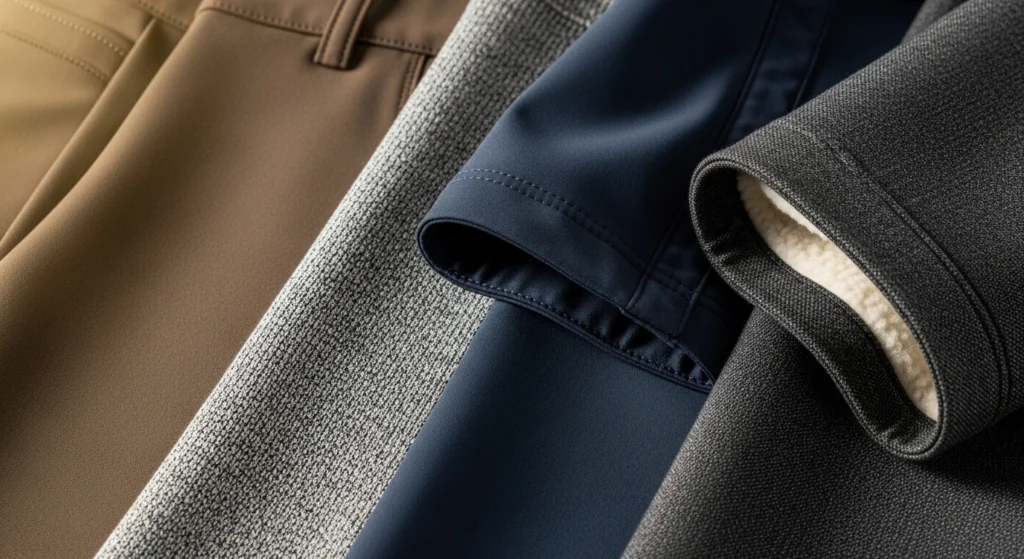
High-performance equestrian apparel is engineered — not simply stitched.
At competitive levels, fabric selection directly affects rider balance, temperature regulation, durability, and overall presentation. Understanding the best fabrics used in high-performance equestrian gear helps riders, academies, and brands make informed decisions beyond aesthetics.
Below is a closer look at the materials most trusted in professional environments.
1. Four-Way Stretch Polyester Blends
Modern competition breeches and riding jackets frequently rely on advanced polyester-elastane blends.
These fabrics provide:
-
Multi-directional stretch
-
Shape retention after repeated flexion
-
Lightweight structure
-
Fast drying capability
Performance publications such as Textile World regularly discuss how engineered polyester blends outperform traditional cotton in high-mobility sports applications.
In equestrian settings, stretch recovery is critical. Poor elasticity leads to sagging knees, unstable waistlines, and compromised saddle contact.
2. Technical Knit Fabrics for Breathability
Training tops and base layers often incorporate warp-knit or circular-knit constructions designed to maximise airflow.
According to industry insights published by Performance Apparel Markets, knit-based performance fabrics dominate the global sportswear sector due to their ventilation properties and flexibility.
In equestrian sport, this matters because:
-
Riders generate core heat quickly
-
Arena environments vary in ventilation
-
Layering must remain lightweight
Technical knits allow heat to escape without compromising coverage.
3. Softshell Fabrics for Weather Resistance
Softshell materials combine stretch, insulation, and water resistance in a single layer. They are commonly used in training jackets and transitional outerwear.
Equestrian media platform Eventing Nation frequently highlights how outdoor riders rely on adaptable outer layers during cross-country preparation and colder training sessions.
Softshell fabrics provide:
-
Wind protection
-
Moderate thermal insulation
-
Abrasion resistance
-
Flexibility under movement
Unlike rigid waterproof shells, softshell construction maintains athletic mobility.
4. Grip-Enhanced Fabric Panels
Modern breeches often integrate silicone or polyurethane grip systems at the knee or full seat.
These materials are not purely decorative. They improve saddle stability and rider security during technical movements.
Manufacturers focusing on advanced fabric development often refine grip placement during sampling and testing stages. Structured sampling processes ensure consistency in texture, elasticity, and durability across production cycles. An overview of controlled apparel development workflows can be explored here.
5. Moisture-Wicking Microfiber Blends
Microfiber-based fabrics are frequently used in base layers and show shirts due to their ability to pull moisture away from the skin.
For equestrian athletes, this translates into:
-
Reduced sweat retention
-
Improved comfort during extended sessions
-
Lower risk of overheating
Microfiber blends are particularly valuable during multi-round competitions.
6. Structured Wool Blends for Formal Competition Wear
Although synthetic performance fabrics dominate training gear, wool blends remain relevant in formal competition jackets.
Modern wool-blend show coats incorporate stretch fibres to balance tradition with performance. They provide:
-
Refined drape
-
Natural breathability
-
Classic presentation
In disciplines governed by traditional turnout standards, structured wool blends continue to hold value — particularly in dressage.
Custom show coat production often combines traditional exterior aesthetics with technical interior linings for durability. Dedicated production systems for equestrian competition wear are outlined here
What Makes a Fabric “High-Performance”?
It is not the fibre alone — it is the combination of:
-
Stretch architecture
-
Recovery strength
-
Moisture management
-
Seam compatibility
-
Abrasion resistance
-
Climate adaptability
True high-performance equestrian gear results from fabric engineering paired with structured garment construction.
The Strategic Advantage of Fabric Planning
Professional riders and teams increasingly separate their wardrobe into:
-
Daily training fabrics
-
Transitional weather fabrics
-
Competition-grade structured fabrics
Bulk planning ensures consistent fabric sourcing across seasons. For academies and equestrian brands seeking controlled production and repeatable material standards, structured OEM equestrian manufacturing services can provide long-term consistency
Final Perspective
The best fabrics used in high-performance equestrian gear are selected for movement, endurance, climate control, and presentation.
Fabric choice is not a trend decision — it is a performance decision.
Understanding these materials allows riders and organisations to invest in apparel that supports athletic precision rather than simply visual appeal.
For custom fabric selection, bulk production, or private label equestrian apparel development:
WhatsApp: https://wa.me/ghcsportswear
Email: info@ghcsportswar.com