Best Fabrics Used in High-Performance Equestrian Gear for Riders, Clubs, and B2B Brands
The best fabrics used in high-performance equestrian gear are selected for movement, durability, comfort, climate control, rider presentation, and repeat use. High-performance equestrian apparel is engineered, not simply stitched.
A riding jacket, pair of breeches, base layer, saddle pad, or competition shirt may look simple from the outside. But at product-development level, fabric selection decides how the garment stretches, recovers, breathes, resists friction, handles washing, supports branding, and performs during real riding conditions.
Equestrian gear has to work in demanding environments:
- Long hours in the saddle
- Leg contact and saddle friction
- Sweat and heat buildup
- Outdoor weather changes
- Arena presentation
- Stable work
- Repeated washing
- Competition standards
- Club and team identity
- Retail and private label consistency
For riders, fabric affects comfort.
For clubs, fabric affects consistency.
For equestrian brands, fabric affects customer trust.
For retailers and distributors, fabric affects returns, reviews, and repeat buying.
For B2B buyers, fabric affects bulk production quality and long-term reorder success.
GHC Sportswear® supports custom equestrian apparel, riding jackets, breeches, jodhpurs, riding leggings, base layers, saddle pads, horse gear, club apparel, private label packaging, and bulk equestrian manufacturing for B2B buyers worldwide.
Direct Answer: What Are the Best Fabrics Used in High-Performance Equestrian Gear?
The best fabrics used in high-performance equestrian gear include four-way stretch polyester-elastane blends, nylon-spandex performance fabrics, technical knit fabrics, moisture-wicking microfiber blends, softshell fabrics, stretch woven fabrics, grip-enhanced silicone or polyurethane panels, structured wool blends, quilted saddle pad fabrics, breathable mesh panels, and durable weather-resistant woven materials.
The right fabric depends on the product:
| Product Type | Best Fabric Direction |
|---|---|
| Breeches | Polyester-elastane, nylon-spandex, stretch woven, gabardine blends |
| Riding leggings | Nylon-spandex, polyester-spandex, compression stretch |
| Base layers | Moisture-wicking polyester, microfiber, technical knit |
| Riding jackets | Softshell, stretch woven, polyester blends |
| Competition jackets | Structured stretch woven, wool blends, refined softshell |
| Saddle pads | Quilted cotton blends, polyester blends, technical lining |
| Horse rugs | Durable woven polyester, ripstop, insulated or lined options |
| Gloves | Synthetic leather, stretch fabric, grip panels |
| Club apparel | Polo fabric, fleece, softshell, performance jersey |
A high-performance fabric is not chosen because it sounds premium. It is chosen because it matches the riding use.
What Makes a Fabric High-Performance?
A fabric becomes high-performance when its structure, fibre content, finishing, and garment construction work together for a specific riding purpose.
High-performance equestrian fabrics usually offer:
- Stretch
- Recovery
- Breathability
- Moisture management
- Abrasion resistance
- Shape retention
- Wash durability
- Comfort against skin
- Suitable fabric weight
- Branding compatibility
- Climate adaptability
- Seam compatibility
- Consistent bulk production behaviour
The fibre alone does not decide performance. Polyester, nylon, elastane, cotton, wool, and blends can all perform differently depending on yarn, knit, weave, finish, GSM, construction, and garment pattern.
For B2B buyers, this means the question should not be only “What fabric is this?”
The better question is:
“Is this fabric right for this product, this rider, this season, this discipline, and this order volume?”
1. Four-Way Stretch Polyester-Elastane Blends
Four-way stretch polyester-elastane blends are among the most common fabrics used in high-performance riding apparel.
They are widely used for:
- Breeches
- Riding leggings
- Training tops
- Base layers
- Competition shirts
- Lightweight jackets
- Club apparel
These fabrics are popular because they can offer:
- Multi-directional stretch
- Shape recovery
- Lightweight comfort
- Quick-drying performance
- Smooth surface
- Sublimation compatibility
- Good colour output
- Wash practicality
Polyester remains central in performance apparel because it is durable, lightweight, and widely used in sportswear. Textile Exchange reported that polyester accounted for 59% of total global fibre output in 2024, making it the most widely produced fibre worldwide.
Why it matters in equestrian gear
Riders constantly flex through the hip, knee, and seat. Poor stretch recovery can cause sagging knees, loose waistbands, and unstable fit. In breeches and leggings, stretch recovery is not cosmetic. It affects comfort, appearance, and long-term wear.
Best uses
- Everyday riding breeches
- Riding leggings
- Training tops
- Base layers
- Team apparel
- Lightweight competition shirts
B2B production note
For bulk production, buyers should confirm GSM, stretch direction, opacity, recovery, colour fastness, and wash performance before approving bulk orders.
2. Nylon-Spandex Performance Fabrics
Nylon-spandex fabrics are often used in premium riding leggings, fitted base layers, active riding apparel, and higher-comfort training pieces.
Nylon blends can offer:
- Soft hand feel
- Strong stretch
- Smooth surface
- Good abrasion resistance
- Comfortable compression feel
- Premium fit
- Flexibility for close-fitting apparel
Why it matters in equestrian gear
Nylon-spandex is useful when riders need a close fit without a rough or rigid fabric feel. It can be suitable for riding leggings, compression-style base layers, and premium activewear-inspired equestrian apparel.
Best uses
- Riding leggings
- Fitted base layers
- Premium training tops
- Women’s equestrian activewear
- Private label riding apparel
- Stretch club apparel
B2B production note
Nylon can behave differently from polyester in printing and dyeing, so branding method should be confirmed early. For certain designs, heat transfer or small logo applications may be more suitable than full sublimation.
3. Technical Knit Fabrics
Technical knit fabrics are used in training tops, base layers, summer riding apparel, and flexible equestrian garments.
They may include:
- Warp-knit constructions
- Circular-knit constructions
- Mesh knit panels
- Jersey knit
- Ribbed stretch panels
- Performance knit blends
Technical knits can support:
- Breathability
- Stretch
- Lightweight comfort
- Flexible movement
- Moisture movement
- Layering
- Soft skin contact
Why it matters in equestrian gear
Riders generate heat quickly during training, especially in warm arenas or outdoor summer sessions. A technical knit base layer can help improve comfort by allowing movement and reducing the heavy feel of dense fabric.
Best uses
- Base layers
- Summer riding tops
- Training shirts
- Competition shirts
- Lightweight polos
- Breathable panels
- Under-jacket layers
B2B production note
Technical knit performance depends on yarn, construction, density, and finish. A buyer should not assume every knit fabric is breathable. Sample testing is important.
For seasonal planning, see Seasonal Equestrian Gear Checklist.
4. Moisture-Wicking Microfiber Blends
Moisture-wicking microfiber blends are commonly used in base layers, show shirts, lightweight training tops, and close-to-skin performance apparel.
Microfiber fabrics are usually made with very fine synthetic fibres. When engineered correctly, they can create a smooth hand feel, lightweight comfort, and good moisture movement.
They can support:
- Sweat management
- Quick drying
- Lightweight layering
- Smooth surface feel
- Comfortable base layer performance
- Reduced cling compared with heavier fabrics
Why it matters in equestrian gear
Riders often wear layers. A base layer that traps sweat can become uncomfortable under a jacket or gilet. Moisture-wicking microfiber blends are useful for training and competition because they help keep the rider more comfortable during extended sessions.
Best uses
- Base layers
- Show shirts
- Summer tops
- Training tops
- Competition shirts
- Under-jacket apparel
B2B production note
Moisture-wicking should be discussed as a performance requirement before fabric selection. Buyers should request sample testing, especially if the product is for summer riding, competition use, or multi-hour training.
Useful internal guide: Moisture-Wicking Fabrics.
5. Softshell Fabrics
Softshell fabrics are widely used in equestrian jackets, gilets, transitional outerwear, and club apparel.
Softshell can combine:
- Stretch
- Wind resistance
- Moderate warmth
- Water resistance
- Abrasion resistance
- Smooth outer surface
- Comfortable inner backing
- Practical layering
Why it matters in equestrian gear
Rigid outerwear can restrict riders. Softshell is useful because it can provide weather protection while still allowing movement. This is why it is often used for training jackets, autumn outerwear, winter layering, and riding club apparel.
Best uses
- Riding jackets
- Gilets
- Team jackets
- Stable outerwear
- Autumn and spring riding apparel
- Club uniforms
- Branded staff apparel
B2B production note
Softshell varies significantly. Buyers should confirm stretch, thickness, water resistance level, inner backing, zipper quality, and whether the jacket needs a riding-friendly back length or two-way zipper.
For everyday and show-use separation, read Everyday Riding vs Competition Gear.
6. Stretch Woven Fabrics
Stretch woven fabrics are valuable in high-performance equestrian gear because they offer structure with movement.
They are often used in:
- Breeches
- Show jackets
- Competition jackets
- Riding trousers
- Structured apparel
- Premium clubwear
Stretch woven fabrics can provide:
- Clean appearance
- Controlled stretch
- Better shape retention
- More tailored finish
- Smoother silhouette
- Durability
- Professional presentation
Why it matters in equestrian gear
Competition apparel often needs a more refined appearance than everyday training gear. Stretch woven fabrics can help maintain clean lines while still allowing riding movement.
Best uses
- Competition jackets
- Show coats
- Breeches
- Structured gilets
- Formal team apparel
- Premium equestrian collections
B2B production note
Stretch woven fabrics should be tested in riding position, not only standing position. A jacket can look perfect on a hanger but restrict shoulder movement or pull across the back when mounted.
7. Gabardine and Cotton-Blend Fabrics
Gabardine and cotton-blend fabrics remain useful in selected equestrian products, especially traditional breeches, jodhpurs, riding trousers, and heritage-style apparel.
They can offer:
- Structured hand feel
- Durability
- Classic presentation
- Good tailoring potential
- Traditional riding look
- Firm shape
Why it matters in equestrian gear
Not every equestrian product needs a modern activewear look. Some markets still prefer classic riding trousers, structured breeches, and traditional competition or academy apparel.
Best uses
- Breeches
- Jodhpurs
- Riding trousers
- Academy apparel
- Heritage equestrian collections
- Selected competition apparel
B2B production note
Cotton-rich blends may absorb more moisture than synthetic performance fabrics, so they should be selected carefully based on product use. For heavy training, polyester-spandex or nylon-spandex may perform better. For heritage styling, gabardine blends can still be valuable.
8. Grip-Enhanced Silicone or Polyurethane Panels
Grip panels are not usually the base fabric itself, but they are a major part of modern high-performance breeches and riding leggings.
Grip systems may include:
- Silicone knee grip
- Silicone full-seat grip
- Polyurethane grip prints
- Patterned grip placement
- Tonal grip design
- Custom grip layouts
Why it matters in equestrian gear
Grip panels can help improve saddle contact and rider security when correctly placed. They should not be treated only as decoration. Placement, thickness, flexibility, and durability all matter.
Best uses
- Riding breeches
- Riding leggings
- Competition breeches
- Training tights
- Private label riding apparel
B2B production note
Grip systems should be tested for stretch, wash durability, hand feel, and rider comfort. Poor grip application can crack, peel, feel sticky, or restrict movement.
9. Breathable Mesh Panels
Mesh panels are useful in equestrian apparel where ventilation is needed without losing garment structure.
They can be used in:
- Base layers
- Summer riding tops
- Training shirts
- Competition shirts
- Underarm panels
- Back panels
- Side panels
- Ventilated jackets
Why it matters in equestrian gear
Riders may need coverage but still require airflow. Mesh panels can improve ventilation in heat-prone areas without making the full garment too lightweight.
Best uses
- Summer riding tops
- Competition shirts
- Base layers
- Training apparel
- Lightweight jackets
- Performance polos
B2B production note
Mesh placement should be functional and modest. Competition apparel may require cleaner presentation, while everyday training apparel can allow more visible ventilation zones.
10. Structured Wool Blends for Competition Wear
Although synthetic fabrics dominate modern training gear, wool blends still have value in formal equestrian competition apparel, especially where tradition and presentation matter.
Wool blends can offer:
- Refined drape
- Classic appearance
- Natural breathability
- Structure
- Formal presentation
- Premium hand feel
Modern wool-blend show coats may include stretch fibres or technical linings to improve movement and comfort.
Why it matters in equestrian gear
Competition apparel must often balance tradition with function. A structured wool-blend jacket can create a polished arena look while modern construction improves comfort.
FEI dressage rules and national competition guidance show that competition clothing is connected to discipline-specific rule systems, not only fashion preference.
Best uses
- Show jackets
- Dressage coats
- Formal competition apparel
- Premium equestrian collections
- Heritage-style competition ranges
B2B production note
Wool-blend competition apparel needs careful tailoring, lining selection, shoulder structure, sleeve length, and sample approval. It should not be developed like a standard training jacket.
11. Quilted Fabrics for Saddle Pads
Saddle pads require a different fabric approach from rider apparel. They need comfort, structure, quilting, durability, lining compatibility, and branding space.
Common saddle pad fabric directions include:
- Quilted cotton blends
- Polyester blends
- Technical lining fabrics
- Moisture-managing inner panels
- Durable binding materials
- Foam or padding layers
- Embroidery-friendly outer surfaces
Why it matters in equestrian gear
Saddle pads face sweat, saddle pressure, washing, horse hair, friction, and branding expectations. A weak saddle pad can lose structure, shift shape, or look poor after limited use.
Best uses
- Training saddle pads
- Competition saddle pads
- Club saddle pads
- Private label saddle pad collections
- Event merchandise
- Branded academy gear
B2B production note
Buyers should confirm shape, quilting pattern, binding, lining, embroidery placement, logo size, thickness, and wash-care expectations before bulk production.
12. Durable Weather-Resistant Woven Fabrics for Horse Rugs
Horse rugs need stronger fabric planning than standard apparel.
Depending on product type, horse rug materials may need:
- Durable woven outer shell
- Ripstop structure
- Water-resistant or waterproof treatment
- Insulation
- Breathable lining
- Strong binding
- Secure closures
- Reinforced stress points
Why it matters in equestrian gear
Horse rugs are exposed to weather, movement, turnout, stable conditions, dirt, and repeated fastening. Fabric strength and construction details matter.
Best uses
- Turnout rugs
- Stable rugs
- Cooler rugs
- Exercise sheets
- Fly rugs
- Lightweight seasonal rugs
B2B production note
Rug development should confirm intended use, climate, durability level, lining, closures, size range, branding, and care instructions.
Certified and Responsible Fabric Options
B2B buyers increasingly ask about certified fabrics, recycled materials, safer textile choices, and responsible sourcing.
OEKO-TEX® STANDARD 100 is a label for textiles tested for harmful substances, from yarn to finished product. OEKO-TEX® also notes that every thread, button, and accessory in a certified article is tested against a list of over 1,000 harmful substances.
For equestrian brands, certified fabric options can help build buyer trust, especially for base layers, riding tops, leggings, children’s riding apparel, and private label collections.
Possible options include:
- OEKO-TEX® tested fabrics where available
- Recycled polyester options
- Certified cotton options where suitable
- Responsible packaging
- Fabric documentation on request
- Clear product claims
- Verified sustainability wording
Avoid unsupported claims such as:
- 100% eco-friendly
- Chemical-free
- Fully sustainable
- Zero impact
- Planet-safe fabric
Better wording:
- Recycled polyester option available
- Certified fabric option available on request
- Fabric documentation can be discussed before production
- OEKO-TEX® tested fabric option available where applicable
Useful internal guides:
Safety-Related Materials Need Separate Standards
High-performance fabric does not automatically mean safety-certified fabric.
This matters especially for products such as body protectors, protective riding equipment, and other safety-related gear. BETA explains that body protectors are designed to absorb impact from a fall or kick, and that its 2018 Body Protector Standard meets EN 13158 requirements. BETA also states that the standard sets criteria for shock absorption, coverage area, and gaps between protective foam panels.
For B2B buyers, the rule is simple:
- Riding apparel needs quality fabric and construction.
- Safety-related products need relevant standards, testing, certification, and documentation.
- Do not market normal apparel as protective unless it has the correct testing and certification.
This protects the brand, the rider, and the manufacturer.
Everyday Riding Fabrics vs Competition Fabrics
Fabric choice should match use case.
| Use Case | Best Fabric Direction |
| Everyday riding | Durable stretch, easy care, abrasion resistance |
| Training tops | Technical knit, moisture-wicking microfiber |
| Summer apparel | Lightweight breathable fabrics and mesh panels |
| Autumn gear | Softshell, water-resistant stretch woven |
| Winter gear | Thermal base layers, fleece, insulated softshell |
| Competition apparel | Structured stretch woven, wool blends, refined show fabrics |
| Saddle pads | Quilted fabrics, durable binding, breathable lining |
| Horse rugs | Durable woven outer fabrics, insulation, lining |
For the full difference, read Everyday Riding vs Competition Gear.
Seasonal Fabric Planning for Equestrian Gear
Season also affects fabric choice.
| Season | Fabric Priority |
| Spring | Lightweight layers, stretch, rain resistance |
| Summer | Breathability, quick drying, moisture control |
| Autumn | Durable mid-weight fabrics, water resistance |
| Winter | Thermal insulation, wind resistance, layering |
For seasonal planning, read Seasonal Equestrian Gear Checklist.
A smart brand does not use the same fabric story all year. It builds seasonal fabric systems.
Fabric Mistakes to Avoid
Common fabric mistakes in equestrian gear include:
- Choosing style over function
- Using low-stretch fabric for breeches
- Ignoring opacity in riding leggings
- Selecting heavy fabric for summer riding
- Using delicate fabric for daily training
- Choosing poor-quality grip panels
- Not testing wash performance
- Ignoring seam compatibility
- Using rigid jackets for riding movement
- Overusing embroidery on lightweight fabrics
- Making unsupported sustainability claims
- Treating safety equipment like normal apparel
- Skipping sample approval before bulk production
For more detail, read Equestrian Gear Mistakes.
Fabric Testing Before Bulk Production
Before approving bulk production, B2B buyers should test samples.
Testing should review:
- Stretch
- Recovery
- Opacity
- Breathability
- Hand feel
- Wash performance
- Colour consistency
- Pilling resistance
- Seam strength
- Logo durability
- Grip-panel durability
- Rider movement
- Saddle comfort
- Fit after washing
- Packaging presentation
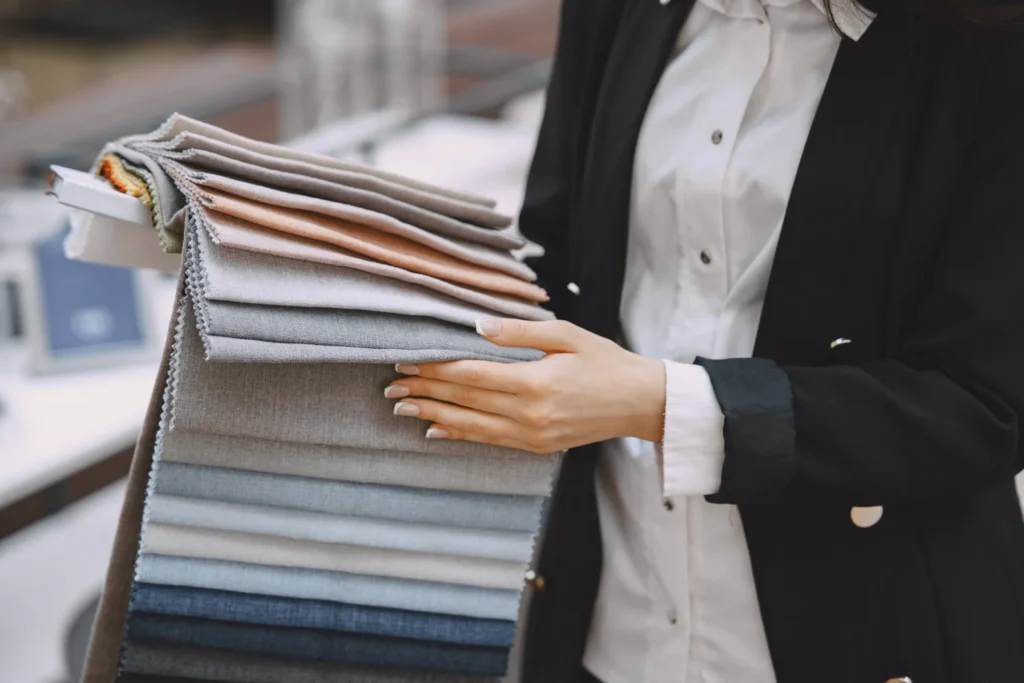
A fabric that looks good in a swatch can behave differently in a finished garment. Sampling prevents expensive mistakes.
Fabric Selection by Product Category
Riding Breeches
Best fabric direction:
- Polyester-spandex
- Nylon-spandex
- Stretch woven
- Gabardine blends
- Grip-enhanced panels
Key checks:
- Knee recovery
- Seat comfort
- Waistband stability
- Opacity
- Grip durability
- Wash performance
Riding Leggings
Best fabric direction:
- Nylon-spandex
- Polyester-spandex
- Compression stretch
- Full-seat or knee grip option
Key checks:
- Opacity
- Stretch recovery
- Waistband support
- Seam comfort
- Grip placement
- Fabric thickness
Base Layers
Best fabric direction:
- Moisture-wicking polyester
- Microfiber
- Technical knit
- Mesh panels
Key checks:
- Breathability
- Sweat management
- Skin comfort
- Sleeve movement
- Layering ability
- Quick drying
Riding Jackets
Best fabric direction:
- Softshell
- Stretch woven
- Polyester blends
- Weather-resistant fabrics
Key checks:
- Shoulder movement
- Sleeve length
- Back length
- Zipper quality
- Water resistance
- Wind resistance
- Layering comfort
Competition Jackets
Best fabric direction:
- Structured stretch woven
- Wool blends
- Refined softshell
- Tailored technical fabric
Key checks:
- Shoulder structure
- Waist shaping
- Sleeve length
- Collar position
- Clean silhouette
- Competition presentation
Saddle Pads
Best fabric direction:
- Quilted cotton blends
- Polyester blends
- Technical lining
- Durable binding
Key checks:
- Shape retention
- Quilting quality
- Lining comfort
- Logo placement
- Binding durability
- Wash performance
Horse Rugs
Best fabric direction:
- Durable woven polyester
- Ripstop
- Insulated lining
- Weather-resistant outer fabrics
Key checks:
- Outer strength
- Lining quality
- Closure durability
- Fit and sizing
- Seasonal suitability
- Reinforced stress points
Fabric Selection for Private Label Equestrian Brands
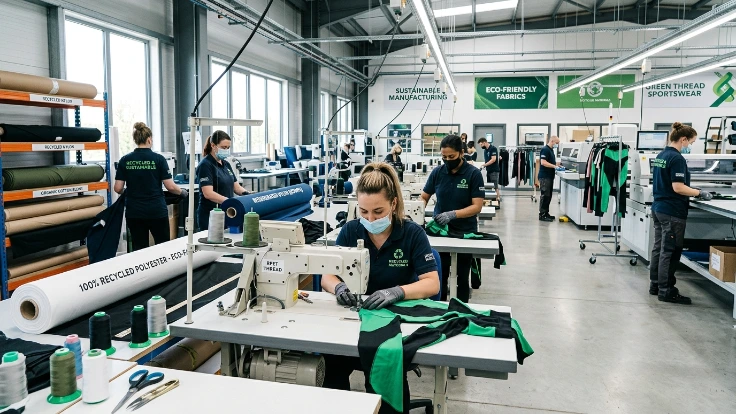
Private label equestrian brands need more than one good fabric. They need a repeatable fabric strategy.
A strong private label range may include:
- Daily training fabric
- Summer breathable fabric
- Winter thermal fabric
- Competition show fabric
- Saddle pad fabric
- Club apparel fabric
- Premium collection fabric
- Recycled or certified option
For brand consistency, buyers should document:
- Fabric name or code
- GSM
- Fibre composition
- Colour references
- Stretch direction
- Finish
- Wash care
- Supplier availability
- Branding method
- Approved sample photos
This helps future reorders stay consistent.
Read more: Private Label Apparel Manufacturing Guide and Custom Equestrian Gear Manufacturer.
How GHC Sportswear® Supports Fabric Selection
GHC Sportswear® helps B2B buyers select fabrics based on product use, target market, season, discipline, branding, and order quantity.
Fabric selection support may include:
- Riding apparel fabric direction
- Breeches and jodhpurs fabric planning
- Base layer fabric selection
- Softshell jacket development
- Saddle pad fabric planning
- Horse rug material discussion
- Recycled fabric options
- Certified fabric discussion
- Branding compatibility
- Sample development
- Bulk production planning
- Reorder consistency
GHC Sportswear® can work from tech packs, product images, reference samples, sketches, or buyer specifications.
Explore:
- Equestrian Gear Manufacturer
- Custom Equestrian Gear Manufacturer
- Custom Equestrian Gear Manufacturing Guide
- Complete Horse Tack Guide
- GHC Sportswear® Products
- GHC Sportswear® Services
What B2B Buyers Should Send for Fabric Selection
To receive accurate fabric guidance, buyers should send:
- Product category
- Everyday or competition use
- Discipline
- Target season
- Quantity
- Size range
- Fabric preference
- Stretch requirement
- GSM target if known
- Colour references
- Logo files
- Branding method
- Reference photos
- Tech pack if available
- Packaging needs
- Delivery country
- Certification or documentation needs
- Sample requirement
Example:
“Need women’s riding leggings for everyday training, black colour, high-waist fit, nylon-spandex or polyester-spandex fabric, full-seat silicone grip, sizes XS–XL, 150 pieces, private label packaging, delivery to UK, sample required.”
Clear fabric requirements lead to better samples and fewer revisions.
Contact and Project Information
For custom fabric selection, bulk production, wholesale supply, or private label equestrian apparel development, buyers can contact GHC Sportswear® with product details and target use.
Contact GHC Sportswear®:
WhatsApp GHC Sportswear®
Email: info@ghcsportswear.com
Contact page: GHC Sportswear® Contact Us
FAQ: Best Fabrics Used in High-Performance Equestrian Gear
What are the best fabrics used in high-performance equestrian gear?
The best fabrics used in high-performance equestrian gear include polyester-elastane blends, nylon-spandex, technical knits, microfiber blends, softshell, stretch woven fabrics, wool blends, breathable mesh, grip-enhanced panels, quilted saddle pad fabrics, and durable weather-resistant woven materials.
What fabric is best for riding breeches?
Riding breeches commonly use polyester-spandex, nylon-spandex, stretch woven fabrics, or gabardine blends. The best option depends on stretch, recovery, opacity, grip placement, and intended use.
What fabric is best for equestrian base layers?
Equestrian base layers usually work best with moisture-wicking polyester, microfiber blends, technical knit fabrics, or stretch jersey fabrics that support breathability and layering.
Is softshell good for riding jackets?
Yes. Softshell is useful for riding jackets because it can provide stretch, wind resistance, moderate warmth, and practical comfort without the stiffness of some rigid outerwear fabrics.
Are wool blends still used in equestrian competition apparel?
Yes. Wool blends are still used in selected show jackets and formal competition apparel because they provide refined drape, structure, and classic presentation.
Are silicone grip panels important in breeches?
Silicone or polyurethane grip panels can improve saddle contact when correctly placed and tested. They should be checked for flexibility, durability, wash performance, and rider comfort.
Should equestrian brands use certified fabrics?
Certified fabric options can support buyer trust, especially for private label collections. OEKO-TEX® STANDARD 100 tested fabrics or recycled polyester options can be discussed where available.
Can GHC Sportswear® help select fabrics for custom equestrian apparel?
Yes. GHC Sportswear® can support fabric selection, sample development, custom equestrian apparel, saddle pads, horse gear, private label packaging, bulk production, and international shipping coordination.
Conclusion
The best fabrics used in high-performance equestrian gear are chosen for movement, comfort, durability, climate control, presentation, and repeatable manufacturing.
Four-way stretch polyester blends support flexible riding apparel. Nylon-spandex offers premium comfort and compression. Technical knits and microfiber blends support base layers and sweat management. Softshell works well for riding jackets and transitional outerwear. Stretch woven fabrics and wool blends support refined competition apparel. Quilted fabrics serve saddle pads, while durable woven materials support horse rugs and outerwear.
The right fabric is never chosen by trend alone. It must match the rider, product, discipline, season, branding method, and production requirement.
GHC Sportswear® supports B2B buyers with custom equestrian fabric selection, riding apparel development, saddle pad production, private label packaging, sampling, bulk manufacturing, and international delivery coordination.
In high-performance equestrian gear, fabric is not just material.
It is the foundation of fit, function, presentation, and brand trust.