Seasonal Equestrian Gear Checklist for Riders, Clubs, Teams, and B2B Brands
A seasonal equestrian gear checklist helps riders, riding schools, clubs, academies, retailers, wholesalers, distributors, and private label brands prepare the right riding apparel and horse gear for changing weather conditions.
Equestrian gear is not used in one fixed environment. Riders deal with spring rain, summer heat, autumn moisture, winter cold, stable work, outdoor training, competition days, and repeated washing. Because of that, gear selection should change by season.
Seasonal planning matters because it helps improve:
- Rider comfort
- Movement and flexibility
- Weather protection
- Sweat management
- Stable and training practicality
- Club uniform consistency
- Product lifespan
- Bulk order planning
- Reorder control
- Private label collection planning
For B2B buyers, a seasonal equestrian gear checklist is also useful for stock planning, product development, and repeat manufacturing. A riding school may need standardised winter jackets. A retailer may need summer base layers. A private label equestrian brand may need spring saddle pads, autumn gilets, and winter thermal apparel.
GHC Sportswear® supports custom equestrian apparel, saddle pads, horse gear, riding jackets, breeches, jodhpurs, riding leggings, base layers, club apparel, private label packaging, and bulk equestrian gear manufacturing for B2B buyers worldwide.
Direct Answer: What Should Be Included in a Seasonal Equestrian Gear Checklist?
A seasonal equestrian gear checklist should include riding apparel, base layers, jackets, breeches, gloves, saddle pads, horse rugs, stable apparel, weather protection, safety-related equipment, and reorder planning based on spring, summer, autumn, and winter conditions.
| Season | Main Challenge | Gear Priority |
|---|---|---|
| Spring | Temperature changes, wind, rain | Lightweight layers and rain resistance |
| Summer | Heat, sweat, sun exposure | Breathable fabrics and moisture control |
| Autumn | Moisture, mud, cooler weather | Durable and water-resistant layers |
| Winter | Cold, wind, restricted movement risk | Thermal insulation without bulk |
The goal is not to own more gear. The goal is to own the right gear for the right riding conditions.
Why Seasonal Equestrian Gear Planning Matters
Riding conditions change across the year. A jacket that works in autumn may be too warm for summer. A light base layer that feels perfect in spring may not provide enough protection in winter. A saddle pad used daily in wet conditions may need faster replacement than one used in dry indoor training.
A seasonal plan helps riders and organisations avoid common problems:
- Overheating in summer
- Restricted movement in winter
- Wet fabric during autumn rides
- Poor layering in spring
- Mismatched club apparel
- Last-minute ordering
- Inconsistent product quality
- Unplanned replacement costs
- Stock shortages for riding schools and retailers
For clubs, academies, and equestrian brands, seasonal planning also improves bulk buying. Instead of buying random retail products throughout the year, organisations can plan a consistent product range and reorder from an approved specification.
For related sourcing errors, read Equestrian Gear Mistakes.
Spring Equestrian Gear Checklist
Spring riding often brings unstable weather. Riders may face cool mornings, warmer afternoons, wind, rain, and muddy ground in the same week. Spring gear should support layering without restricting movement.
Spring riding apparel checklist
| Product | Purpose |
| Lightweight riding jacket | Helps with wind and mild rain |
| Breathable base layer | Supports comfort during temperature changes |
| Flexible breeches or jodhpurs | Allows riding movement without overheating |
| Light gilet | Adds core warmth while keeping arms free |
| Rain-resistant outer layer | Useful for unpredictable showers |
| Light riding gloves | Supports grip in cool or damp conditions |
| Club hoodie or sweatshirt | Useful for warm-ups, travel, and stable work |
Spring horse gear checklist
| Product | Purpose |
| Light saddle pad | Suitable for regular training sessions |
| Ear bonnet | Useful for insects, wind, and team presentation |
| Light turnout rug | Depends on horse, clipping, and local weather |
| Fly mask | Useful as insects increase |
| Grooming kit | Spring coat changes require regular grooming |
| Saddle cover | Helps protect tack during damp conditions |
Spring planning notes for B2B buyers
Spring is a good time for clubs, schools, and brands to review upcoming event apparel. Buyers should check size gaps, update logo files, approve saddle pad designs, and prepare summer stock early.
Products worth planning in spring:
- Club jackets
- Lightweight base layers
- Saddle pads
- Ear bonnets
- Team polos
- Riding leggings
- Event apparel
Summer Equestrian Gear Checklist
Summer brings heat, sweat, sun exposure, and longer outdoor sessions. Fabric choice becomes more important because heavy, dense, or poorly ventilated apparel can increase discomfort.
The FEI’s Beat the Heat guidance focuses on managing hot and humid conditions for horses and humans at equestrian events, including heat-risk planning, cooling, hydration, shade, and workload management.
Summer riding apparel checklist
| Product | Purpose |
| Lightweight riding top | Reduces heat buildup |
| Moisture-wicking base layer | Helps manage sweat |
| Ventilated breeches or riding leggings | Improves comfort in warm weather |
| Breathable gloves | Supports grip without excess heat |
| Light competition shirt | Keeps presentation clean without heavy fabric |
| UV-conscious fabric option | Useful for outdoor riding where suitable |
| Lightweight cap for off-horse use | Useful around the yard, not as riding helmet replacement |
Summer horse gear checklist
| Product | Purpose |
| Breathable saddle pad | Helps reduce trapped heat |
| Fly mask | Protects from flies and irritation |
| Fly rug | Useful depending on climate and turnout |
| Lightweight ear bonnet | Useful for insects and competition presentation |
| Cooling towel or sponge kit | Supports post-work cooling routine |
| Water and travel hydration plan | Important for training and event days |
Summer planning notes for B2B buyers
For summer collections, equestrian brands and retailers should consider:
- Lightweight base layers
- Breathable riding tops
- Summer riding leggings
- Ventilated breeches
- Lightweight gloves
- Moisture-managing saddle pads
- Summer club polos
- Fly masks and ear bonnets
Fabric direction should focus on breathability, quick drying, stretch, and comfort. For deeper fabric planning, read Moisture-Wicking Fabrics and Synthetic vs Natural Fabrics in Sportswear.
Autumn Equestrian Gear Checklist
Autumn introduces cooler temperatures, wind, rain, mud, and moisture exposure. Gear should focus on water resistance, durability, and flexible layering.
Autumn riding apparel checklist
| Product | Purpose |
| Mid-weight riding jacket | Handles cooler riding sessions |
| Water-resistant outer layer | Useful for rain and damp yards |
| Insulated base layer | Adds warmth without heavy bulk |
| Durable breeches or jodhpurs | Better for wetter conditions |
| Riding gloves | Helps grip in cooler or wet weather |
| Gilet or vest | Adds warmth while allowing arm movement |
| Club hoodie or tracksuit | Useful for teamwear and stable use |
Autumn horse gear checklist
| Product | Purpose |
| Mid-weight saddle pad | Useful for cooler training |
| Turnout rug option | Depends on horse, clipping, and weather |
| Cooler rug | Helps after work or washing |
| Stable rug | Useful as nights get colder |
| Mud-friendly grooming kit | Helps with daily horse care |
| Saddle cover | Protects tack from wet conditions |
Autumn planning notes for B2B buyers
Autumn is the best time to prepare winter apparel. Waiting until winter can create rushed orders, limited fabric choices, and delivery pressure.
Products worth planning in autumn:
- Winter riding jackets
- Thermal base layers
- Cold-weather gloves
- Stable rugs
- Club hoodies
- Gilets
- Insulated breeches
- Winter private label packaging
Winter Equestrian Gear Checklist
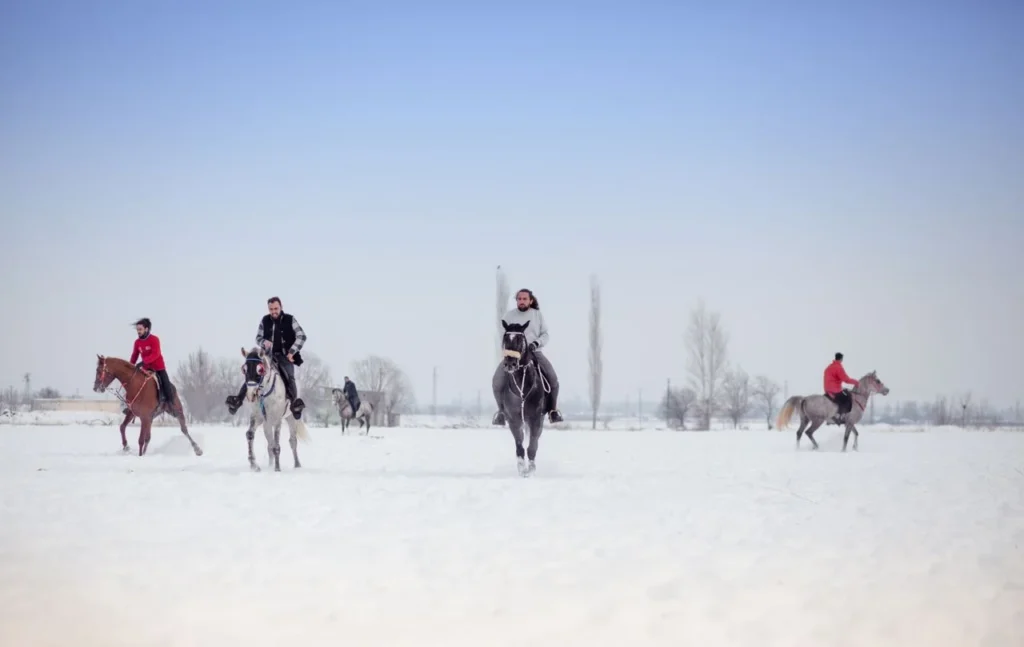
Winter riding requires warmth without excessive bulk. Riders still need balance, posture, grip, and freedom of movement.
USEA recommends a layering approach for winter riding, starting with moisture-wicking base layers, followed by insulating mid-layers and protective outer layers. USEF also notes that wind, wet weather, and cold are key factors when deciding horse blanketing needs.
Winter riding apparel checklist
| Product | Purpose |
| Thermal base layer | Helps retain warmth and manage moisture |
| Insulated riding jacket | Keeps rider warm during cold sessions |
| Wind-resistant outer layer | Reduces wind chill |
| Winter breeches or thermal leggings | Adds warmth while supporting movement |
| Cold-weather riding gloves | Protects hands and supports grip |
| Gilet or mid-layer | Adds core warmth without full sleeve bulk |
| Warm riding socks | Improves boot comfort in cold weather |
| Waterproof outerwear | Useful for wet winter conditions |
Winter horse gear checklist
| Product | Purpose |
| Stable rug | Helps warmth during colder stabling |
| Turnout rug | Depends on weather, clipping, and turnout |
| Cooler rug | Useful after exercise when the horse is warm or damp |
| Saddle pad rotation | Allows drying between rides |
| Grooming kit | Helps manage mud and damp coat |
| Spare dry layers | Prevents reuse of wet gear |
| Tack protection | Helps protect equipment from damp storage |
Winter planning notes for B2B buyers
Winter equestrian apparel should be warm but not bulky. Important product features include:
- Thermal fabrics
- Softshell outer layers
- Wind-resistant panels
- Fleece-lined options
- Durable zippers
- Longer riding-friendly jacket backs
- Two-way zippers for saddle comfort
- Comfortable cuffs
- Practical pockets
- Embroidered or heat-transfer branding
For winter club apparel, consistent sizing and repeat supply are especially important.
Year-Round Safety Gear Checklist
Some equestrian products are seasonal. Safety-related equipment is year-round.
BETA explains that its 2018 body-protector standard meets EN 13158 requirements. British Riding Clubs rules state that a body protector is obligatory in all cross-country competitions and strongly recommended in show jumping competitions.
Year-round safety-related items may include:
- Correctly fitted riding helmet
- Body protector where required
- Suitable riding boots
- Gloves
- Hi-vis gear for hacking
- Competition-compliant clothing
- Medical armband where required by event rules
- Discipline-specific tack and accessories
Important note for B2B brands: safety-related products should not be marketed with protective claims unless relevant testing, certification, and documentation support those claims.
Seasonal Gear by Product Type
Riding Jackets
| Season | Recommended Direction |
| Spring | Lightweight, rain-resistant |
| Summer | Light competition jacket or optional event layer |
| Autumn | Mid-weight, water-resistant |
| Winter | Insulated, wind-resistant, movement-friendly |
Breeches and Jodhpurs
| Season | Recommended Direction |
| Spring | Flexible mid-light fabric |
| Summer | Breathable lightweight fabric |
| Autumn | Durable mid-weight fabric |
| Winter | Thermal or wind-resistant option |
Base Layers
| Season | Recommended Direction |
| Spring | Breathable layering |
| Summer | Moisture-wicking and lightweight |
| Autumn | Mid-weight or lightly insulated |
| Winter | Thermal and moisture-managing |
Gloves
| Season | Recommended Direction |
| Spring | Light grip gloves |
| Summer | Breathable gloves |
| Autumn | Durable weather-resistant gloves |
| Winter | Insulated riding gloves |
Saddle Pads
| Season | Recommended Direction |
| Spring | Standard breathable pad |
| Summer | Lightweight, moisture-conscious pad |
| Autumn | Durable and easy-care finish |
| Winter | Rotation system for drying and hygiene |
Seasonal Equestrian Gear Checklist for Clubs and Riding Schools
Clubs and riding schools need more structure because they manage multiple riders, sizes, replacements, and standardised branding.
Spring club checklist
- Review existing club apparel
- Check size gaps
- Order lightweight jackets
- Refresh saddle pads
- Prepare event apparel
- Confirm logo files
- Plan summer stock
Summer club checklist
- Order breathable riding tops
- Prepare competition shirts
- Confirm lightweight breeches or leggings
- Add summer gloves
- Review saddle pad rotation
- Prepare event merchandise
- Share heat-management reminders with riders
Autumn club checklist
- Order mid-weight jackets
- Review water-resistant layers
- Prepare stablewear
- Confirm winter requirements
- Plan bulk orders before peak cold weather
- Check replacement saddle pads
- Update size charts
Winter club checklist
- Order insulated jackets
- Add thermal base layers
- Prepare gloves and warm socks
- Review horse rug needs
- Plan dry gear rotation
- Check safety-related equipment standards
- Prepare spring reorder plan
Manufacturer-supported production helps clubs avoid mismatched jackets, inconsistent colours, and unavailable retail stock.
Seasonal Equestrian Gear Checklist for Retailers and Private Label Brands
Retailers and private label brands should plan seasonal collections before the season begins.
Spring collection ideas
- Lightweight riding jackets
- Base layers
- Breeches
- Saddle pads
- Ear bonnets
- Club polos
- Rain-resistant outerwear
Summer collection ideas
- Breathable tops
- Lightweight riding leggings
- Ventilated breeches
- Summer gloves
- Fly masks
- Lightweight saddle pads
- Competition shirts
Autumn collection ideas
- Mid-weight jackets
- Water-resistant layers
- Durable breeches
- Gilets
- Hoodies
- Stable apparel
- Cooler rugs
Winter collection ideas
- Thermal base layers
- Insulated jackets
- Fleece-lined breeches
- Winter gloves
- Wind-resistant outerwear
- Stable rugs
- Warm club apparel
Retailers should also prepare:
- Size charts
- Product photography
- Fabric descriptions
- Care labels
- Packaging
- Seasonal landing pages
- Bulk inventory
- Reorder windows
- Private label tags
For brand planning, read Private Label Apparel Manufacturing Guide and Custom Apparel Manufacturing Guide.
Seasonal Fabric Planning
Fabric should match the season and riding use.
| Season | Fabric Priority |
| Spring | Lightweight stretch, breathable layers |
| Summer | Moisture-wicking, ventilated, quick-dry |
| Autumn | Durable, mid-weight, water-resistant |
| Winter | Thermal, wind-resistant, insulated |
Common fabric directions include:
- Polyester-spandex for stretch riding apparel
- Nylon-spandex for premium leggings and base layers
- Softshell for jackets and gilets
- Fleece for hoodies and warm layers
- Gabardine for selected breeches and riding trousers
- Quilted fabrics for saddle pads
- Durable woven fabrics for rugs and outerwear
- Recycled polyester options where suitable
Useful internal guides:
- Synthetic vs Natural Fabrics in Sportswear
- Moisture-Wicking Fabrics
- Sustainable Sports Clothing Certifications
Seasonal Branding and Customisation
Seasonal gear should still carry consistent branding across clubs, teams, retailers, and private label collections.
Customisation options may include:
- Embroidery
- Heat transfer logos
- Woven labels
- Rubber badges
- Silicone patches
- Sublimation printing
- Screen printing
- Club crests
- Rider names
- Sponsor logos
- Private label packaging
Best branding choices by product:
| Product | Common Branding Method |
| Jackets | Embroidery, badges, heat transfer |
| Base layers | Heat transfer, sublimation, labels |
| Breeches | Small logos, silicone patches, labels |
| Saddle pads | Embroidery, woven badges |
| Hoodies | Embroidery, screen print, heat transfer |
| Gilets | Embroidery, rubber badges |
| Club polos | Embroidery, woven labels |
Useful branding guides:
Manufacturer Support for Seasonal Requirements
A manufacturer helps B2B buyers plan equestrian gear by season, quantity, fabric, branding, packaging, and reorder schedule.
GHC Sportswear® supports:
- Seasonal product development
- Custom riding apparel
- Saddle pads
- Horse rugs
- Club apparel
- Bulk equestrian gear
- Private label packaging
- Fabric selection
- Sample approval
- Logo placement
- Size grading
- Repeat production
- International shipping coordination
A seasonal plan helps avoid urgent orders, poor substitutions, and inconsistent product lines.
For full manufacturing support, see:
- Custom Equestrian Gear Manufacturer
- Custom Equestrian Gear Manufacturing Guide
- Complete Horse Tack Guide
Bulk Planning Timeline for Seasonal Equestrian Gear
B2B buyers should plan seasonal equestrian gear early.
| Season to Sell or Use | Planning Should Start |
| Spring collection | Winter |
| Summer collection | Early spring |
| Autumn collection | Summer |
| Winter collection | Early autumn |
Bulk buyers should allow time for:
- Product discussion
- Fabric selection
- Sample development
- Sample revisions
- Bulk production
- Quality control
- Packing
- International shipping
- Customs and local delivery
Rushed seasonal planning usually creates compromises. Early planning gives better fabric choices, cleaner branding, and more stable production.
What to Send for a Seasonal Equestrian Gear Quote
B2B buyers can prepare better enquiries by sending:
- Product list
- Target season
- Quantity
- Size range
- Fabric preference
- Colour references
- Logo files
- Branding placement
- Reference photos
- Tech pack if available
- Packaging needs
- Delivery country
- Sample requirement
- Target timeline
- Safety or documentation requirements
Example:
“Need winter riding jackets and thermal base layers for a riding academy, 150 pieces, navy and black, embroidered club logo, women’s and youth sizes, delivery to UK, sample required before bulk production.”
Clear details lead to better quotations and fewer revisions.
Product Categories Supported by GHC Sportswear®
GHC Sportswear® supports custom equestrian gear and sportswear manufacturing for global B2B buyers.
Product categories include:
- Riding jackets
- Show jackets
- Breeches
- Jodhpurs
- Riding leggings
- Base layers
- Competition shirts
- Gilets
- Club polos
- Hoodies
- Tracksuits
- Saddle pads
- Ear bonnets
- Horse rugs
- Gloves
- Stable apparel
- Equestrian accessories
- Private label packaging
- Custom labels
- Bulk equestrian apparel
Explore:
- Equestrian Gear Manufacturer
- GHC Sportswear® Products
- GHC Sportswear® Services
- Pakistan Custom Sportswear Manufacturer
Contact and Project Information
For seasonal equestrian gear, bulk orders, custom specifications, wholesale supply, or private label manufacturing, buyers can contact GHC Sportswear® with their product list and target season.
Contact GHC Sportswear®:
WhatsApp GHC Sportswear®
Email: info@ghcsportswear.com
Contact page: GHC Sportswear® Contact Us
FAQ: Seasonal Equestrian Gear Checklist
What is a seasonal equestrian gear checklist?
A seasonal equestrian gear checklist is a list of riding apparel, horse gear, safety-related items, outerwear, base layers, gloves, rugs, and accessories needed for spring, summer, autumn, and winter riding conditions.
What should riders wear in spring?
Spring riders usually need lightweight jackets, breathable base layers, flexible breeches, rain-resistant outerwear, gloves, and layering pieces for changing weather.
What equestrian gear is best for summer?
Summer gear should focus on breathable riding tops, ventilated breeches, lightweight gloves, moisture-wicking fabrics, breathable saddle pads, fly masks, and heat-aware planning.
What should be in an autumn equestrian gear checklist?
Autumn gear should include mid-weight riding jackets, water-resistant layers, insulated base layers, durable gloves, cooler rugs, stable rugs, and mud-friendly grooming gear.
What should riders wear in winter?
Winter riders usually need thermal base layers, insulated riding jackets, wind-resistant breeches, cold-weather gloves, warm socks, and waterproof outerwear that does not restrict movement.
Why should riding schools plan seasonal gear early?
Riding schools should plan early to avoid stock gaps, mismatched uniforms, rushed production, size shortages, and delayed deliveries during peak seasonal demand.
Can GHC Sportswear® manufacture seasonal equestrian gear?
Yes. GHC Sportswear® can support custom seasonal equestrian apparel, saddle pads, horse rugs, club apparel, private label packaging, sampling, bulk production, and international shipping coordination.
Conclusion
A seasonal equestrian gear checklist helps riders, clubs, riding schools, academies, retailers, wholesalers, distributors, and private label brands stay prepared throughout the year.
Spring requires flexible layers.
Summer requires breathability and heat awareness.
Autumn requires durability and water resistance.
Winter requires warmth without restriction.
The best equestrian gear plan considers apparel, horse gear, safety-related items, weather conditions, fabric selection, branding, sizing, reorders, and bulk production timing.
GHC Sportswear® supports B2B buyers with custom equestrian gear manufacturing, seasonal product planning, private label development, sampling, bulk production, and international delivery coordination.
Seasonal planning is not only about what to wear now. It is about building a reliable system for comfort, consistency, performance, and repeat supply.