Private Label Apparel Manufacturing Guide for Startups & Brands
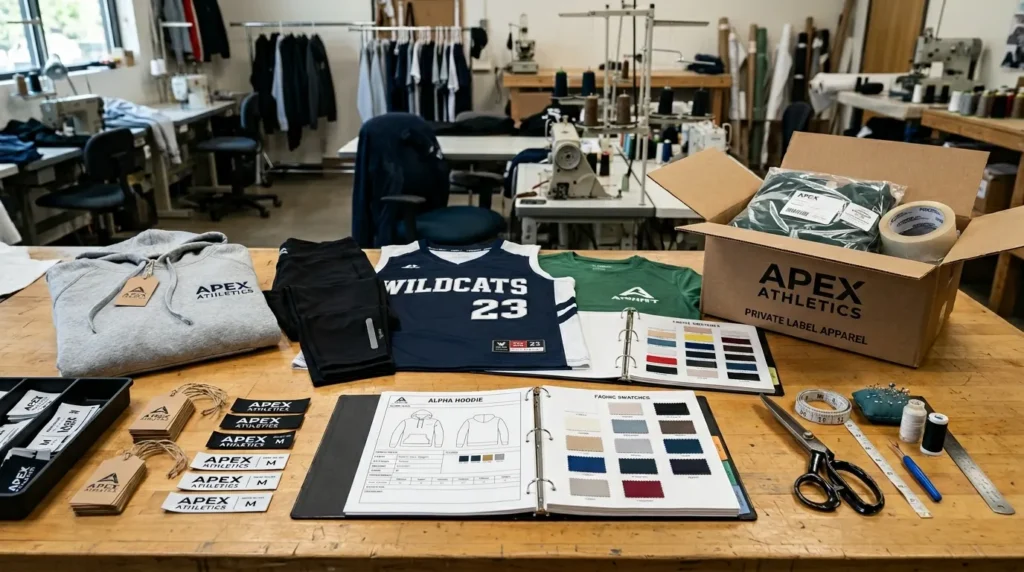
Private label apparel manufacturing is one of the fastest ways for a startup, retailer, influencer, gym, club, distributor, or online brand to launch clothing without owning a factory. Instead of building production from zero, the brand works with a manufacturer that develops and produces garments under the buyer’s own label, logo, packaging, and product identity.
For GHC Sportswear® clients, private label apparel manufacturing is not only about putting a logo on a product. It includes product planning, fabric selection, sampling, fit development, branding, packaging, quality control, bulk production, and reorder systems. When this process is handled properly, a brand can launch faster, reduce production errors, and build a product line that can scale.
This guide explains how private label apparel manufacturing works, what brands should prepare, what mistakes to avoid, and how different product categories can be developed under one consistent brand system. It is written for startups, apparel brands, sportswear businesses, wholesalers, distributors, retailers, gyms, academies, clubs, and merchandise companies that want to build serious products instead of random one-time orders.
Buyers who want to understand the wider company can start from the GHC Sportswear® homepage.
Private Label Apparel Manufacturing: What It Means
Private label apparel manufacturing means a manufacturer produces garments for a buyer, and the buyer sells those garments under its own brand name. The manufacturer handles the technical production work, while the buyer controls the branding, target market, product direction, pricing, and customer relationship.
This model is useful because brands do not need to own sewing machines, cutting tables, printing equipment, sourcing networks, or production staff. Instead, they work with a manufacturing partner that already understands materials, construction, sampling, sizing, finishing, and bulk production.
Private label apparel can include:
- Sportswear
- Gym wear
- Activewear
- Team uniforms
- Yoga wear
- Hoodies
- Tracksuits
- T-shirts
- Compression wear
- Riding apparel
- Equestrian gear
- Motorcycle apparel
- Club merchandise
- Branded event apparel
- Retail collections
The biggest advantage is control. A brand can choose its label, packaging, colors, trims, and product style while using the manufacturer’s production experience.
Private Label vs White Label vs OEM vs ODM
Many new buyers confuse private label, white label, OEM, and ODM. These terms are connected, but they are not the same.
| Model | What It Means | Best For |
|---|---|---|
| White Label | Existing generic product sold under different brand names | Fast launch with limited customization |
| Private Label | Product made for a brand with custom labels, packaging, and selected details | Startups, retailers, gyms, clubs, online brands |
| OEM | Product made according to buyer’s exact design and specifications | Brands with detailed tech packs and custom products |
| ODM | Manufacturer offers design or development support along with production | Brands needing product development help |
Private label sits in the middle. It gives buyers more brand control than white label, but it may not require the full technical detail of a highly customized OEM project. However, strong private label programs often grow into OEM-level development as the brand becomes more mature.
A beginner may start with private label hoodies, T-shirts, or gym wear. Later, once the brand understands its customers, it can move toward fully custom OEM designs with unique patterns, fabric blends, trims, and packaging.
Why Private Label Apparel Manufacturing Is Popular
Private label apparel manufacturing is popular because it reduces barriers to entry. A brand can begin with a focused product range, test market demand, and scale based on customer response. This is especially useful for sportswear startups, gyms, influencers, equestrian brands, motorcycle clubs, retailers, and distributors.
A private label model helps buyers:
- Launch products without owning a factory
- Build a branded product range
- Control labels and packaging
- Test products before scaling
- Create repeatable inventory
- Improve margins compared with resale-only models
- Build long-term customer loyalty
- Expand into multiple product categories
The apparel supply chain is complex, and sourcing decisions matter. OECD guidance for the garment and footwear sector focuses on due diligence across responsible supply chains, which shows why brands should treat sourcing and manufacturing as serious business decisions, not simple product buying.
Private label manufacturing works best when the buyer has a clear product strategy. Without strategy, the brand becomes a collection of random products. With strategy, the brand becomes a system.
Who Should Use Private Label Apparel Manufacturing
Private label manufacturing works for many types of buyers, but the strategy changes depending on the business model.
A gym may want branded activewear for members. A sportswear startup may want leggings, hoodies, compression tops, and performance T-shirts. A riding school may want stable jackets, riding apparel, and horse-related gear. A motorcycle club may want vests, hoodies, Kevlar apparel, and event merchandise. A distributor may want a wider product catalog across different apparel categories.
| Buyer Type | Typical Private Label Needs | Main Priority |
|---|---|---|
| Startup brand | First product launch and small collection | Product quality and identity |
| Gym or fitness business | Member apparel and retail products | Comfort and branding |
| Sports academy | Uniforms, training wear, merchandise | Consistency and reorders |
| Equestrian brand | Riding apparel, stable wear, tack-related products | Fit, durability, presentation |
| Motorcycle club | Jackets, vests, hoodies, shirts | Identity and bulk member sizing |
| Distributor | Multiple categories and repeat supply | Stable production and pricing |
| Retailer | Private label line for store sales | Packaging and margin |
The best private label product range starts with a clear customer. Without a clear buyer, the product line becomes random and difficult to sell.
Start With Product Strategy, Not Just a Logo
Many new brands think private label starts with a logo. That is wrong. A logo matters, but the product strategy matters more.
Before contacting a manufacturer, brands should define:
- Who is the target customer?
- What problem does the product solve?
- What price level will the brand target?
- Which product should launch first?
- What fabrics match the customer?
- What fit does the market expect?
- What branding style fits the product?
- What packaging level is needed?
- What order quantity is realistic?
- Will the product be reordered?
A strong strategy prevents overbuying, weak product choices, and confusing collections. A startup does not need twenty products at launch. It needs a focused range that customers understand.
For example, a gym brand may start with oversized T-shirts, shorts, and hoodies. An equestrian brand may start with riding shirts, stable jackets, and saddle pads. A motorcycle club may start with vests, hoodies, and riding shirts. A distributor may start with core sportswear products that can be sold across different markets.
Choosing the Right First Product
The first private label product should be easy to explain, easy to sell, and realistic to produce. A difficult product with too many trims, panels, zippers, linings, prints, and size complications may not be the best starting point for a new brand.
Good first products may include:
- Performance T-shirts
- Hoodies
- Joggers
- Gym shorts
- Leggings
- Tracksuits
- Team jerseys
- Riding shirts
- Stable jackets
- Motorcycle club hoodies
More complex products such as technical jackets, horse rugs, Kevlar jeans, or premium riding breeches can be added later when the brand has stronger product knowledge and sales data.
For buyers comparing possible product categories, GHC Sportswear® lists its available product range here: GHC Sportswear® products.
Product Planning for Private Label Apparel
Product planning turns an idea into instructions. Without clear planning, the manufacturer has to guess. Guessing leads to delays, poor samples, wrong materials, and wasted money.
A private label product plan should include:
- Product name
- Product category
- Target user
- Fabric preference
- Fit style
- Size range
- Color options
- Logo placement
- Label type
- Packaging requirements
- Quantity target
- Budget range
- Delivery deadline
For example, “black gym hoodie” is not enough. A manufacturer needs to know fabric weight, fleece type, fit, cuff style, pocket style, hood shape, drawcord type, logo method, label placement, packaging, and size breakdown.
Product planning is where serious brands separate themselves from casual buyers. If the plan is weak, production becomes slow and confusing. If the plan is clear, sampling and bulk manufacturing become smoother.
Tech Packs and Product Specifications
A tech pack is the instruction file for production. Some private label buyers do not have full tech packs at the start, and that is normal. A good manufacturer can help develop product details, but clear specifications are still needed.
A basic tech pack should include:
- Product sketch or reference
- Measurements
- Size chart
- Fabric details
- Trim details
- Stitching notes
- Logo placement
- Label placement
- Print or embroidery instructions
- Packaging notes
- Color references
- Sample comments
A tech pack reduces misunderstandings. It also creates records for future reorders. Without documentation, the second order may not match the first.
This is especially important for private label brands because repeat production is part of brand growth. If a hoodie sells well, the buyer needs the same fit, fabric, and finish again. If product records are missing, every reorder becomes a new problem.
Fabric Selection in Private Label Manufacturing
Fabric selection affects comfort, durability, price, and customer satisfaction. A great design fails if the fabric is wrong. Textile Exchange reported that global fiber production reached 124 million tonnes in 2023 in its Materials Market Report 2024, which shows the scale and importance of fiber and material choices in apparel supply chains.
Common fabric choices include:
- Polyester
- Cotton
- Cotton-poly blends
- Polyester-spandex
- Nylon-spandex
- Fleece
- Mesh
- Interlock knit
- Softshell
- Denim
- Aramid or Kevlar-style reinforcement fabrics
- Technical performance fabrics
Each fabric has a purpose. Gym wear needs stretch and sweat control. Teamwear needs durability and print compatibility. Yoga wear needs stretch, softness, and opacity. Motorcycle apparel may need reinforcement zones. Equestrian apparel needs movement, comfort, and durability.
Fabric Selection by Product Category
| Product Category | Fabric Direction | Main Buyer Concern |
|---|---|---|
| Gym wear | Polyester-spandex, nylon blends | Stretch, sweat control, recovery |
| Team uniforms | Polyester, mesh, sublimation fabrics | Durability and color consistency |
| Hoodies | Fleece, cotton-poly blends | Comfort and structure |
| Tracksuits | Interlock, fleece, technical knits | Fit, durability, clean finish |
| Yoga wear | High-stretch blends | Softness, opacity, recovery |
| Riding apparel | Technical knits, softshell, stretch fabrics | Movement and saddle comfort |
| Motorcycle apparel | Denim, textile, leather, reinforced fabrics | Durability and rider use |
| Casual merchandise | Cotton, fleece, blends | Branding and everyday wear |
A buyer should not choose fabric only by price. The right fabric supports the brand promise. If a gym brand promises performance, the fabric must perform. If a riding apparel brand promises comfort, the fabric must support movement. If a motorcycle brand promises durability, the materials must match that claim.
Sampling: The Step Brands Should Not Skip
Sampling is where the product becomes real. A sample lets the buyer check fabric, fit, logo placement, stitching, label quality, and product feel before bulk production.
Sampling may include:
- Prototype sample
- Fit sample
- Revised sample
- Pre-production sample
- Size set sample
Skipping sampling is risky. If a product has fit problems or branding mistakes, those problems become expensive during bulk production. Sampling takes time, but it protects the order.
McKinsey’s State of Fashion 2026 report describes a fashion market dealing with changing trade conditions, cost pressure, and value-conscious consumers, which makes efficient development and better sourcing decisions more important for brands.
A private label brand should treat samples as learning tools. The first sample may not be perfect. That is normal. The goal is not to rush the sample. The goal is to fix problems before producing hundreds or thousands of units.
Fit and Sizing for Private Label Apparel
Sizing can make or break a private label brand. Customers may forgive a delayed launch, but they rarely forgive bad fit after purchase.
Fit planning should consider:
- Target market
- Gender
- Age group
- Regional sizing expectations
- Product use
- Stretch level
- Shrinkage
- Movement requirements
A gym compression top, oversized hoodie, riding jacket, yoga legging, and motorcycle jean all need different sizing logic. Copying one size chart across all products creates problems.
For B2B buyers, consistency matters even more. If the first order fits well but the second order changes, customers lose trust. A distributor or retailer cannot explain random sizing changes to every customer. That is why size charts, grading, and approved samples must be stored properly.
Branding: More Than a Logo
Private label manufacturing is built around branding. Branding turns a product into something customers recognize and trust. It includes more than the main logo.
Branding can include:
- Neck labels
- Woven labels
- Heat transfer labels
- Rubber patches
- Embroidery
- Screen prints
- Hang tags
- Branded drawcords
- Custom zipper pulls
- Packaging
- Care labels
- Barcode labels
Branding should match the product category. A premium riding jacket may need subtle embroidery and refined labels. A gym hoodie may use bold prints. A motorcycle vest may need patch compatibility. A yoga line may need clean, minimal branding.
Poor branding makes products look cheap even if the garment is good. Strong branding makes the product feel complete.
Printing and Embellishment Options
Different branding methods work for different products.
| Method | Best For | Notes |
|---|---|---|
| Screen printing | T-shirts, hoodies, bulk designs | Strong for bold graphics |
| Sublimation | Sports uniforms, performance shirts | Best for full-color polyester designs |
| Embroidery | Jackets, polos, stable wear | Premium look, durable finish |
| Heat transfer | Logos, names, smaller runs | Flexible but must be applied correctly |
| Woven labels | Brand identity and packaging | Professional product finish |
| Rubber patches | Sportswear and outerwear | Modern branding detail |
| Embossing | Leather and premium trims | Useful for equestrian and motorcycle gear |
Branding should be approved during sampling. Last-minute changes create production errors.
A buyer should also consider how the product will be used. A logo on stretch fabric must survive movement. A logo on sportswear must survive sweat and washing. A logo on motorcycle gear should not sit in an uncomfortable place. A logo on riding apparel should not rub or restrict movement.
Packaging for Private Label Brands
Packaging is part of the product experience. A good product in poor packaging feels unfinished. A simple product in clean packaging feels more valuable.
Packaging options include:
- Poly bags
- Printed bags
- Hang tags
- Size stickers
- Barcode labels
- Branded boxes
- Tissue paper
- Product cards
- Care instruction cards
- Retail-ready packaging
For wholesalers and distributors, packaging also supports logistics. Products should be packed by size, color, SKU, and order requirement. For online brands, packaging supports customer experience and social sharing.
A private label brand should think about packaging early. Packaging affects cost, shipping volume, presentation, and customer satisfaction.
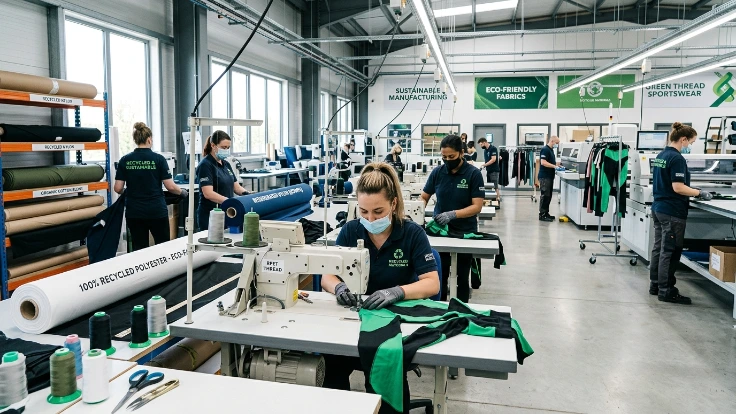
Quality Control in Private Label Apparel Manufacturing
Quality control protects the brand before products reach customers. It should not happen only at the end. It should be part of the full production process.
Quality control checks include:
- Fabric inspection
- Cutting accuracy
- Stitching quality
- Measurement checks
- Logo placement
- Print quality
- Embroidery quality
- Label placement
- Color consistency
- Packaging inspection
- Random finished-goods checks
The International Apparel Federation describes itself as the world’s leading federation for apparel manufacturers, associations, brands, retailers, and supporting companies, which reflects how apparel manufacturing operates across a large global network.
For private label buyers, quality control is what protects customer trust. A weak batch can damage reviews, returns, and repeat sales.
Minimum Order Quantity and Scaling
MOQ means minimum order quantity. It is the lowest quantity a manufacturer can produce for a specific product, color, or design. MOQ depends on fabric sourcing, printing setup, labor, cutting efficiency, and production planning.
Brands should understand that very low quantities may cost more per unit. Larger quantities usually reduce cost, but they also increase risk if the product has not been tested.
A good scaling path may look like this:
| Stage | Brand Action | Goal |
|---|---|---|
| Test stage | Small sample and limited production | Validate product |
| Launch stage | Focused first collection | Build customer response |
| Growth stage | Repeat bestsellers | Control cash flow |
| Expansion stage | Add related products | Grow product range |
| Wholesale stage | Increase quantities | Improve margin and supply |
Start with control. Scale after proof. A brand that orders too much too early may get stuck with inventory. A brand that orders too little without planning reorders may miss demand. The right manufacturer helps the buyer plan realistic production steps.
Private Label Sportswear Manufacturing
Sportswear is one of the strongest private label categories because demand exists across gyms, teams, clubs, schools, influencers, and online brands.
Private label sportswear may include:
- Gym T-shirts
- Compression wear
- Hoodies
- Shorts
- Joggers
- Tracksuits
- Training tops
- Team uniforms
- Performance jackets
Buyers developing sportswear products should consider the GHC Sportswear® men’s sportswear manufacturer and women’s sportswear manufacturer pages for category-specific production options.
Sportswear private label brands need strong fabric planning because customers expect comfort, sweat control, and durability. A basic cotton T-shirt may work for casual merchandise, but performance sportswear usually needs technical fabrics.
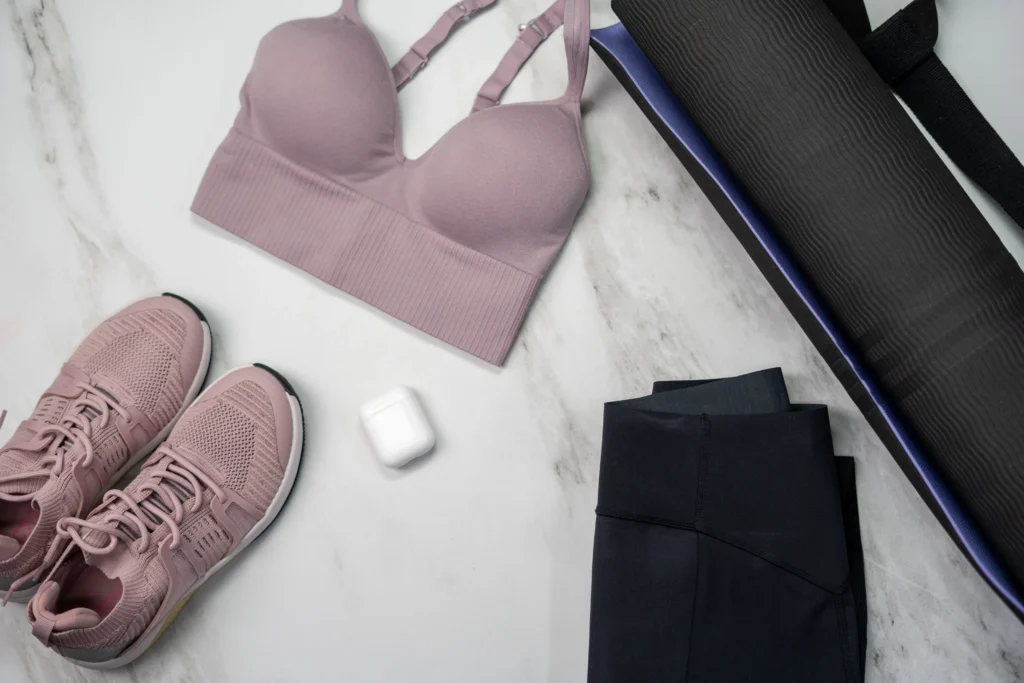
Private Label Yoga Wear Manufacturing
Yoga wear requires comfort, stretch, recovery, softness, and opacity. Customers expect the product to move with the body without becoming see-through or losing shape.
Private label yoga wear may include:
- Leggings
- Sports bras
- Yoga tops
- Biker shorts
- Matching sets
- Lightweight jackets
- Seamless-style collections
Brands entering this market should plan fit carefully because yoga and activewear buyers are sensitive to comfort. GHC Sportswear® also supports custom wholesale women’s yoga wear manufacturing for brands building yoga and activewear lines.
Yoga wear is also a branding-heavy category. Customers notice fit, fabric hand feel, waistband comfort, stitching, opacity, and color consistency quickly.
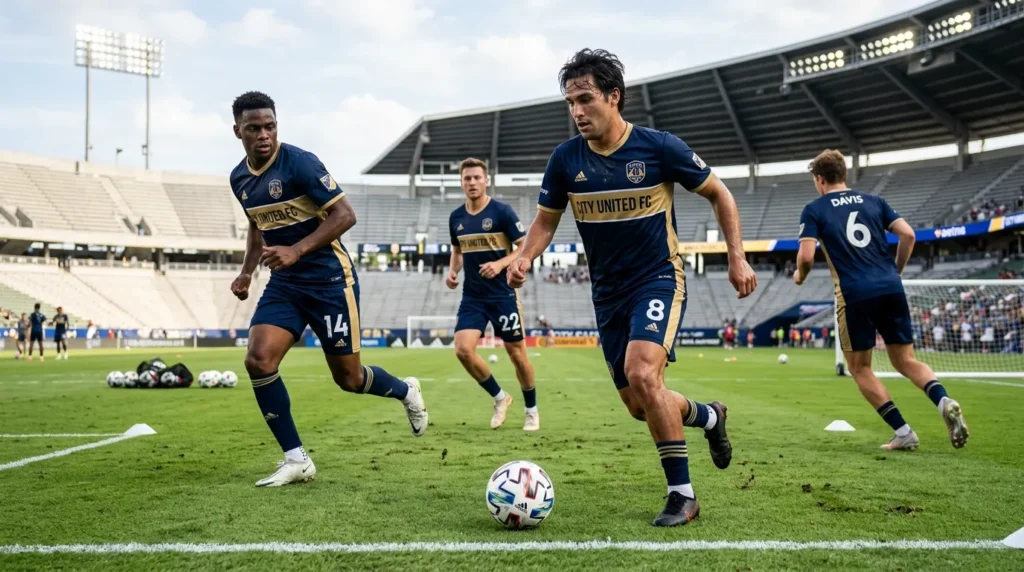
Private Label Sports Uniforms
Private label teamwear is useful for retailers, academies, clubs, school suppliers, and distributors. It allows buyers to sell custom sports uniforms under their own brand while working with a manufacturer for production.
Private label sports uniforms may include:
- Football kits
- Basketball uniforms
- Rugby jerseys
- Baseball uniforms
- Volleyball uniforms
- Cycling kits
- Training kits
- Warm-up apparel
GHC Sportswear® offers support through its custom wholesale sports uniforms manufacturer page for buyers focused on teamwear and bulk sports uniforms.
Teamwear buyers should pay special attention to reorders. Teams often add players, change numbers, or need replacement kits. A good private label system keeps artwork, colors, and sizing records ready for future production.
Private Label Equestrian Gear
Equestrian private label products can include rider apparel, stable wear, horse rugs, saddle pads, gloves, and tack-related items. This category requires extra attention to fit, durability, material quality, and product safety.
Equestrian buyers should use the Complete Horse Tack Guide for product education and the Custom Equestrian Gear Manufacturing Guide for B2B manufacturing planning.
For direct category production, GHC Sportswear® also provides a custom wholesale equestrian gear manufacturer page.
Equestrian private label brands should not treat rider apparel and horse gear as simple fashion products. Fit, comfort, durability, and practical use matter heavily.
Private Label Motorcycle Gear
Motorcycle private label products may include Kevlar hoodies, Kevlar jeans, riding jackets, motorcycle shirts, club vests, riding pants, and branded merch. This category requires strong material planning and honest product positioning.
Motorcycle buyers should use the Custom Motorcycle Gear Manufacturing Guide for full manufacturing education. GHC Sportswear® also provides a custom wholesale motorbike gear manufacturer page for direct motorcycle gear production.
Motorcycle private label buyers should also be careful with product claims. If a product is marketed as protective gear, the brand must understand the materials, construction, testing expectations, and market regulations involved.
Services Needed for Private Label Apparel
A private label project may require more than sewing. It may need product development, fabric sourcing, sampling, printing, packaging, and order handling.
GHC Sportswear® explains wider support on its services page. This matters because a startup may begin with simple apparel but later need stronger development support as the product range grows.
Common services include:
- Product development
- Fabric and trim sourcing
- Sampling
- Pattern development
- Size grading
- Printing
- Embroidery
- Labeling
- Packaging
- Bulk production
- Quality control
- Fulfillment support
A manufacturer with wider services can help brands avoid managing too many suppliers at once.
Common Mistakes Private Label Brands Make
New private label brands often make avoidable mistakes.
Common mistakes include:
- Launching too many products
- Choosing fabric only by price
- Skipping samples
- Using unclear logo files
- Not preparing size charts
- Ignoring packaging
- Not planning reorders
- Choosing a supplier only because they are cheap
- Making last-minute design changes
- Not checking quality before shipment
These mistakes create delays, higher costs, and customer complaints. A controlled process prevents most of them.
One of the biggest mistakes is trying to copy another brand without understanding the customer. Inspiration is fine. Blind copying is weak strategy. A private label brand needs its own positioning, product quality, and customer promise.
Cost Factors in Private Label Apparel Manufacturing
Private label cost depends on several factors.
| Cost Factor | Why It Matters |
|---|---|
| Fabric | Technical fabrics cost more than basic materials |
| Product complexity | More panels, pockets, zippers, or trims increase labor |
| Branding | Labels, patches, embroidery, and prints add steps |
| Packaging | Retail-ready packaging increases presentation cost |
| Quantity | Larger orders usually reduce unit cost |
| Sampling | Revisions affect development cost |
| Shipping | Weight, volume, and destination affect logistics |
| Quality level | Better construction costs more but reduces returns |
A smart buyer compares total value, not only unit price. Cheap production can become expensive if the product fails.
How to Choose a Private Label Manufacturer
A good private label apparel manufacturer should understand product development, communication, sampling, bulk production, branding, and repeat orders.
Before choosing a manufacturer, ask:
- Can you develop samples before bulk?
- Can you source fabrics and trims?
- Can you customize labels and packaging?
- Can you support multiple product categories?
- Can you repeat the same product later?
- What quality control checks do you perform?
- Can you support wholesalers and distributors?
- How do you handle revisions?
- What is the production timeline?
- Can you help with scaling?
Buyers can learn more about company background through the GHC Sportswear® about us page.
Private Label Apparel Manufacturing Checklist
| Step | What to Prepare |
|---|---|
| Brand plan | Customer, product category, price level |
| Product selection | First launch items and future expansion |
| Specifications | Fabric, fit, measurements, trims |
| Branding | Logo, labels, patches, packaging |
| Sampling | Prototype, revisions, final approval |
| Size range | Size chart and grading |
| Production | Quantity, colors, timeline |
| Quality control | Measurements, stitching, prints, labels |
| Packaging | Retail or wholesale packing |
| Reorder plan | Product records, artwork, material references |
This checklist should be used before starting any private label order.
Launch Plan for a Private Label Apparel Brand
A simple launch plan helps a new brand avoid confusion.
First, choose one target customer. Do not try to sell to everyone. A product for gym users, riders, sports teams, and motorcycle clubs cannot all be the same.
Second, choose a focused product range. Three strong products are better than ten weak ones.
Third, approve samples properly. Wear them, test them, wash them, and check branding.
Fourth, prepare content before launch. Product photos, size charts, descriptions, care instructions, and packaging should be ready before stock arrives.
Fifth, collect customer feedback after launch. Use that feedback to improve the next production run.
Private label growth is not only about the first order. It is about turning the first order into a repeatable system.
How Private Label Supports Long-Term Brand Growth
Private label manufacturing helps brands move from idea to real product ownership. Instead of reselling generic products, the brand builds its own identity. Over time, that identity becomes a business asset.
A strong private label system supports:
- Better margins
- Repeat customers
- Brand recognition
- Product expansion
- Wholesale opportunities
- Retail partnerships
- Stronger customer loyalty
However, private label success depends on consistency. If products change randomly, customers lose trust. If fit is stable, quality is reliable, and branding is consistent, the brand becomes easier to grow.
Website Cluster Strategy for Private Label Content
This pillar should become the central page for all private label and apparel manufacturing articles. Supporting articles should link back here whenever they discuss launching a brand, MOQ, sampling, branding, packaging, fulfillment, product planning, fabric sourcing, or OEM/ODM manufacturing.
Future supporting articles can include:
- How to Start a Sportswear Brand
- OEM vs ODM Apparel Manufacturing
- How MOQ Affects Small Clothing Brands
- Why Sampling Matters in Apparel Production
- How Fabric Choice Impacts Garment Quality
- Apparel Branding Guide
- Apparel Packaging Guide
- How Bulk Apparel Production Works
- What Buyers Look for in Clothing Manufacturers
- Why Clothing Brands Fail During Their First Production Run
Each supporting article should link to this pillar, one related supporting article, the most relevant category page, and the contact page or CTA.
Need a Reliable Private Label Apparel Manufacturing Partner?
GHC Sportswear® supports startups, apparel brands, wholesalers, distributors, retailers, gyms, clubs, academies, equestrian businesses, motorcycle brands, and merchandise companies with private label apparel manufacturing.
We support:
- Private label sportswear
- Custom teamwear
- Gym wear and activewear
- Yoga wear
- Equestrian apparel and gear
- Motorcycle apparel
- Branded merchandise
- Product development
- Sampling
- Fabric and trim sourcing
- Printing and embroidery
- Custom labels and packaging
- Bulk production
- Quality control
- Repeat manufacturing
If you are building a private label apparel brand, expanding your product range, or sourcing bulk production, GHC Sportswear® can help you turn your idea into a scalable product line.
To discuss private label apparel manufacturing, contact GHC Sportswear® here: Contact GHC Sportswear®.
WhatsApp: https://wa.me/ghcsportswear
Email: info@ghcsportswar.com
Final Thoughts
Private label apparel manufacturing gives startups and established businesses a practical way to build branded products without owning a factory. It allows brands to control identity, packaging, product direction, and customer experience while using the manufacturer’s production systems.
The strongest private label brands do not start with random products. They start with a clear customer, a focused product range, strong sampling, reliable fabrics, consistent sizing, controlled branding, and a reorder plan.
GHC Sportswear® supports private label buyers across sportswear, teamwear, yoga wear, equestrian gear, motorcycle apparel, and branded merchandise. With the right planning and manufacturing partner, private label apparel can become more than a product launch. It can become a long-term brand system.