Sublimation Printing: Best Uses for Custom Sportswear and Apparel
Sublimation printing is one of the most important decoration methods in custom sportswear, team uniforms, activewear, cycling apparel, running shirts, esports jerseys, and polyester performance clothing. It is popular because it can create bright, full-color designs that become part of the fabric instead of sitting as a thick layer on top.
For athletes, this means the garment can stay lightweight and comfortable.
For brands, teams, clubs, academies, wholesalers, distributors, and private label businesses, sublimation printing gives strong design freedom. It allows all-over artwork, gradients, patterns, sponsor logos, names, numbers, and detailed graphics to be built into the garment design.
But sublimation printing is not the right method for every product. It works best on polyester or polyester-rich fabrics. It does not perform well on pure cotton. It usually needs white or light fabric for the best color result. It also requires good artwork preparation, heat control, fabric testing, and production planning.
This guide explains how sublimation printing works, when to use it, where it performs best, what limitations buyers should understand, and how GHC Sportswear® can help B2B buyers develop custom sublimation sportswear and apparel.
What Is Sublimation Printing?
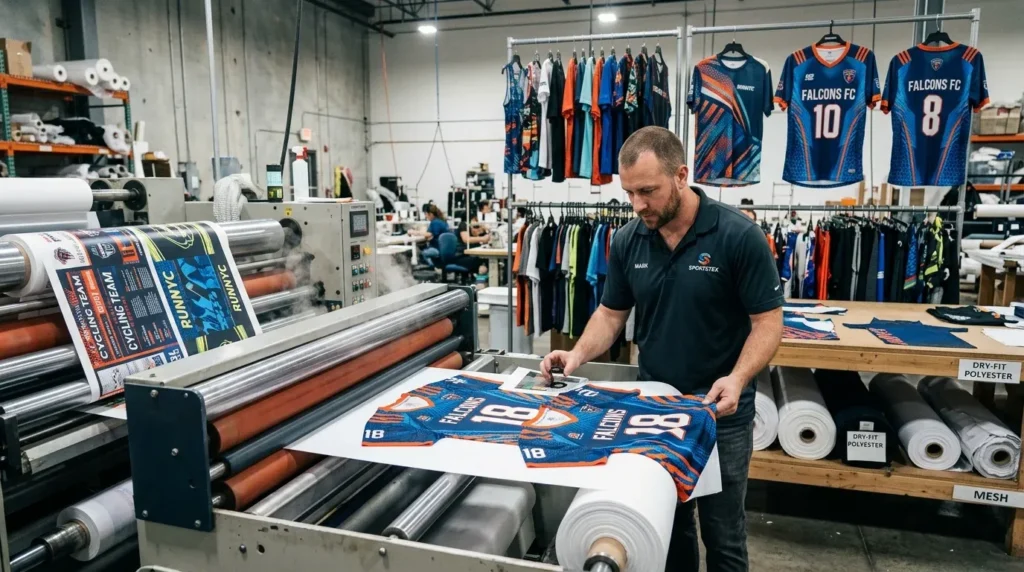
Sublimation printing is a heat-based digital printing method used to transfer dye onto polyester fabric or polymer-coated surfaces. The design is first printed onto sublimation transfer paper using special sublimation inks. Then heat and pressure transfer the dye into the polyester fibers.
Unlike screen printing or vinyl transfer, sublimation does not place a heavy print layer on top of the fabric. The dye bonds with the fiber structure, which gives the print a smooth and lightweight feel.
A basic sublimation printing process includes:
- Preparing the digital design
- Printing the artwork onto sublimation transfer paper
- Placing the transfer paper on polyester fabric
- Applying heat and pressure with a heat press or calendar machine
- Allowing the fabric to cool
- Removing the transfer paper
- Inspecting the print, color, and alignment
Russell Printers explains that sublimation works on polyester or polymer-coated materials because the dye needs a compatible surface to bond with. Their guide on dye sublimation printing gives a simple overview of the process.
For custom sportswear, the key point is this: sublimation printing is strongest when the product is made from polyester performance fabric.
Why Sublimation Printing Matters in Sportswear
Sportswear needs printing methods that do not interfere with movement, breathability, and comfort. A heavy print layer can feel stiff, trap heat, or crack after repeated use.
Sublimation printing solves many of these problems because the design becomes part of the fabric. This makes it useful for performance garments where comfort matters.
It is commonly used for:
- Football jerseys
- Basketball uniforms
- Cricket shirts
- Rugby training tops
- Cycling jerseys
- Running shirts
- Esports jerseys
- Tracksuits
- Training kits
- Polyester T-shirts
- Team uniforms
- All-over print apparel
- Custom activewear
For team sports, sublimation printing is especially useful because it allows complete design control. A team can include logos, patterns, sponsor marks, numbers, names, and color gradients without adding multiple heavy print layers.
GHC Sportswear® supports custom teamwear and uniform production through its custom wholesale sports uniforms manufacturer page, where buyers can explore relevant categories for team uniforms and sportswear manufacturing.
How Sublimation Printing Works in Production
A strong sublimation result depends on process control. The method may look simple, but small production errors can affect the final product.
Artwork preparation
The design starts as a digital file. Sublimation printing is excellent for complex artwork, but the file must be prepared correctly.
Before production, buyers should confirm:
- Artwork resolution
- Print size
- Color profile
- Garment pattern layout
- Logo placement
- Name and number placement
- Sponsor positions
- Seam allowance
- Panel matching
- Final mockup approval
This is especially important for all-over print uniforms. If the artwork is not aligned correctly, patterns may not match across seams or panels.
Fabric selection
Sublimation printing works best on polyester. The higher the polyester content, the stronger and more vibrant the result usually becomes.
Common fabric choices include:
- 100% polyester jersey
- Polyester mesh
- Polyester-spandex blends
- Recycled polyester
- Polyester interlock
- Polyester performance knit
- Polyester fleece for selected products
Polyester blends can work, but color strength may be reduced if polyester content is too low. Natural fabrics such as pure cotton do not produce proper sublimation results because the dye does not bond with cotton the same way.
Transfer printing
The design is printed onto special sublimation paper. Good paper, ink, and printer settings matter. Poor transfer paper can cause dull colors, blurry edges, or uneven results.
Heat pressing
Heat and pressure activate the sublimation dye and transfer it into the polyester fibers. The exact time, temperature, and pressure depend on the fabric, machine, ink, and production setup.
Incorrect heat settings can cause:
- Faded colors
- Ghosting
- Blurry print edges
- Fabric damage
- Color shifts
- Uneven transfer
- Poor alignment
Cutting and sewing
For many sportswear products, sublimation is done before sewing. The fabric panels are printed first, then cut and stitched into the final garment.
This allows full control over artwork placement, but it also requires accurate pattern planning.
Benefits of Sublimation Printing
Sublimation printing offers several advantages for custom apparel buyers, especially in performance sportswear.
1. Full-color design freedom
Sublimation printing is excellent for detailed, multi-color designs. It can handle gradients, shadows, patterns, photographic elements, and complex graphics.
This makes it useful for:
- Modern football kits
- Esports jerseys
- Cycling apparel
- Running shirts
- Basketball uniforms
- Promotional teamwear
- Custom sports collections
Unlike screen printing, sublimation does not need a separate screen for every color.
2. Lightweight print feel
Because the dye bonds with the polyester fiber, the print does not create a thick surface layer. This helps keep the garment lightweight.
For athletes, this matters during training and competition. A lightweight jersey is more comfortable than a garment with heavy print coverage.
3. Strong wash performance on polyester
Sublimation prints are known for strong durability on polyester because the design becomes part of the fabric. The print is less likely to crack or peel compared with surface-applied methods.
This is useful for team uniforms and activewear that are washed often.
4. Good for all-over printing
All-over printing is one of the biggest advantages of sublimation. Designs can cover the full garment, including front, back, sleeves, side panels, and details.
This gives brands and teams more creative control.
5. Practical for team personalization
Names, numbers, logos, and sponsor marks can be included in the artwork during printing. This reduces the need for multiple decoration steps.
For teams, clubs, and academies, this can make production cleaner and more consistent.
Limitations of Sublimation Printing
Sublimation printing is powerful, but it has clear limits.
It works best on polyester
This is the main limitation. Sublimation printing needs polyester or polymer-coated surfaces. It does not work properly on pure cotton.
If a buyer wants cotton hoodies, cotton T-shirts, or natural-fiber lifestyle apparel, DTG printing, screen printing, embroidery, or heat transfer printing may be better.
For cotton-rich products, the DTG printing guide is a more relevant internal resource.
It works best on white or light fabric
Sublimation dye is transparent. It does not print white ink. This means colors show best on white or light polyester fabric.
Dark fabrics are not ideal because the design will not appear correctly.
Color matching needs testing
Sublimation colors can shift depending on fabric, ink, heat, pressure, and printer settings. Brands with strict logo colors should request samples before bulk production.
It may not suit every stretch fabric
Polyester-spandex blends can be used, but high heat can affect stretch behavior if the fabric is not tested. Yoga wear, compression wear, and activewear with high elastane content need careful testing.
Setup is different from basic heat transfer
Sublimation printing requires the right printer, inks, paper, heat equipment, and fabric. It is not the same as basic heat transfer vinyl.
Best Fabrics for Sublimation Printing
Fabric choice decides how well sublimation printing performs.
| Fabric Type | Sublimation Suitability | Best Use |
|---|---|---|
| 100% polyester | Excellent | Jerseys, uniforms, running shirts |
| Polyester mesh | Excellent | Hot-weather sportswear and team kits |
| Polyester interlock | Very good | Jerseys, tracksuits, training wear |
| Recycled polyester | Very good | Sustainable sportswear and activewear |
| Polyester-spandex blend | Good with testing | Leggings, fitted tops, activewear |
| Cotton-poly blend | Limited | Muted results if polyester content is low |
| 100% cotton | Poor | Use DTG or screen printing instead |
| Nylon | Requires testing | Not always suitable |
| Polyester fleece | Depends | Selected hoodies and warm-up products |
For B2B buyers, the safest approach is to test the fabric before approving bulk production.
GHC Sportswear® can help brands choose the right fabric and printing method through its custom sportswear manufacturing guide and broader services page.
Best Products for Sublimation Printing
Sublimation printing is strongest when used on polyester performance apparel.
| Product | Sublimation Fit | Notes |
|---|---|---|
| Football jerseys | Excellent | Full-color team designs, names, numbers |
| Basketball uniforms | Excellent | Lightweight and breathable prints |
| Cycling jerseys | Excellent | All-over graphics and sponsor logos |
| Running shirts | Excellent | Lightweight performance fabric |
| Esports jerseys | Excellent | Detailed graphics and team identity |
| Tracksuits | Good | Works on polyester panels |
| Training tops | Excellent | Strong for team and gym use |
| Yoga apparel | Depends | Polyester-spandex must be tested |
| Hoodies | Depends | Better on polyester fleece than cotton |
| Cotton T-shirts | Poor | Use DTG or screen printing |
This is why the method should be chosen after the product type is confirmed.
Sublimation Printing vs Screen Printing
Sublimation printing and screen printing are both useful, but they solve different problems.
| Area | Sublimation Printing | Screen Printing |
|---|---|---|
| Best fabric | Polyester | Cotton, blends, and selected synthetics |
| Best design type | Full-color, detailed, all-over designs | Bold logos and simple graphics |
| Print feel | Lightweight, part of fabric | Ink layer on fabric surface |
| Order flexibility | Good for detailed team designs | Good for bulk simple designs |
| Color gradients | Strong | More complex and costly |
| Dark garments | Limited | Better with correct inks |
| Cotton garments | Poor | Strong |
| Best use | Sports uniforms and polyester apparel | T-shirts, hoodies, basic teamwear |
For a deeper comparison, use the internal guide: Screen Printing vs Sublimation.
Sublimation Printing vs Heat Transfer Printing
Sublimation printing is technically a heat-based transfer process, but in apparel production it is usually treated separately because the dye bonds with polyester fibers.
| Area | Sublimation Printing | Heat Transfer Printing |
|---|---|---|
| Process | Dye transfers into polyester fiber | Design bonds to garment surface |
| Best fabric | Polyester | Depends on transfer type |
| Print feel | Very light | Can be light or thick |
| Best use | Full polyester teamwear | Names, numbers, logos, mixed products |
| Cotton use | Not suitable | Some transfers work well |
| All-over print | Excellent | Limited depending on method |
| Stretch wear | Needs testing | Needs flexible transfers |
For names, numbers, and mixed-fabric branding, heat transfer printing may be more practical. For full polyester sports uniforms, sublimation printing is often stronger.
Sublimation Printing for Sports Teams and Clubs
Sports teams often need uniforms that are lightweight, durable, and visually strong. Sublimation printing is useful because it allows all design elements to be included in one print process.
A sublimated team uniform can include:
- Team logo
- Sponsor logos
- Player names
- Player numbers
- Club colors
- Sleeve graphics
- Side panels
- Gradient patterns
- Home and away designs
- Academy branding
This is useful for football teams, basketball teams, cricket teams, rugby clubs, running clubs, cycling teams, esports teams, and school sports programs.
For teams, sublimation printing also supports repeat designs. Once the artwork and sizing are approved, future orders can be easier to manage.
Sublimation Printing for Activewear Brands
Activewear brands use sublimation printing for performance products where color, pattern, and lightweight feel matter.
Relevant products include:
- Training shirts
- Gym tops
- Leggings
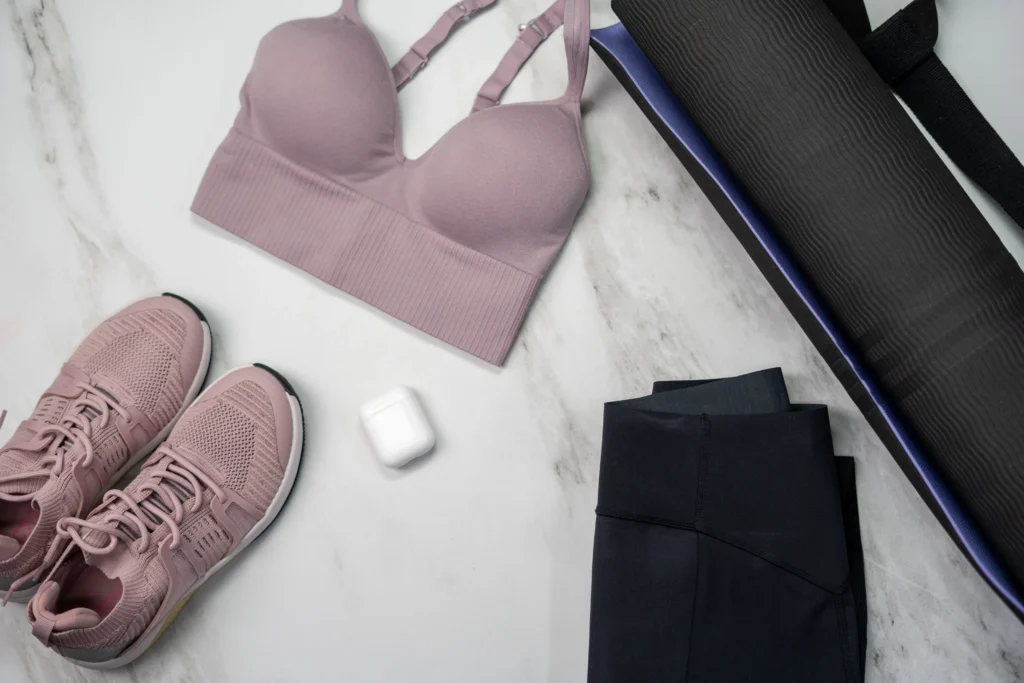
- Sports bras
- Bike shorts
- Running apparel
- Matching sets
- Performance crop tops
- Lightweight jackets
For women’s activewear, sublimation works best when the fabric is polyester-rich and tested for stretch, opacity, and recovery. Buyers can explore related product categories on the custom wholesale women’s sportswear manufacturer page.
For men’s activewear, sublimation is often useful for gym shirts, training tops, running shirts, and team apparel. Related categories are available on the custom wholesale men’s sportswear manufacturer page.
Sublimation Printing for Yoga Wear
Yoga wear needs softness, stretch, opacity, and comfort. Sublimation printing can work for yoga apparel if the fabric is polyester-rich and tested carefully.
It may be suitable for:
- Printed leggings
- Sports bras
- Crop tops
- Tank tops
- Matching yoga sets
- Studio apparel
However, buyers should test whether the design fades or stretches poorly during movement. A print may look strong when flat but become lighter when stretched.
For yoga-specific apparel, GHC Sportswear® buyers can review the custom yoga apparel guide and the custom wholesale women’s yoga wear manufacturer page.
Sublimation Printing and Sustainable Sportswear
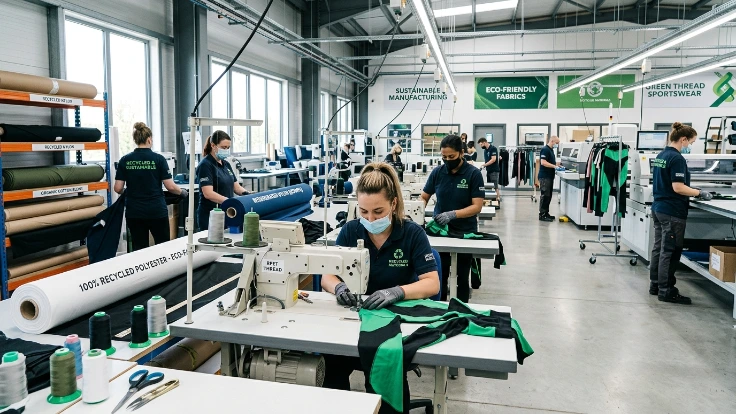
Sublimation printing can support cleaner production in some ways because it can reduce heavy ink layers and works well for made-to-order or team-specific apparel. But it is not automatically sustainable.
A realistic sustainability strategy should consider:
- Recycled polyester options
- Efficient fabric cutting
- Lower failed-print rates
- Durable products
- Better order planning
- Responsible ink and chemical sourcing
- Reduced overproduction
- Smarter packaging
OEKO-TEX® explains that ECO PASSPORT is a certification system for textile chemicals, colorants, and auxiliaries, while STANDARD 100 tests textiles for harmful substances. Brands can review the OEKO-TEX® ECO PASSPORT standard and OEKO-TEX® STANDARD 100 when evaluating safer textile inputs and finished product claims.
For buyers interested in responsible production, the related internal guide Sustainable Sportswear Manufacturing is also useful.
Quality Control Checklist for Sublimation Printing
Before approving a sublimation order, buyers should check the full process.
| Quality Area | What to Check |
|---|---|
| Fabric | Polyester content, GSM, stretch, hand feel |
| Artwork | Resolution, layout, panel matching |
| Colors | Logo accuracy, brightness, shade consistency |
| Print placement | Names, numbers, sponsors, panels |
| Heat settings | Temperature, pressure, time |
| Ghosting | Blurry edges or shifted artwork |
| Stretch | Print behavior when fabric stretches |
| Wash test | Fading, bleeding, color change |
| Sewing | Panel alignment and seam matching |
| Reorder plan | Repeat colors and artwork consistency |
This checklist helps prevent common bulk production problems.
Common Sublimation Printing Mistakes
Many sublimation problems happen because the method is chosen without checking the fabric or use case.
Common mistakes include:
- Using low-polyester fabric
- Trying to sublimate pure cotton
- Printing on dark fabric
- Using low-resolution artwork
- Ignoring panel alignment
- Skipping sample approval
- Not testing stretch fabrics
- Ignoring color shifts
- Not checking sponsor logo placement
- Using the wrong heat settings
- Approving bulk production without wash testing
The biggest mistake is treating sublimation printing as a universal solution. It is not. It is a strong method for polyester apparel, especially performance sportswear, but not for every garment.
When Should Brands Choose Sublimation Printing?
Sublimation printing is a strong choice when:
- The garment is polyester or polyester-rich
- The design is full-color
- The buyer wants all-over printing
- The product is sportswear or teamwear
- The print should feel lightweight
- The design includes gradients or patterns
- Names and numbers are part of the artwork
- The product will be washed frequently
- The buyer wants strong visual branding
It may not be the best choice when:
- The garment is cotton
- The fabric is dark
- The product needs embroidery-style branding
- The artwork is only a simple one-color logo
- The fabric cannot handle heat
- The buyer needs exact color matching without sampling
- The product uses high-stretch fabric without testing
A good manufacturer should explain these points before production begins.
How GHC Sportswear® Supports Sublimation Printing Projects
GHC Sportswear® supports brands, teams, clubs, academies, retailers, wholesalers, distributors, and private label businesses with sublimation printing and custom sportswear manufacturing.
GHC Sportswear® can help with:
- Sublimated sports uniforms
- Football jerseys
- Basketball uniforms
- Cricket shirts
- Running apparel
- Cycling jerseys
- Esports jerseys
- Tracksuits
- Training tops
- Activewear
- Custom logos
- Player names and numbers
- Sponsor placement
- Fabric selection
- Product sampling
- Bulk production
- Private label support
Buyers can explore wider product categories on the GHC Sportswear® products page and review apparel production support through the GHC Sportswear® services page.
For more learning, buyers can also visit the GHC Sportswear® blogs page.
Need Sublimation Printing for Your Team or Brand?
If you are developing polyester team uniforms, sportswear, training kits, esports jerseys, running apparel, cycling gear, or private label activewear, GHC Sportswear® can help you choose the right sublimation printing approach.
GHC Sportswear® works with:
- Sportswear brands
- Sports teams
- Clubs
- Academies
- Schools
- Esports teams
- Wholesalers
- Distributors
- Retailers
- Fitness brands
- Private label businesses
- Team uniform suppliers
GHC Sportswear® provides support for fabric selection, artwork layout, names and numbers, sponsor logos, sampling, private labels, packaging, size grading, and bulk production.
For B2B buyers, the goal is not only to print a bright design. The goal is to create sublimated apparel that fits well, feels comfortable, performs in real use, and can be produced consistently.
Contact GHC Sportswear® for sublimation printing and custom sportswear manufacturing support:
WhatsApp: https://wa.me/ghcsportswear
Email: info@ghcsportswar.com
Contact page: GHC Sportswear® contact us
Conclusion
Sublimation printing is one of the best methods for custom polyester sportswear and performance apparel. It creates vibrant, detailed designs that become part of the fabric, making it useful for team uniforms, jerseys, training tops, cycling apparel, esports jerseys, and all-over print activewear.
Its biggest strengths are full-color design freedom, lightweight print feel, strong polyester compatibility, and all-over printing capability.
Its biggest limitations are fabric restrictions, light-color requirements, and the need for careful testing on stretch fabrics.
For brands, teams, clubs, academies, wholesalers, distributors, retailers, and private label businesses, sublimation printing can be a strong production method when the product is planned correctly.
GHC Sportswear® helps B2B buyers select the right fabric, artwork setup, print method, and production process so custom sportswear looks professional, feels comfortable, and performs in real use.
Related Blog:
Screen Printing vs Sublimation: https://ghcsportswear.com/screen-printing-vs-sublimation/
Heat Transfer Printing: https://ghcsportswear.com/heat-transfer-printing/
Sustainable Sportswear Manufacturing: https://ghcsportswear.com/sustainable-sportswear-manufacturing/