DTG Printing: A Practical Guide for Custom Apparel Brands
DTG printing has become one of the most useful digital printing methods for custom apparel brands, startups, retailers, teams, clubs, event organizers, and private label businesses. It gives buyers a way to print detailed designs directly onto garments without the heavy setup process required for traditional screen printing.
For brands that want flexibility, DTG printing can be a practical option.
It works especially well when a business needs small batches, personalized designs, sample testing, detailed artwork, or fast product development. Instead of creating separate screens for each color, the design is printed from a digital file directly onto the garment using specialized textile inkjet technology.
That makes DTG printing valuable for modern apparel businesses that do not want to hold too much stock or commit to large runs before testing demand.
However, DTG printing is not perfect for every product. It works best on cotton and cotton-rich garments. It can cost more per piece than screen printing for large bulk orders. Print durability depends on pretreatment, curing, ink quality, fabric type, and wash care. For B2B buyers, the best decision is not simply choosing the newest method. The best decision is choosing the right print method for the product, fabric, artwork, order quantity, and customer use.
This guide explains how DTG printing works, where it performs well, where it has limits, and how brands can use it correctly in custom apparel manufacturing.
What Is DTG Printing?
DTG printing means direct-to-garment printing. It is a digital textile printing method where artwork is printed directly onto fabric using textile inkjet technology.
The process is similar to printing a digital image on paper, but the printer, ink, fabric preparation, and curing process are designed for garments.
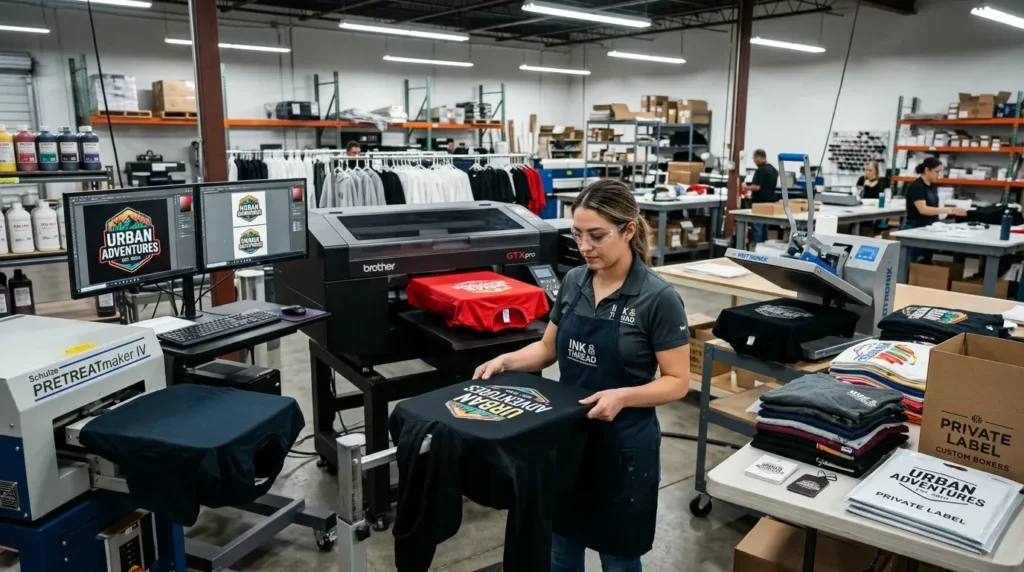
A basic DTG printing workflow includes:
- Preparing the artwork file
- Pretreating the garment when needed
- Loading the garment onto the printer platen
- Printing the design directly onto the fabric
- Heat curing the ink
- Checking print quality before packing
Kornit explains that DTG printing is useful for detailed, full-color designs and custom on-demand apparel because it does not require the same setup process as screen printing. You can read their overview of DTG printing vs screen printing for a clear industry comparison.
For apparel buyers, the main advantage is flexibility. A brand can test designs, print limited drops, personalize garments, or create samples before committing to larger production.
Why DTG Printing Matters for Custom Apparel
Custom apparel is moving toward smaller collections, faster testing, more personalization, and lower inventory risk. DTG printing fits this shift because it allows brands to print detailed designs without creating screens for every color.
This matters for:
- Clothing startups
- Private label apparel brands
- Event merchandise suppliers
- Online stores
- Sportswear brands
- Fitness brands
- Team merchandise sellers
- Retailers testing new designs
- Artists and designers
- Promotional apparel businesses
A startup may want 25 printed T-shirts to test a design. A gym may need personalized member apparel. A fashion brand may want a limited-edition graphic hoodie. A sports club may need event merchandise with detailed artwork.
In these situations, DTG printing can be more practical than traditional methods.
GHC Sportswear® supports custom apparel manufacturing for businesses that need flexible production, sampling, branding, and private label support. Brands can explore the wider production approach through the GHC Sportswear® custom apparel manufacturing guide.
How DTG Printing Works in Production
DTG printing may look simple from the outside, but the quality depends on several production steps.
Artwork preparation
The design starts as a digital file. High-resolution artwork gives better results. Poor-quality files can lead to blurry prints, weak details, or color problems.
Before production, buyers should confirm:
- Artwork resolution
- Print size
- Color profile
- Transparent background
- Placement
- Garment color
- Final mockup approval
Detailed artwork is one of the strengths of DTG printing. It can handle gradients, shadows, small details, and multi-color graphics better than many traditional methods.
Garment selection
The fabric matters. DTG printing usually performs best on cotton or cotton-rich garments because water-based pigment inks bond more effectively with cotton fibers.
Grand View Research notes that cotton has strong compatibility with DTG technology because cotton fibers absorb water-based inks well, helping produce vibrant prints. Their direct-to-garment printing market report also highlights cotton as a major material segment for DTG.
Common DTG-friendly products include:
- Cotton T-shirts
- Cotton hoodies
- Sweatshirts
- Long-sleeve shirts
- Tote bags
- Premium jersey tops
- Casual apparel
- Lifestyle sportswear
DTG can work on some blends, but results may vary. High-polyester fabrics are usually not the best choice for DTG. For polyester sports uniforms, sublimation may be a better option.
Pretreatment
Pretreatment is one of the most important parts of DTG printing, especially on dark garments. It helps the ink sit correctly on the fabric and improves color brightness.
DuPont’s DTG process guidelines explain that pretreatment is used for producing high-quality digital prints on light and dark cotton or cotton-blend garments with pigment inks. Their DTG pigment ink and pretreatment guide shows how important this step is in professional production.
If pretreatment is poor, the print may look dull, uneven, or weak after washing.
Printing
Once the garment is ready, the printer applies the ink directly onto the fabric. For dark garments, a white ink base may be printed first, followed by color layers.
The print quality depends on:
- Printer calibration
- Ink quality
- Pretreatment consistency
- Garment surface
- Artwork resolution
- Print settings
- Operator skill
Curing
After printing, the garment must be heat cured. Curing helps set the ink so the print can better withstand washing and wear.
Poor curing can lead to fading, cracking, or poor wash performance. This is why quality control matters.
Benefits of DTG Printing for Apparel Brands
DTG printing has several practical benefits for modern apparel businesses.
1. Strong detail for complex artwork
DTG printing is useful for designs with gradients, shading, small details, photographs, and multiple colors. Screen printing can also produce excellent results, but complex artwork may require more setup and more screens.
DTG allows brands to print detailed artwork without separating every color into a separate screen.
This is useful for:
- Graphic T-shirts
- Fashion artwork
- Artist merchandise
- Event apparel
- Limited-edition drops
- Personalized products
- Photo-style designs
2. Flexible order quantities
DTG printing is useful when buyers need small runs or design testing. Since there is no screen setup, it can be practical for low quantities and one-off designs.
This helps businesses avoid overproduction.
A new brand can test five designs in small quantities before deciding which one deserves bulk production. That is much safer than producing hundreds of units without knowing customer demand.
3. Good for sampling and product testing
For private label brands, sampling is important. DTG printing allows buyers to test artwork placement, color direction, garment quality, and customer response before scaling.
A brand can test:
- Logo placement
- Graphic size
- Color options
- Product photography
- Customer demand
- Retail pricing
- Packaging style
This makes DTG printing useful as part of product development.
4. Soft print feel
DTG prints usually feel softer than thick ink applications because the ink is printed into the fabric surface rather than sitting as a heavy layer. The final feel depends on ink, fabric, pretreatment, and curing.
For fashion and lifestyle apparel, soft hand feel matters because customers want comfort.
5. Good for personalization
DTG printing works well for personalized apparel because every print can be different without changing screens.
This is useful for:
- Names
- One-off graphics
- Team gifts
- Event shirts
- Creator merchandise
- Online custom orders
- Limited drops
- Retail personalization
Limits of DTG Printing
DTG printing is useful, but it is not the best method for every order.
It is not always best for large bulk orders
For large quantities with simple designs, screen printing may be more cost-effective. Screen printing has setup costs, but once the screens are ready, the cost per unit can become lower on bulk orders.
DTG printing may be better for small runs and detailed designs. Screen printing may be better for large bulk orders with simple artwork.
It works best on cotton
DTG printing usually performs best on cotton and cotton-rich garments. It may not give the same result on polyester, nylon, or some performance fabrics.
For polyester sportswear, buyers may need sublimation, DTF, screen printing, or heat transfer depending on the product.
GHC Sportswear® can help buyers compare production methods through its GHC Sportswear® services page.
Pretreatment must be controlled
Pretreatment can improve print quality, but poor pretreatment can create stains, uneven print areas, or poor wash results. This is why production consistency matters.
Dark garments need more process control
Printing on dark garments often requires a white underbase. This adds time, ink usage, and quality control requirements.
Wash durability depends on process quality
DTG durability is not only about the printer. It depends on fabric, pretreatment, ink, curing, washing, and garment care. Brands should test samples before bulk production.
A research study on pigment ink printing for cotton found that surface treatment can affect color strength and wet-rubbing fastness, which supports the importance of pretreatment and chemistry in digital textile printing. The study is available through ScienceDirect’s textile pigment ink research.
DTG Printing vs Screen Printing
DTG printing and screen printing both have value. The right method depends on the project.
| Factor | DTG Printing | Screen Printing |
|---|---|---|
| Best for | Small runs, detailed artwork, personalization | Bulk orders, simple bold designs |
| Setup | Low setup compared to screens | Screens required for each color |
| Artwork detail | Strong for complex designs | Strong for simple graphics |
| Fabric | Best on cotton and cotton blends | Works on many fabrics with correct ink |
| Cost | Better for low quantities | Better for larger quantities |
| Print feel | Often softer | Can be thicker depending on ink |
| Speed | Good for quick small orders | Efficient after setup for bulk |
| Best buyer | Startups, creators, retail testing | Teams, wholesalers, large campaigns |
A buyer should not choose DTG printing only because it is modern. The buyer should choose it when the design, order size, fabric, and business model fit the method.
For a deeper article comparison, add this internal link after publishing: Screen Printing vs. Sublimation: Which Is Better for Custom Sportswear?
Best Products for DTG Printing
DTG printing is best suited for products where cotton content, detailed designs, and small-batch flexibility matter.
| Product | DTG Suitability | Notes |
|---|---|---|
| Cotton T-shirts | Excellent | Best common use case |
| Hoodies | Good | Works well if surface is smooth |
| Sweatshirts | Good | Best on cotton-rich fleece |
| Tote bags | Good | Works on cotton canvas |
| Kidswear | Good | Soft feel can be useful |
| Polyester jerseys | Limited | Sublimation may be better |
| Performance sportswear | Depends | Fabric testing required |
| Caps | Limited | Shape and surface can be difficult |
| Workwear | Depends | Durability needs testing |
For sportswear and activewear categories, buyers can explore GHC Sportswear® product options through the GHC Sportswear® products page.
DTG Printing for Private Label Apparel
DTG printing can be useful for private label apparel businesses because it helps reduce inventory risk.
A private label brand can use DTG printing to:
- Test new artwork
- Launch small capsule drops
- Produce limited editions
- Offer personalized products
- Create influencer merchandise
- Validate demand before bulk production
- Print designs under its own label
For startups, this is valuable. Instead of ordering large stock, they can test what customers actually buy.
GHC Sportswear® supports private label buyers with product development, labels, branding, packaging, and production planning. A deeper overview is available in the private label apparel manufacturing guide.
DTG Printing for Sportswear and Team Merchandise
DTG printing is not always the main choice for performance team uniforms, especially if the garment is polyester. Sublimation is often better for full-color polyester jerseys and team kits.
But DTG printing can still be useful for sports-related merchandise.
Good sportswear uses include:
- Team fan T-shirts
- Cotton club shirts
- Event merchandise
- Gym brand shirts
- Coach apparel
- Training lifestyle tops
- Supporter apparel
- Limited-edition sports graphics
For actual sports uniforms, buyers should compare DTG with sublimation, screen printing, embroidery, and heat transfer.
Teams and sportswear buyers can review relevant uniform categories on the custom wholesale sports uniforms manufacturer page.
DTG Printing for Men’s and Women’s Sportswear Brands
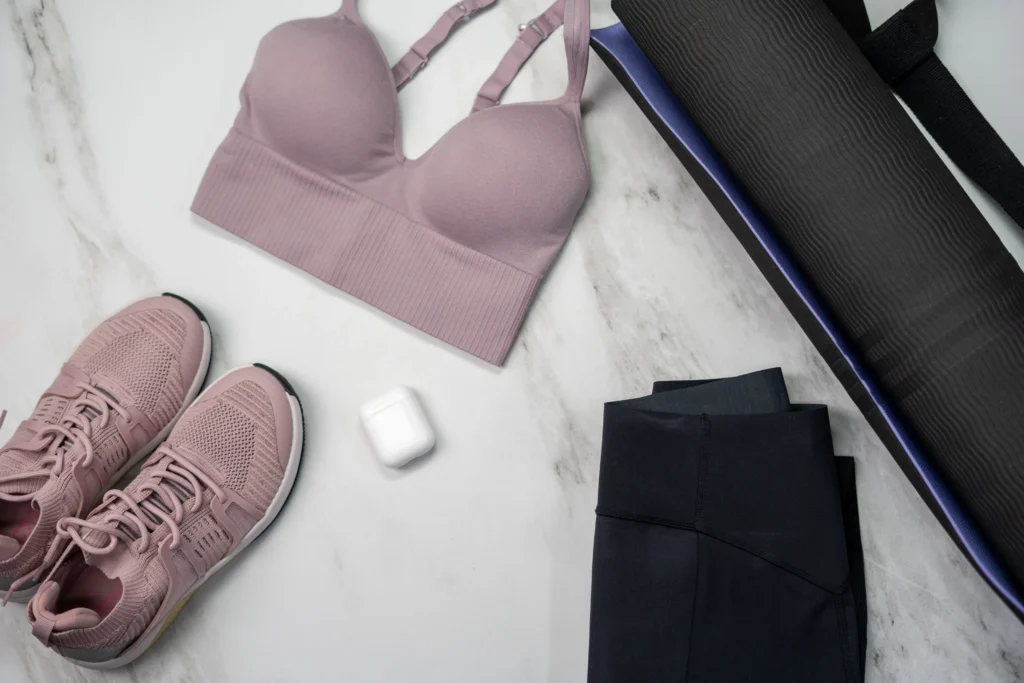
DTG printing can support both men’s and women’s lifestyle sportswear collections. It is especially useful for cotton-rich tops, gym lifestyle shirts, hoodies, and limited graphic collections.
Women’s sportswear brands may use DTG printing for:
- Oversized gym T-shirts
- Lifestyle hoodies
- Studio merchandise
- Wellness brand tops
- Limited-edition graphic apparel
Men’s sportswear brands may use DTG printing for:
- Training-inspired T-shirts
- Gym brand hoodies
- Casual sportswear tops
- Fitness merchandise
- Streetwear-style athletic apparel
Relevant internal categories include the custom wholesale women’s sportswear manufacturer page and the custom wholesale men’s sportswear manufacturer page.
Sustainability and DTG Printing
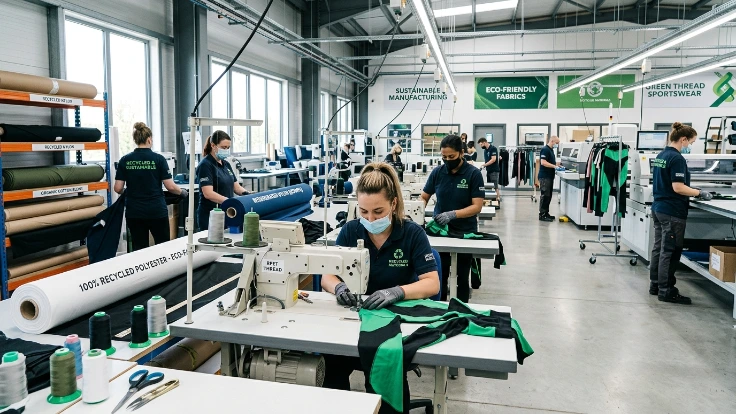
DTG printing is often promoted as more eco-friendly than some traditional printing methods because it can reduce setup waste and uses water-based inks. But brands should be accurate.
DTG printing still uses ink, pretreatment, electricity, garments, packaging, and curing equipment. Sustainability depends on the full process, not only the printing method.
A better sustainability approach includes:
- Using quality garments that last
- Testing prints before bulk production
- Avoiding overproduction
- Choosing safer ink systems where available
- Reducing failed prints
- Using better packaging
- Matching the printing method to the product
OEKO-TEX® explains that its ECO PASSPORT certification is an independent system for chemicals, colorants, and auxiliaries used in textile and leather production. Brands that care about responsible sourcing can learn more through the OEKO-TEX® ECO PASSPORT standard.
For GHC Sportswear®, the stronger message is not “DTG is automatically sustainable.” The stronger message is: DTG printing can support lower-risk, on-demand, small-batch apparel production when used correctly.
Quality Control Checklist for DTG Printing
Before placing a DTG order, buyers should check the full production process.
| Quality Area | What to Check |
|---|---|
| Artwork | Resolution, size, placement, color profile |
| Fabric | Cotton content, surface smoothness, weight |
| Pretreatment | Even application and correct drying |
| Color brightness, detail, alignment | |
| Curing | Correct time, temperature, and pressure |
| Wash test | Fading, cracking, peeling, color change |
| Hand feel | Softness and comfort |
| Packaging | Folding, labels, moisture protection |
| Repeatability | Same result across future orders |
This checklist helps brands avoid weak products and customer complaints.
Common DTG Printing Mistakes
Many businesses use DTG printing incorrectly because they treat it as a simple “upload and print” process.
Common mistakes include:
- Using low-resolution artwork
- Printing on the wrong fabric
- Skipping test prints
- Poor pretreatment control
- Weak curing
- Choosing dark garments without checking underbase quality
- Ignoring wash testing
- Using DTG for the wrong bulk order type
- Expecting polyester performance results from cotton-focused printing
- Not planning labels and packaging
- Not checking print placement across sizes
The biggest mistake is assuming DTG printing solves every custom apparel problem. It does not. It solves specific problems: small batches, detailed artwork, quick testing, personalization, and cotton-rich garment printing.
When Brands Should Choose DTG Printing
DTG printing is a good option when:
- The artwork is detailed
- The order quantity is small or medium
- The garment is cotton or cotton-rich
- The brand wants samples quickly
- The design has many colors
- Personalization is required
- The business wants to test demand
- The product is lifestyle apparel or merchandise
It may not be the best option when:
- The order is very large
- The design is simple and one-color
- The garment is polyester sportswear
- Exact Pantone matching is critical
- The product needs heavy industrial durability
- The buyer wants the lowest possible unit cost in bulk
This decision framework helps buyers avoid wasting money.
How GHC Sportswear® Supports DTG Printing Projects
GHC Sportswear® helps apparel brands, startups, retailers, sportswear businesses, event suppliers, wholesalers, distributors, and private label buyers choose the right decoration and manufacturing method for custom apparel.
GHC Sportswear® can support:
- DTG printing guidance
- Custom T-shirt production
- Hoodies and sweatshirts
- Private label apparel
- Sportswear merchandise
- Event apparel
- Printed lifestyle collections
- Branding and logo placement
- Product sampling
- Fabric selection
- Packaging support
- Bulk production planning
Buyers can review the wider production support on the GHC Sportswear® services page and explore product categories on the GHC Sportswear® products page.
For businesses still comparing methods, GHC Sportswear® can help decide whether DTG printing, screen printing, sublimation, embroidery, or heat transfer is the better fit.
Need DTG Printing for Your Custom Apparel Brand?
If you are launching a clothing brand, testing a private label collection, creating event merchandise, building gym apparel, or developing custom printed sportswear, GHC Sportswear® can help you plan the right production method.
GHC Sportswear® works with:
- Clothing startups
- Sportswear brands
- Fitness brands
- Event merchandise buyers
- Wholesalers
- Distributors
- Retailers
- Teams and clubs
- Private label businesses
- Custom apparel brands
GHC Sportswear® provides support for fabric selection, artwork placement, sampling, branding, labels, packaging, and bulk production.
For B2B buyers, the goal is not only to print a design. The goal is to create custom apparel that looks professional, feels comfortable, matches the buyer’s brand, and can be produced consistently.
Contact GHC Sportswear® for DTG printing and custom apparel manufacturing support:
WhatsApp: https://wa.me/ghcsportswear
Email: info@ghcsportswar.com
Contact page: GHC Sportswear® contact us
Conclusion
DTG printing is a practical tool for modern custom apparel production. It is useful for detailed designs, small-batch orders, product testing, personalization, and private label apparel development.
It works especially well on cotton and cotton-rich garments such as T-shirts, hoodies, sweatshirts, and lifestyle apparel. It is less suitable for many polyester performance sportswear products, where sublimation or other decoration methods may be better.
For brands, the real advantage of DTG printing is flexibility. It allows businesses to test designs, reduce inventory risk, create limited drops, and produce personalized apparel without large setup requirements.
But good results depend on process control. Artwork quality, fabric choice, pretreatment, curing, wash testing, and quality inspection all matter.
GHC Sportswear® helps B2B buyers use DTG printing as part of a smarter custom apparel manufacturing strategy, where the print method matches the product, customer, and business goal.
Related Blog:
Screen Printing vs. Sublimation: Which Is Better for Custom Sportswear?
Custom Sportswear Manufacturing Guide for Brands & Startups