Heat Transfer Printing: When to Use It for Custom Apparel
Heat transfer printing is one of the most flexible decoration methods used in custom apparel production. It allows brands, teams, clubs, retailers, event organizers, wholesalers, and private label businesses to add logos, names, numbers, graphics, and detailed artwork onto garments using heat and pressure.
This method is popular because it can work across many apparel categories. It can be used for T-shirts, hoodies, sports uniforms, gym wear, yoga apparel, team merchandise, event shirts, workwear, bags, and selected performance garments.
For B2B buyers, heat transfer printing is useful because it supports short runs, personalization, fast sampling, and design flexibility. A sports team may need player names and numbers. A fitness brand may need custom logos on tops and hoodies. A private label apparel startup may want a small batch of printed products before scaling into larger production. A distributor may need flexible branding for different clients.
However, heat transfer printing is not the best choice for every product. The result depends on the transfer type, fabric, heat press settings, pressure, curing, wash care, and production quality. Choosing the wrong transfer can lead to peeling, cracking, fading, poor stretch, or a print that feels too heavy.
This guide explains how heat transfer printing works, which transfer types are common, when brands should use it, when they should avoid it, and how GHC Sportswear® can help B2B buyers choose the right custom apparel printing method.
What Is Heat Transfer Printing?
Heat transfer printing is a decoration method where a design is first printed, cut, or prepared on transfer paper, transfer film, vinyl, or another carrier material. The design is then applied to fabric using a heat press machine.
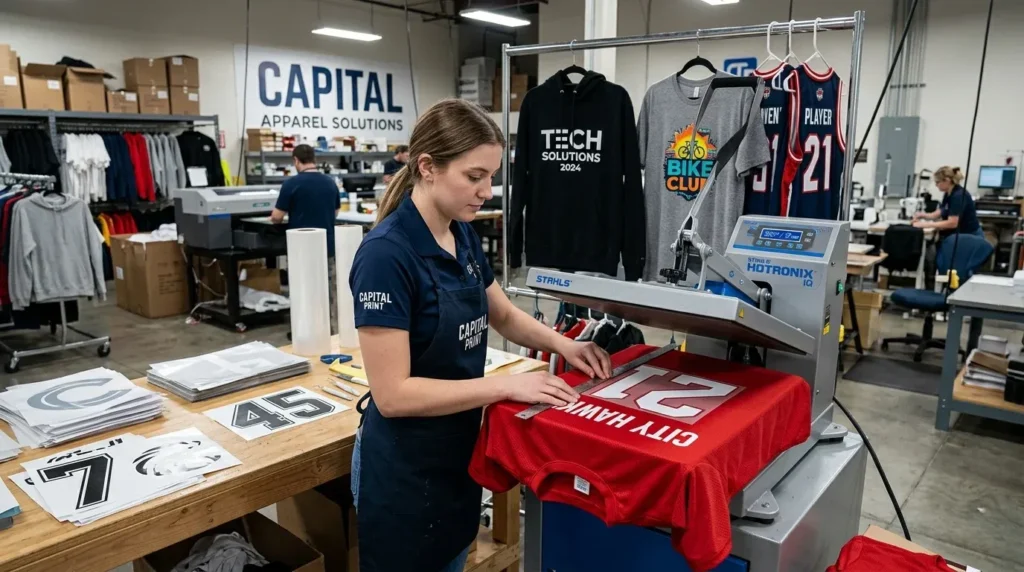
The heat press uses controlled heat, pressure, and time to bond the design to the garment.
The basic process looks like this:
- Prepare the design file
- Print or cut the transfer
- Position the transfer on the garment
- Apply heat and pressure
- Peel the carrier sheet according to the method
- Check adhesion, placement, and finish
DecoNetwork explains that heat transfer printing works by using heat and pressure to transfer artwork onto a surface, which is why press settings and material compatibility matter. You can read their overview of what heat transfer printing is for a simple technical explanation.
For apparel buyers, the main benefit is flexibility. Heat transfer printing can be used for small orders, personalized names, numbers, logos, and detailed artwork without the same setup requirements as screen printing.
Why Heat Transfer Printing Matters for Custom Apparel
Custom apparel buyers need production methods that match how modern orders work. Not every buyer wants thousands of pieces. Many need smaller batches, fast samples, limited drops, team personalization, or mixed designs.
Heat transfer printing fits these needs well.
It is commonly used for:
- Team names and numbers
- Custom T-shirts
- Hoodies and sweatshirts
- Event merchandise
- Sports uniforms
- Gym apparel
- Yoga wear
- Workwear branding
- Promotional apparel
- Club merchandise
- Private label products
- Retail test drops
For startups and private label brands, this method can reduce risk. A brand can test a design before placing a larger order. A sports club can customize each player’s uniform. A retailer can create limited seasonal graphics without committing to large production.
GHC Sportswear® helps buyers compare printing and decoration methods through its custom apparel manufacturing services, including options for branding, logos, private labels, and bulk apparel production.
How Heat Transfer Printing Works in Production
Heat transfer printing may look simple, but strong results require process control. A poor-quality heat transfer can fail quickly if the wrong material, temperature, time, or pressure is used.
Step 1: Artwork preparation
The design must be prepared correctly before production. This includes size, placement, color, file quality, and background control.
Before production, buyers should confirm:
- Artwork resolution
- Logo size
- Color requirements
- Print placement
- Garment color
- Garment fabric
- Design quantity
- Personalization details
- Mockup approval
For names and numbers, accuracy matters. One spelling error or wrong number can ruin the product.
Step 2: Choosing the transfer type
Not all transfers are the same. Vinyl, plastisol, sublimation, DTF, and inkjet transfers all behave differently.
The right transfer depends on:
- Fabric type
- Order size
- Design detail
- Stretch requirement
- Wash durability
- Budget
- Product use
- Hand feel
- Color needs
A cotton hoodie, polyester jersey, yoga legging, and motorbike lifestyle shirt may all need different decoration choices.
Step 3: Heat press application
The heat press applies time, temperature, and pressure. These settings must match the transfer material and garment.
If the temperature is too low, the transfer may not bond properly. If it is too high, the garment or transfer may be damaged. If pressure is uneven, the design may lift or peel.
Transfer Express provides useful placement guidance for heat transfers, which shows why positioning and press accuracy are important in professional apparel decoration. Their heat transfer placement guide is especially useful for production teams.
Step 4: Peeling and finishing
Some transfers require hot peeling, while others require warm or cold peeling. This depends on the transfer type. Peeling incorrectly can damage the print.
After peeling, the garment should be checked for:
- Adhesion
- Color
- Alignment
- Edge lifting
- Stretch behavior
- Hand feel
- Press marks
- Placement accuracy
This quality check is important before packing and shipping.
Main Types of Heat Transfer Printing
Heat transfer printing includes several different methods. B2B buyers should understand the difference before choosing one.
| Transfer Type | Best Use | Main Advantage | Main Limitation |
|---|---|---|---|
| Heat Transfer Vinyl | Names, numbers, simple logos | Clean, bold, durable for simple designs | Not ideal for complex full-color artwork |
| Plastisol Transfer | Bulk logos, teamwear, workwear | Screen-print style durability | Setup may be needed |
| Sublimation Transfer | Polyester sportswear | Lightweight full-color print | Works best on polyester |
| DTF Transfer | Full-color graphics on many fabrics | Flexible and detailed | Quality varies by film, powder, and curing |
| Inkjet Transfer | DIY or very small runs | Low setup | Not ideal for professional bulk quality |
Each method has a place. The mistake is using one transfer type for every product.
Heat Transfer Vinyl
Heat transfer vinyl, often called HTV, is one of the most common forms of heat transfer printing. It uses colored vinyl sheets that are cut into shapes, weeded, and heat pressed onto fabric.
STAHLS’ explains that heat transfer vinyl is used to decorate apparel, bags, and soft goods by applying it with heat and pressure. Their beginner guide to HTV is useful for understanding how this method works.
HTV is best for:
- Player names
- Player numbers
- Simple logos
- One-color graphics
- Team uniforms
- Staff shirts
- Club apparel
- Workwear labels
- Event shirts
HTV is strong for clean, simple decoration. It is not usually the best choice for very detailed artwork, gradients, photographs, or large full-front graphics that need a soft feel.
For sports teams, HTV can work well for names and numbers on uniforms when the correct material is selected for the fabric.
Plastisol Transfers
Plastisol transfers are similar to screen printing, but the design is printed onto transfer paper first and then heat pressed onto the garment later.
This method is useful when buyers want a screen-print style result but need more flexibility in application.
Plastisol transfers are often used for:
- Teamwear
- Workwear
- School apparel
- Club merchandise
- Promotional shirts
- Bulk logos
- Repeat designs
They can be durable when applied correctly and can work on many fabric types. However, they still require the right curing, pressure, and application process.
For large orders with simple artwork, traditional screen printing may still be better. For repeated smaller applications of the same design, plastisol transfers can be practical.
Sublimation Transfers
Sublimation is also a heat transfer process, but it works differently from vinyl or plastisol. Sublimation uses heat to turn dye into gas, which bonds with polyester fibers.
Sublimation works best on polyester and polyester-coated materials.
It is widely used for:
- Football kits
- Basketball jerseys
- Cycling jerseys
- Running shirts
- Esports jerseys
- Polyester teamwear
- Full-color sports uniforms
- All-over printed apparel
Sublimation is ideal for polyester sportswear because the print becomes part of the fabric. It does not sit on top like vinyl, so the garment stays lightweight and breathable.
For custom sports uniforms, sublimation is often better than standard heat transfer vinyl when the design includes full-color patterns, sponsor logos, player names, numbers, and detailed artwork.
Teams and buyers can explore relevant uniform categories on the custom wholesale sports uniforms manufacturer page.
DTF Transfers
DTF means direct-to-film. It is a newer and popular heat transfer option where artwork is printed onto a film, coated with adhesive powder, cured, and then heat pressed onto fabric.
DTF transfers are used because they can handle full-color designs and work on many garment types.
DTF can be useful for:
- Custom T-shirts
- Hoodies
- Sportswear merchandise
- Retail graphics
- Small-batch apparel
- Promotional clothing
- Private label designs
The benefit is flexibility. The risk is quality variation. DTF results depend heavily on ink, film, powder, curing, pressing, and wash testing.
A well-made DTF transfer can look strong. A poor-quality DTF transfer may feel rubbery, crack, peel, or wash badly.
For professional B2B production, DTF transfers should always be tested before bulk orders.
Inkjet Transfers
Inkjet transfers are common in DIY apparel printing and very small custom projects. They use special transfer paper and standard inkjet printing.
This method is usually not the best choice for professional bulk apparel because durability and finish can be limited compared to commercial transfer methods.
Inkjet transfers may work for:
- One-off gifts
- Trial samples
- Hobby printing
- Basic small projects
For GHC Sportswear® buyers, stronger commercial methods such as DTF, plastisol transfers, sublimation, screen printing, embroidery, or DTG printing are usually better for professional apparel lines.
Heat Transfer Printing vs Screen Printing
Heat transfer printing and screen printing are both useful, but they serve different needs.
| Factor | Heat Transfer Printing | Screen Printing |
|---|---|---|
| Best for | Small runs, names, numbers, personalization | Bulk orders and simple designs |
| Setup | Lower for many small jobs | Higher because screens are required |
| Design flexibility | Good for mixed designs | Best for repeated artwork |
| Fabric range | Depends on transfer type | Broad with correct ink |
| Feel | Varies by transfer | Varies by ink thickness |
| Bulk cost | Can be higher per piece | Often lower at scale |
| Personalization | Strong | Less practical |
| Best buyer | Teams, events, startups, custom orders | Wholesalers, campaigns, large team orders |
Screen printing is still strong for large orders with simple artwork. Heat transfer printing is stronger for flexible customization and short runs.
Heat Transfer Printing vs DTG Printing
Heat transfer printing and DTG printing are often compared because both can be useful for small custom orders.
| Factor | Heat Transfer Printing | DTG Printing |
|---|---|---|
| Main Process | Transfer applied with heat press | Ink printed directly onto garment |
| Best Fabric | Depends on transfer type | Cotton and cotton-rich fabric |
| Personalization | Strong | Strong |
| Print Feel | Depends on transfer | Usually softer on cotton |
| Best Use | Names, numbers, logos, mixed fabrics | Detailed cotton apparel prints |
| Limitation | Poor transfers can peel | Needs pretreatment and curing |
| Best Buyer | Teams, events, uniforms, mixed products | Fashion, lifestyle, cotton T-shirts |
For cotton graphic T-shirts, DTG may be better. For player numbers, team names, and mixed fabric projects, heat transfer printing may be more practical.
Related article: Add this link after publishing: DTG Printing: A Practical Guide for Custom Apparel Brands
Best Products for Heat Transfer Printing
Heat transfer printing works across many apparel categories, but the transfer type must match the product.
| Product | Suitable Transfer Direction | Notes |
|---|---|---|
| T-shirts | HTV, DTF, plastisol, DTG alternative | Depends on fabric and design |
| Hoodies | HTV, DTF, plastisol | Good for logos and graphics |
| Sports jerseys | Sublimation, HTV names/numbers | Polyester kits need careful method choice |
| Joggers | HTV, DTF, plastisol | Good for logos and branding |
| Yoga tops | DTF or suitable stretch transfer | Stretch testing required |
| Team uniforms | Sublimation, HTV, plastisol | Names and numbers are common |
| Caps | Heat transfer patches or embroidery | Shape affects application |
| Bags | HTV, DTF, plastisol | Material testing required |
| Workwear | Plastisol, HTV, patches | Durability is important |
Buyers can review broader apparel categories on the GHC Sportswear® products page.
Heat Transfer Printing for Sportswear
Sportswear needs printing methods that support movement, sweat, washing, and repeated use. A transfer that looks good on delivery but cracks after training is not acceptable.
Heat transfer printing can be useful in sportswear for:
- Names
- Numbers
- Sponsor logos
- Small team logos
- Event graphics
- Training apparel
- Fan merchandise
- Staff clothing
- Club apparel
For full performance uniforms, sublimation may be better when the fabric is polyester and the artwork is complex.
For cotton sports lifestyle apparel, heat transfers or DTG may work better depending on the design.
GHC Sportswear® can help teams, clubs, academies, wholesalers, and private label buyers choose the right method for each product.
Heat Transfer Printing for Women’s and Men’s Activewear
Heat transfer printing can also support activewear branding. This includes gym tops, hoodies, joggers, crop tops, shorts, and lifestyle sportswear.
For women’s sportswear, transfer placement must consider stretch, body movement, and fabric recovery. A logo on leggings or sports bras needs careful testing because stretch can affect print performance.
Relevant product categories are available through the custom wholesale women’s sportswear manufacturer page.
For men’s sportswear, heat transfer printing is often used for gym shirts, hoodies, joggers, shorts, and training apparel. Buyers can review categories on the custom wholesale men’s sportswear manufacturer page.
Heat Transfer Printing for Yoga Wear
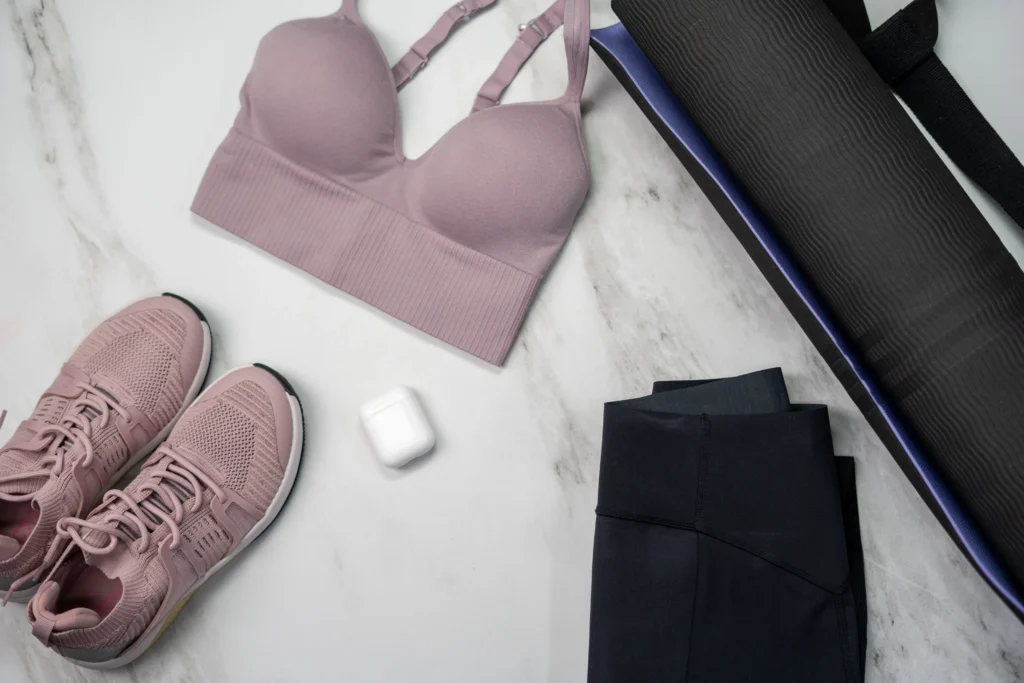
Yoga wear needs stretch, softness, and comfort. Heat transfer printing can work for logos, small graphics, and branding, but the transfer must stretch with the garment.
For yoga leggings, sports bras, and fitted tops, buyers should test:
- Stretch behavior
- Cracking
- Edge lifting
- Skin comfort
- Wash durability
- Heat marks
- Print placement
A large, thick transfer may not be comfortable on yoga apparel. Small logos, subtle branding, or flexible transfers are usually better.
Yoga buyers can review relevant categories on the custom wholesale women’s yoga wear manufacturer page.
Heat Transfer Printing for Motorbike and Lifestyle Apparel
Motorbike apparel often needs durable decoration methods such as patches, embroidery, heat transfers, or printed panels. Heat transfer printing may work for biker lifestyle apparel, event shirts, club hoodies, and casual merchandise.
For protective motorcycle apparel, buyers should be more careful. Heat transfers should not interfere with protective panels, abrasion zones, seams, or performance features.
Relevant categories can be reviewed on the custom wholesale motorbike gear manufacturer page.
Advantages of Heat Transfer Printing
Heat transfer printing has several practical advantages for custom apparel buyers.
Flexible for small orders
It works well for short runs, team personalization, event merchandise, and product testing.
Good for names and numbers
Player names and numbers are one of the strongest uses of heat transfer printing.
Works across many product types
Depending on the transfer type, it can be used on T-shirts, hoodies, uniforms, bags, activewear, and workwear.
Supports detailed designs
DTF and sublimation transfers can handle full-color artwork. HTV is better for simple designs.
Lower setup for many projects
Compared with screen printing, heat transfer printing can be easier for small batches and personalized products.
Useful for testing designs
Brands can test artwork before scaling into bulk production.
Limitations of Heat Transfer Printing
Heat transfer printing also has limits.
Not every transfer fits every fabric
Cotton, polyester, nylon, spandex, fleece, and coated materials all behave differently under heat.
Poor application can fail
Wrong heat, pressure, time, or peeling can cause poor bonding.
Some transfers feel heavy
Large vinyl designs may feel thick or stiff, especially on lightweight sportswear.
Stretch fabrics need testing
Activewear and yoga wear need flexible transfers that do not crack during movement.
Wash durability varies
Durability depends on material quality, application, fabric, and care instructions.
Large bulk orders may be better with other methods
For simple graphics in high quantities, screen printing may be more cost-effective.
Quality Control Checklist for Heat Transfer Printing
Before approving bulk production, buyers should check the following:
| Quality Area | What to Check |
|---|---|
| Fabric | Heat tolerance, stretch, surface texture |
| Transfer type | HTV, DTF, sublimation, plastisol, or other |
| Artwork | Size, color, placement, resolution |
| Press settings | Time, temperature, pressure |
| Peel method | Hot, warm, or cold peel |
| Adhesion | Edges, corners, surface bonding |
| Stretch | Cracking, lifting, distortion |
| Wash test | Peeling, fading, cracking |
| Hand feel | Thickness and comfort |
| Placement | Consistency across sizes |
| Packaging | Folding without damaging the print |
This checklist helps reduce returns and customer complaints.
Common Mistakes Buyers Make
Many heat transfer printing problems happen before production starts.
Common mistakes include:
- Choosing the wrong transfer type
- Printing on untested fabric
- Using transfers that are too thick for activewear
- Ignoring stretch requirements
- Using low-quality artwork
- Placing logos in uncomfortable areas
- Not checking heat tolerance
- Skipping wash tests
- Ordering bulk without a sample
- Not confirming names and numbers
- Using the same method for every product
The biggest mistake is thinking heat transfer printing is one method. It is not. It is a group of methods, and each one has different strengths.
Sustainability and Heat Transfer Printing
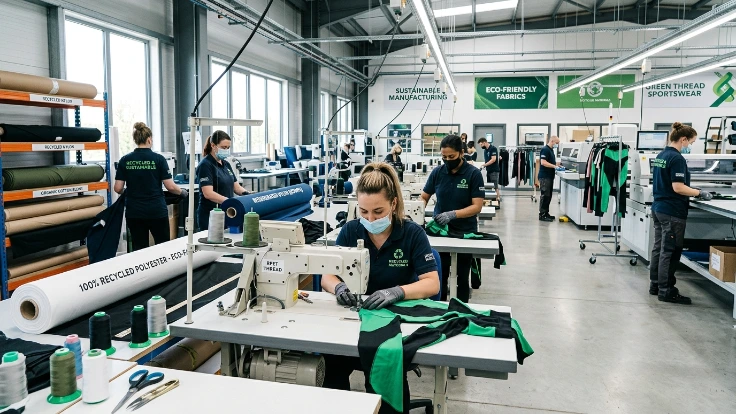
Heat transfer printing can support lower-risk production when used for small batches, testing, and on-demand orders. It can help reduce overproduction because buyers do not always need to produce large quantities before testing demand.
However, sustainability depends on the full system.
Brands should consider:
- Transfer material waste
- Ink systems
- Garment durability
- Failed print reduction
- Packaging choices
- Wash durability
- Responsible chemical use
- Lower overproduction
OEKO-TEX® ECO PASSPORT is an independent certification system for textile chemicals, colorants, and auxiliaries. Buyers that care about safer textile inputs can review the OEKO-TEX® ECO PASSPORT standard and ask suppliers about available certified materials or chemical systems.
The right sustainability message is not “all heat transfer printing is eco-friendly.” The better message is: heat transfer printing can support smarter production when materials are selected carefully, samples are tested, and overproduction is reduced.
When Should Brands Use Heat Transfer Printing?
Heat transfer printing is a strong choice when:
- The order is small or mixed
- Personalization is required
- Names and numbers are needed
- The design is detailed
- The buyer needs fast sampling
- The brand wants to test demand
- Multiple garment types need branding
- The product is teamwear, merchandise, or promotional apparel
It may not be the best choice when:
- The order is very large with a simple design
- The fabric cannot handle heat
- The garment has heavy stretch and no test is done
- The buyer needs a very soft print on cotton
- The print area is too large and stiff
- The design is better suited for embroidery, sublimation, or screen printing
A good manufacturer should explain these trade-offs clearly.
How GHC Sportswear® Supports Heat Transfer Printing Projects
GHC Sportswear® supports brands, sports teams, clubs, academies, retailers, wholesalers, distributors, event suppliers, fitness startups, and private label businesses with custom apparel printing and manufacturing.
GHC Sportswear® can help with:
- Heat transfer printing guidance
- Custom logo placement
- Names and numbers
- Sports uniforms
- T-shirts and hoodies
- Gym apparel
- Yoga wear
- Team merchandise
- Private label apparel
- Product sampling
- Fabric selection
- Branding and packaging
- Bulk production planning
Buyers can review the GHC Sportswear® services page to understand custom production support and visit the GHC Sportswear® blogs page for more apparel manufacturing guides.
For B2B buyers, the goal is not only to apply a design. The goal is to choose the right decoration method so the final garment looks professional, feels comfortable, and performs well after washing and use.
Need Heat Transfer Printing for Custom Apparel?
If you are creating custom team uniforms, sportswear, gym apparel, yoga wear, club merchandise, event shirts, or private label apparel, GHC Sportswear® can help you choose the right heat transfer printing method for your product.
GHC Sportswear® works with:
- Apparel startups
- Sportswear brands
- Sports teams
- Clubs
- Academies
- Fitness brands
- Yoga brands
- Wholesalers
- Distributors
- Retailers
- Private label businesses
- Event merchandise buyers
GHC Sportswear® provides support for design placement, fabric selection, logo application, names and numbers, sampling, labels, packaging, and bulk production.
For buyers, the best printing method is the one that matches the garment, customer, order size, and business goal.
Contact GHC Sportswear® for heat transfer printing and custom apparel manufacturing support:
WhatsApp: https://wa.me/ghcsportswear
Email: info@ghcsportswar.com
Contact page: GHC Sportswear® contact us
Conclusion
Heat transfer printing is a flexible and practical method for custom apparel production. It is useful for short runs, team personalization, event merchandise, names, numbers, logos, private label apparel, and small-batch testing.
The strength of heat transfer printing is its versatility. Buyers can choose from HTV, plastisol transfers, sublimation transfers, DTF transfers, and other options depending on the fabric and design.
The weakness is that results vary if the wrong method is used. Fabric type, stretch, heat tolerance, pressure, temperature, peeling, and wash testing all matter.
For sportswear brands, teams, clubs, academies, wholesalers, distributors, retailers, and private label businesses, heat transfer printing can be a valuable tool when it is used correctly.
GHC Sportswear® helps B2B buyers choose the right printing and decoration method so custom apparel looks professional, feels comfortable, and supports real commercial use.
Related Blog:
Screen Printing vs. Sublimation: Which Is Better for Custom Sportswear?
DTG Printing: A Practical Guide for Custom Apparel Brands