Forgotten Olympic Sports: Strange Events That Once Made the Games
Forgotten Olympic sports are a reminder that the Olympic Games were not always as polished, standardized, and globally organized as they are today. Before the modern Olympic program became familiar to fans around the world, the Games experimented with events that now feel surprising, unusual, or even difficult to imagine on a modern Olympic schedule.
Today, most viewers expect athletics, swimming, gymnastics, football, basketball, boxing, cycling, wrestling, tennis, rowing, and other established sports. But earlier Olympic editions included events such as tug-of-war, croquet, rope climbing, plunge for distance, and other competitions that reflected the sporting culture of their time.
Some of these events disappeared because they lacked international participation. Some were too slow for spectators. Some were replaced by better-organized versions of similar skills. Others simply did not match the direction the Olympic Games were moving in.
That history is useful for more than trivia.
For teams, clubs, academies, sports brands, and apparel manufacturers, forgotten Olympic sports show how sport keeps changing. Equipment changes. Rules change. Audience expectations change. Athlete needs change. Even the clothing worn in sport changes.
GHC Sportswear® works in that same changing sports environment, helping teams, clubs, academies, retailers, wholesalers, distributors, and private label brands create custom sportswear that fits modern performance, branding, and production needs.
This article explores several forgotten Olympic sports, why they were included, why they disappeared, and what modern sports businesses can learn from them.
Why Olympic Sports Change Over Time
The Olympic program is not fixed forever. Sports are added, removed, revised, and reorganized depending on participation, governance, athlete safety, audience interest, global reach, and the direction of the Olympic Movement.
The IOC explains that a sport must comply with the Olympic Charter, the World Anti-Doping Code, and other Olympic Movement requirements before it can be considered for the Olympic program. The IOC also requires recognized sports to be governed by an International Federation. You can read the IOC’s explanation of how a new sport can be included in the Olympic Games programme.
This explains why some early Olympic events did not survive. In the early 1900s, the Games were still experimenting. Many sports were regional, loosely organized, or popular only in certain countries.
Modern Olympic sports need stronger structure. They need:
- International governance
- Clear rules
- Athlete participation across regions
- Anti-doping compliance
- Safe competition formats
- Public interest
- Broadcast appeal
- Gender participation planning
- Strong event organization
Forgotten Olympic sports disappeared because they did not meet the long-term needs of the Games as the Olympic program matured.
Tug-of-War: The Team Strength Event That Once Drew Serious Competition
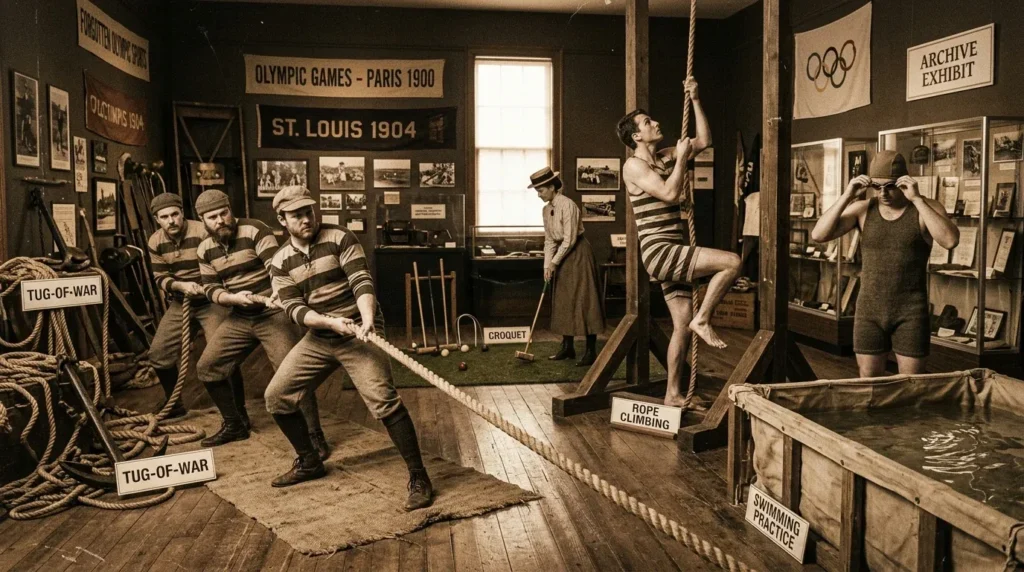
Tug-of-war is one of the most surprising forgotten Olympic sports because many people now think of it as a school event, picnic game, or community competition. But from 1900 to 1920, it had a serious place in the Olympic program.
Olympics.com describes tug-of-war as an event where two opposing teams tried to drag each other toward them, and it was part of the Olympic Games during the early modern period. You can read more in Olympics.com’s article on Antwerp 1920 and Olympic tug-of-war.
The Olympic version was not casual. It required strength, timing, coordination, grip, balance, and teamwork. A strong team could not rely only on one powerful athlete. Everyone had to pull together with rhythm and discipline.
Why tug-of-war belonged at the time
Tug-of-war matched many early Olympic values. It tested strength, teamwork, endurance, and discipline. It was also easy to understand. Spectators did not need complex scoring systems to follow the contest.
It also reflected the sporting culture of the late 19th and early 20th centuries, when strength-based club competitions were popular in parts of Europe and the United States.
Why tug-of-war disappeared
Tug-of-war was discontinued after the 1920 Games as the Olympic program became more selective. The Games moved toward sports with broader international systems, clearer federation structures, and more standardized competition formats.
The sport still exists outside the Olympics, but it no longer fits the modern Olympic program.
What modern teams can learn
Tug-of-war shows the power of team identity. Everyone on the team wears the same purpose. Everyone depends on timing, trust, and shared effort.
That same idea applies to modern uniforms. A team uniform is not just clothing. It creates identity and unity. GHC Sportswear® explains this in more detail in the guide on custom team uniforms benefits, which covers how custom teamwear supports identity, confidence, and professional presentation.
Croquet: A One-Time Olympic Event With Historic Importance
Croquet may seem like an unusual Olympic event today, but it appeared at the Paris 1900 Olympic Games. Its Olympic history is short, but important.
The IOC notes that women first competed at the Olympic Games in Paris 1900, and croquet was one of the sports in which women participated. You can read the IOC’s answer to when women first competed in the Olympic Games.
This makes croquet more than a forgotten Olympic sport. It is part of a wider history of women’s participation in the Olympic Games.
Why croquet was included
Paris 1900 was connected to the Exposition Universelle, and the Olympic program included many events that reflected French sporting and social culture at the time. Croquet was known among upper-class and recreational sporting circles, which helped explain its appearance.
Why croquet did not return
Croquet did not have enough global competitive depth to remain on the Olympic program. It had limited participation, limited spectator pull, and did not develop into a major international Olympic sport.
That does not make it meaningless. It simply means it did not fit the direction of the Games.
What modern sports businesses can learn
Croquet’s short Olympic life teaches an important lesson: a sport or product can be culturally interesting but still fail to scale if participation is too narrow.
The same applies to apparel. A sportswear product should not be developed only because it looks attractive in one market. Brands need to understand whether the product can scale, whether athletes need it, and whether the design works across real use cases.
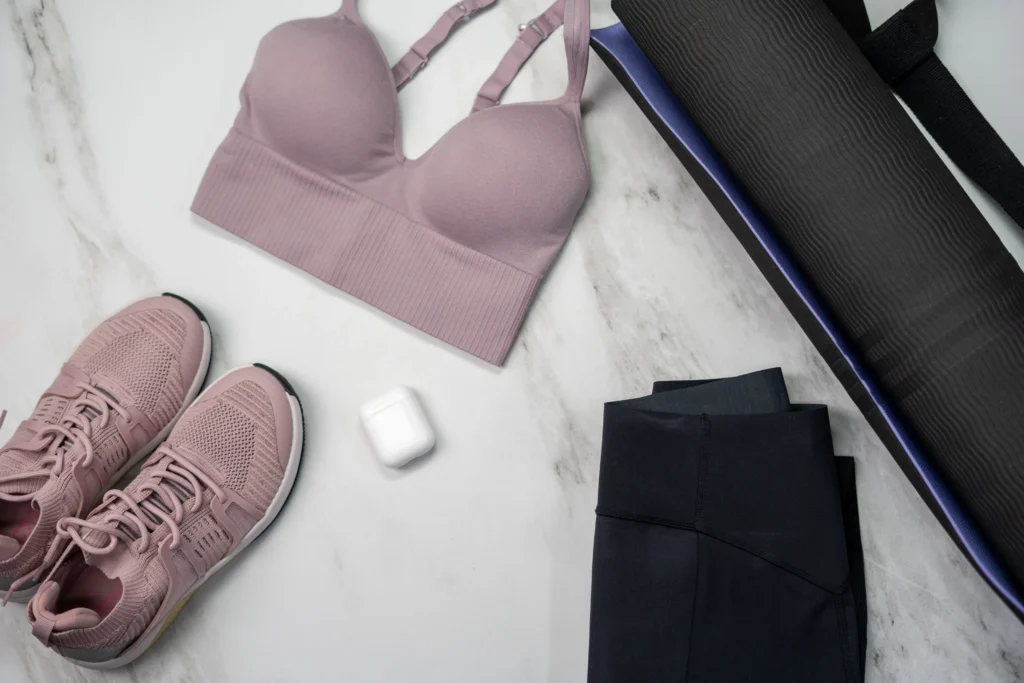
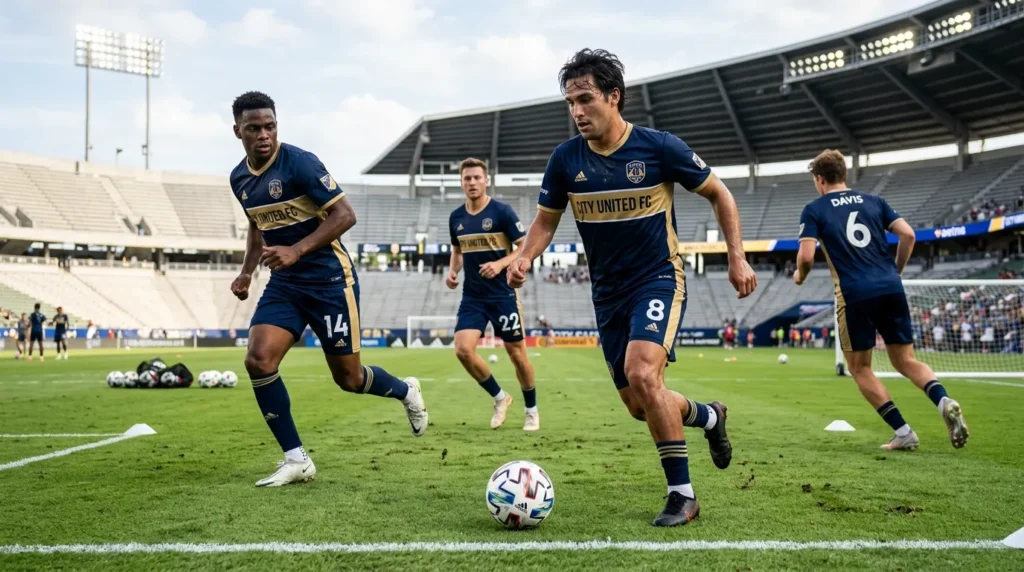
For example, a yoga brand needs stretch, coverage, softness, and waistband stability. A baseball uniform needs breathability, durability, names, numbers, and team identity. A football kit needs moisture control, lightweight construction, and clear player visibility.
GHC Sportswear® supports different sport-specific apparel categories through its products page, helping buyers match products to actual market needs.
Plunge for Distance: The Olympic Swimming Event That Was Too Quiet to Last
Plunge for distance is one of the strangest forgotten Olympic sports. It appeared at the 1904 Olympic Games in St. Louis.
The event was simple but unusual. Athletes dived into the water and tried to travel as far as possible without using swimming strokes after the initial plunge. The competitor who glided the farthest won.
Olympics.com has covered the event in its feature on plunging in St. Louis, describing how it belonged to a period when the Olympic program was still testing different aquatic events.
Why plunge for distance was included
At the time, plunge for distance had some popularity in the United States. Since the 1904 Olympics were held in St. Louis, local sporting culture influenced the program.
The event tested lung control, body position, glide efficiency, and stillness in water. It was not completely random. But it did not create the same excitement as races, dives, or more dynamic aquatic competitions.
Why it disappeared
The biggest problem was spectator interest. Watching an athlete dive and remain motionless underwater was not exciting for most viewers.
Modern Olympic sports need tension, movement, clear scoring, and audience engagement. Plunge for distance did not offer enough of that.
What this teaches brands
A product may be technically interesting but still fail if the customer experience is weak.
In sportswear, a fabric may sound advanced, but if it feels uncomfortable, customers will not reorder. A design may look clever, but if it restricts movement, athletes will reject it. A uniform may include many features, but if the player feels distracted, the product has failed.
GHC Sportswear® focuses on practical sportswear production, including fabric selection, fit, customization, and bulk quality control. Buyers can learn more through the GHC Sportswear® services page.
Rope Climbing: A Gymnastics Test of Speed and Strength
Rope climbing was once part of Olympic gymnastics. It appeared in several early Olympic editions, including Athens 1896 and Los Angeles 1932. Olympics.com still lists official results for the Los Angeles 1932 men’s rope climbing event.
The event was direct. Athletes climbed a vertical rope as quickly as possible. It tested upper-body strength, grip power, speed, and control.
Why rope climbing fit the early Olympics
Rope climbing was connected to gymnastics training and physical education. It was a clear test of strength and athletic discipline.
In older training systems, rope climbing was common in schools, military fitness, and gymnastics practice. It made sense as a competitive event in the early Olympic period.
Why rope climbing was removed
Gymnastics evolved. The Olympic program moved toward apparatus events that offered more complexity, variety, artistry, and scoring depth. Events such as rings, parallel bars, vault, floor, and horizontal bar became more central.
Rope climbing was eventually seen as too narrow compared with the wider gymnastics program.
What modern athletes can learn
Rope climbing disappeared as an Olympic event, but the skill did not disappear from training. Grip strength, pulling power, shoulder stability, and body control are still important in many sports.
Modern training apparel must support this kind of movement. Athletes need tops that do not restrict the shoulders, shorts or leggings that allow mobility, and fabrics that handle sweat.
GHC Sportswear® discusses performance apparel needs in articles such as essential sports gear and moisture-wicking fabrics, both of which support better product decisions for teams and brands.
Live Pigeon Shooting: The Controversial Event That Shows How Values Change
Live pigeon shooting is often mentioned in lists of unusual or forgotten Olympic events connected to Paris 1900. It remains one of the most controversial examples because it involved shooting live birds.
Because early Olympic records from 1900 are complicated, some historians debate how certain events should be classified. For that reason, it is better to describe live pigeon shooting carefully as a controversial event associated with the 1900 Paris Olympic competitions rather than treating it like a normal modern Olympic sport.
TIME’s overview of unusual discontinued Olympic sports discusses live pigeon shooting among the events that show how different early Olympic competition could be from today.
Why it existed at the time
Shooting sports had popularity among European elites, and live-target shooting reflected social and sporting practices of that era. At the time, animal welfare standards and public expectations were very different from today.
Why it disappeared
Modern sport moved away from live animal targets. Ethical expectations changed. Clay target shooting became the accepted competitive format because it preserves the test of accuracy without using live birds.
This is one of the clearest examples of how public values shape sport.
What businesses can learn
Sports brands should understand that consumer values change. What was acceptable 100 years ago may not be acceptable now. Today, buyers care more about ethical sourcing, sustainability, responsible production, and transparency.
This matters in apparel too.
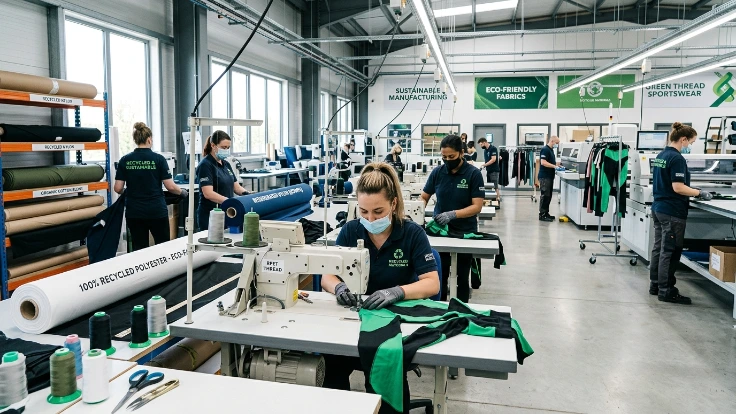
Modern sportswear buyers ask about materials, labor practices, certifications, durability, and waste. GHC Sportswear® supports this direction through resources like sustainable sportswear manufacturing, which explains how eco-conscious production is becoming more important for brands and B2B buyers.
Quick Overview of Forgotten Olympic Sports
| Forgotten Olympic Sport | Olympic Appearance | Main Skill Tested | Why It Disappeared |
|---|---|---|---|
| Tug-of-war | 1900 to 1920 | Strength, teamwork, endurance | Olympic program became more standardized |
| Croquet | Paris 1900 | Precision and control | Limited global participation and interest |
| Plunge for distance | St. Louis 1904 | Glide, breath control, body position | Low spectator appeal |
| Rope climbing | Early Olympic gymnastics editions | Upper-body strength and speed | Gymnastics evolved toward broader apparatus events |
| Live pigeon shooting | Associated with Paris 1900 competitions | Accuracy and shooting skill | Ethical concerns and changing public values |
These forgotten Olympic sports show that the Games have always changed with society, audiences, governance, and athletic standards.
Forgotten Olympic Sports vs Modern Olympic Sports
The difference between forgotten Olympic sports and modern Olympic sports is not only about popularity. It is about structure.
| Area | Forgotten Olympic Sports | Modern Olympic Sports |
|---|---|---|
| Governance | Often weaker or regional | International federation structure |
| Rules | Sometimes inconsistent | Standardized global rules |
| Participation | Often limited | Broader international participation |
| Spectator appeal | Mixed or low | Stronger broadcast and audience value |
| Athlete safety | Less developed | More regulated |
| Ethics | Reflected older values | Must match modern standards |
| Apparel needs | Often simple or informal | Sport-specific performance apparel |
| Commercial support | Limited | Strong sponsorship, branding, and product ecosystems |
Modern Olympic sports are not only competitions. They are part of full ecosystems involving athletes, coaches, federations, sponsors, broadcasters, apparel manufacturers, and fans.
That is why custom sportswear is more important now than ever. Teams need coordinated apparel. Athletes need better fabrics. Brands need performance-driven designs. Clubs and academies need consistent uniforms.
What Forgotten Olympic Sports Teach Modern Teams
Forgotten Olympic sports may seem like old curiosities, but they offer useful lessons for modern teams and sports organizations.
Team identity matters
Tug-of-war showed that team coordination can be as important as individual strength. Modern teams still need a shared visual identity through uniforms, warm-ups, tracksuits, and training apparel.
Rules and standards matter
Sports survive when rules are clear and consistent. Apparel production works the same way. Size charts, fabric standards, logo placement, and quality control must be structured.
Spectator experience matters
Plunge for distance faded partly because it did not excite audiences. Sportswear brands also need to think about visibility, photography, social media, and presentation. A team kit should look clear in person and on camera.
Values matter
Live pigeon shooting is a strong reminder that ethics change. Modern buyers care more about responsible sourcing, sustainability, and product safety.
Evolution is normal
Rope climbing disappeared from the Olympic program, but strength training stayed important. Sports evolve, and apparel must evolve with them.
GHC Sportswear® supports this evolution by helping B2B buyers create modern sportswear that fits real athletic use and branding needs.
Practical Use Cases for Teams, Clubs, and Brands
Sports clubs
A club can use sports history content to educate young athletes and build stronger team culture. Custom uniforms, training tops, and club merchandise can connect that culture to daily practice.
Academies
Academies can use stories from Olympic history to inspire athletes while also building organized apparel systems across age groups and training squads.
Sportswear brands
Brands can use historic sport themes for limited collections, storytelling campaigns, and educational blog content.
Wholesalers and distributors
Distributors can use sports-history articles to attract clubs, schools, and teams searching for sports content, then guide them toward uniform and apparel solutions.
Private label businesses
Private label brands can build collections inspired by heritage sports, classic teamwear, retro athletics, or Olympic-style training apparel.
Build Modern Sportswear with GHC Sportswear®
Forgotten Olympic sports show how much sport has changed. But one thing has stayed the same: athletes and teams need clothing that supports movement, identity, and performance.
If you are building apparel for sports teams, clubs, academies, schools, retailers, distributors, wholesalers, event organizers, or private label sportswear brands, GHC Sportswear® can help with custom sportswear manufacturing.
GHC Sportswear® works with:
- Sports teams
- Clubs
- Academies
- Schools
- Colleges
- Sportswear brands
- Wholesalers
- Distributors
- Retailers
- Private label businesses
- Event organizers
GHC Sportswear® can support:
- Custom team uniforms
- Training wear
- Tracksuits
- Performance T-shirts
- Sports shorts
- Warm-up jackets
- Custom logos
- Names and numbers
- Private labels
- Bulk production
- Product sampling
- Branding and packaging
Buyers can explore available product categories on the GHC Sportswear® products page and learn more about custom production through the GHC Sportswear® services page.
For B2B buyers, the goal is not only to create apparel. The goal is to create sportswear that fits the sport, represents the team, supports movement, and can be produced consistently.
Contact GHC Sportswear® for custom sportswear manufacturing support:
WhatsApp: https://wa.me/ghcsportswear
Email: info@ghcsportswar.com
Contact page: GHC Sportswear® contact us
Conclusion
Forgotten Olympic sports reveal how much the Games have changed since the early modern Olympic era. Tug-of-war, croquet, plunge for distance, rope climbing, and controversial early events such as live pigeon shooting show that the Olympic program was once much more experimental.
Some events disappeared because they lacked global appeal. Some were too limited for spectators. Some were replaced by better-organized sports. Some no longer matched modern ethical expectations.
But these forgotten Olympic sports still matter because they show how sport evolves.
Modern athletes need better training systems. Teams need stronger identity. Clubs need organized apparel. Brands need products that match today’s performance and sustainability expectations.
GHC Sportswear® helps teams, clubs, academies, wholesalers, distributors, retailers, and private label businesses create custom sportswear for the sports world as it exists today: faster, more organized, more professional, and more brand-conscious than ever before.
Related Blog:
Arshad Nadeem Olympic Record: https://ghcsportswear.com/arshad-nadeem-olympic-record/
Essential Sports Gear: https://ghcsportswear.com/essential-sports-gear/
Custom Team Uniforms Benefits: https://ghcsportswear.com/custom-team-uniforms-benefits/