Forgotten Sports from History: Lost Games That Shaped Modern Sport
Forgotten sports from history show how much human competition has changed over time. Some games were once watched by huge crowds, supported by rulers, played by nobles, or treated as major public entertainment. Today, many of those sports survive only in old records, specialist clubs, museums, or small regional communities.
That does not make them irrelevant.
These lost sports reveal what different societies valued. Ancient Rome loved speed, danger, and spectacle. Medieval Europe admired martial skill, courage, status, and ceremony. Early modern Europe enjoyed court games, lawn games, and aristocratic pastimes. The modern sports world then moved toward standardized rules, safer competition, global participation, and better spectator appeal.
The story of forgotten sports from history is also connected to sportswear. Every sport creates its own clothing needs. Chariot racers needed control and protection. Knights used armor, colors, and heraldic identity. Court tennis players needed movement-friendly clothing. Modern athletes now need breathable fabrics, moisture control, stretch, durability, compression, team branding, and professional uniform systems.
GHC Sportswear® works in today’s version of that same sporting evolution. Instead of producing clothing for charioteers or knights, GHC Sportswear® helps sports teams, clubs, academies, wholesalers, distributors, retailers, and private label brands create custom sportswear for modern athletic needs.
This article explores forgotten sports from history, why they once mattered, why they declined, and what modern teams and sportswear buyers can learn from them.
Why Forgotten Sports from History Disappear
Sports rarely disappear for one simple reason. Most fade because society changes around them.
A sport may decline when its equipment becomes too expensive, its facilities become difficult to maintain, its rules are too complicated, or public interest moves to faster and easier alternatives. Some sports disappear because safety expectations change. Others become niche because they remain popular only in one region or social class.
Common reasons sports disappear include:
- Changing social values
- New technology
- Safety concerns
- Lack of standard rules
- Expensive facilities
- Declining public interest
- Better alternatives
- Weak international structure
- Limited participation
- Poor spectator appeal
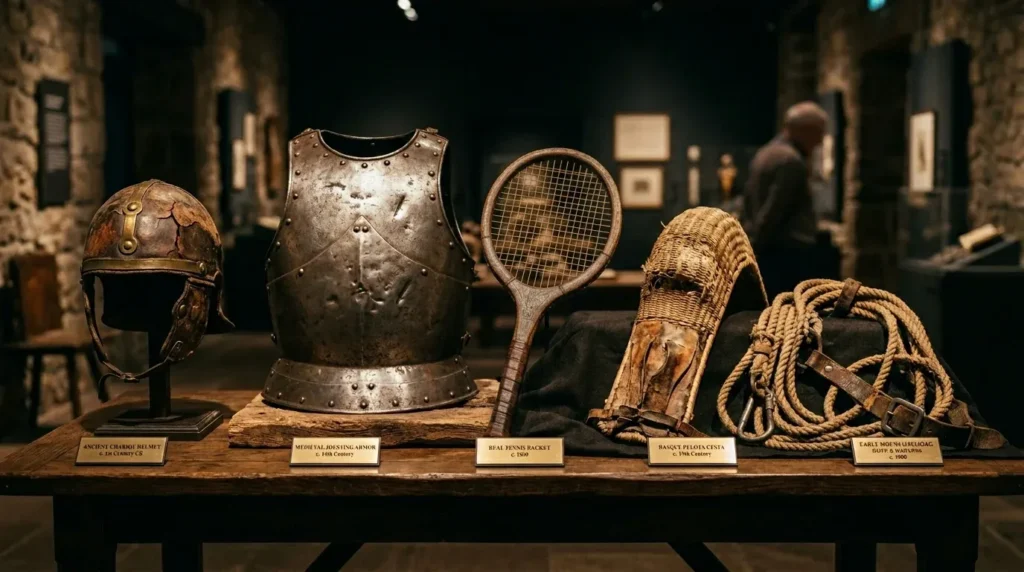
Some forgotten sports from history never fully vanished. Real tennis, Basque pelota, tug-of-war, and jousting still exist in certain forms. But they no longer dominate public attention the way they once did.
This pattern still matters today. Modern sports and apparel markets also change. A product category can rise quickly, become mainstream, or fade if it no longer fits customer needs.
That is why sportswear brands must keep improving. Teams now expect custom uniforms, sponsor logos, breathable fabrics, sublimation printing, private label packaging, and consistent repeat production. GHC Sportswear® supports this modern demand through custom apparel development, teamwear manufacturing, activewear production, and branded sportswear solutions.
Ancient Forgotten Sports from History
Ancient sports were often connected to public entertainment, religion, politics, military preparation, and social identity. Many were more dangerous than modern sports because safety standards were very different.
Chariot Racing: The Roman Empire’s High-Speed Spectacle
Chariot racing is one of the most famous forgotten sports from history. In the Roman Empire, it was not a small recreational event. It was a huge public spectacle.
The most famous venue was the Circus Maximus in Rome. Britannica describes the Circus Maximus as one of the largest sports arenas ever built, with an estimated capacity of around 150,000 after rebuilding under Julius Caesar. The scale of the venue shows how important chariot racing was to Roman public life. You can read more about the Circus Maximus through Britannica.
Chariot races involved speed, danger, control, and crowd excitement. Drivers had to manage horses, sharp turns, aggressive rivals, and the risk of violent crashes. Fans supported racing factions, creating a culture that looked surprisingly similar to modern team loyalty.
Chariot racing had:
- Teams and colors
- Famous athletes
- Large crowds
- Political attention
- Dangerous competition
- Strong fan identity
Why chariot racing disappeared
Chariot racing declined as the Roman Empire weakened. Large public games required money, organization, venues, horses, political support, and public stability. As Roman institutions collapsed, the sport lost the system that made it possible.
Religious and cultural changes also played a role. As Christianity became more influential, many older public spectacles lost approval or support.
What modern sportswear buyers can learn
Chariot racing shows that sport has always been about more than performance. It has also been about identity, colors, teams, spectacle, and public recognition.
Modern sports teams still depend on these same ideas. Uniform colors, logos, numbers, warm-up gear, and teamwear all help create identity.
For modern teams, GHC Sportswear® explains this clearly in its guide on custom team uniforms benefits, where teamwear is connected to unity, confidence, and professional presentation.
Medieval Forgotten Sports from History
Medieval sports were often linked to warfare, nobility, ceremony, and physical courage. Some were training exercises that became public entertainment.
Jousting: The Knight’s Ultimate Public Test
Jousting is one of the most recognizable forgotten sports from history. It involved two armored knights charging toward each other on horseback with lances. The goal was to strike the opponent accurately, break the lance, or unseat the rival.
Jousting was not only entertainment. It was connected to martial skill, social rank, bravery, and reputation. Knights used armor, shields, banners, and colors to represent identity and status.
World History Encyclopedia explains that jousting became especially popular in medieval European tournaments and allowed knights to display skill, courage, and prestige. You can read more about medieval jousting for historical context.
Why jousting disappeared
Jousting declined as warfare changed. Firearms, professional armies, and new battle tactics reduced the military role of armored knights. When knights became less central to war, their sporting traditions also lost importance.
Safety was another issue. Jousting could cause serious injury or death. As modern sport developed, organized competition moved toward clearer rules and safer formats.
What jousting teaches modern teams
Jousting had one strong feature that modern sport still uses: visual identity.
Knights used crests, colors, armor details, and symbols. Today, sports teams use jerseys, logos, player numbers, sponsor marks, and custom colors.
The form has changed, but the purpose is similar. Athletic clothing helps people recognize the competitor, team, club, or brand.
GHC Sportswear® helps modern teams and B2B buyers create that identity through custom uniforms, tracksuits, training wear, and branded apparel.
Court and Lawn Games That Lost Mainstream Appeal
Some forgotten sports from history did not disappear because they were violent or unsafe. They faded because simpler, more accessible versions became more popular.
Real Tennis: The Royal Game That Became a Niche Sport
Real tennis, also called court tennis or royal tennis, is one of the oldest racket sports still played today. It is the ancestor of modern lawn tennis and was historically linked with royal courts and elite clubs.
Real tennis is played indoors on a walled court with unusual angles, sloping surfaces, and complex rules. It requires strategy, touch, court awareness, and deep technical knowledge.
This sport did not fully disappear, but it became niche. The Guardian reported in 2025 on the opening of a new real tennis court in Sydney, showing that the sport still has dedicated players even though it remains far from mainstream. The article about real tennis in Sydney shows how old sports can survive through committed communities.
Why real tennis declined
Real tennis lost mainstream popularity because lawn tennis was easier to play, easier to watch, and easier to organize. Lawn tennis needed simpler courts and clearer rules for mass participation.
This is a common reason forgotten sports from history fade. A sport may remain interesting, but if a simpler alternative appears, the wider public often chooses the easier option.
Product lesson for brands
Sportswear products follow the same rule. If a garment is too complicated, too expensive, uncomfortable, or difficult to reorder, buyers will look for a better alternative.
Modern sportswear should be practical. It should fit well, wash well, support movement, and be easy to reproduce in bulk.
GHC Sportswear® supports this through its custom manufacturing services, which help buyers choose fabric, fit, printing, embroidery, labels, packaging, and production methods through the GHC Sportswear® services page.
Pall Mall: The Lawn Game Before Croquet
Pall Mall was a lawn game popular in parts of Europe during the 16th and 17th centuries. Players used a mallet to hit a ball through hoops or along a course. It is often discussed as one of the predecessors to croquet.
Pall Mall was connected to aristocratic leisure, gardens, and social play. It needed space, equipment, and time, which made it less accessible to ordinary players.
Why Pall Mall faded
Pall Mall declined as croquet became more organized and widely accepted. Croquet offered a clearer and more refined version of similar lawn-game ideas.
This is another pattern seen in forgotten sports from history: a sport does not always vanish because people dislike it. Sometimes it is replaced by a cleaner, better-organized format.
What B2B buyers can learn
Standardization helps products scale.
For custom sportswear, this means clear size charts, consistent fabric specifications, repeatable colors, reliable logo placement, and stable production quality.
A buyer may order once because a product looks good. But they reorder when sizing, fabric, quality, and communication stay consistent.
Regional Sports That Became Niche
Some forgotten sports from history are not truly gone. They remain strong in specific regions but lost wider international visibility.
Basque Pelota and Jai Alai: Speed, Skill, and Regional Identity
Basque pelota is a traditional sport from the Basque Country. It includes several forms, with players hitting a ball against a wall using the hand, racket, bat, or cesta.
Jai alai is one of the best-known forms. Britannica describes jai alai as a Basque-origin ball game played in a three-walled court using a long curved cesta to catch and throw a hard rubber ball. You can read Britannica’s explanation of jai alai for more background.
Jai alai was once popular in parts of the United States, Latin America, and the Philippines, especially where frontons and betting systems supported the sport.
Why Basque pelota declined internationally
Basque pelota and jai alai declined outside core regions because the sport needed specialized facilities, skilled players, and a strong betting or spectator culture. As other sports became easier to watch and organize, jai alai lost some of its wider appeal.
Reasons for decline included:
- Expensive fronton facilities
- Smaller player base
- Competition from mainstream sports
- Reduced betting appeal in some markets
- Limited media visibility
- Regional concentration
What this teaches sportswear brands
Regional identity can be powerful, but growth requires accessibility. A sportswear brand may start with a narrow community, but to scale, products must be easy to understand, easy to order, and suitable for real use.
GHC Sportswear® supports sportswear brands, clubs, and private label businesses across many categories through the GHC Sportswear® products page.
Forgotten Sports from History and the Olympic Games
Some forgotten sports from history were once part of the Olympic Games. They later disappeared as the Olympic program became more structured and global.
GHC Sportswear® has a full guide on forgotten Olympic sports, which covers events such as tug-of-war, croquet, rope climbing, and plunge for distance. This section gives a shorter overview within the wider history of lost sports.
Tug-of-War: Strength, Teamwork, and Olympic History
Tug-of-war was part of the Olympic Games from 1900 to 1920. Teams pulled against each other until one side gained the required distance. Today, many people think of tug-of-war as a school or community activity, but it was once a serious Olympic competition.
Olympics.com has covered its Olympic history in an article about Antwerp 1920 and tug-of-war.
Why tug-of-war disappeared
Tug-of-war disappeared from the Olympic program as the Games became more standardized. The Olympic movement increasingly focused on sports with stronger international structures, clearer rules, and broader appeal.
The sport still exists recreationally and competitively, but it no longer has Olympic status.
Modern lesson from tug-of-war
Tug-of-war proves that teamwork can be as important as individual power. Every athlete must pull together with timing, trust, and shared effort.
Modern team uniforms support a similar idea. A coordinated team look helps athletes feel part of one group. This is why custom teamwear remains important for clubs, schools, academies, and sports organizations.
Rope Climbing: An Early Olympic Strength Test
Rope climbing was once part of Olympic gymnastics. Athletes climbed a vertical rope as fast as possible, testing grip strength, upper-body power, speed, and control.
Olympics.com lists official results for the Paris 1924 men’s rope climbing event, showing its place in Olympic history.
Why rope climbing disappeared
Rope climbing disappeared because gymnastics evolved. Other apparatus events became more popular, more dynamic, and better suited for modern Olympic competition.
But the skill itself did not disappear. Pulling strength, grip, and body control remain important in gymnastics, climbing, obstacle racing, fitness training, and many sports.
Modern training apparel must support these movements through stretch, breathability, and strong stitching. GHC Sportswear® explains performance fabric choices in its guide on moisture-wicking fabrics.
Forgotten Sports from History: Comparison Table
| Sport | Main Era or Peak | Main Skill | Why It Declined |
|---|---|---|---|
| Chariot racing | Ancient Rome | Speed, control, risk management | Fall of Roman public entertainment systems |
| Jousting | Medieval Europe | Riding, lance control, martial skill | Firearms and changing warfare |
| Real tennis | Medieval to early modern Europe | Strategy, touch, court skill | Lawn tennis became more accessible |
| Pall Mall | 16th–17th century Europe | Mallet control and accuracy | Croquet became more organized |
| Basque pelota / jai alai | Regional tradition with 20th-century peaks | Speed, reaction, throwing skill | Facility cost and declining betting markets |
| Tug-of-war | Early modern Olympics | Strength and teamwork | Olympic program standardization |
| Rope climbing | Early Olympic gymnastics | Grip, speed, upper-body strength | Gymnastics evolved toward other apparatus |
This table shows that most forgotten sports from history faded because the world around them changed.
Forgotten Sports from History vs Modern Sports
The biggest difference between forgotten sports from history and modern sports is structure.
| Area | Forgotten Sports from History | Modern Sports |
|---|---|---|
| Rules | Often local or inconsistent | Standardized by governing bodies |
| Facilities | Often expensive or specialized | Built for wider access |
| Safety | Less regulated | More safety-focused |
| Apparel | Informal, symbolic, or status-based | Performance and identity-driven |
| Audience | Local, royal, regional, or class-based | Global and media-driven |
| Branding | Crests, colors, factions, tradition | Logos, uniforms, sponsors, merchandise |
| Growth | Depended on culture and patrons | Depends on participation, media, and business systems |
Modern sport is more organized. It also requires better apparel planning.
Teams need uniforms. Athletes need training gear. Clubs need identity. Brands need consistent production. Retailers need products that customers understand.
GHC Sportswear® supports this modern sports ecosystem by helping B2B buyers create apparel that fits the sport, supports the athlete, and represents the team professionally.
What Forgotten Sports from History Teach Modern Sportswear Brands
Forgotten sports from history are useful because they show how sport and culture change together.
Identity matters
Chariot racing had factions. Jousting had heraldic colors. Modern teams have jerseys, logos, colors, numbers, and sponsor placement.
A uniform is part of identity, not just clothing.
Accessibility matters
Real tennis declined because lawn tennis was easier to access. Sportswear brands should also make products easy to buy, wear, wash, reorder, and understand.
Safety expectations change
Jousting and some ancient spectacles became less acceptable as society changed. Modern buyers now care more about safer materials, ethical sourcing, and responsible production.
For modern responsible production, GHC Sportswear® has a guide on sustainable sportswear manufacturing.
Performance needs evolve
Older sports often used clothing based on status, tradition, or available materials. Modern athletes need technical apparel, moisture control, compression, stretch, durability, and sport-specific construction.
GHC Sportswear® also covers related topics such as compression clothing and performance fabrics for active use.
Storytelling helps teams and brands connect
Sports history gives teams and brands a way to connect with culture. A club can build pride through heritage. A school can teach athletes how sport evolved. A private label brand can use retro sports inspiration for a modern collection.
The key is to use history in a way that feels relevant, not forced.
Practical Use Cases for Modern Sports Businesses
Sports teams and clubs
Teams can use lessons from forgotten sports from history to build culture and identity. Custom uniforms, warm-ups, tracksuits, and training kits help turn that identity into something athletes wear every day.
Academies and schools
Academies can use stories from old sports to teach athletes how competition changes over time. They can also build organized apparel systems for teams, training groups, and tournaments.
Private label sportswear brands
Private label brands can develop heritage-inspired sportswear collections using classic cuts, old-sport references, retro colors, and modern performance fabrics.
Wholesalers and distributors
Distributors can supply schools, teams, clubs, and academies with custom sportswear that fits modern needs while still allowing traditional team identity.
Retailers
Retailers can create sports-history-inspired collections, lifestyle apparel, fanwear, or limited-edition teamwear with a storytelling angle.
Build Modern Sportswear with GHC Sportswear®
The sports in this article may be forgotten, but the need for quality sportswear is stronger than ever. Modern athletes and teams need apparel that supports performance, comfort, identity, and durability.
GHC Sportswear® works with:
- Sports teams
- Clubs
- Academies
- Schools
- Colleges
- Sportswear brands
- Retailers
- Wholesalers
- Distributors
- Private label businesses
- Event organizers
GHC Sportswear® can support:
- Custom sports uniforms
- Teamwear production
- Tracksuits
- Training shirts
- Hoodies
- Performance T-shirts
- Athletic shorts
- Compression wear
- Private label apparel
- Custom logos
- Names and numbers
- Bulk production
- Sampling and product development
- Branding and packaging
Buyers can explore apparel categories on the GHC Sportswear® products page and learn more about production support on the GHC Sportswear® services page.
For B2B buyers, the goal is not only to produce clothing. The goal is to create sportswear that fits the sport, supports the athlete, represents the team, and can be produced consistently.
Contact GHC Sportswear® for custom sportswear manufacturing support:
WhatsApp: https://wa.me/ghcsportswear
Email: info@ghcsportswar.com
Contact page: GHC Sportswear® contact us
Conclusion
Forgotten sports from history show that sport is always changing. Chariot racing, jousting, real tennis, Pall Mall, Basque pelota, tug-of-war, and rope climbing all tell a different story about how people competed, watched, trained, and expressed identity through sport.
Some disappeared because technology changed. Some faded because safer or simpler alternatives became popular. Some became niche because they required special facilities or complex rules. Some lost public attention as modern sports systems became more organized.
But these sports still matter.
They remind us that every sport is shaped by culture, equipment, clothing, audience interest, and social values.
Modern sportswear follows the same pattern. Athletes now expect better fabrics, better fit, better branding, and better production quality. Teams want identity. Brands want consistency. Buyers want apparel that works in real use.
GHC Sportswear® helps modern sports teams, clubs, academies, wholesalers, distributors, retailers, and private label businesses create custom sportswear for today’s athletic world.
Related Blog:
Forgotten Olympic Sports: https://ghcsportswear.com/forgotten-olympic-sports/
Essential Sports Gear: https://ghcsportswear.com/essential-sports-gear/
Custom Team Uniforms Benefits: https://ghcsportswear.com/custom-team-uniforms-benefits/