Sports Ghost Stories: Haunted Stadiums and Cursed Teams in Sports Folklore
Sports ghost stories have always been part of fan culture. Stadiums are emotional places. They hold victories, heartbreaks, rivalries, historic performances, loyal supporters, and memories that last for generations. When a venue becomes old enough, every empty hallway, quiet stand, and late-night shadow can turn into a story.
Some fans talk about haunted stadiums. Others talk about cursed teams. Some stories are playful folklore. Some come from long championship droughts. Some are built around legendary players, famous coaches, strange coincidences, or historic venues that feel bigger than the games played inside them.
These stories should not be treated as confirmed facts. They are part of sports culture, not evidence of the supernatural. But that does not make them useless. Sports ghost stories show how deeply fans connect with teams, stadiums, athletes, and history.
A team is never just a team. A stadium is never just a building.
For brands, clubs, academies, and sportswear businesses, this matters because sports are built on identity. Fans remember colors, uniforms, logos, moments, and legends. GHC Sportswear® works with teams, clubs, academies, retailers, wholesalers, distributors, and private label brands that want to create that kind of lasting identity through custom sportswear and team apparel.
This article explores famous sports ghost stories, haunted stadium legends, cursed teams, and why folklore remains such a powerful part of the sports world.
Why Sports Ghost Stories Stay Popular
Sports ghost stories stay popular because sports are emotional. Fans remember more than scores. They remember where they were, who they watched with, what the team wore, and how the moment felt.
A stadium can hold decades of shared memory. When a fan walks into a historic ballpark or football ground, they are not only entering a venue. They are entering a place filled with old games, famous players, missed chances, last-minute wins, and family traditions.
Sports folklore often grows from:
- Historic stadiums
- Long championship droughts
- Legendary players
- Famous coaches
- Unusual losing streaks
- Dramatic rivalries
- Fan superstition
- Emotional defeats
- Historic wins
- Local storytelling
That is why sports ghost stories often survive even after the supposed curse is “broken.” The story becomes part of the team’s identity.
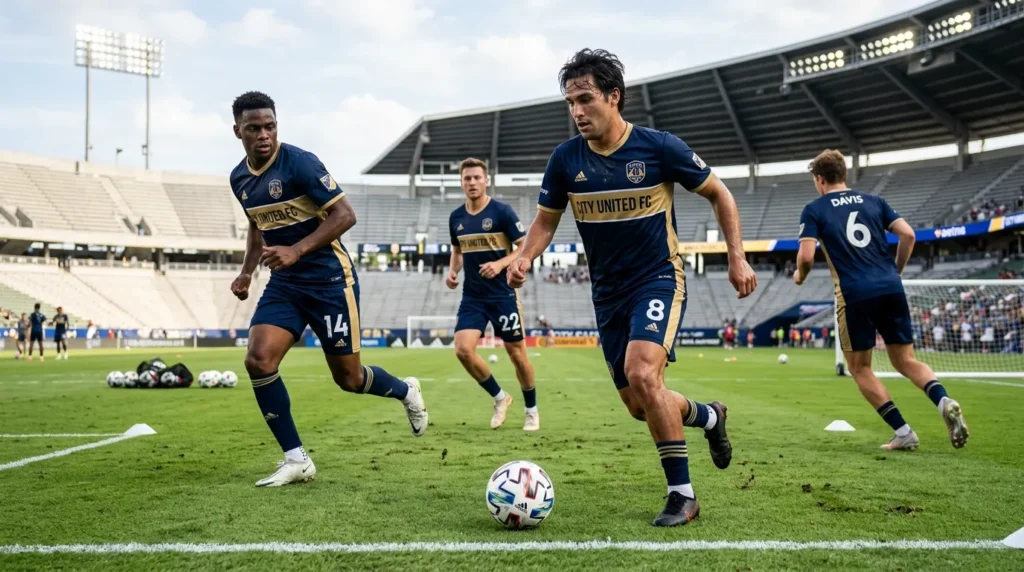
The same idea applies to uniforms and teamwear. A jersey is not only fabric. It carries club colors, player names, sponsor identity, fan memory, and team culture. GHC Sportswear® explains the importance of team identity in its guide on custom team uniforms benefits.
Haunted Stadiums and the Power of Place
Many sports ghost stories begin with stadiums. Old stadiums are perfect settings for folklore because they combine history, crowds, silence, architecture, and emotion.
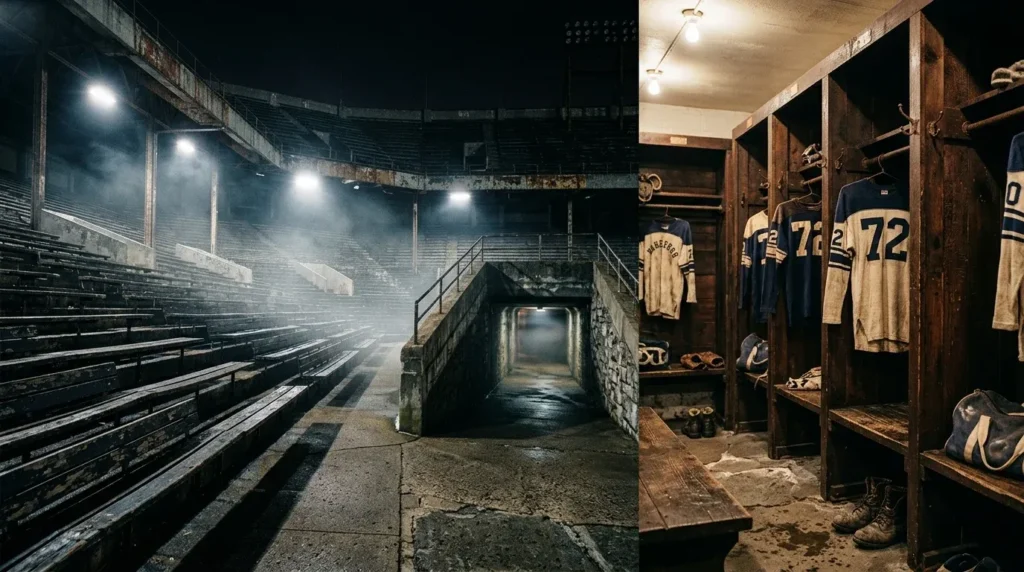
A stadium during a sold-out game is loud and alive. The same stadium late at night can feel completely different. Empty seats, dark tunnels, echoing corridors, and old locker rooms create the kind of atmosphere where stories grow.
Historic venues often become symbols of a city. Fans do not only visit them for games. They visit them because the building itself carries meaning.
That is why haunted stadiums are such a common part of sports folklore.
Fenway Park: Ghost Stories Around the Green Monster
Fenway Park is one of the most famous baseball stadiums in the world. The Boston Red Sox official ballpark information notes that Fenway Park was constructed for the 1912 season, making it one of the most historic venues in Major League Baseball.
Over time, Fenway has collected many stories. Some fans speak about strange shadows, unexplained sounds, and ghostly figures near the famous Green Monster. A few stories even connect the folklore to former Red Sox legends, though these claims remain part of fan imagination rather than confirmed history.
What makes Fenway Park such a strong setting for sports ghost stories is not only age. It is emotion. The stadium has seen legendary performances, painful losses, loyal fans, and decades of baseball memory.
Why Fenway’s legends feel believable to fans
Fenway has the right ingredients for folklore:
- A historic stadium
- A unique left-field wall
- Generational fan loyalty
- A long championship drought
- Legendary players
- Night games and old architecture
- A strong emotional connection with Boston
Even fans who do not believe in ghosts understand why Fenway feels haunted by memory. In sports, memory can be powerful enough to feel like a presence.
The Curse of the Bambino: Baseball’s Most Famous Curse
No list of sports ghost stories is complete without the Curse of the Bambino.
The story began after Babe Ruth left the Boston Red Sox and joined the New York Yankees. The deal was completed in early 1920, and the Red Sox did not win another World Series until 2004.
Fans later described the drought as a curse. The idea became one of the most famous pieces of baseball folklore.
The Curse of the Bambino was not a real supernatural force. It was a way for fans and media to explain decades of frustration, near misses, and heartbreak.
Why the curse became so famous
The Curse of the Bambino worked as a story because it had everything fans remember:
- A legendary player
- A major team decision
- A rival franchise
- An 86-year title drought
- Painful playoff losses
- A dramatic ending in 2004
When the Red Sox finally won the World Series in 2004, the curse became part of baseball history. It did not disappear from memory. Instead, it became a completed legend.
For sports brands and teams, this shows how stories can become part of identity. A team’s history is not only built on wins. It is also built on the pain before the win.
Wrigley Field: Curses, Ghosts, and the Cubs’ Long Wait
Wrigley Field is another venue deeply connected to sports ghost stories. It has history, charm, old architecture, loyal fans, and one of baseball’s most famous curses.
The Chicago Cubs’ Curse of the Billy Goat began in 1945, according to popular baseball folklore. The story says Billy Sianis, owner of the Billy Goat Tavern, was asked to leave Wrigley Field during the World Series because of his goat. The legend says he cursed the Cubs, declaring they would not win again.
The Cubs did not win the World Series again until 2016, ending a 108-year championship drought.
Why Wrigley Field became a folklore landmark
Wrigley Field is more than a stadium. It is a symbol of loyalty through disappointment. Fans kept showing up even when the team did not win championships.
That kind of loyalty creates stories.
Wrigley’s sports ghost stories often involve old players, disappointed fans, strange noises, and the feeling that past seasons still live inside the ballpark. Whether people believe these tales or not, the stadium’s atmosphere makes them easy to imagine.
The curse after 2016
When the Cubs won the World Series in 2016, the Curse of the Billy Goat was considered broken. But like many famous sports curses, it remained part of the team’s culture.
That is the power of sports ghost stories. Even when the curse ends, the legend stays.
Lambeau Field: The Spirit of Vince Lombardi
Lambeau Field, home of the Green Bay Packers, is one of the most respected venues in American football. The Packers’ official history notes that the stadium opened in 1957 and was renamed Lambeau Field in 1965.
Many fans connect Lambeau Field with Vince Lombardi, the legendary coach who helped define the Packers’ winning identity in the 1960s. Some stories describe his “presence” still being felt around the stadium, especially during major games.
This should be understood as folklore and tribute, not evidence. But it shows how a coach can become part of a stadium’s emotional identity.
Why Lombardi’s presence became part of the legend
Vince Lombardi represents discipline, winning standards, leadership, and football tradition. For Packers fans, he is not only a former coach. He is part of the team’s identity.
That is why Lambeau Field sports ghost stories feel different from horror tales. They are more like respect stories. Fans imagine the old coach still watching, still expecting effort, still demanding standards.
For teams and clubs, this connects to a practical lesson: identity is built through standards. Uniforms, training wear, branding, and team presentation all help reinforce those standards.
GHC Sportswear® supports teams and organizations with custom uniforms, tracksuits, training apparel, and performance clothing through its custom wholesale sports uniforms manufacturer page.
Augusta National: Golf Tradition and the Phantom Founder
Augusta National Golf Club, home of the Masters Tournament, is one of the most famous golf venues in the world. The Masters’ official founders page notes that Clifford Roberts served as Chairman of Augusta National from 1931 through 1976 and was named Chairman in Memoriam after his death in 1977.
Because Augusta is such a tradition-heavy venue, it has attracted its own folklore. Some stories mention a phantom figure connected with the course and its strict traditions. These stories are part of golf culture and mystery, not verified fact.
Why Augusta inspires mystery
Augusta National is private, historic, carefully maintained, and strongly linked to tradition. That alone makes it a natural place for legend.
Sports ghost stories often grow where access is limited and reputation is huge. The less ordinary a venue feels, the more likely people are to build stories around it.
Golf is also a sport of silence, patience, and ritual. That atmosphere makes Augusta’s folklore feel different from baseball or football curses. It is quieter, more formal, and more mysterious.
Famous Sports Curses and What They Really Mean
Curses are a major part of sports ghost stories because they give fans a way to explain repeated failure.
When a team loses for decades, fans look for meaning. They ask why. A curse becomes a story that organizes disappointment.
Famous sports curses usually involve:
- A symbolic mistake
- A legendary player
- A fan conflict
- A long losing streak
- A dramatic playoff failure
- A final redemption moment
The curse may not be real, but the emotions behind it are real.
Fans use curses to explain pain, but they also use them to keep hope alive. If a curse can be broken, the future can change.
Haunted Stadiums vs Cursed Teams
Haunted stadium stories and cursed team stories are related, but they are not the same.
| Type | Main Focus | Common Example | Why Fans Remember It |
|---|---|---|---|
| Haunted stadiums | A place with strange or emotional stories | Fenway Park, Wrigley Field, Lambeau Field | The venue feels full of history |
| Cursed teams | A team with long misfortune | Red Sox, Cubs | Fans explain droughts through folklore |
| Player legends | Stories linked to famous athletes | Babe Ruth, Ted Williams, Vince Lombardi | Heroes feel larger than life |
| Venue folklore | Stories tied to architecture or atmosphere | Green Monster, old stands, tunnels | Old buildings feel mysterious |
| Redemption stories | Curses that are finally broken | Red Sox 2004, Cubs 2016 | Fans love closure |
This is why sports ghost stories are not only scary. They are emotional storytelling.
What Sports Ghost Stories Teach Modern Teams
Sports ghost stories may sound like entertainment, but they teach real lessons about sports culture.
History creates identity
Teams with history have stronger emotional connection. Fans care because they know the stories behind the colors, stadium, players, and moments.
Uniforms carry memory
A team jersey becomes part of the story. Fans remember what the team wore during a famous win, painful loss, or championship season.
This is why custom uniforms matter. A uniform can become part of a club’s history.
Fans remember symbols
The Green Monster, Wrigley ivy, Lambeau’s frozen games, and Augusta’s fairways are all symbols. Sports brands need symbols too: colors, logos, slogans, designs, and consistent apparel.
Storytelling builds loyalty
Teams are not built only through results. They are built through shared stories. A club with strong identity can survive losing seasons because fans feel part of something bigger.
Presentation matters
A team that looks organized feels more professional. Uniforms, warm-ups, jackets, caps, and teamwear help create that presentation.
GHC Sportswear® helps teams, clubs, academies, and B2B buyers create apparel that supports identity, performance, and long-term brand recognition.
Sports Ghost Stories and Team Culture
Sports ghost stories are part of team culture because they create shared language. Fans say “the curse,” and everyone understands. They say “the old stadium,” and memories come back.
A strong team culture often includes:
- Historic moments
- Famous players
- Stadium traditions
- Rituals
- Uniform colors
- Rivalries
- Fan chants
- Local legends
- Emotional stories
This is why sports content matters for brands. A sportswear company should not only understand fabric and stitching. It should understand why teams care about identity.
For more sports history content, GHC Sportswear® also covers forgotten sports from history and forgotten Olympic sports. These articles show how sports culture, old games, and team traditions continue to influence modern athletics.
Apparel Lessons from Sports Folklore
A haunted stadium story may seem far away from apparel manufacturing, but the connection is real. The strongest sports brands are built around memory and recognition.
Modern sportswear should support:
- Team identity
- Player comfort
- Sponsor visibility
- Fan recognition
- Performance needs
- Repeat production
- Durable branding
- Professional presentation
A team with strong visual identity is easier to remember. A club with consistent uniforms looks more organized. A brand with reliable apparel builds trust faster.
GHC Sportswear® supports custom apparel production across sportswear categories through the GHC Sportswear® products page and manufacturing support through the GHC Sportswear® services page.
Practical Use Cases for Teams, Clubs, and Brands
Sports teams
Teams can use history, legends, and local identity to create stronger uniforms and teamwear. A custom kit can reflect club colors, founding year, location, or fan culture.
Clubs and academies
Clubs and academies can use storytelling to build pride across age groups. Matching uniforms, tracksuits, and training wear help young athletes feel part of the organization.
Retailers and wholesalers
Retailers and wholesalers can create sports-inspired apparel that connects with fans through culture and nostalgia.
Private label brands
Private label sportswear brands can build collections inspired by historic stadiums, retro teamwear, old-school training apparel, or famous sports folklore.
Event organizers
Sports events can use custom merchandise, limited-edition shirts, hoodies, caps, and fanwear to create lasting memories.
Build Team Identity with GHC Sportswear®
Sports ghost stories prove that teams and venues are remembered through emotion, identity, and visual symbols. The same is true for uniforms and sportswear.
If you are building apparel for a sports team, club, academy, retailer, distributor, wholesaler, event, or private label brand, GHC Sportswear® can help you create custom sportswear that supports both performance and identity.
GHC Sportswear® works with:
- Sports teams
- Clubs
- Academies
- Schools
- Colleges
- Sportswear brands
- Retailers
- Wholesalers
- Distributors
- Private label businesses
- Event organizers
GHC Sportswear® can support:
- Custom sports uniforms
- Teamwear production
- Tracksuits
- Training shirts
- Hoodies
- Performance T-shirts
- Athletic shorts
- Compression wear
- Custom logos
- Names and numbers
- Private labels
- Bulk production
- Branding and packaging
For B2B buyers, the goal is not only to create apparel. The goal is to create sportswear that athletes can wear with pride and fans can recognize instantly.
Contact GHC Sportswear® for custom sportswear manufacturing support:
WhatsApp: https://wa.me/ghcsportswear
Email: info@ghcsportswar.com
Contact page: GHC Sportswear® contact us
Conclusion
Sports ghost stories are part of what makes sports culture memorable. Haunted stadiums, cursed teams, legendary coaches, old ballparks, and strange fan beliefs all add depth to the games people love.
Fenway Park, Wrigley Field, Lambeau Field, and Augusta National are not only venues. They are places where history, memory, folklore, and fan emotion come together.
The Curse of the Bambino and the Curse of the Billy Goat show how fans use stories to explain long years of disappointment. When those curses were finally broken, the stories did not disappear. They became part of the teams’ identities forever.
That is the real power of sports ghost stories. They turn games into legends.
For modern teams, clubs, academies, brands, retailers, wholesalers, distributors, and private label businesses, the lesson is clear: identity matters. History matters. Symbols matter. Apparel matters.
GHC Sportswear® helps teams and sportswear businesses create custom apparel that supports today’s athletes while building the kind of visual identity fans remember.
Related Blog:
Forgotten Sports from History: https://ghcsportswear.com/forgotten-sports-from-history/
Forgotten Olympic Sports: https://ghcsportswear.com/forgotten-olympic-sports/
Custom Team Uniforms Benefits: https://ghcsportswear.com/custom-team-uniforms-benefits/