

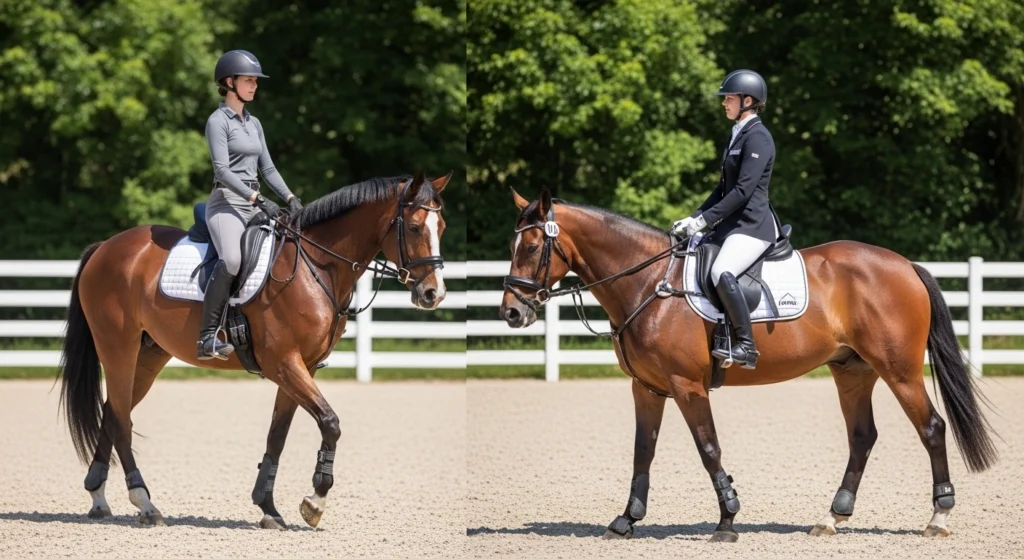
Everyday Riding vs Competition Gear: What’s the Difference?
At first glance, everyday riding apparel and competition gear may look similar. Both include breeches, jackets, boots, and technical tops. But at a professional level, the differences are deliberate — and significant.
Understanding everyday riding vs competition gear helps riders, academies, and equestrian brands invest in the right apparel for the right purpose.
Purpose Defines Everything
Everyday riding apparel is built for repetition.
Competition gear is built for presentation.
Training sessions involve sweat, friction, dust, repeated washing, and long hours in the saddle. Durability and comfort dominate the decision.
Competition, however, introduces regulation and visual standards. Organisations such as The Pony Club UK outline specific turnout requirements for events, reinforcing that presentation is not optional — it is judged.
This single difference — repetition vs representation — shapes everything else.
Fabric Selection: Resilience vs Refinement
Daily training gear prioritises:
-
Stretch recovery
-
Abrasion resistance
-
Moisture management
-
Easy maintenance
Competition garments prioritise:
-
Clean silhouette
-
Structured tailoring
-
Lightweight elegance
-
Minimal visible wear
Publications like Dressage Today often highlight how show coats are engineered for appearance in the arena rather than long-term daily wear.
That’s why many professionals separate their wardrobes completely. Training breeches absorb stress. Show breeches preserve crisp lines.
Construction and Fit Differences
Everyday riding apparel allows slight flexibility in tailoring. Comfort is dominant.
Competition apparel demands precision.
In regulated events under bodies such as British Dressage, jacket cut, colour, and overall turnout are scrutinised. A loose shoulder or uneven fit becomes visible under arena lighting.
This is why competition jackets often feature:
-
Structured shoulder seams
-
Defined waist shaping
-
Controlled stretch panels
-
Refined stitching
For teams seeking repeatable show standards, structured development of custom equestrian show jackets ensures consistency across riders. See Here.
Colour and Design Expectations
Training gear permits variety. Riders experiment with colours, seasonal fabrics, and practical designs.
Competition gear, by contrast, follows discipline norms:
-
Navy, black, or dark show coats
-
Neutral breeches
-
Subtle branding
Eventing Nation frequently covers how even small turnout variations can affect perception in the arena.
Competition apparel is conservative by design. It reinforces professionalism.
Durability Strategy
Here is where the biggest misunderstanding occurs.
Many assume competition gear must be stronger. In reality, everyday riding gear usually handles more physical stress.
Training apparel:
-
Endures daily washing
-
Faces constant friction
-
Handles outdoor exposure
Competition apparel:
-
Worn less frequently
-
Maintained carefully
-
Stored properly between events
For academies and riding schools managing both categories, bulk sportswear production allows separation of training lines and competition lines under controlled sizing systems:
https://ghcsportswear.com/custom-wholesale-equestrian-gear-manufacturer/
Cost Structure Differences
Because competition gear focuses on tailoring and presentation, per-unit cost may be higher. However, it is replaced less frequently.
Everyday gear may have lower individual cost but higher replacement frequency due to wear.
Professional riders budget accordingly — separating “performance wear” from “arena wear.”
The Strategic Approach Used by Professionals
Serious riders do not mix these categories casually.
They:
-
Maintain dedicated training kits
-
Protect competition apparel
-
Plan seasonal rotation
-
Work with manufacturers for consistency
Structured sampling and production systems help maintain both categories without inconsistency. An overview of apparel development processes can be reviewed here: See Our Process
Final Perspective
The difference between everyday riding vs competition gear is not cosmetic. It is functional, structural, and strategic.
Training apparel is built for endurance.
Competition apparel is built for precision and presentation.
Understanding that distinction allows riders and organisations to invest smarter — and maintain a professional standard year-round.
For custom development, bulk production, or team coordination support:
WhatsApp: https://wa.me/ghcsportswear
Email: info@ghcsportswar.com