

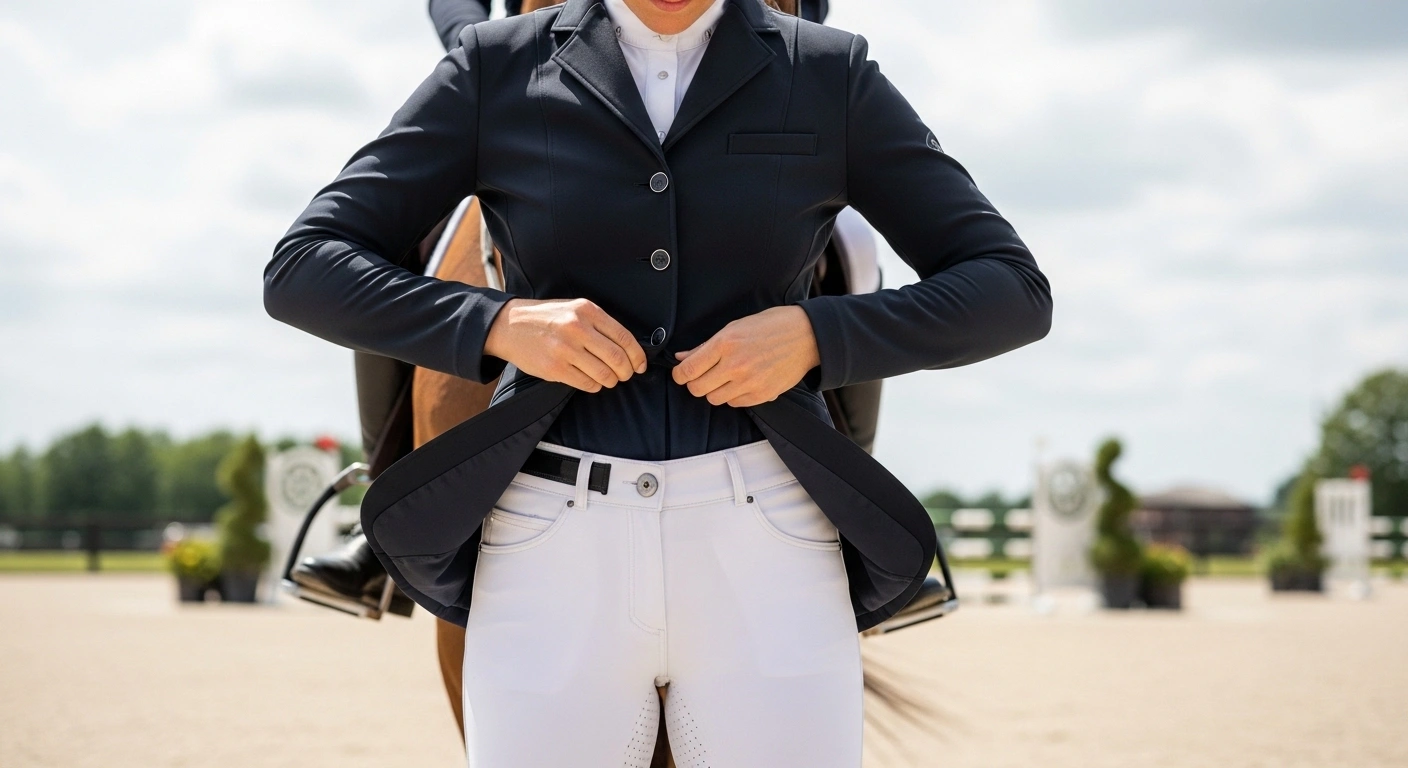
Professional riders do not “shop.”
They evaluate.
At elite level, riding apparel is not fashion — it is functional equipment that directly affects balance, precision, endurance, and presentation. The decision-making process is systematic, shaped by discipline demands, regulatory expectations, and long-term durability.
Understanding how professionals choose their apparel reveals why performance gear differs from retail collections.
It Starts With Movement, Not Appearance
Before colour or branding is considered, professionals test mobility.
Riders competing in international circuits often follow discipline standards outlined by organisations such as British Showjumping, where turnout and structure requirements influence jacket design and fit.
What professionals assess immediately:
-
Does the jacket restrict shoulder rotation?
-
Does the breech maintain grip under extended saddle time?
-
Does the fabric recover shape after repeated flexion?
If the answer is no, the garment is rejected — regardless of aesthetics.
Discipline Dictates Construction
Different equestrian disciplines impose different technical requirements.
Publications like Practical Horseman frequently analyse how dressage coats differ structurally from show jumping jackets, particularly in length, stiffness, and tailoring.
A dressage rider will often prioritise:
-
Longer structured coats
-
Clean vertical lines
-
Refined tailoring
A show jumper typically prioritises:
-
Lightweight stretch
-
Athletic cut
-
Reduced bulk
Professional riders select apparel engineered for their discipline — not “multi-purpose” pieces.
Climate and Competition Calendar Matter
Elite riders often compete across regions and climates. Apparel must transition between indoor arenas, humid outdoor circuits, and colder training months.
The United States Eventing Association regularly discusses environmental demands placed on event riders, reinforcing the importance of breathable yet resilient fabrics.
This is why professionals invest in layered systems rather than single-season garments.
Fit Is Evaluated Under Real Conditions
Fit is not judged in a showroom.
Professionals test apparel:
-
During extended flatwork
-
Over fences
-
After washing cycles
-
During travel
Stability at the waistline, seat grip consistency, and shoulder articulation determine long-term usability.
This is also why many teams avoid inconsistent retail sizing and instead work directly with structured manufacturers offering repeat production standards.
Custom equestrian show jackets developed under controlled sizing systems can be reviewed here
Durability Is a Financial Decision
Professional riders train daily. Apparel is exposed to friction, sweat, repeated laundering, and transport.
Rather than replacing garments each season, many academies and competitive teams prefer controlled production partnerships.
Structured bulk supply options for teams and academies are outlined here
Working directly with a manufacturer allows:
-
Fabric consistency across seasons
-
Controlled restocking
-
Logo standardisation
-
Long-term cost efficiency
The Professional Decision Framework
Elite riders evaluate apparel across five dimensions:
-
Mobility
-
Discipline compliance
-
Climate adaptability
-
Structural durability
-
Presentation consistency
Anything failing one of these categories is excluded.
Final Perspective
How professional riders choose their riding apparel is driven by precision and practicality. The closer a garment aligns with athletic performance, regulatory standards, and long-term resilience, the more valuable it becomes.
For teams, academies, or equestrian brands seeking structured production rather than retail purchasing, direct manufacturing support provides greater control.
To discuss bulk orders or custom development:
WhatsApp: https://wa.me/ghcsportswear
Email: info@ghcsportswar.com