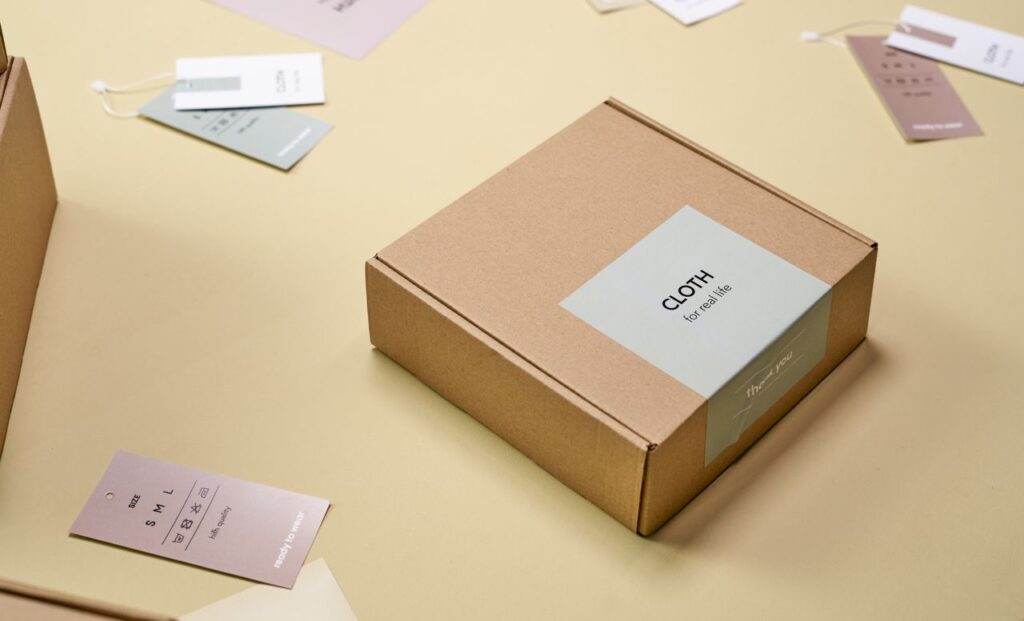
Private label packaging is the packaging a manufacturer or fulfillment provider prepares for products sold under your brand. For clothing, it can include individual garment bags, paper sleeves, hangtags, size stickers, retail boxes and shipping cartons.
The right arrangement protects the garment, identifies the correct product and gives the customer a consistent presentation. It also needs to work for the people receiving, storing, picking and dispatching your stock.
A branded box may suit a gift collection. A wholesale activewear order may need compact individual bags and clear carton labels. The choice depends on the garment, sales channel and delivery route.
This guide explains how to select private label packaging, write usable specifications, compare costs and approve the complete packed product before bulk production. For the wider development process, read the Private Label Apparel Manufacturing Guide.
What Should Private Label Packaging Include?
A practical clothing packaging system includes the components required to protect, identify and handle the product at each stage. Some components carry branding; others support storage or transport.
Start by separating three decisions:
| Packaging level | Main purpose | Typical components |
|---|---|---|
| Individual garment pack | Protect and identify one sellable unit | Bag, sleeve, size sticker, hangtag |
| Retail or customer presentation | Present the purchase in the intended format | Tissue, retail box, insert, garment wrap |
| Transport packaging | Move grouped units to their destination | Carton, dividers where needed, packing list, carton label |
These levels can overlap. A suitable garment bag might also serve as the retail presentation. However, an individual bag does not automatically provide enough protection for a courier shipment.
Decide who supplies and applies each component. The clothing manufacturer may pack the garments for warehouse receipt, while a separate fulfillment team adds the customer-facing mailer or box when an order arrives.
Document that division of work before comparing quotations. Otherwise, two suppliers may quote different portions of the packaging process.
Choose Packaging Around Your Sales Channel
Your private label packaging should support the way the business sells and distributes clothing. Start with the receiving location and follow the product through to the customer.
Wholesale and retail distribution
Retailers need to receive the correct styles, colors and sizes in a format their teams can handle. Ask for the retailer’s packing instructions before designing bags, tickets or cartons.
A store may want individually packed garments. Another buyer may request products on hangers or in defined size assortments. The retailer can also specify barcode placement and carton identification.
Keep those requirements alongside your brand artwork. Attractive presentation cannot compensate for an assortment that the buyer cannot receive accurately.
Direct-to-consumer orders
An online brand needs packaging that works for individual orders and returns. Consider whether the customer buys one garment, a matching set or several unrelated products.
The manufacturer’s individual pack and the fulfillment provider’s shipping pack serve different jobs. Check whether both are necessary and whether either can perform more than one function without compromising protection.
For example, one small bag size may fit a folded sports bra but fail to accommodate a hoodie. A range of mailer sizes can help the fulfillment team select an appropriate outer pack.
Clubs, academies and teamwear buyers
A team order may require packs organized by player rather than by garment style. One player’s jersey, shorts and socks could form a complete distribution pack.
Confirm whether the buyer wants individual garment identification, a player name on the grouped pack or both. Keep the packing list consistent with the approved team roster.
This requirement changes the packing labor and checking process. Include it when requesting a quotation instead of introducing it after production finishes.
Marketplaces and fulfillment warehouses
Obtain the current receiving requirements from the platform or warehouse you intend to use. Check unit identification, bag closures, carton labels and any restrictions on inserts or presentation materials.
Requirements can vary between programs and destinations. A bag approved for one retail customer may need changes for another receiving operation.
Compare Private Label Packaging Materials
Choose materials according to protection, handling and the intended presentation. Then assess the complete pack through sampling.
| Option | Useful for | What to check |
|---|---|---|
| Clear garment bag | Visible product identification and compact packing | Material, thickness, closure, label adhesion and fit |
| Printed garment bag | Branding on an individual protective pack | Print durability, color, readability and minimum quantity |
| Resealable pouch | Products that need repeated opening during handling | Closure operation, dimensions and suitability for the garment |
| Paper sleeve or belly band | Light presentation around a folded garment | Fold stability, abrasion and whether separate protection is needed |
| Tissue wrap | Presentation inside another pack | Color transfer, tearing and packing time |
| Folding retail box | Structured retail or gift presentation | Board construction, assembly, dimensions and storage space |
| Rigid presentation box | Collections with a defined presentation requirement | Protection, freight volume and total cost |
| Shipping mailer or carton | Delivery to the receiving customer | Closure strength, appropriate dimensions and transport protection |
A paper sleeve can communicate the brand clearly while leaving the garment partly exposed. A resealable pouch can help with repeated handling, but the closure adds a component that needs inspection.
Choose a material because it solves a defined requirement. Avoid adding layers simply because a competitor uses them.
For technical sportswear, also assess interaction with the garment. Raised decoration, grip applications, zippers and delicate surfaces may need particular folding or separation arrangements.
Measure the Packed Garment Before Ordering Bags
Private label packaging dimensions should follow the actual folded garment. A design image gives no reliable indication of the space a finished hoodie or lined jacket needs.
Agree a folding method first. Then measure the width, length and thickness of the folded product. Check more than one size where the range includes substantial differences in garment volume.
Record how the supplier measures the bag. Clarify whether stated dimensions describe the usable internal space and whether they include a flap, gusset or closure area.
A bag that only just fits the smallest sample can create problems when the factory packs larger sizes. Conversely, an oversized bag can allow unnecessary movement and make the finished pack harder to organize.
Test the proposed size with the actual garment, hangtag and any insert. Close the pack normally and check whether the contents distort it or place pressure on the closure.
A brand can sometimes share one bag across several products. Approve that arrangement only after checking each product and relevant size. The convenience of shared purchasing should not determine the garment’s fold or damage its decoration.
Write a Packaging Specification the Factory Can Follow
A usable private label packaging specification identifies the components, artwork, placement and packing sequence. Keep it connected to the garment’s current production specification.
Include the following information:
- Packaging component name and reference code.
- Material and relevant thickness or board specification.
- Finished dimensions and how the supplier measures them.
- Closure, flap, gusset or other functional details.
- Approved artwork version, print colors and placement.
- Product identifiers and the data source for variable labels.
- Folding method and orientation inside the pack.
- Quantity and assortment per outer carton.
- Inspection requirements and approval references.
Instead of writing “use a premium branded bag,” specify the approved bag sample, its dimensions, material, closure and artwork file. That gives purchasing and production a shared reference.
Explain the packing sequence too. State whether the team attaches the hangtag before folding, places an insert inside the individual pack or applies a barcode sticker after sealing it.
When a product includes several garments, define the sellable unit. A tracksuit set and two separately sold garments can require different identifiers and packing arrangements.
Keep Branding and Product Identification Consistent
Private label packaging usually combines fixed brand information with variable product information. Treat those two types of content separately.
The logo, brand colors and general design may stay the same across the collection. Style, size, color and product identifier change between variants.
A plain branded bag with an accurate variable sticker can offer more flexibility than printing a separate bag for every size and color. Compare the total requirement before commissioning multiple designs.
For a hypothetical collection with two styles, two colors and five sizes, the business has 20 style-color-size combinations. The packaging system needs to distinguish those variants even if they share one bag design.
An internal SKU is the business’s own stock code. A GTIN is a standardized product identifier. They can coexist, but the factory needs the correct data for each field.
GS1 UK’s guidance on GTIN quantities explains that different product sizes and colors need their own GTINs when using the system. Confirm the identifier and barcode requirements of your sales channel before printing. How many GTINs do I need?
Send the manufacturer a controlled product-data file rather than asking the packing team to interpret informal messages. Include a sample label for each variant and verify that the printed information matches the garment inside.
Scan the barcode on the finished packaging with the receiving operation’s equipment where possible. A successful scan on one phone does not establish that every warehouse or checkout system will handle the label correctly.
Calculate the Full Packaging Cost
Private label packaging cost includes more than the price of the bag or box. Printing setup, sampling, stickers, assembly, packing labor and excess component purchases can change the commitment.
Separate three figures when comparing offers:
- The component and labor cost allocated to each packed garment.
- One-time development or setup charges.
- The cash required to purchase packaging at its supplier minimum.
The following example is hypothetical. It illustrates the calculation and does not represent a GHC Sportswear® quotation or a market benchmark.
Assume a 400-garment order with the following costs:
| Item | Illustrative cost per garment | Cost for 400 garments |
|---|---|---|
| Individual bag | £0.30 | £120 |
| Hangtag | £0.15 | £60 |
| Product sticker | £0.05 | £20 |
| Packing labor | £0.10 | £40 |
| Recurring total | £0.60 | £240 |
| One-time print setup | £0.20 allocated | £80 |
| Total allocated packaging cost | £0.80 | £320 |
Now assume the bag supplier requires a purchase of 1,000 bags at £0.30 each. The buyer pays £300 for bags, although the garment order uses only 400.
The remaining 600 bags represent £180 of packaging stock. Under these assumptions, the initial packaging cash payment becomes £500: the £320 allocated cost plus the £180 unused bag inventory.
Record ownership and storage of those bags. Also confirm whether the next garment order can use them without additional printing charges. A future brand redesign could make that stock unusable.
This distinction helps a startup evaluate affordability without confusing packaging inventory with the cost consumed by the opening order.
Packaging MOQ Can Exceed Garment MOQ
A manufacturer may accept a small garment order while a printed bag, box or tag supplier requires a larger quantity. Each component has its own purchasing conditions.
Ask whether the minimum applies to the material, dimensions, print design or individual color. A shared logo bag may combine demand across products; size-specific printed bags may divide it again.
For an initial collection, compare standard packaging with variable labels against fully customized components. The simpler option can preserve flexibility while the brand establishes which products sell.
The private label clothing MOQ guide explains why component minimums and production quantities need separate confirmation.
Agree how the supplier records unused stock, checks its condition and reports the balance. Include any storage charges or time limits before paying for surplus components.
Check How Packaging Changes Freight Volume
Private label packaging can increase shipment dimensions even when the garments themselves remain unchanged. Individual presentation boxes, thick inserts and generous empty space all affect the packed shipment.
DHL’s chargeable-weight explanation describes the comparison between physical weight and volumetric weight. The calculation depends on the transport service and its applicable density ratio. United Kingdom
Consider this illustrative air-freight calculation using a divisor of 6,000. Assume each carton has an actual gross weight of 8 kg.
| Carton dimensions | Volume calculation | Volumetric weight | Higher of actual and volumetric weight |
|---|---|---|---|
| 50 × 40 × 30 cm | 60,000 ÷ 6,000 | 10 kg | 10 kg |
| 50 × 40 × 20 cm | 40,000 ÷ 6,000 | Approximately 6.67 kg | 8 kg |
This example shows why carton dimensions matter. It does not establish a freight rate or guarantee that the shorter carton safely holds the same products.
Confirm the applicable divisor, rounding rules and charging terms with the carrier. Request carton count, packed dimensions and gross weight before accepting a final freight quotation.
For some brands, assembling retail presentation boxes at the destination may be worth comparing with shipping garments inside assembled boxes. Include the destination labor and storage cost in that comparison.
Choose Environmental Claims You Can Support
Describe private label packaging through specific, documented properties. “Recycled content,” “recyclable,” “reusable” and “compostable” describe different attributes.
Ask what material the supplier provides and which evidence supports the claim. Specify any recycled-content percentage you require and clarify whether it refers to the whole pack or one component.
A paper box with a plastic window contains more than one material. A packaging claim should make its scope clear rather than implying that every component shares the same property.
For paper-based components, FSC’s paper and packaging guidance explains its certification framework for responsible sourcing. Confirm the documentation and authorized label use for the packaging you actually purchase. Forest Stewardship Council
A certification associated with a box does not establish certification of the garment inside. Keep those claims separate when preparing artwork and product descriptions.
Also consider practical disposal. Ask whether the intended market has a suitable collection route for the material and whether the customer needs to separate components. Avoid broad environmental promises that the supplier’s evidence cannot support.
The sustainable sports clothing certifications guide explains why scope and documentation matter when evaluating material claims.
Approve the Complete Packed Sample
Review private label packaging around the finished product before the factory starts the bulk packing run. A flat artwork proof cannot show how a bag closes or how a box holds the garment.
Inspect the sample in the form the receiving customer will see. Open it, remove the garment and repack it using the planned method.
Check the following:
- Correct garment, size, color and product identifier.
- Bag or box fit across the relevant size range.
- Closure operation and resistance to normal handling.
- Logo dimensions, print position and readable text.
- Barcode data and scanning performance.
- Hangtag attachment and contact with the garment surface.
- Folding appearance and protection of decoration or hardware.
- Packing sequence and time required for assembly.
Inspect color transfer or abrasion where printed materials touch the garment. If the route or buyer requires a transport test, agree the method and acceptance criteria with the relevant provider.
Use the apparel sampling process to connect packaging approval with garment approval. Record the exact artwork version and physical references the factory should follow.
Control Outer Cartons and Packing Lists
Individual presentation deserves attention, but wholesale buyers also need clear transport packaging. Agree the carton arrangement before the packing team begins.
Specify whether each carton contains one variant, a defined size assortment or a mixed selection. Identify that arrangement on the packing list and carton label.
Useful fields can include the purchase-order reference, carton number, style, color, size breakdown and quantity. Follow the receiving customer’s requirements for additional fields and placement.
Check cartons against the packing list before dispatch. If the shipment contains 12 cartons, the documentation should identify what each carton contains, including any partial carton.
Keep individual labels and outer labels consistent. A correct carton label cannot resolve a wrong size sticker on the garment pack inside.
For repeat orders, retain the approved packing arrangement and update quantities or customer requirements deliberately. Record any change to bag dimensions, artwork or component stock before the next run.
Questions to Ask Your Manufacturer
A useful packaging quotation request connects the product, quantities and receiving requirements. Ask the manufacturer:
- Which private label packaging components can you source and apply?
- What is the minimum for each component and artwork design?
- Does the quote include setup, labels, assembly and packing labor?
- Can we approve a complete packed garment sample?
- Who owns and stores unused packaging?
- Which product-data format do you need for variable labels?
- What carton dimensions and weights do you expect?
- Which steps will our warehouse or fulfillment provider complete?
When choosing a private label clothing manufacturer, assess how the team manages packaging approvals and variant checks alongside garment quality control.
Frequently Asked Questions
What is private label packaging for clothing?
It is the packaging prepared for garments sold under a buyer’s brand. It can include protective bags, branded presentation materials, product-identification labels and outer cartons. The required components depend on the product and distribution channel.
Do I need custom printed bags for my first collection?
No. A suitable standard bag with approved hangtags and accurate product stickers can support an initial launch. Compare the purchasing minimum, presentation and handling requirements before committing to a fully printed design.
Can one bag size fit every garment?
Sometimes, but check the actual folded products and relevant garment sizes. A shared bag needs enough space for the largest approved pack without creating excessive empty space around smaller products.
Should the factory add the customer shipping mailer?
That depends on the distribution model. A manufacturer shipping wholesale stock may only prepare individual garment packs and transport cartons. The fulfillment provider can add the customer mailer when it dispatches an individual order.
Does each clothing size need a different barcode?
When using GS1 identifiers, different size and color variants need distinct GTINs. An internal stock system can also use its own SKU codes. Confirm the required identifiers with the retailer, marketplace or warehouse before printing labels. How many GTINs do I need?
How much does clothing packaging cost?
Cost depends on materials, dimensions, print design, quantity, setup and packing labor. Compare the complete quote, including minimum purchases and freight effects. Separate the cost allocated to used components from the cash committed to unused packaging stock.
Can packaging be recycled if it contains recycled material?
Recycled content alone does not establish recyclability. Assess the complete packaging construction and the collection arrangements available to customers. Obtain evidence for the specific claim rather than treating the two descriptions as interchangeable.
When should I approve packaging?
Approve it before bulk component purchasing and the production packing run. Review artwork first, then check the complete packed garment using the intended materials, identifiers and folding method.
Plan Your Clothing Packaging With GHC Sportswear®
GHC Sportswear® supports private label brands, retailers, wholesalers, clubs and other B2B buyers with garment development, branding and packaging coordination.
Explore our manufacturing services and custom product range to plan packaging around the products you intend to source.
Send your garment references, target quantity, size breakdown, brand artwork and delivery country. Include your retailer or warehouse packing requirements and identify which presentation components your fulfillment team will add later.
Request a manufacturing and packaging quotation or contact GHC Sportswear® on WhatsApp.
Email: info@ghcsportswear.com.
Follow our manufacturing updates on LinkedIn, Instagram, Facebook and YouTube.