

Introduction – Why Seasonal Gear Planning Matters
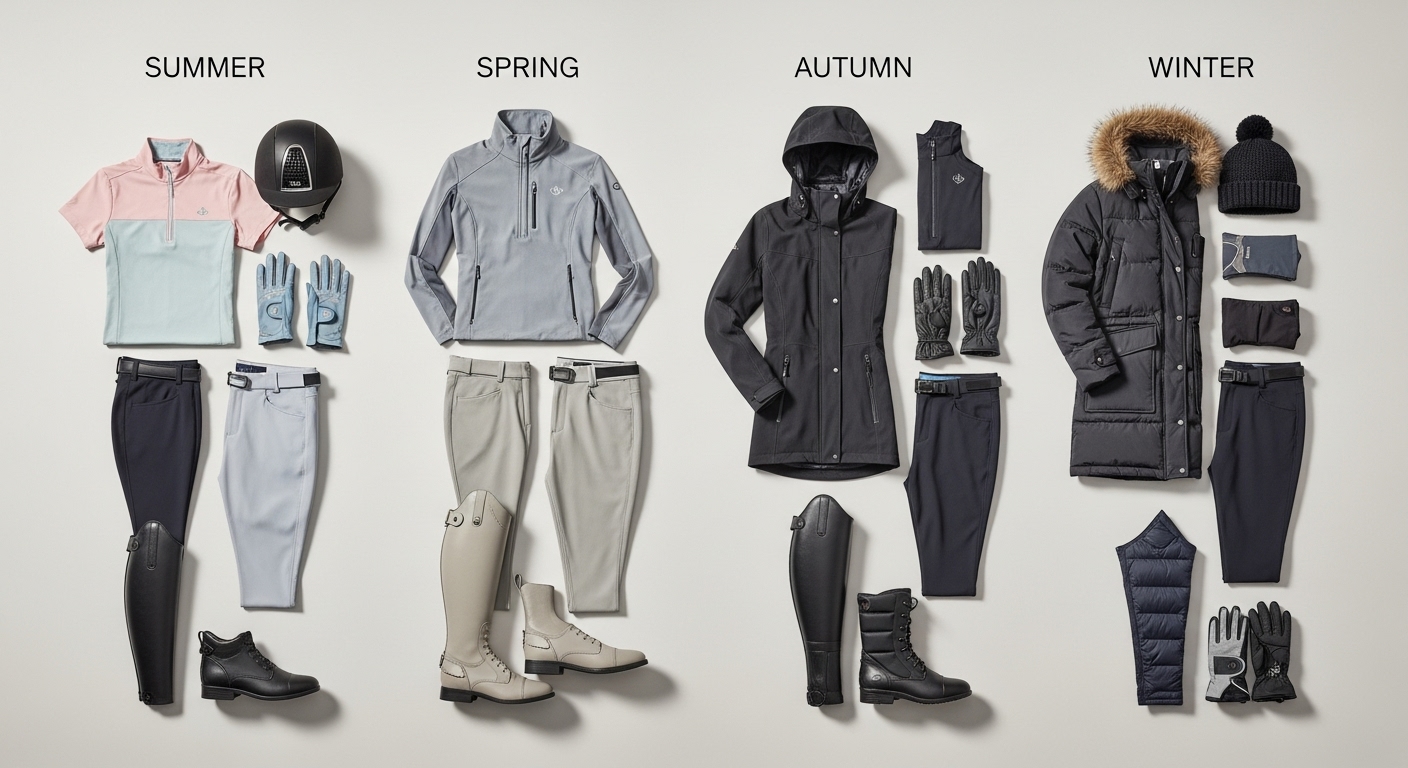
Riding conditions change significantly throughout the year, and equestrian gear must be selected accordingly. A clear seasonal equestrian gear checklist helps riders, teams, and riding schools prepare in advance, reduce unnecessary replacements, and maintain comfort and safety during training and competition.
Seasonal planning is especially important for organisations managing group apparel, standardised kits, or repeat orders.
Spring – Managing Unstable Weather Conditions
Spring riding often involves fluctuating temperatures, wind, and intermittent rain. Gear should support layering without restricting movement.
Light layering is widely recommended by organisations such as the British Equestrian Federation,which highlights adaptability as a key factor in rider comfort during transitional seasons.
Spring gear checklist
-
Lightweight riding jackets
-
Breathable base layers
-
Flexible riding breeches
-
Light rain-resistant outerwear
Layered systems allow riders to adjust during longer sessions without changing full outfits.
Summer – Heat and Moisture Control
Summer places physical strain on riders and equipment, particularly during outdoor training and competition. Fabric choice becomes critical.
The Fédération Équestre Internationale (FEI) regularly emphasises heat management and breathable apparel as part of rider welfare considerations during high-temperature events.
Summer gear checklist
-
Lightweight, breathable riding tops
-
Ventilated breeches
-
UV-protective materials
-
Moisture-managing gloves
Dense fabrics and poor ventilation are common causes of overheating and fatigue.
Autumn – Preparing for Cooler and Wetter Conditions
Autumn introduces lower temperatures and increased moisture exposure. Gear should focus on durability and water resistance while maintaining flexibility.
Industry publications such as Horse & Hound often note that moisture retention in apparel accelerates fabric wear and reduces comfort during extended riding sessions.
Autumn gear checklist
-
Mid-weight riding jackets
-
Water-resistant outer layers
-
Insulated base layers
-
Durable gloves for longer use
Winter – Insulation Without Restricting Movement
Winter riding requires warmth while preserving balance, posture, and control.
Guidance shared by US Equestrian (USEF) stresses that winter apparel should retain heat without excessive bulk that interferes with rider movement and stability.
Winter gear checklist
-
Insulated riding jackets
-
Thermal base layers
-
Wind-resistant breeches
-
Cold-weather riding gloves
Seasonal Gear Overview
| Season | Main Challenge | Gear Priority |
|---|---|---|
| Spring | Temperature changes | Layered apparel |
| Summer | Heat management | Breathable fabrics |
| Autumn | Moisture exposure | Water resistance |
| Winter | Cold and wind | Thermal insulation |
Why Seasonal Planning Benefits Teams and Riding Schools
For clubs, academies, and organised teams, seasonal planning ensures consistent appearance, easier reorders, and better inventory control. This is why many organisations move away from retail buying and rely instead on manufacturer-supported seasonal supply.
Structured equestrian apparel ranges designed for repeat production can be seen on the GHC Sportswear®
Manufacturer Support for Seasonal Requirements
Manufacturers support seasonal planning by offering repeatable designs, season-specific fabrics, and bulk production aligned with delivery schedules. This reduces inconsistency and allows organisations to plan ahead with confidence.
An overview of this structured workflow is available through the GHC Sportswear® manufacturing process.
Bulk and Custom Equestrian Gear Support
For riding schools, teams, or brands planning seasonal gear in advance, working directly with a manufacturer simplifies reordering and improves cost control.
To discuss bulk orders, custom specifications, or wholesale supply, contact GHC Sportswear® directly:
-
WhatsApp: https://wa.me/ghcsportswear
-
Email: info@ghcsportswar.com
Conclusion – Using a Seasonal Equestrian Gear Checklist
A well-structured seasonal equestrian gear checklist helps riders and organisations stay prepared throughout the year. Planning gear by season improves comfort, extends product lifespan, and supports consistent training and competition outcomes.