Bridle Doesn’t Fit? Here’s What Most Riders Get Wrong
If your bridle doesn’t fit, your horse will tell you — not with words, but through resistance, discomfort, and poor performance.
Many riders assume the problem is behavior or training. In reality, it’s often incorrect tack fit. A poorly fitted bridle affects communication, control, and the horse’s comfort.
Fixing it starts with understanding what most riders get wrong.
Signs Your Horse’s Bridle Fit Is Wrong
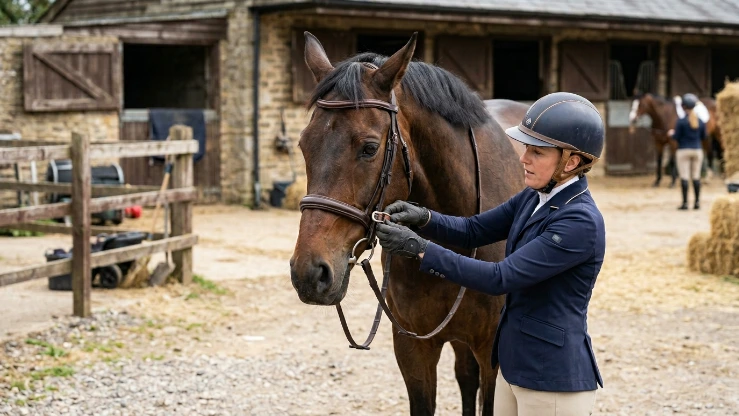
One of the biggest reasons a bridle doesn’t fit is guessing the size instead of measuring properly.
Horses vary widely in head shape, even within the same breed. A “standard size” rarely works perfectly.
Guidelines from the British Horse Society emphasize correct tack fitting as essential for both welfare and effective riding.
What riders miss:
- cheekpiece length
- browband width
- noseband position
Even small mismatches create pressure points.
Bridle Doesn’t Fit Because the Browband Is Too Tight
A tight browband is a silent problem.
If it’s too short:
- it pulls the bridle forward
- creates pressure behind the ears
- causes head shaking or resistance
According to Horse & Hound, incorrect browband sizing is one of the most overlooked tack issues affecting comfort.
A properly fitted browband should sit flat without tension.
Bridle Doesn’t Fit When Noseband Position Is Wrong
Another major reason a bridle doesn’t fit is incorrect noseband placement.
Too tight or too low:
- restricts breathing
- limits jaw movement
- creates discomfort
Too loose:
- reduces control
- makes the bridle unstable
Research and welfare insights shared by World Horse Welfare highlight that improper noseband use can negatively impact horse comfort and performance.
Bridle Doesn’t Fit If Bit Position Is Incorrect
Many riders focus on the bridle but ignore the bit position.
If the bit:
- sits too high → causes tension
- sits too low → causes instability
…it affects communication between rider and horse.
A correct fit usually creates slight wrinkles at the corners of the mouth — not excessive pressure.
Straps Are Either Too Tight or Too Loose
This is where inconsistency kills performance.
Common mistakes:
- over-tightening everything for “control”
- leaving straps loose for “comfort”
Both are wrong.
A good bridle fit is balanced — secure but not restrictive.
For riding schools and equestrian teams managing multiple horses, consistent tack quality and fit becomes even more important.
Structured solutions for bulk equestrian gear and standardized setups can be explored here.
Quick Fix vs Proper Fit
Many riders try quick fixes:
- adding padding
- tightening straps
- switching bits
But if your bridle doesn’t fit, these won’t solve the real issue.
Proper fit always comes from:
- correct sizing
- correct adjustment
- understanding horse anatomy
6 Simple Fixes for a Bridle That Doesn’t Fit
- Measure your horse’s head properly
- Check browband tension
- Adjust noseband correctly
- Position the bit properly
- Balance all straps evenly
- Re-check after riding
Small adjustments make a big difference.
Need Help with Equestrian Gear?
If you’re managing multiple horses, running a riding school, or sourcing tack in bulk, consistency matters.
GHC Sportswear® supports equestrian businesses with custom gear and bulk solutions designed for performance and reliability.
- WhatsApp: https://wa.me/ghcsportswear
- Email: info@ghcsportswar.com
Final Thoughts
If your bridle doesn’t fit, the issue is rarely the horse — it’s the setup.
Most problems come from:
- wrong sizing
- incorrect adjustments
- overlooked details
Fix these properly, and you’ll see immediate improvement in comfort and control.