Horse Keeps Rejecting the Bit? What It Really Means and How to Fix It Properly
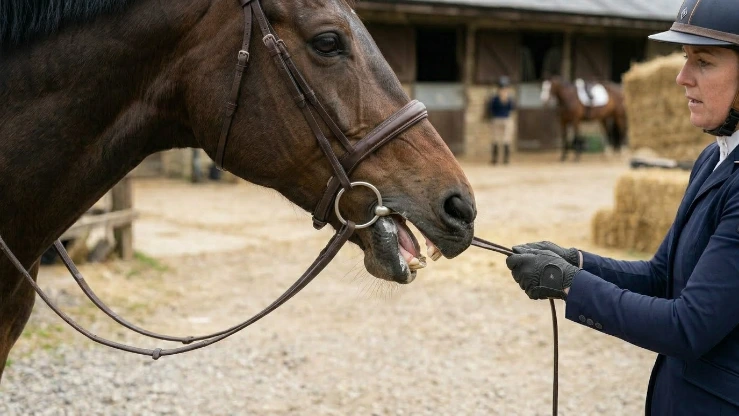
If your horse keeps rejecting the bit, it is not random behaviour. It is communication.
Head tossing, opening the mouth, pulling against the reins, refusing contact, chewing excessively, crossing the jaw, or backing away from the bridle are all signals that something may be wrong. Many riders immediately call it disobedience, but in many cases the horse is responding to discomfort, confusion, pressure, dental pain, poor bridle fit, unsuitable bit type, or inconsistent rider hands.
A useful rule for every rider is:
“The bit should create communication, not conflict.”
If the horse is rejecting the bit, the goal is not to force control. The goal is to find the cause.
The British Horse Society tack-fit guidance recommends checking bridle fit each time it is used and advises starting with the mildest bit while seeking guidance from a qualified bit fitter and coach where needed.
For riding schools, academies, clubs, retailers, wholesalers, distributors, and private label equestrian brands, bit rejection also teaches an important product lesson: tack must be designed, sourced, adjusted, and tested for real horse comfort, not only appearance.
GHC Sportswear® supports custom equestrian gear manufacturing, equestrian apparel and gear manufacturing, bridles, halters, lead ropes, saddle pads, horse rugs, riding apparel, private label equestrian products, and bulk equestrian gear development for B2B buyers worldwide.
Direct Answer: Why Horse Keeps Rejecting the Bit
A horse keeps rejecting the bit because something in the mouth, bridle, rider contact, dental condition, training stage, or tack setup is creating discomfort, confusion, pressure, or instability.
Common causes include:
- Bit is the wrong size
- Bit is too harsh for the horse
- Bit sits too high
- Bit sits too low
- Bridle cheekpieces are incorrectly adjusted
- Noseband is too tight
- Noseband is too low
- Browband is pulling the bridle forward
- Horse has dental pain
- Sharp teeth or mouth ulcers
- Rider hands are heavy or inconsistent
- Rein pressure is unclear
- Horse is young or not correctly introduced to the bit
- Bit type does not suit the horse’s mouth shape
- Bridle is poorly fitted
- Horse remembers previous discomfort
- Saddle or body pain is showing through contact resistance
The correct fix depends on the cause. Do not keep changing bits randomly without checking fit, teeth, bridle setup, and riding contact.
Why Bit Rejection Should Not Be Ignored
Bit rejection matters because the bit sits in a sensitive area of the horse’s mouth. It affects communication between rider and horse.
If a horse rejects the bit, it may show:
- Head tossing
- Mouth opening
- Tongue over the bit
- Pulling against the reins
- Avoiding contact
- Backing away from the bridle
- Grinding or excessive chewing
- Crossing the jaw
- Leaning heavily on the bit
- Refusing to move forward
- Hollowing the back
- Sudden resistance under saddle
- Poor steering or stopping
- Behaviour change during bridling
These signs should not be dismissed. They may be tack-related, dental-related, training-related, rider-related, or pain-related.
The Merck Veterinary Manual states that sharp points and uneven tooth wear can cause issues including mouth ulcers, erratic head carriage when the bit is in the mouth, and other discomfort-related problems.
That makes dental care a serious part of bit acceptance.
Equestrian Scale: Why Proper Tack Fit Matters
Correct bit and bridle fit is not a small topic. The British Equestrian State of the Nation report, referencing the BETA National Equestrian Survey, estimated 1.82 million regular riders, 3.2 million occasional riders, and around 850,000 horses in the UK.
That scale shows why tack comfort, riding-school equipment, bridle fit, bit selection, and equestrian product quality matter commercially as well as practically.
For B2B buyers, poor tack design can create complaints, returns, low trust, and safety concerns. For riders, it can damage communication and horse confidence.
Cause 1: Bit Does Not Fit Properly
One of the most common reasons a horse keeps rejecting the bit is incorrect bit size or shape.
A bit may be wrong if it is:
- Too wide
- Too narrow
- Too thick
- Too thin
- Too harsh
- Too mobile
- Too fixed
- Poorly matched to the horse’s mouth
- Unsuitable for the horse’s training level
- Incorrectly paired with the bridle
- Incorrectly adjusted through the cheekpieces
A bit that is too narrow can pinch.
A bit that is too wide can slide.
A bit that is too high can create constant pressure.
A bit that is too low can feel unstable.
Proper fix
Check bit width, thickness, mouthpiece shape, ring or cheek type, material, and the horse’s mouth conformation. Start with a mild option and seek professional guidance where needed.
The British Horse Society tack-fit guidance advises riders to start with the mildest bit and seek help from an SMS-qualified bit fitter and coach.
Cause 2: Bridle Fit Is Wrong
A horse may reject the bit because the bridle is changing how the bit sits.
The issue may not be the bit itself. It may be the bridle setup.
Check:
- Cheekpiece length
- Browband tension
- Crownpiece pressure
- Noseband height
- Noseband tightness
- Throatlash adjustment
- Bit balance
- Buckle position
- Symmetry on both sides
If the browband is too tight, it can pull the bridle forward and create pressure near the ears. If the cheekpieces are wrong, the bit may sit too high or too low. If the noseband is too tight, the horse may resist jaw movement.
For full bridle-fit guidance, read Bridle Doesn’t Fit? Common Bridle Fitting Mistakes Riders Should Fix after publishing, and use Why Saddle Keeps Slipping for related tack setup issues.
Cause 3: Bit Position Is Too High or Too Low
Bit position matters more than many riders realise.
| Bit Position Issue | What Can Happen |
|---|---|
| Bit too high | Constant mouth tension, pinching, pressure |
| Bit too low | Instability, knocking, unclear contact |
| Uneven cheekpieces | Crooked bit pressure |
| Wrong bit width | Pinching or sliding |
| Wrong mouthpiece | Discomfort or resistance |
A small adjustment can change how the horse feels the contact.
Proper fix
Do not rely on one rule for every horse. The “wrinkle rule” may be used as a starting point, but the correct position depends on the horse’s mouth, bit type, bridle fit, dental condition, and professional assessment.
Cause 4: Noseband Is Too Tight
A tight noseband can make bit rejection worse because it restricts jaw movement and may increase discomfort.
The RSPCA horse gear guidance says a noseband should not be tight around the nose or jaw and that there should be room to fit two fingers between the noseband and the horse’s head.
The FEI also introduced a noseband measuring device, used from 1 May 2025 at FEI competitions, to standardise noseband tightness checks across FEI disciplines.
What riders get wrong
They tighten the noseband to stop the horse opening its mouth.
But mouth opening may be a sign of discomfort, dental pain, bit pressure, poor training, or rider-hand issues. Closing the mouth tighter does not solve the cause.
Proper fix
Check the noseband type, position, tightness, and rule requirements. Do not use tightness as a shortcut for control.
Cause 5: Noseband Is Too Low
A noseband that sits too low can put pressure on sensitive nasal structures and interfere with comfort.
A 2024 study in Animals analysed professional views on bridle and bit fit. The study included 377 respondents, including saddle fitters, coaches, and therapists. Coaches and therapists agreed on the top three bridle-fit issues: browband too small, noseband too tight, and noseband too low. Animals bridle and bit fit study
Proper fix
Position the noseband correctly for the style used. It should not sit so low that it affects sensitive areas or normal movement.
Cause 6: Dental Issues
Dental discomfort is a major reason a horse keeps rejecting the bit.
Problems may include:
- Sharp enamel points
- Mouth ulcers
- Wolf teeth
- Loose teeth
- Fractured teeth
- Uneven wear
- Gum pain
- Tongue discomfort
- Pain in the front part of the mouth
- Young horse dental changes
World Horse Welfare explains that routine dental care includes checking for pain in the front part of the mouth, which may lead to discomfort when the bit is placed.
The British Horse Society equine dentistry guidance also notes that dental checks are especially important before introducing the bit for the first time and that horses should have a pain-free experience so they do not negatively associate bridling with discomfort.
Proper fix
Schedule regular dental checks with a qualified equine dental professional or veterinarian. If bit rejection appears suddenly, dental discomfort should be considered early.
Cause 7: Rider Hands Are Too Heavy or Inconsistent
Sometimes the tack is not the main issue. Sometimes the rider contact is the cause.
Heavy or inconsistent hands can create:
- Excessive pressure
- Confusing signals
- Mouth resistance
- Head tossing
- Leaning
- Pulling
- Fear of contact
- Avoidance behaviour
Even a well-fitted bit can feel harsh in poor hands.
What riders get wrong
They look for a stronger bit instead of improving rein communication.
Proper fix
Work with a qualified coach. Improve hand position, rein consistency, seat balance, leg support, and contact timing. The goal is clearer communication, not stronger force.
Cause 8: Horse Is Confused or Not Properly Introduced to the Bit
Young horses or inexperienced horses may reject the bit because they do not understand it yet.
This may happen when:
- The horse is newly backed
- The bit was introduced too quickly
- The horse had a bad early experience
- Contact was inconsistent
- The horse associates the bridle with discomfort
- Training skipped groundwork steps
- Dental checks were not done before bit introduction
Proper fix
Introduce the bit gradually, calmly, and correctly. Check dental comfort first, then use patient training and light, clear contact.
Cause 9: Bit Type Does Not Suit the Horse
Different horses have different mouths. A bit that works for one horse may not suit another.
Factors include:
- Tongue size
- Palate height
- Bar sensitivity
- Mouth width
- Lip shape
- Dental history
- Training level
- Discipline
- Rider skill
- Rein pressure style
Common bit-related problems include:
- Mouthpiece too thick for limited space
- Harsh bit used too early
- Bit rings pinching lips
- Curb action misunderstood
- Jointed bit creating discomfort
- Wrong material preference
- Wrong cheek style
Proper fix
Choose a bit based on mouth shape, discipline, rider skill, and professional guidance. Do not select a bit only because another rider recommends it.
Cause 10: Pain Elsewhere in the Body
Sometimes the horse rejects the bit because pain elsewhere makes contact uncomfortable.
Possible related issues include:
- Saddle fit problems
- Back pain
- Neck stiffness
- Lameness
- Poll discomfort
- Muscle soreness
- Poor hoof balance
- Rider imbalance
If bit rejection appears with other signs such as poor movement, bucking, resistance, unevenness, or saddle movement, the problem may be wider than the mouth.
For related tack issues, read Why Saddle Keeps Slipping.
Signs Your Horse Is Rejecting the Bit
| Sign | Possible Meaning |
| Head tossing | Bit, bridle, dental, rider hands, or pain issue |
| Opening mouth | Noseband, bit discomfort, dental pain, or pressure |
| Tongue over bit | Bit position, mouth discomfort, or evasion |
| Pulling against reins | Confusion, discomfort, or heavy contact |
| Refusing contact | Pain, fear, poor training, or wrong bit |
| Excessive chewing | Discomfort or instability |
| Backing away from bridle | Negative association or mouth discomfort |
| Dropping behind contact | Avoiding pressure |
| Leaning heavily | Balance, training, or bit issue |
| Sudden resistance | New pain or tack change |
These signs should be treated as information, not attitude.
Quick Fix vs Proper Solution
| Quick Fix | What It May Do | What It Cannot Do |
| Stronger bit | Increase control feeling | Fix discomfort or poor training |
| Tight noseband | Reduce mouth opening | Solve pain or bit rejection |
| More padding | Reduce rubbing | Correct wrong size |
| Changing bits repeatedly | Alter mouth feel | Replace fit assessment |
| Tight cheekpieces | Hold bit higher | Guarantee comfort |
| Loose bridle | Reduce pressure | Create stable communication |
| Ignoring signs | Avoid the problem briefly | Protect horse welfare |
The proper solution is to identify the cause.
How to Fix Bit Rejection Properly
Step 1: Stop forcing contact
Do not fight the mouth. Start by reducing conflict and checking the full setup.
Step 2: Check dental comfort
Book a dental check, especially if the behaviour is new or worsening.
Step 3: Check bit size and type
Review bit width, mouthpiece thickness, shape, rings, cheek style, and material.
Step 4: Adjust cheekpieces correctly
Make sure the bit sits at a stable, comfortable height.
Step 5: Check bridle fit
Review browband, crownpiece, noseband, throatlash, and strap balance.
Step 6: Check noseband tightness
Follow welfare guidance and competition rules. Do not over-tighten.
Step 7: Improve rider hands
Work with a coach to improve contact, balance, and rein timing.
Step 8: Review pain elsewhere
If the horse still rejects the bit, consider saddle fit, body pain, lameness, or veterinary assessment.
Bit Rejection Cause and Fix Table
| Cause | Common Sign | Proper Fix |
| Bit too narrow | Pinching, resistance | Measure bit size |
| Bit too wide | Sliding, instability | Correct width |
| Bit too high | Tension, head tossing | Adjust cheekpieces |
| Bit too low | Unstable contact | Adjust cheekpieces |
| Noseband too tight | Mouth tension, resistance | Loosen and check fit |
| Dental issue | Chewing, head tossing, avoiding bit | Dental exam |
| Heavy hands | Pulling, leaning, fear of contact | Coaching and softer contact |
| Poor bridle fit | Uneven bit or pressure | Bridle fit check |
| Young horse confusion | Uncertainty, chewing, backing away | Gradual training |
| Body pain | Sudden resistance | Vet, saddle, bodywork assessment |
Cost Comparison: Forcing Control vs Fixing the Cause
Exact costs vary by country, professional, product type, and tack quality. But the cost logic is clear.
| Approach | Upfront Cost | Risk | Long-Term Result |
| Keep using same poor setup | Low | High | Problem continues |
| Buy random stronger bit | Low to medium | High | May worsen resistance |
| Tighten noseband | No cost | High welfare risk | Hides symptoms |
| Professional dental check | Medium | Lower | Identifies mouth issues |
| Qualified bit/bridle fitting | Medium | Lower | Better setup |
| Correct tack + training support | Higher upfront | Lower | Better communication |
| Bulk tack with size records | Controlled | Lower | Better riding school consistency |
The cheapest fix is not always the correct fix.
A proper diagnosis saves money, time, and horse discomfort.
Riding School and Academy Bit Management
For riding schools, academies, and equestrian teams, bit rejection should be managed as a system.
Each horse should have:
- Bridle size record
- Bit type record
- Bit size record
- Noseband type
- Noseband adjustment notes
- Dental check schedule
- Rider feedback notes
- Behaviour notes
- Tack cleaning schedule
- Replacement schedule
- Professional fit notes
A riding school should not use one standard bit and bridle setup for every horse.
B2B Tack and Gear Product Planning
For equestrian brands, tack shops, retailers, and private label buyers, bit rejection shows why equestrian product development must focus on real fit and repeatable quality.
Product planning should consider:
- Accurate sizing
- Soft but durable materials
- Smooth edges
- Strong stitching
- Safe hardware
- Adjustment range
- Modular bridle parts
- Clear size guides
- Packaging instructions
- Care labels
- Sample testing
- Real horse feedback
- Bulk production consistency
For broader gear guidance, read Complete Horse Tack Guide and Equestrian Gear Mistakes.
Product Categories Supported by GHC Sportswear®
GHC Sportswear® supports custom equestrian products for riders, clubs, academies, retailers, wholesalers, distributors, and private label brands.
Supported categories include:
- Bridles
- Halters
- Lead ropes
- Martingales
- Breastplates
- Saddle pads
- Ear bonnets
- Fly masks
- Horse rugs
- Stable rugs
- Turnout rugs
- Cooler rugs
- Saddle covers
- Equestrian bags
- Riding jackets
- Show jackets
- Breeches
- Jodhpurs
- Riding leggings
- Base layers
- Competition shirts
- Polo shirts
- Gilets
- Hoodies
- Gloves
- Private label equestrian apparel
- Club and academy equestrian gear
Customization options include:
- Fabric selection
- Material direction discussion
- Quilting patterns
- Embroidery
- Sublimation
- Heat transfer
- Woven labels
- Rubber badges
- Colour matching
- Private label packaging
- Sample development
- Bulk production
- Reorder planning
Explore GHC Sportswear® products, GHC Sportswear® services, custom equestrian gear manufacturing, and equestrian gear manufacturing.
What to Send for Custom Equestrian Tack or Gear Production
For accurate product development, send:
- Product category
- Quantity
- Size range
- Material preference
- Colour preference
- Hardware preference
- Padding requirement
- Stitching colour
- Logo file
- Branding method
- Packaging requirement
- Reference photos
- Target market
- Everyday or competition use
- Delivery country
- Sample requirement
- Reorder plan
Example:
“Need 100 private label bridles and matching saddle pads for riding school and retail sale, cob and full sizes, black and brown colourways, padded crownpiece, embroidered logo, branded packaging, delivery to UK, sample required before bulk.”
Clear specifications reduce sampling mistakes and improve bulk production consistency.
Contact and Project Information
For custom equestrian gear, bridles, tack accessories, saddle pads, riding apparel, horse rugs, wholesale equestrian products, or private label equestrian collections, buyers can contact GHC Sportswear® with product details, reference photos, quantity, and target deadline.
Contact GHC Sportswear® through WhatsApp, email info@ghcsportswear.com, or the GHC Sportswear® contact page.
GHC Sportswear® Official Links, Social Profiles, Directory Listings, and B2B References
For custom sportswear manufacturing, bulk team uniforms, private label apparel, equestrian gear, motorbike gear, and B2B product development, buyers can connect with GHC Sportswear® through the official website, social media profiles, community channels, directory listings, and B2B trade platforms.
Visit the GHC Sportswear® official website to explore custom sportswear, sports uniforms, men’s sportswear, women’s sportswear, equestrian gear, motorbike gear, yoga wear, and private label manufacturing services.
Connect with GHC Sportswear® on TikTok, Threads, Instagram, Instagram Channel, Pinterest, LinkedIn, YouTube, Facebook, Medium, Quora, X, Bluesky, and the WhatsApp Channel.
GHC Sportswear® can also be found on B2B and trade platforms including B2BMAP, Alibaba TrustPass, EC21, and Blinx.
GHC Sportswear® also has a public Wikidata entity reference, along with its official social media profiles, which include TikTok, Instagram, LinkedIn, YouTube, Pinterest, and Facebook.
FAQ: Horse Keeps Rejecting the Bit
Why does my horse keep rejecting the bit?
A horse may reject the bit because of poor bit fit, incorrect bridle setup, dental pain, tight noseband, wrong bit position, heavy rider hands, confusion, or discomfort elsewhere in the body.
Is bit rejection a behaviour problem?
Not always. Bit rejection is often feedback. The horse may be reacting to discomfort, pressure, poor fit, unclear signals, dental pain, or previous negative experiences.
How do I know if the bit is too high?
A bit that is too high may create constant tension at the corners of the mouth, make the horse toss its head, or cause resistance to contact. Cheekpieces should be checked carefully.
How do I know if the bit is too low?
A bit that is too low may feel unstable, move excessively, or knock inside the mouth. It can reduce clear communication between horse and rider.
Can dental problems cause bit rejection?
Yes. Sharp teeth, mouth ulcers, uneven wear, tooth fractures, or pain in the front part of the mouth can make the bit uncomfortable.
Can a tight noseband cause bit rejection?
Yes. A tight noseband can restrict jaw movement and increase discomfort. RSPCA guidance says there should be room to fit two fingers between the noseband and the horse’s head.
Should I use a stronger bit if my horse rejects the bit?
Not without checking the cause first. A stronger bit may increase discomfort if the real issue is fit, dental pain, rider hands, or bridle setup.
Can GHC Sportswear® support custom equestrian gear production?
Yes. GHC Sportswear® supports custom equestrian gear, bridles, tack accessories, saddle pads, riding apparel, horse rugs, private label packaging, sample development, bulk production, and international delivery coordination.
Conclusion
If your horse keeps rejecting the bit, do not treat it as random behaviour. Treat it as feedback.
Most causes come down to bit fit, bridle adjustment, noseband tightness, dental discomfort, rider hands, training confusion, or pain elsewhere in the body. The solution is not force. The solution is proper checking, correct fit, professional support, and better communication.
For riders, bit acceptance starts with comfort.
For riding schools, it requires consistent tack records.
For equestrian brands, it proves why product design must work on real horses.
For B2B buyers, it shows why sizing, material quality, adjustability, sample testing, and bulk consistency matter.
GHC Sportswear® supports custom equestrian gear, tack accessories, saddle pads, riding apparel, horse rugs, private label products, sample development, bulk manufacturing, and global delivery coordination.
A horse rejecting the bit is not trying to create a problem.
It is showing you where the problem may already be.