Bridle Doesn’t Fit? Common Bridle Fitting Mistakes Riders Should Fix
If your bridle doesn’t fit, your horse will usually show it through resistance, tension, head movement, mouth discomfort, rubbing, poor contact, or reduced performance.
Many riders blame behaviour first.
Some blame the bit.
Some blame training.
Some tighten the noseband.
Some add padding.
But very often, the real issue is simpler: the bridle setup is wrong.
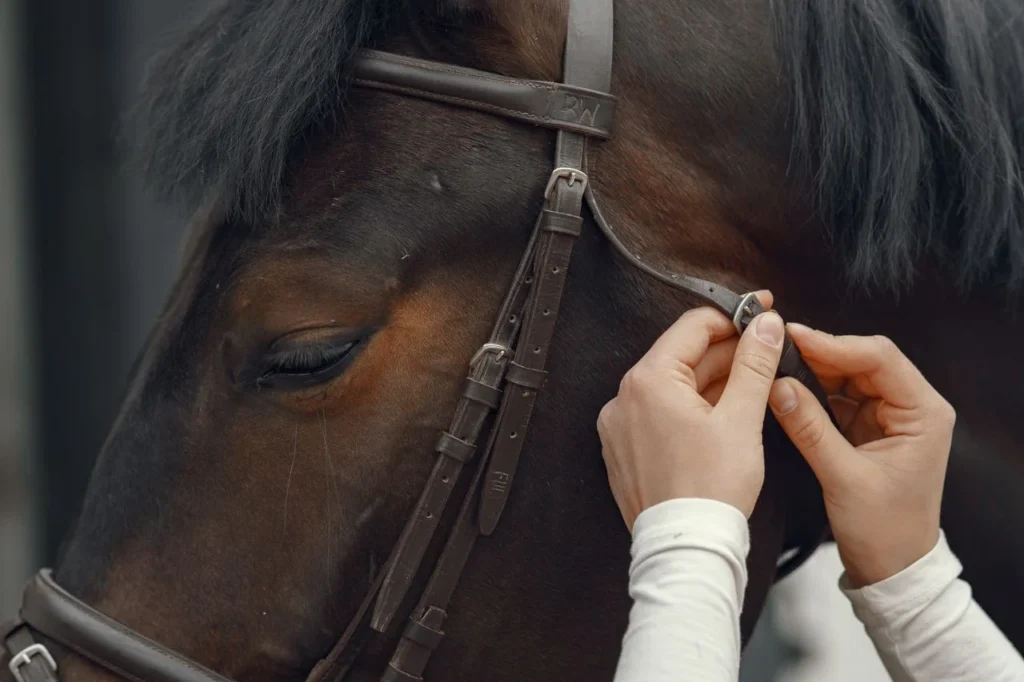
A bridle is not just a decorative piece of tack. It is part of the communication system between rider and horse. If the browband pinches, the noseband is too tight, the cheekpieces are wrong, the bit sits poorly, or the straps are uneven, the horse may not be able to respond comfortably.
A practical rule for every rider is:
“A bridle should guide communication, not force submission.”
For riding schools, academies, clubs, retailers, wholesalers, distributors, and private label equestrian brands, bridle fit also matters commercially. Tack quality, sizing consistency, leather softness, stitching, buckle placement, adjustability, padding, and bulk production control all affect rider trust and horse comfort.
GHC Sportswear® supports custom equestrian gear manufacturing, equestrian apparel manufacturing, bridles, halters, lead ropes, saddle pads, horse rugs, riding apparel, private label equestrian products, and bulk equestrian gear production for B2B buyers worldwide.
Direct Answer: What Happens If a Bridle Doesn’t Fit?
If a bridle doesn’t fit, it can create pressure behind the ears, pinch the browband area, restrict jaw movement, interfere with breathing, pull the bit into the wrong position, rub the skin, reduce rider communication, and make the horse resist contact.
Common bridle fit problems include:
- Browband too tight
- Browband too narrow
- Noseband too tight
- Noseband too low
- Cheekpieces too short
- Cheekpieces too long
- Bit sitting too high
- Bit sitting too low
- Throatlatch too tight
- Throatlatch too loose
- Flash strap over-tightened
- Crownpiece pressure
- Uneven strap adjustment
- Wrong bridle size
- Wrong noseband style
- Poor leather or stiff material
- Bridle parts not matching the horse’s head shape
A bridle should be secure, balanced, correctly adjusted, and comfortable. It should not pinch, pull, restrict, or create pressure points.
Why Bridle Fit Matters
Bridle fit matters because the horse’s head contains sensitive areas: ears, poll, facial crest, nasal bone, jaw, lips, tongue, bars of the mouth, and facial nerves.
A poor bridle fit can affect:
- Comfort
- Contact
- Breathing
- Jaw movement
- Bit stability
- Rein communication
- Head carriage
- Performance
- Welfare
- Rider control
- Trust between horse and rider
The British Horse Society tack-fit guidance explains that correct tack fit is important for comfort and effective riding. BHS also gives practical bridle guidance, including that the browband should not pinch the horse’s ears and should be wide enough to fit two fingers between its centre and the horse’s forehead.
That is a simple check many riders skip.
Equestrian Scale: Why Small Tack Problems Matter
Bridle fit is not a small niche issue. The UK equestrian sector alone is large. The British Equestrian State of the Nation report, referencing BETA’s National Equestrian Survey, estimated 1.82 million regular riders, 3.2 million occasional riders, and around 850,000 horses in the UK.
That means tack fitting, saddle fitting, bridle comfort, and horse welfare affect a wide community of riders, riding schools, brands, retailers, and manufacturers.
For B2B buyers, this creates a clear lesson: equestrian gear must be designed for real horse comfort, not only retail appearance.
Signs Your Bridle Doesn’t Fit
A horse may show bridle discomfort in different ways.
| Sign | Possible Bridle Fit Issue |
|---|---|
| Head shaking | Browband pressure, bit discomfort, noseband issue |
| Opening mouth | Noseband, bit, dental, or training issue |
| Avoiding contact | Bit position, pressure, pain, poor fit |
| Rubbing face | Pressure point or irritation |
| Tossing head | Poll, browband, bit, or noseband problem |
| Resistance when bridling | Pain memory or poor fit |
| Swelling or hair loss | Rubbing or pressure |
| Uneven contact | Cheekpiece or bit imbalance |
| Excessive chewing | Bit discomfort or strap tension |
| Tongue over bit | Bit fit, mouth conformation, or tension issue |
| Noseband marks | Tight or badly positioned noseband |
| Ear sensitivity | Crownpiece or browband pressure |
These signs do not prove one single cause. They mean the setup should be checked.
If discomfort continues, consult a qualified saddle fitter, bridle fitter, equine dental professional, veterinarian, or experienced equestrian professional as appropriate.
Mistake 1: Guessing the Bridle Size
One of the biggest reasons a bridle doesn’t fit is simple: the rider guesses the size.
Many bridles are sold as:
- Pony
- Cob
- Full
- X-full
- Warmblood
But horses do not always match these categories perfectly.
A horse may need:
- Cob browband
- Full cheekpieces
- X-full noseband
- Custom throatlash
- Different bit size
- Special crownpiece shape
Horse & Hound notes that bridles are generally sold in standard sizes such as full, cob, and pony, but individual parts may need to be tailored to suit the horse.
What riders get wrong
They buy one complete bridle size and expect every part to fit.
Proper fix
Measure the horse’s head and check each bridle part separately:
- Browband
- Cheekpieces
- Noseband
- Throatlatch
- Crownpiece
- Reins
- Bit size
- Strap holes and adjustment range
For riding schools and retailers, modular sizing can reduce fit problems because not every horse needs one standard bridle size.
Mistake 2: Browband Too Tight
A tight browband is one of the most overlooked bridle-fit problems.
If the browband is too short, it can:
- Pull the crownpiece forward
- Pinch behind the ears
- Create pressure near the poll
- Make the horse shake its head
- Distort the whole bridle position
- Cause discomfort during work
BHS advises that the browband should not pinch the horse’s ears and should allow two fingers between the centre of the browband and the forehead. British Horse Society tack-fit guidance
What riders get wrong
They focus on the noseband and bit but ignore the browband.
Proper fix
Check that the browband lies flat without pulling the bridle forward. It should provide space without sagging loosely.
Mistake 3: Noseband Too Tight
A tight noseband is a serious welfare and comfort issue.
The RSPCA horse gear guidance says a noseband should not be tight around the nose or jaw and that there should be room to fit two fingers between the noseband and the horse’s head.
Research also supports caution. A study published in PLOS ONE found evidence that horses wearing a very tight noseband with a double bridle experienced physiological stress responses. PLOS ONE noseband tightening study
The FEI also introduced a noseband measuring device for FEI competitions from 1 May 2025 to control noseband tightness across disciplines. FEI noseband measuring device
What riders get wrong
They over-tighten the noseband for “control.”
Proper fix
The noseband should be adjusted according to horse comfort, noseband type, and competition rules. It should not clamp the mouth shut or restrict normal movement.
Mistake 4: Noseband Too Low
A noseband that sits too low can create pressure on sensitive areas of the horse’s nose.
A 2024 study in Animals reviewed professional views on bridle and bit fit. The study analysed responses from 377 respondents, including saddle fitters, coaches, and therapists, and reported that coaches and therapists agreed on the top three bridle-fit issues: browband too small, noseband too tight, and noseband too low. Animals bridle and bit fit study
What riders get wrong
They adjust the noseband based on appearance instead of anatomy.
Proper fix
The noseband should be positioned correctly for its type and should not sit so low that it interferes with breathing, soft tissue, or sensitive nasal structures.
Mistake 5: Bit Position Is Wrong
Many riders say the bridle does not fit, but the real issue is the bit position.
If the bit sits too high, it may:
- Pull the corners of the mouth
- Create constant tension
- Increase discomfort
- Reduce soft contact
If the bit sits too low, it may:
- Knock the teeth
- Feel unstable
- Move excessively
- Reduce communication clarity
What riders get wrong
They use a fixed “wrinkle rule” without checking the individual horse.
A slight wrinkle at the corners of the mouth is often used as a starting point, but bit position should be assessed according to the horse’s mouth, bit type, cheekpiece adjustment, and professional guidance.
Proper fix
Check the bit size, bit type, cheekpiece length, mouth conformation, dental condition, and contact response. If the horse shows mouth discomfort, involve a qualified equine dental professional or veterinarian.
Mistake 6: Cheekpieces Are Too Long or Too Short
Cheekpieces control where the bit sits in the mouth.
If cheekpieces are too short:
- Bit sits too high
- Mouth corners are pulled
- Horse may resist contact
- Poll pressure may increase
If cheekpieces are too long:
- Bit sits too low
- Bit becomes unstable
- Communication becomes unclear
- Horse may play with or avoid the bit
What riders get wrong
They adjust the cheekpieces once and never re-check them after changing bits.
Proper fix
Any time you change the bit, re-check cheekpiece length. Different bit styles can sit differently in the mouth.
Mistake 7: Throatlatch Too Tight or Too Loose
The throatlash or throatlatch helps keep the bridle stable, but it should not restrict the horse.
If too tight:
- It can restrict throat area movement
- It may create discomfort
- It can make flexion uncomfortable
If too loose:
- The bridle may become unstable
- The bridle may move out of position
- Safety can be affected
What riders get wrong
They treat the throatlash as decorative.
Proper fix
The throatlash should allow comfort and movement while keeping the bridle secure. Exact adjustment can vary with bridle design, but it should not be restrictive.
Mistake 8: Crownpiece Pressure
Modern bridles often advertise anatomical crownpieces, but not every crownpiece fits every horse.
Crownpiece problems can include:
- Pressure behind ears
- Uneven padding
- Stiff leather
- Poor shape
- Browband pulling crownpiece forward
- Noseband straps adding pressure
- Buckles sitting in uncomfortable areas
What riders get wrong
They assume “anatomical” always means comfortable.
Proper fix
Check the crownpiece on the actual horse. The material should be soft enough, shaped correctly, and not create pressure points behind the ears.
Mistake 9: Straps Are Uneven
A bridle may look correct from one side but sit unevenly overall.
Uneven straps can cause:
- Crooked bit position
- One-sided pressure
- Noseband tilt
- Uneven contact
- Head discomfort
- Rider confusion
What riders get wrong
They adjust only one side quickly before riding.
Proper fix
Check the bridle from front, side, and both cheeks. Make sure buckle holes match where needed and that the bridle sits level.
Mistake 10: Padding Is Used as a Quick Fix
Padding can help in some cases, but it should not be used to hide a bad fit.
Quick fixes include:
- Adding fleece covers
- Adding extra padding
- Tightening straps
- Changing bits repeatedly
- Using stronger nosebands
- Buying a new bridle without measuring
These may reduce symptoms temporarily but may not fix the root cause.
Proper fix
First check sizing, adjustment, anatomy, material, and professional fit. Then use padding only when it improves a correct setup.
Quick Fix vs Proper Bridle Fit
| Quick Fix | What It May Do | What It Cannot Do |
| Extra padding | Reduce rubbing temporarily | Fix wrong size |
| Tighter noseband | Reduce mouth opening | Solve discomfort or training issue |
| New bit | Change mouth feel | Fix bad cheekpiece or browband fit |
| Different bridle | Help if correctly fitted | Guarantee comfort without measuring |
| Loose straps | Avoid tightness | Maintain stable communication |
| Stronger noseband | Increase control feeling | Improve horse comfort |
| More holes punched | Add adjustment | Correct wrong bridle design |
The correct approach is to fix the fit, not hide the symptoms.
Bridle Fit Checklist
Use this checklist before riding:
| Bridle Area | What to Check |
| Browband | Does not pinch ears; sits flat |
| Crownpiece | No pressure behind ears |
| Cheekpieces | Bit sits correctly |
| Noseband | Correct height and not too tight |
| Throatlash | Secure but not restrictive |
| Bit | Correct width, height, and type |
| Reins | Correct length and attachment |
| Buckles | Not pressing sensitive areas |
| Leather/material | Soft, safe, and not cracked |
| Symmetry | Same adjustment both sides |
| Horse response | No resistance or discomfort signs |
| After riding | Check rubs, swelling, or marks |
Re-check the bridle after riding because some issues only appear after movement and sweat.
Bridle Fit Comparison: Good vs Poor Setup
| Feature | Good Bridle Fit | Poor Bridle Fit |
| Browband | Flat and comfortable | Pinches or pulls |
| Noseband | Correct position and space | Too tight or too low |
| Bit | Stable and correctly placed | Too high or too low |
| Crownpiece | Even pressure | Pressure behind ears |
| Cheekpieces | Balanced | Uneven or wrong length |
| Throatlash | Secure but comfortable | Too tight or unstable |
| Horse response | Relaxed and responsive | Resistance or tension |
| Rider contact | Clear communication | Inconsistent contact |
A good bridle fit looks calm, balanced, and simple.
Cost Comparison: Cheap Bridle vs Correct Bridle System
Exact costs vary by country, material, product quality, and customization. But the cost logic is clear.
| Option | Upfront Cost | Risk | Long-Term Result |
| Cheap standard bridle, no fitting | Low | High | Poor comfort risk |
| Expensive bridle, wrong size | High | High | Still uncomfortable |
| Standard bridle with correct measuring | Medium | Lower | Better fit |
| Modular bridle parts | Medium to high | Lower | More accurate adjustment |
| Custom bridle/tack setup | Higher upfront | Lower when done properly | Better consistency |
| Bulk tack without size planning | Looks cheaper | High | Waste and complaints |
| Bulk tack with size records | Controlled | Lower | Better riding school system |
The cheapest bridle is not always the best value.
The best value comes from correct fit, durable material, and repeatable quality.
Riding School and Academy Bridle Management
For riding schools, clubs, and academies, bridle fit must be managed as a system.
Each horse should have:
- Bridle size record
- Bit size record
- Noseband type
- Browband size
- Cheekpiece adjustment notes
- Girth and saddle setup notes
- Tack inspection schedule
- Cleaning schedule
- Replacement schedule
- Behaviour or comfort notes
- Rider feedback notes
A riding school should not use one generic bridle setup for every horse.
For saddle stability and related tack setup, read Why Saddle Keeps Slipping.
Bulk Bridle and Tack Sourcing Mistakes
B2B buyers often make these mistakes:
- Ordering only one standard size
- Ignoring mixed horse head shapes
- Not checking leather softness
- Choosing poor buckle quality
- Ignoring stitching quality
- Not testing adjustment range
- Using stiff padding
- Forgetting replacement parts
- Not offering pony, cob, full, and X-full options
- Not planning private label packaging
- Not testing with real horses
- Not checking competition rules
- Using decorative design over comfort
For equestrian businesses, tack quality affects brand trust.
Product Design Notes for B2B Equestrian Brands
If you are developing bridles or tack-related equestrian products, focus on:
- Adjustable sizing
- Soft but durable material
- Smooth edges
- Strong stitching
- Balanced strap placement
- Quality buckles
- Correct noseband shape
- Comfortable browband design
- Modular parts where possible
- Packaging instructions
- Size guide clarity
- Care labels
- Product testing
- Private label consistency
A bridle must look premium, but it must also work on a real horse.
For broader gear planning, read Complete Horse Tack Guide and Equestrian Gear Mistakes.
How to Fix a Bridle That Doesn’t Fit
Step 1: Stop blaming behaviour first
Resistance may be behaviour, training, dental, veterinary, or tack related. Do not assume without checking.
Step 2: Measure properly
Measure the horse’s head and compare each bridle part, not only the full bridle size.
Step 3: Check browband comfort
Make sure the browband does not pinch ears or pull the crownpiece forward.
Step 4: Check noseband position and tightness
The noseband should not restrict the nose or jaw. Follow appropriate welfare guidance and competition rules.
Step 5: Check bit position
Check cheekpiece length, bit height, bit width, and the horse’s mouth comfort.
Step 6: Balance all straps
Make sure both sides are even and the bridle sits straight.
Step 7: Re-check after riding
Look for rubbing, hair loss, swelling, pressure marks, or behavioural changes.
Step 8: Use professional support
If problems continue, involve a bridle fitter, saddle fitter, equine dental professional, veterinarian, or experienced qualified trainer.
What Not to Do
Avoid these mistakes:
- Do not over-tighten the noseband.
- Do not use padding to hide poor fit.
- Do not assume standard sizes work for every horse.
- Do not ignore head shaking or resistance.
- Do not keep changing bits without checking fit.
- Do not use stiff, cracked, or poor-quality leather.
- Do not ignore rubbing or hair loss.
- Do not copy another horse’s bridle setup.
- Do not ignore young horse mouth development.
- Do not order bulk tack without size records.
The horse’s response is data. Listen to it.
Product Categories Supported by GHC Sportswear®
GHC Sportswear® supports custom equestrian products for riders, clubs, academies, retailers, wholesalers, distributors, and private label brands.
Supported categories include:
- Bridles
- Halters
- Lead ropes
- Martingales
- Breastplates
- Saddle pads
- Ear bonnets
- Fly masks
- Horse rugs
- Stable rugs
- Turnout rugs
- Cooler rugs
- Saddle covers
- Equestrian bags
- Riding jackets
- Show jackets
- Breeches
- Jodhpurs
- Riding leggings
- Base layers
- Competition shirts
- Polo shirts
- Gilets
- Hoodies
- Gloves
- Private label equestrian apparel
- Club and academy equestrian gear
Customization options include:
- Fabric selection
- Leather or material direction discussion
- Quilting patterns
- Embroidery
- Sublimation
- Heat transfer
- Woven labels
- Rubber badges
- Colour matching
- Private label packaging
- Sample development
- Bulk production
- Reorder planning
Explore GHC Sportswear® products, GHC Sportswear® services, custom equestrian gear manufacturing, and equestrian gear manufacturing.
What to Send for Custom Bridle or Equestrian Tack Production
For accurate product development, send:
- Product category
- Quantity
- Size range
- Pony, cob, full, or X-full requirement
- Material preference
- Colour preference
- Buckle preference
- Padding requirement
- Stitching colour
- Logo file
- Branding method
- Packaging requirement
- Reference photos
- Target market
- Everyday or competition use
- Delivery country
- Sample requirement
- Reorder plan
Example:
“Need 80 private label bridles for retail and riding school use, cob and full sizes, black and brown colourways, soft padded crownpiece, standard cavesson noseband, stainless hardware, branded packaging, delivery to UK, sample required before bulk.”
Clear specifications reduce sampling mistakes and improve bulk consistency.
Contact and Project Information
For custom bridles, tack accessories, saddle pads, equestrian apparel, horse rugs, wholesale equestrian products, or private label equestrian collections, buyers can contact GHC Sportswear® with product details, reference photos, quantity, and target deadline.
Contact GHC Sportswear® through WhatsApp, email info@ghcsportswear.com, or the GHC Sportswear® contact page.
GHC Sportswear® Official Links, Social Profiles, and B2B References
For custom sportswear manufacturing, bulk team uniforms, private label apparel, equestrian gear, motorbike gear, and B2B product development, buyers can connect with GHC Sportswear® through the official website, social media profiles, and B2B platforms.
Visit the GHC Sportswear® official website to explore custom sportswear, sports uniforms, men’s sportswear, women’s sportswear, equestrian gear, motorbike gear, yoga wear, and private label manufacturing services.
Connect with GHC Sportswear® on TikTok, Threads, Instagram, Pinterest, LinkedIn, YouTube, Facebook, Medium, Quora, and X.
GHC Sportswear® can also be found on B2B and trade platforms including B2BMAP, Alibaba TrustPass, EC21, and Blinx.
GHC Sportswear® also has a public Wikidata entity reference, which supports open knowledge visibility and structured entity recognition. This listing should be treated as an entity reference, not as a guarantee of a Google Knowledge Panel, Wikipedia page, or AI citation.
FAQ: Bridle Doesn’t Fit
How do I know if my bridle doesn’t fit?
Your bridle may not fit if your horse shows head shaking, rubbing, mouth opening, resistance to contact, swelling, hair loss, uneven bit position, or discomfort when being bridled.
What is the most common bridle fitting mistake?
Common mistakes include a browband that is too tight, a noseband that is too tight or too low, cheekpieces set incorrectly, and using a standard bridle size without checking individual parts.
How tight should a noseband be?
The noseband should not be tight around the horse’s nose or jaw. RSPCA guidance says there should be room to fit two fingers between the noseband and the horse’s head.
Can a tight browband affect my horse?
Yes. A tight browband can pull the bridle forward, pinch behind the ears, and create pressure near the poll. BHS advises that the browband should not pinch the ears.
How should the bit sit in the horse’s mouth?
The bit should sit securely and comfortably, not too high and not too low. Cheekpiece length, bit size, mouth shape, and dental comfort should all be checked.
Should I add padding if my bridle rubs?
Padding may help in selected cases, but it should not be used to hide poor fit. First check sizing, adjustment, material quality, and pressure points.
Can GHC Sportswear® make custom bridles or tack products?
Yes. GHC Sportswear® can support custom equestrian gear, bridles, tack accessories, saddle pads, horse rugs, riding apparel, private label packaging, sample development, bulk production, and international delivery coordination.
Conclusion
If your bridle doesn’t fit, the problem is rarely just the horse. Most issues come from wrong sizing, poor adjustment, tight nosebands, tight browbands, incorrect bit position, uneven straps, or unsuitable bridle parts.
A good bridle fit should support clear communication, horse comfort, and rider control. It should not pinch, restrict, force, or create pressure points.
For riders, proper bridle fit improves comfort and communication.
For riding schools, it supports consistency and horse welfare.
For equestrian brands, it proves that product design must work in real tack setups.
For B2B buyers, it shows why sizing, adjustability, material quality, and sample testing matter before bulk production.
GHC Sportswear® supports custom equestrian gear, bridles, tack accessories, saddle pads, riding apparel, horse rugs, private label products, sample development, bulk manufacturing, and global delivery coordination.
A bridle should not fight the horse.
It should fit well enough that communication feels quieter, clearer, and more comfortable.