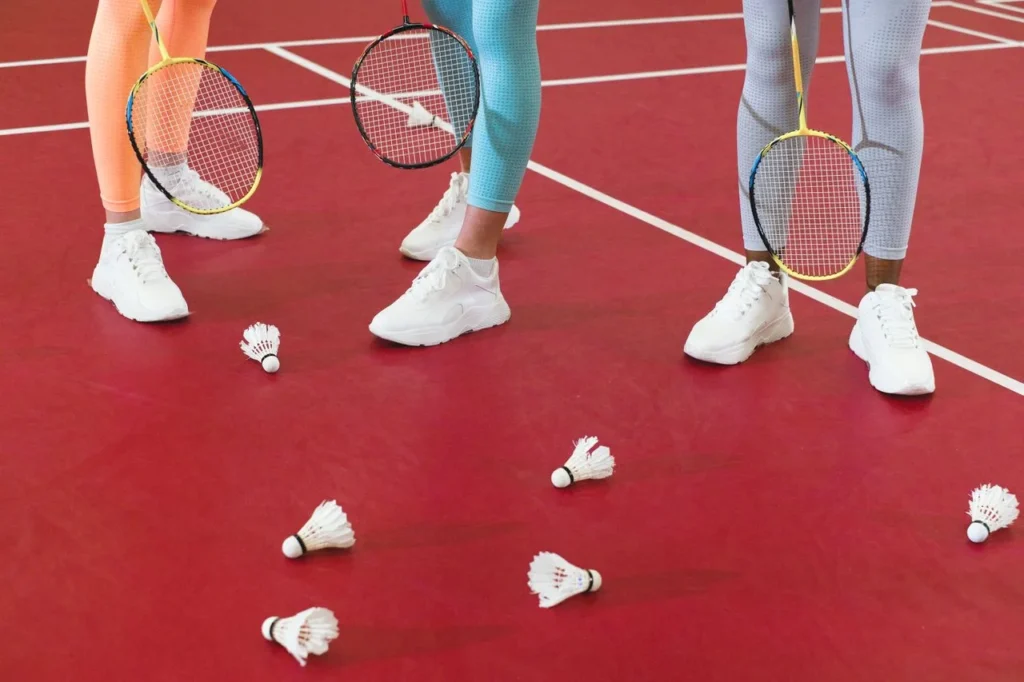
Proper Footwear in Badminton: Shoes, Grip, Support, and Court Safety
Proper footwear in badminton is one of the most important parts of a player’s kit. A badminton player can wear a quality shirt, use a strong racket, and train hard, but the wrong shoes can still create serious problems on court. Badminton involves fast lunges, sudden stops, side-to-side movement, explosive jumps, quick recovery steps, and repeated changes of direction. That movement pattern makes footwear different from normal running shoes or casual sneakers.
The right badminton shoes help players grip the court, move safely, reduce slipping, absorb impact, support lateral motion, and stay comfortable during long rallies. The wrong footwear can cause discomfort, reduce agility, damage indoor courts, and increase the risk of slips, ankle rolls, knee stress, and fatigue.
This is why proper footwear in badminton should never be treated as an afterthought.
Badminton is also extremely fast. Olympics.com reported that India’s Satwiksairaj Rankireddy set a Guinness World Record with a 565 km/h badminton hit. That speed shows how explosive the sport can be. Players need shoes that support rapid footwork and stable landing, especially during smashes, net kills, defensive lifts, and deep lunges.
For teams, clubs, academies, schools, retailers, wholesalers, and private label sportswear brands, proper footwear also connects to the wider uniform system. Badminton footwear should match the dress code, court rules, apparel design, and team identity. GHC Sportswear® focuses on custom badminton uniforms and sportswear, while proper footwear should be selected from specialist badminton or indoor court shoe brands. Together, the right apparel and footwear create a safer, more professional, and more performance-ready badminton kit.
Why Proper Footwear in Badminton Matters
Proper footwear in badminton matters because badminton footwork is different from running, walking, football, basketball, or general gym training. A running shoe is mainly designed for forward motion. Badminton shoes must support quick lateral movement, lunging, jumping, braking, and recovery.
Badminton footwear affects:
- Grip on indoor courts
- Lateral stability
- Landing comfort
- Ankle support
- Knee loading
- Foot fatigue
- Court protection
- Movement confidence
- Player safety
- Match performance
A systematic review in BMJ Open Sport & Exercise Medicine found that lower-body injuries were the most frequent badminton injuries across reviewed studies, with lower body injury ranges reported between 41% and 92%. Sprains, strains, tendinopathy, and stress fractures were among the common injury types discussed in the review.
That does not mean shoes can prevent every injury. No shoe can guarantee injury prevention. But proper footwear in badminton can support grip, cushioning, stability, and movement mechanics, which are all important for a sport built around sudden directional change.
Proper Footwear in Badminton vs Running Shoes
One of the biggest mistakes new players make is wearing running shoes for badminton.
Running shoes are usually designed for forward motion. They may have thick cushioning, higher heel height, and less lateral stability. Badminton shoes need to stay closer to the court, grip well, and support side-to-side movement.
| Feature | Running Shoes | Proper Badminton Shoes |
|---|---|---|
| Movement Focus | Forward running | Lateral movement, lunges, jumps |
| Sole Type | Outdoor or road sole | Non-marking indoor court sole |
| Grip | Built for road/treadmill | Built for court traction |
| Stability | Forward-motion support | Side-to-side support |
| Cushioning | Often thicker | Balanced cushioning and court feel |
| Court Safety | May mark or damage floor | Designed to protect indoor courts |
| Best Use | Running and jogging | Badminton and indoor court play |
This is why proper footwear in badminton should be specific to indoor court movement, not general exercise.
Non-Marking Soles: The First Rule of Badminton Footwear
Non-marking soles are one of the most important features of proper footwear in badminton. Many badminton courts require non-marking shoes because ordinary soles can leave black marks, damage surfaces, or reduce court quality over time.
A non-marking badminton shoe should provide:
- Indoor court grip
- Clean movement
- Court surface protection
- Fast stopping ability
- Controlled sliding resistance
- Good traction during lunges
ASICS describes its indoor squash and badminton shoes as built for fast indoor sports with “non-marking soles, responsive grip, and flexible support.” That wording captures the core footwear need for badminton: grip without damaging the court.
Gum rubber soles
Gum rubber soles are popular for indoor badminton because they provide strong grip on wooden and synthetic indoor courts. They are common in specialist badminton shoes.
Standard rubber soles
Some indoor court shoes use non-marking rubber compounds that work well on sports hall floors. The key is that they should be designed for indoor court use.
Multi-court soles
Multi-court shoes may work for casual play, but they are not always ideal for serious badminton. Competitive players usually benefit from badminton-specific indoor court footwear.
Grip and Traction in Proper Footwear in Badminton
Grip is central to proper footwear in badminton. Badminton players need to stop quickly, push off powerfully, and change direction without slipping.
Good grip helps during:
- Net lunges
- Back-court recovery
- Defensive side steps
- Jump smashes
- Split steps
- Cross-court movement
- Sudden braking
- Direction changes
Too little grip can cause slipping. Too much grip can also be a problem if the shoe catches the floor aggressively and stresses the ankle or knee. The best badminton shoes balance traction with smooth movement.
For clubs and academies, this is also a coaching issue. Players should be taught to keep court shoes clean because dust on the sole reduces grip. Even expensive badminton shoes perform poorly when the outsole is dirty.
Cushioning and Shock Absorption
Cushioning is another major part of proper footwear in badminton. Badminton involves repeated jumps, lunges, and landings. Each landing creates impact forces that travel through the foot, ankle, knee, hip, and lower back.
Good cushioning can help reduce harsh impact feeling and improve comfort. But too much soft cushioning can reduce court feel and stability.
A strong badminton shoe needs balanced cushioning:
- Enough shock absorption for jumps
- Enough stability for side movement
- Enough court feel for quick footwork
- Enough responsiveness for recovery steps
EVA foam
EVA foam is widely used in sports shoes because it is lightweight and provides basic cushioning.
Gel cushioning
Some court shoes use gel-based cushioning to absorb shock, especially under the heel or forefoot.
Brand example: Yonex Power Cushion
Yonex is one of the best-known badminton footwear brands. Its Power Cushion technology is marketed around shock absorption and energy return. For badminton buyers, this shows how major footwear brands compete around cushioning, impact management, and court responsiveness.
Brand example: Li-Ning BOOM
Li-Ning describes its BOOM platform as a lightweight and elastic midsole technology, with official technology material discussing high energy return. This shows how badminton and court footwear brands are using midsole technology as a performance message.
The lesson is simple: cushioning is not only comfort. In badminton, it is part of movement efficiency and player confidence.
Lateral Stability and Ankle Support
Badminton is a lateral sport. Players move sideways as much as they move forward. That is why proper footwear in badminton must support lateral stability.
A shoe with poor side support can allow the foot to roll outward during fast cuts or landings. That can increase the risk of ankle discomfort or instability.
A 2024 study on torsional stiffness in badminton footwear found that shoe stiffness can influence lower-limb biomechanics during badminton tasks. The researchers reported that intermediate torsional stiffness may provide a useful balance between flexibility and stability.
This matters because badminton shoes should not be too soft or too rigid. Players need support, but they also need flexibility.
Good lateral stability may come from:
- Wider outsole base
- Reinforced side panels
- Heel counter support
- Midfoot shank
- Torsional support
- Secure lacing
- Low-to-medium shoe profile
- Strong upper construction
A badminton shoe should feel stable when the player lunges, lands, or pushes sideways.
Lightweight Design and Agility
Speed matters in badminton. Heavy shoes can make footwork feel slower, especially during long matches.
Proper footwear in badminton should be lightweight enough to support agility but strong enough to protect the player during sharp movement.
A lightweight shoe can help with:
- Faster foot recovery
- Less fatigue
- Better court feel
- More responsive movement
- Quicker split-step action
However, lightweight does not always mean better. A shoe that is too light may lack support, durability, or cushioning. Competitive players should look for a balance between weight, structure, and stability.
This is similar to apparel. GHC Sportswear® explains how lightweight performance fabrics support movement in Materials Revolutionizing Badminton Apparel. The same performance logic applies to shoes: lightness matters only when it does not sacrifice function.
Fit: The Most Overlooked Part of Proper Footwear in Badminton
The best badminton shoe will not work if the fit is wrong. Fit is one of the most important parts of proper footwear in badminton.
A good badminton shoe should feel secure but not painful. The foot should not slide inside the shoe during lunges or jumps.
A proper fit should include:
- Secure heel lock
- No heel slipping
- Enough toe room
- Snug midfoot hold
- No painful pressure points
- Stable side support
- Comfortable width
- Strong lacing control
Toe room
A thumb-width rule can help, but badminton players should avoid too much empty space. Excessive toe room can cause the foot to slide forward during lunges.
Heel hold
The heel should stay secure. Heel slipping reduces stability and can create blisters.
Width
Some players need wider shoes. A narrow shoe can create pressure and discomfort. A shoe that is too wide can reduce support.
Break-in period
Badminton shoes should feel reasonably comfortable from the start. They may soften slightly, but they should not feel painful during basic movement.
Breathability and Heat Comfort
Badminton is often played indoors, where heat and sweat build quickly. Proper footwear in badminton should include breathable materials that help reduce heat and moisture inside the shoe.
Breathable shoe features may include:
- Mesh upper panels
- Ventilation zones
- Moisture-managing lining
- Lightweight tongue
- Perforated upper materials
- Quick-drying inner materials
ASICS notes that an intense, fast-moving game like badminton generates heat and recommends breathable materials for badminton shoes. This matches real court experience: feet can become hot during long sessions, especially in humid halls or multi-match tournaments.
Breathability does not replace socks or hygiene. Players should also choose proper sports socks and allow shoes to dry after use.
Proper Footwear in Badminton by Player Level
Different players need different footwear priorities.
| Player Level | Footwear Priority | Best Shoe Direction |
| Beginner | Safety and basic grip | Non-marking indoor court shoes |
| Casual player | Comfort and value | Lightweight court shoes with cushioning |
| School player | Durability and fit | Stable badminton shoes with good outsole |
| Club player | Grip and movement support | Badminton-specific shoes |
| Academy player | Training durability | Stable shoes with strong support |
| Tournament player | Performance balance | Lightweight, cushioned, stable badminton shoes |
| Older recreational player | Cushioning and comfort | Supportive shoes with good shock absorption |
This table shows why proper footwear in badminton should match player level and use case.
Types of Soles for Badminton Shoes
The outsole controls grip, court safety, and movement confidence.
| Sole Type | Best Use | Notes |
| Gum rubber sole | Indoor wooden and synthetic courts | Strong grip and court-friendly |
| Non-marking rubber sole | Indoor badminton courts | Protects court and supports traction |
| Multi-court sole | Casual or mixed surfaces | Less ideal for high-level badminton |
| Outdoor sole | Outdoor casual play | Usually not suitable for indoor courts |
For serious indoor play, non-marking gum rubber or badminton-specific indoor court soles are usually the safest choice.
Badminton Shoe Upper Materials
The upper affects comfort, support, breathability, and durability.
Common upper materials include:
- Mesh
- Synthetic leather
- TPU overlays
- Knit materials
- Reinforced textile panels
- PU-coated sections
A good badminton upper should support the foot during side movement while allowing enough ventilation. Too much soft mesh can reduce support. Too much stiff synthetic material can reduce comfort.
The best badminton shoe uppers usually combine breathable zones with structural support.
Midsole Technology and Court Feel
The midsole sits between the upper and outsole. It affects cushioning, responsiveness, and stability.
Common midsole materials and features include:
- EVA foam
- PU foam
- Gel inserts
- Supercritical foam
- Carbon or TPU shank
- Torsional support plate
- Heel cushioning systems
- Forefoot responsiveness zones
Proper footwear in badminton should not feel like a thick running shoe. A badminton player needs to feel connected to the court while still getting enough cushioning.
A low, stable shoe often feels more controlled than a high, soft shoe during fast lateral movement.
Popular Badminton Footwear Brands
Several brands are known for badminton or indoor court shoes. This section is not a ranking, but a practical overview of common market examples.
Yonex
Yonex is one of the most recognized badminton footwear brands. It is known for Power Cushion technology, lightweight badminton shoes, and professional badminton sponsorship.
Victor
Victor is widely used in badminton and offers shoes focused on court grip, stability, and durability.
Li-Ning
Li-Ning is active in badminton footwear and uses midsole technologies such as BOOM in its wider performance product language.
ASICS
ASICS offers indoor court shoes for badminton and squash, with official product guidance focusing on non-marking soles, grip, and flexible support.
Mizuno
Mizuno also produces indoor court shoes used by racket-sport and court-sport players.
The best brand depends on the player’s foot shape, court surface, movement style, budget, and comfort needs. There is no single perfect shoe for everyone.
Proper Footwear in Badminton and Dress Codes
Footwear is also part of badminton dress codes. Many indoor courts require non-marking shoes, and some tournaments may have footwear expectations linked to player safety and court protection.
GHC Sportswear® covers this wider topic in Badminton Dress Codes, including how footwear, clothing, sponsor placement, and competition presentation work together.
For teams and academies, the complete badminton kit should include:
- Performance shirt
- Shorts, skirt, or skort
- Non-marking badminton shoes
- Sports socks
- Warm-up apparel
- Team tracksuit
- Optional accessories
- Sponsor-ready branding
GHC Sportswear® can support custom badminton uniforms and teamwear that complement proper badminton footwear.
Care Tips for Badminton Shoes
Proper footwear in badminton lasts longer when players care for it correctly.
Best care practices include:
- Use badminton shoes only indoors
- Do not wear court shoes outside
- Wipe soles after play
- Air-dry after every session
- Avoid damp storage
- Remove insoles when drying if needed
- Do not dry near high heat
- Rotate shoes for heavy training
- Replace shoes when grip or cushioning declines
A worn-out badminton shoe can become unsafe even if it still looks fine from the outside. Players should check outsole grip, midsole compression, heel stability, and inner wear regularly.
Warning Signs Your Badminton Shoes Need Replacing
Players should consider replacing shoes when they notice:
- Sole grip is reduced
- Outsole pattern is worn flat
- Shoes feel unstable
- Midsole feels compressed
- Heel counter collapses
- Upper tears near the side
- Feet slide inside the shoe
- New knee, ankle, or foot discomfort appears
- The shoe feels uneven during movement
For frequent players, shoes may wear faster than expected because badminton footwork is repetitive and aggressive.
Proper Footwear in Badminton and Team Apparel
GHC Sportswear® does not need to claim to manufacture badminton shoes to support badminton players properly. Footwear should come from specialist badminton shoe brands, while GHC Sportswear® supports the custom uniform, apparel, and teamwear side.
A complete badminton team kit may include:
- Custom match shirts
- Training shirts
- Shorts
- Skirts or skorts
- Tracksuits
- Warm-up jackets
- Hoodies
- Team polos
- Compression layers
- Sports socks where required
- Sponsor-ready uniforms
- Private label badminton apparel
The shoe protects movement. The uniform supports identity, comfort, and presentation.
GHC Sportswear® explains badminton apparel development in:
- Evolution of Badminton Uniforms
- Materials Revolutionizing Badminton Apparel
- Customizing Your Badminton Uniform
- Badminton Dress Codes
Together, proper footwear and proper apparel create a professional badminton setup.
Buyer Checklist for Proper Footwear in Badminton
Before buying badminton shoes, players and teams should check:
| Requirement | What to Confirm |
| Court type | Wooden, synthetic, indoor multi-sport court |
| Sole | Non-marking indoor sole |
| Grip | Strong traction without unsafe sticking |
| Cushioning | Enough impact comfort without losing stability |
| Lateral support | Stable side movement |
| Fit | Secure heel and midfoot |
| Toe room | Enough comfort without sliding |
| Breathability | Mesh or ventilation zones |
| Weight | Light but not weak |
| Durability | Reinforced side and outsole |
| Use case | Casual, training, academy, tournament |
| Care plan | Indoor-only use and regular drying |
This checklist makes proper footwear in badminton easier to choose.
Common Footwear Mistakes in Badminton
Common mistakes include:
- Wearing running shoes on court
- Wearing outdoor shoes indoors
- Ignoring non-marking sole rules
- Choosing shoes only by color
- Choosing shoes only by brand
- Buying shoes too large
- Ignoring heel slip
- Using worn-out shoes too long
- Playing with dusty soles
- Storing shoes wet
- Using one pair for outdoor and indoor play
- Ignoring foot width
- Ignoring lateral support
Footwear mistakes can reduce performance and increase discomfort. For serious badminton, shoes should be chosen for the sport first and style second.
Strong CTA: Build a Complete Badminton Kit, Not Just a Uniform
Proper footwear in badminton is essential, but it is only one part of a complete kit. Players also need breathable shirts, movement-friendly shorts or skirts, warm-up apparel, socks, and team branding.
If your club, academy, school, corporate league, retailer, wholesaler, distributor, or private label brand is building badminton apparel, GHC Sportswear® can help create the uniform side of the kit.
Send GHC Sportswear®:
- Team logo
- Color palette
- Sponsor requirements
- Shirt design idea
- Match or training use
- Fabric target
- Quantity
- Size range
- Player name requirements
- Packaging needs
- Reference photos
- Tech pack if available
GHC Sportswear® can help you develop custom badminton uniforms that complement proper footwear and meet court-ready performance expectations.
Build Custom Badminton Apparel with GHC Sportswear®
GHC Sportswear® works with teams, clubs, academies, schools, colleges, retailers, wholesalers, distributors, private label businesses, and sportswear brands.
GHC Sportswear® can support:
- Custom badminton uniforms
- Badminton match shirts
- Badminton training tops
- Badminton shorts
- Badminton skirts and skorts
- Tracksuits
- Warm-up jackets
- Hoodies
- Team polos
- Moisture-wicking fabrics
- Mesh panels
- Recycled polyester options
- Sublimation printing
- Heat transfer names and numbers
- Sponsor logo placement
- Private labels
- Branding and packaging
- Bulk production
- Reorder planning
Buyers can explore product categories on the GHC Sportswear® products page and production support through the GHC Sportswear® services page.
Contact GHC Sportswear® for custom badminton apparel manufacturing support:
WhatsApp: https://wa.me/ghcsportswear
Email: info@ghcsportswear.com
Contact page: GHC Sportswear® contact us
FAQ: Proper Footwear in Badminton
Why is proper footwear in badminton important?
Proper footwear in badminton is important because the sport requires fast lunges, jumps, stops, and side-to-side movement. Badminton shoes support grip, stability, cushioning, comfort, and court safety.
Can I wear running shoes for badminton?
Running shoes are not ideal for badminton because they are designed mainly for forward motion. Badminton shoes provide better lateral support, court grip, and non-marking indoor soles.
What soles are best for badminton shoes?
Non-marking gum rubber or indoor court rubber soles are usually best for badminton because they provide grip while protecting the court surface.
How should badminton shoes fit?
Badminton shoes should feel secure around the heel and midfoot, with enough toe room for comfort. The foot should not slide inside the shoe during lunges or jumps.
Are lightweight badminton shoes better?
Lightweight badminton shoes can improve agility, but they still need enough cushioning, stability, and durability. The best shoe balances weight with support.
How long do badminton shoes last?
It depends on playing frequency, court surface, player weight, movement style, and shoe quality. Players should replace shoes when grip, cushioning, or stability noticeably declines.
Conclusion
Proper footwear in badminton affects comfort, safety, movement, court protection, and performance. Badminton is a fast indoor court sport with sharp directional changes, jumps, lunges, and sudden stops. That makes badminton shoes different from running shoes or casual sneakers.
The best badminton shoes should have non-marking indoor soles, strong grip, balanced cushioning, lateral stability, breathable uppers, secure fit, and enough durability for repeated play. Players should choose shoes based on court surface, movement style, player level, fit, and comfort instead of brand name alone.
Proper footwear in badminton also works best as part of a complete kit. Shoes support movement, while custom badminton apparel supports comfort, team identity, sponsor visibility, and professional presentation.
GHC Sportswear® helps B2B buyers create custom badminton uniforms and sportswear that complement proper badminton footwear and support modern court-ready performance.