Materials Revolutionizing Badminton Apparel: Research-Backed Fabrics for Performance
The materials revolutionizing badminton apparel are changing how players train, compete, recover, and represent their teams. Badminton is not a slow indoor game. It is one of the fastest racket sports in the world, with elite smashes regularly reaching extreme speeds. BWF reported men’s smashes in the 340–360 kph region, with the fastest around 400 kph in tracked match conditions, while Olympics.com reported Satwiksairaj Rankireddy’s Guinness World Record smash at 565 km/h.
That speed explains why badminton clothing cannot be treated like ordinary gym wear.
Badminton players need apparel that supports sudden lunges, explosive jumps, fast footwork, overhead smashes, repeated arm rotation, heavy sweating, and long indoor rallies. The wrong fabric becomes hot, heavy, sticky, restrictive, or distracting. The right material helps the athlete stay comfortable, move freely, and maintain focus.
The materials revolutionizing badminton apparel include polyester, polyester-spandex, nylon, mesh, recycled polyester, cotton blends, bamboo-derived viscose, antimicrobial finishes, organic cotton, and advanced performance textiles. But not every material is right for every product. A match shirt needs a different fabric from a warm-up hoodie. A badminton skirt needs a different construction from a club T-shirt. A private label badminton collection needs different sourcing decisions than a one-time school team order.
For teams, clubs, academies, schools, retailers, wholesalers, distributors, and private label sportswear brands, fabric selection is now a business decision, not just a design choice.
GHC Sportswear® helps B2B buyers develop custom badminton uniforms, performance badminton clothing, training wear, warm-up apparel, private label sportswear, and teamwear using materials that match real playing conditions and commercial goals.
Why Materials Revolutionizing Badminton Apparel Matter
The materials revolutionizing badminton apparel matter because badminton movement is intense, multi-directional, and repetitive. A badminton player does not simply run in straight lines. The player changes direction, lunges forward, pushes backward, jumps, twists, stretches, and recovers within seconds.
A badminton uniform must support:
- Fast court movement
- Overhead smashes
- Shoulder rotation
- Deep lunges
- Side-to-side recovery
- Sweat control
- Breathability
- Lightweight comfort
- Flexible fit
- Tournament presentation
- Sponsor logo placement
- Repeated washing
- Bulk production consistency
Sports-clothing research published in the journal Sports Medicine – Open explains that sports clothing affects thermoregulation, comfort, and performance during exercise in heat. The review discusses how fabric, fit, and garment design can influence heat transfer, sweat evaporation, and comfort during physical activity. That matters directly for badminton because indoor courts can become hot, humid, and physically demanding during long sessions.
This is also why the materials revolutionizing badminton apparel connect with the wider history of the sport. GHC Sportswear® explains that shift in Evolution of Badminton Uniforms, where badminton clothing moved from formal, restrictive outfits to lightweight performance sportswear.
Market Reality: Performance Sportswear Is Growing
The materials revolutionizing badminton apparel are part of a much larger sportswear shift. Grand View Research reported the global sportswear market at USD 399.4 billion in 2025, with projected growth to USD 890.4 billion by 2033. That growth is driven by sports participation, fitness culture, outdoor activity, and athleisure demand.
Badminton also has commercial momentum. Fortune Business Insights estimated the global badminton equipment market at USD 7.38 billion in 2025 and projected growth to USD 13.18 billion by 2034. Asia Pacific dominated the market in that report, which matters because badminton has deep participation and fan strength across Asia.
For B2B buyers, these numbers show one thing clearly: badminton apparel is not a small side category. It sits inside a growing sportswear economy where performance fabrics, customization, and sustainability are becoming stronger buyer expectations.
This is why brands should not select badminton uniform fabrics randomly. The material strategy should match the product position, target buyer, competition level, and retail price point.
1. Polyester: The Foundation of Modern Badminton Apparel
Polyester remains one of the most important materials revolutionizing badminton apparel because it is lightweight, durable, quick-drying, and compatible with performance teamwear production.
Textile Exchange reported that polyester remained the most widely produced fiber globally and made up 59% of total global fiber output in 2024. That dominance is not accidental. Polyester is widely used in sportswear because it supports durability, color consistency, moisture-management finishes, and scalable production.
Why polyester works for badminton
Polyester is useful in badminton apparel because it offers:
- Lightweight structure
- Strong durability
- Quick-dry potential
- Good color retention
- Sublimation compatibility
- Stable sizing
- Lower shrinkage than many natural fibers
- Strong bulk production consistency
For badminton teams, polyester is especially useful because it works well with sublimation printing. Sublimation allows full-color team graphics, sponsor areas, names, and numbers without heavy ink layers sitting on the fabric surface.
GHC Sportswear® explains this method in detail in Sublimation Printing and compares it with other branding techniques in Screen Printing vs Sublimation.
Brand example
Nike’s Dri-FIT technology is one example of how major sportswear brands focus on moisture movement. Nike describes Dri-FIT as using high-performance microfiber construction to move sweat away from the skin and spread it across the fabric surface for faster evaporation. Adidas uses similar performance language around AEROREADY, describing it as moisture-managing apparel technology.
The lesson for badminton buyers is clear: moisture control is not a luxury feature. It is central to modern performance apparel.
Best use in badminton apparel
Polyester works well for:
- Badminton match shirts
- Sublimated team uniforms
- Training T-shirts
- Academy apparel
- Club uniforms
- Badminton shorts
- Warm-up tops
- Event shirts
For most custom badminton uniforms, polyester should be one of the first fabrics reviewed.
2. Polyester-Spandex: Stretch for Fast Court Movement
Polyester-spandex blends are among the most practical materials revolutionizing badminton apparel because they combine moisture management with stretch and recovery.
Spandex, also called elastane or Lycra, helps fabric stretch and return to shape. This matters in badminton because players constantly reach, twist, jump, and lunge.
Why stretch matters in badminton
A badminton shirt should not pull across the shoulder during an overhead smash. Shorts should not restrict a deep lunge. A skirt or skort should allow movement without riding up or feeling tight. A fitted training top should move with the athlete instead of fighting the body.
Polyester-spandex blends help with:
- Better stretch
- Better recovery
- Athletic fit
- Improved comfort
- Less restriction
- Better shape retention
- More premium hand feel
Best use in badminton apparel
Polyester-spandex works well for:
- Performance badminton shirts
- Fitted training tops
- Women’s badminton apparel
- Badminton skirts and skorts
- Stretch shorts
- Compression layers
- Warm-up pants
- Premium activewear collections
For clubs, academies, and private label brands, polyester-spandex is a strong choice when the goal is a modern performance fit rather than a loose basic T-shirt.
3. Nylon: Smooth, Strong, and Useful in Premium Blends
Nylon is another performance material used in activewear and sportswear. It is not always the main fabric for badminton match shirts, but it is useful in selected premium products.
Nylon is one of the materials revolutionizing badminton apparel because it can offer a smooth feel, strength, abrasion resistance, and comfort in blended fabrics.
Why nylon works
Nylon can offer:
- Smooth texture
- Lightweight strength
- Good abrasion resistance
- Soft hand feel
- Strong yarn performance
- Compatibility with spandex
- Premium activewear feel
Nylon-spandex blends are common in fitted apparel, compression products, and premium activewear pieces. For badminton, nylon can be useful in training wear, base layers, fitted tops, and warm-up garments.
Best use in badminton apparel
Nylon is useful for:
- Compression shorts
- Base layers
- Premium fitted tops
- Warm-up apparel
- Women’s training wear
- Stretch panels
- Selected activewear products
For B2B buyers, nylon should be considered when softness, stretch, and premium positioning are important.
4. Mesh Fabrics: Ventilation for Indoor Heat
Mesh is one of the most important materials revolutionizing badminton apparel because it improves airflow. Badminton is often played indoors, where heat and sweat can build quickly.
Mesh can be used as a main fabric or as targeted panels. It is especially useful in high-sweat areas.
Best mesh placements
Mesh panels can be used in:
- Back panels
- Side panels
- Underarm zones
- Shoulder zones
- Inner shorts
- Warm-up jackets
- Training shirts
Why mesh matters
Mesh can support:
- Better ventilation
- Lower clingy feeling
- Faster perceived drying
- Improved comfort during long rallies
- A more technical performance look
For badminton apparel, mesh is not only functional. It also helps the garment look more performance-focused, which matters for retail and private label collections.
5. Recycled Polyester: Performance with Better Material Responsibility
Recycled polyester is one of the most important sustainable materials revolutionizing badminton apparel. It can offer many of the same performance benefits as virgin polyester while reducing dependence on virgin fossil-based inputs.
Textile Exchange reported that recycled polyester fiber production increased from around 8.9 million tonnes in 2023 to around 9.3 million tonnes in 2024. However, the same report also shows that virgin fossil-based synthetics still dominate global fiber production. This means recycled polyester is useful, but buyers should avoid exaggerated sustainability claims.
Why recycled polyester matters
Recycled polyester can support:
- Lightweight performance
- Moisture-wicking finishes
- Sublimation printing
- Team color consistency
- Better sustainability positioning
- Reduced reliance on virgin polyester
- Private label eco-focused collections
Certification note
For B2B buyers, recycled claims should be backed by documentation. Certifications such as GRS or RCS can help verify recycled content depending on the supply chain. OEKO-TEX® STANDARD 100 can also help show that textiles have been “tested for harmful substances.”
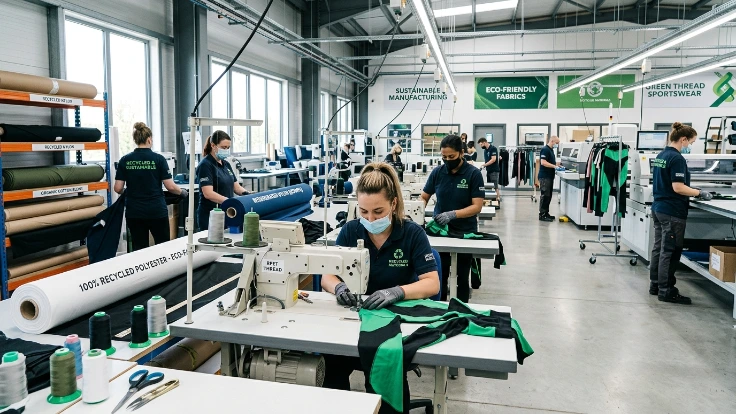
GHC Sportswear® explains this in Sustainable Sportswear Manufacturing and Sustainable Sports Clothing Certifications.
Best use in badminton apparel
Recycled polyester is useful for:
- Eco-focused badminton uniforms
- Club match shirts
- Training tops
- Team shorts
- Warm-up jackets
- Retail sportswear collections
- Private label badminton apparel
For teams and brands with sustainability goals, recycled polyester is one of the strongest material options.
6. Cotton Blends: Softness for Casual and Club Apparel
Cotton blends are part of the materials revolutionizing badminton apparel, but mainly for off-court and lifestyle use.
Pure cotton can absorb sweat and become heavy during intense badminton matches. That makes it less ideal for high-performance match shirts. But cotton-polyester blends can work well for casual training, club merchandise, warm-up wear, travel wear, and fan apparel.
Why cotton blends still matter
Cotton blends can offer:
- Soft hand feel
- Casual comfort
- Better lifestyle appeal
- Improved durability when blended
- Good use for off-court apparel
- Better everyday wearability
Best use in badminton apparel
Cotton blends are better for:
- Club T-shirts
- Team travel shirts
- Hoodies
- Sweatshirts
- Fan merchandise
- Event apparel
- Casual training tops
For badminton match-day uniforms, polyester or polyester-spandex is usually more practical. For club lifestyle apparel, cotton blends can be excellent.
GHC Sportswear® explains the broader decision in Synthetic vs Natural Fabrics Sportswear.
7. Bamboo-Derived Viscose: Soft Feel, But Claims Must Be Accurate
Bamboo-derived fabrics are often marketed as sustainable materials revolutionizing badminton apparel. They can feel soft and comfortable, especially when used as viscose, rayon, or lyocell-type fibers made from bamboo feedstock.
But this category requires careful wording.
The U.S. Federal Trade Commission says textiles can only be called bamboo if made directly from actual bamboo fiber. If the textile is rayon or viscose made using bamboo as the plant source, it should be labeled as “rayon made from bamboo” or “viscose made from bamboo.”
That is important for private label brands because incorrect bamboo claims can become a compliance and trust issue.
Why bamboo-derived viscose is popular
Bamboo-derived viscose can offer:
- Soft feel
- Smooth drape
- Comfortable touch
- Lifestyle apparel appeal
- Breathable feel in casual wear
Best use in badminton apparel
Bamboo-derived viscose may be suitable for:
- Lifestyle sportswear
- Soft club T-shirts
- Off-court apparel
- Casual activewear
- Premium comfort collections
For serious match-day badminton uniforms, polyester-based performance fabrics usually remain more practical.
8. Antimicrobial Finishes: Odor-Control Support
Antimicrobial finishes are another category of materials revolutionizing badminton apparel, especially for players who train frequently or compete through long tournament days.
These finishes are designed to reduce odor-causing bacteria on fabric. They may help garments stay fresher between washes or during extended use, but claims should be tested and worded carefully.
Why antimicrobial finishes matter
Badminton players may train multiple times per week or play several matches in one day. Odor-control support can improve product experience.
Antimicrobial finishes may support:
- Better freshness
- Odor-control positioning
- Improved training comfort
- Premium product value
- Better tournament-day wearability
Important buyer note
Antimicrobial finishes do not replace washing. They also should not be marketed with unsupported medical claims. Buyers should ask for test reports, finish durability, wash performance, and compliance documentation.
9. Organic Cotton: Natural Comfort for Off-Court Products
Organic cotton is one of the sustainable materials revolutionizing badminton apparel for lifestyle and off-court products. It is not usually the best match-day performance fabric because cotton absorbs moisture, but it can be valuable for team merchandise and private label casual wear.
Why organic cotton matters
Organic cotton can offer:
- Natural softness
- Lifestyle appeal
- Stronger eco-positioning than conventional cotton
- Good use in casual apparel
- Premium retail storytelling
Best use in badminton apparel
Organic cotton is suitable for:
- Club T-shirts
- Hoodies
- Sweatshirts
- Event merchandise
- Fan apparel
- Team travel wear
- Lifestyle sportswear
For brands building badminton lifestyle collections, organic cotton can be useful. For match-day products, it should be used carefully.
10. Advanced Performance Textiles: Future Potential, Practical Limits
Advanced textiles are part of the future of materials revolutionizing badminton apparel, but they should be used only when they solve a real problem.
These may include:
- Cooling finishes
- UV-protective textiles
- Smart textiles
- Sensor-ready garments
- Carbon-infused yarns
- Phase-change materials
- Lightweight engineered knits
- High-stretch technical fabrics
Yonex’s VERYCOOL apparel technology is one example of a brand-specific performance claim in badminton and racket sports. Yonex catalog material describes VERYCOOL clothing as using xylitol to absorb heat and perspiration, providing a cooling effect during exercise. Adidas AEROREADY and Nike Dri-FIT also show how major brands use fabric technology as a core product message.
Important buyer note
Advanced materials should be verified. A technology sounds impressive only if it improves comfort, durability, cooling, movement, or user experience. For most B2B buyers, the best first step is still practical fabric selection: polyester, recycled polyester, polyester-spandex, mesh, and tested finishing options.
Materials Revolutionizing Badminton Apparel: Comparison Table
| Material | Best Use | Main Benefit | Buyer Warning |
|---|---|---|---|
| Polyester | Match shirts, uniforms | Lightweight, durable, print-friendly | Choose breathable construction |
| Polyester-spandex | Performance fit apparel | Stretch and recovery | Confirm stretch percentage |
| Nylon | Premium activewear | Smooth and strong | Better in blends than basic team shirts |
| Mesh | Ventilation panels | Better airflow | Do not overuse in weak-stress zones |
| Recycled polyester | Eco-focused uniforms | Performance with better material responsibility | Ask for certification |
| Cotton blends | Club casual wear | Softness and comfort | Not ideal for intense match shirts |
| Bamboo-derived viscose | Lifestyle products | Soft hand feel | Label accurately |
| Antimicrobial finishes | Training wear | Odor-control support | Verify test reports |
| Organic cotton | Off-court apparel | Natural comfort | Better for lifestyle than match play |
| Advanced textiles | Premium ranges | Specialized performance | Use only when tested |
This table shows why the materials revolutionizing badminton apparel must be selected by product purpose, not trend alone.
Best Fabric Strategy by Product Type
The smartest badminton apparel programs use different materials for different products.
Match-day badminton shirt
Recommended materials:
- Polyester interlock
- Recycled polyester
- Polyester mesh
- Polyester-spandex
Why:
- Lightweight
- Quick drying
- Breathable
- Sublimation-friendly
- Good for logos and sponsor placement
Badminton shorts
Recommended materials:
- Lightweight woven polyester
- Polyester-spandex
- Mesh lining
- Recycled polyester
Why:
- Supports lunges
- Handles sweat
- Allows fast movement
- Maintains shape
Women’s badminton skirt or skort
Recommended materials:
- Polyester-spandex
- Nylon-spandex
- Lightweight polyester
- Inner compression short fabric
Why:
- Movement support
- Coverage
- Comfort
- Better fit stability
Warm-up jacket
Recommended materials:
- Polyester knit
- Lightweight woven polyester
- Recycled polyester
- Mesh-lined panels
Why:
- Team identity
- Sponsor visibility
- Travel use
- Pre-match comfort
Club lifestyle apparel
Recommended materials:
- Cotton-poly blends
- Organic cotton
- Bamboo-derived viscose blends
- Fleece blends
Why:
- Better comfort for casual use
- Good for merchandise
- More lifestyle appeal
- Strong for club branding
Material Choice and Logo Method Must Match
The materials revolutionizing badminton apparel also affect decoration methods. A good design can fail if the wrong printing method is used on the wrong fabric.
| Method | Best Fabric Match | Best Use |
| Sublimation | Polyester | Full-color badminton uniforms |
| Heat transfer | Polyester and blends | Names, numbers, sponsor logos |
| Screen printing | Cotton blends and selected polyester | Simple logos and bold prints |
| Embroidery | Jackets, polos, thicker garments | Premium club logos |
| Woven labels | Most garments | Private label branding |
| Rubber badges | Jackets and premium apparel | Modern branding detail |
For badminton uniforms, sublimation is often the strongest option for full team designs because it works well on polyester and keeps the garment lightweight.
GHC Sportswear® offers detailed guidance through:
Sustainability: Facts Matter More Than Green Words
Sustainability is now a major part of the materials revolutionizing badminton apparel, but buyers should avoid vague claims.
Words like “eco-friendly,” “green,” “natural,” and “sustainable” are not enough. B2B buyers need documentation.
Strong sustainability questions include:
- Is the recycled content certified?
- Is the material GRS or RCS verified?
- Is the final fabric OEKO-TEX® STANDARD 100 certified?
- Is the bamboo claim accurately labeled?
- Is the fabric durable enough to reduce replacement?
- Is the packaging aligned with the sustainability claim?
- Can the supplier provide test reports?
- Can the product be reordered consistently?
Textile Exchange data shows that polyester dominates global fiber production, but most polyester remains fossil-based. That means brands should be honest: recycled polyester is a better material choice in many cases, but it is not a complete solution by itself.
The strongest sustainability strategy combines responsible materials, durability, accurate labeling, efficient production, and better long-term planning.
Buyer Checklist for Custom Badminton Apparel
Before ordering custom badminton uniforms, buyers should confirm:
- Match, training, warm-up, or lifestyle use
- Target player level
- Fabric composition
- Fabric GSM
- Stretch requirement
- Breathability requirement
- Moisture-wicking finish
- Mesh panel placement
- Logo method
- Sponsor placement
- Player names and numbers
- Team colors
- Size range
- Women’s and youth fit needs
- Certification requirements
- Sample approval
- Bulk production timeline
- Reorder plan
This checklist prevents common production mistakes and helps buyers choose the right materials revolutionizing badminton apparel before bulk manufacturing begins.
Common Mistakes Buyers Should Avoid
Many badminton apparel problems begin before production.
Common mistakes include:
- Choosing the cheapest fabric only
- Ignoring sweat control
- Using cotton for match uniforms
- Choosing fabric before confirming print method
- Ignoring stretch needs
- Using weak mesh in stress areas
- Making unsupported bamboo claims
- Claiming sustainability without documentation
- Ignoring wash testing
- Overloading the shirt with sponsor logos
- Skipping fit samples
- Not planning reorders
A strong badminton apparel program should be built from fabric, fit, function, and branding together.
How GHC Sportswear® Helps B2B Buyers Choose Better Materials
GHC Sportswear® helps teams, clubs, academies, schools, sportswear brands, retailers, wholesalers, distributors, and private label buyers select the right materials before sampling and bulk production.
GHC Sportswear® can support:
- Polyester badminton uniforms
- Recycled polyester badminton apparel
- Polyester-spandex performance shirts
- Mesh-panel badminton tops
- Lightweight training wear
- Badminton shorts
- Badminton skirts and skorts
- Warm-up jackets
- Team tracksuits
- Sublimation printing
- Heat transfer names and numbers
- Sponsor logo placement
- Private label branding
- Custom packaging
- Bulk production
Buyers can explore sportswear categories on the GHC Sportswear® products page and manufacturing support on the GHC Sportswear® services page.
Stronger CTA: Start with Fabric, Not Guesswork
If you are planning custom badminton uniforms, do not start only with a logo mockup. Start with the material.
Send GHC Sportswear® your tech pack, sample photo, fabric target, GSM preference, order quantity, team colors, logo files, and performance requirements. The GHC Sportswear® team can help you compare polyester, recycled polyester, mesh, stretch blends, and finishing options before sampling.
This helps you avoid wrong fabric selection, poor print compatibility, uncomfortable fit, and bulk-order disappointment.
Request support for:
- Custom badminton uniform sampling
- Fabric selection
- Logo placement planning
- Sponsor-ready design
- Private label development
- Bulk teamwear production
- Sustainable material options
- Reorder planning
Contact GHC Sportswear® for custom badminton apparel manufacturing:
WhatsApp: https://wa.me/ghcsportswear
Email: info@ghcsportswear.com
Contact page: GHC Sportswear® contact us
Conclusion
The materials revolutionizing badminton apparel are changing how badminton uniforms are designed, manufactured, marketed, and worn. Polyester remains the foundation of modern badminton apparel because it is lightweight, durable, print-friendly, and suitable for performance teamwear. Polyester-spandex adds stretch. Nylon supports smooth premium apparel. Mesh improves ventilation. Recycled polyester supports better material responsibility. Cotton blends and organic cotton work well for off-court apparel. Bamboo-derived viscose can offer softness but must be labeled accurately. Antimicrobial finishes and advanced textiles can add value when properly tested.
The best badminton apparel does not come from choosing the trendiest fabric. It comes from choosing the right material for the right product.
A match shirt needs breathability, sweat control, and freedom of movement. A warm-up jacket needs team identity and durability. A club T-shirt needs comfort and repeat wear. A private label badminton collection needs performance, consistency, branding, and documentation.
GHC Sportswear® helps B2B buyers create custom badminton apparel using materials that support player comfort, team identity, sponsor visibility, and scalable production.