Cheap vs Premium Saddles: Is It Worth Paying More for Horse Comfort and Long-Term Value?
The debate around cheap vs premium saddles usually starts with budget, but experienced riders know it ends with horse comfort, rider balance, safety, durability, and long-term value.
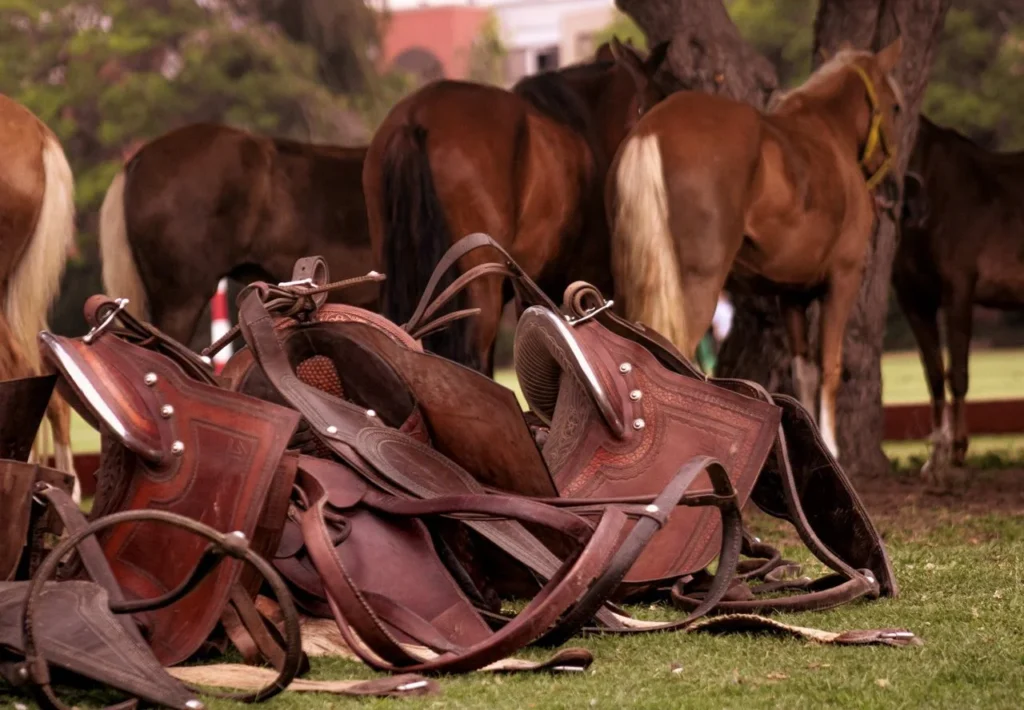
A saddle is not just a piece of riding equipment. It is one of the most important contact points between horse and rider. A weak, unstable, badly shaped, or poorly fitted saddle can affect how the horse moves, how the rider sits, and how the whole riding experience feels.
A useful rule for riders and equestrian businesses is:
“A cheap saddle is not a saving if it creates pressure, imbalance, repairs, replacements, or poor performance.”
That does not mean every premium saddle is automatically perfect. It also does not mean every affordable saddle is useless. The real question is whether the saddle is well built, properly fitted, suitable for the horse, suitable for the rider, and stable over time.
For riding schools, equestrian academies, tack retailers, wholesalers, distributors, and private label equestrian brands, saddle quality becomes even more important. One bad saddle is a rider problem. A bulk order of inconsistent saddles becomes a business problem.
GHC Sportswear® supports custom equestrian gear manufacturing, bulk equestrian gear manufacturing, saddle pads, leather and synthetic tack direction, horse rugs, riding apparel, private label equestrian products, and scalable B2B production for global buyers.
Direct Answer: Cheap vs Premium Saddles
In the cheap vs premium saddles debate, the real difference is not only price. It is fit consistency, material quality, tree structure, panel balance, stitching, durability, adjustability, repair potential, rider support, horse comfort, and long-term value.
Cheap saddles may work for short-term, occasional, or low-intensity use if they fit correctly and are safe. Premium saddles are usually worth the investment when the horse is ridden frequently, the rider needs better balance, the saddle must hold shape, or the buyer wants durability, repairability, and better resale value.
| Factor | Cheap Saddles | Premium Saddles |
|---|---|---|
| Upfront price | Lower | Higher |
| Fit consistency | Often less reliable | Usually more controlled |
| Material quality | Basic or inconsistent | Better leather, synthetic, tree, panels, and hardware |
| Structure over time | May collapse, twist, or compress faster | Usually holds shape better |
| Rider balance | May shift as saddle breaks down | More stable when fitted correctly |
| Horse comfort | Depends heavily on fit; higher risk if poor | Better potential when properly fitted |
| Repairability | Often limited | Often better |
| Resale value | Usually low | Usually stronger |
| Best use | Occasional, temporary, budget-limited riding | Frequent riding, performance, competition, schools, long-term ownership |
The smart decision is not “cheap or expensive.” The smart decision is fit, structure, use case, and lifetime cost.
What You Are Actually Paying For
Most riders think price means brand name. That is only part of it.
A better saddle price usually reflects:
- Tree design and stability
- Panel construction
- Leather or synthetic quality
- Stitching strength
- Hardware quality
- Seat balance
- Rider support
- Fit adjustability
- Consistent production
- Skilled finishing
- Quality inspection
- Repairability
- Better material sourcing
- Longer useful life
- Stronger resale value
A saddle has to distribute rider weight correctly while allowing the horse to move. That is why fit and construction matter more than surface appearance.
The British Horse Society tack affordability guidance explains the point clearly: what appears to be a cheap saddle can become expensive if it is damaged, does not fit, or causes discomfort to the horse.
That is the core of the whole issue.
Why Saddle Fit Comes Before Price
Before comparing cheap vs premium saddles, buyers should understand one thing: an expensive saddle that does not fit is still wrong.
The British Horse Society tack-fit guidance advises that a horse’s saddle should be checked at least twice a year by a Society of Master Saddlers qualified saddle fitter. BHS also notes that saddle fit can change because of weight, workload, age, and season.
This matters because horses change shape.
A saddle that fits today may not fit after:
- Weight gain
- Weight loss
- Muscle development
- Fitness changes
- Injury recovery
- Seasonal condition changes
- Age-related body changes
- Different workload
- Discipline changes
- Rider changes
For related saddle stability problems, read Why Saddle Keeps Slipping.
Cheap Saddle Problems That Show Up Over Time
Cheap saddles often look acceptable when new. Problems usually appear after use.
Common issues include:
- Panels compress unevenly
- Tree structure weakens
- Seat balance changes
- Stitching loosens
- Leather or synthetic surface cracks
- Billet straps wear quickly
- Saddle twists or shifts
- Girth alignment becomes poor
- Rider position becomes unstable
- Pressure points develop
- Horse becomes resistant
- Resale value drops quickly
The rider may not notice immediately. The horse often notices first.
Premium Saddle Advantages
A premium saddle is usually built with better materials, better structure, and better finishing.
Benefits can include:
- More stable tree
- Better panel balance
- Higher-quality leather or technical materials
- Improved rider position
- Better weight distribution
- Stronger stitching
- Better billet quality
- More repair options
- Longer service life
- Better resale value
- More consistent fit
- More professional appearance
- Better support for frequent riding
Premium saddles still need correct fitting and care. Quality does not remove the need for professional assessment.
Reality Snapshot: What Happens Over Time
| Riding Situation | Cheap Saddle Outcome | Premium Saddle Outcome |
| 3 months of light use | May still look acceptable | Structure usually stable |
| 6 months of regular use | Shape may begin changing | Usually more consistent |
| Daily riding | Higher risk of panel compression and wear | Built for stronger repeat use |
| Competition season | May affect balance and presentation | Better support and appearance |
| Riding-school use | High replacement risk | Better long-term stability if maintained |
| Resale after use | Usually weak | Often stronger |
| Repair potential | Limited | Often better |
| Horse shape changes | Fit problems may appear faster | Still requires fitter checks |
Price is visible at checkout. Structure is visible after use.
Cheap vs Premium Saddles and Horse Comfort
Horse comfort is where saddle quality matters most.
A poor saddle can create:
- Uneven pressure
- Restricted shoulder movement
- Back soreness
- Rubbing
- White hairs
- Swelling
- Behaviour changes
- Resistance during tacking
- Bucking or hollowing
- Shorter stride
- Difficulty bending
- Reduced performance
World Horse Welfare states that a poorly fitting or maintained saddle can cause injury and welfare problems for the horse.
A saddle must protect the horse’s back, not only hold the rider.
Rider Balance and Saddle Quality
A saddle also affects the rider.
Poor saddle balance can make the rider:
- Tip forward
- Sit behind the movement
- Grip with the knee
- Lose lower leg stability
- Sit unevenly
- Struggle with transitions
- Feel unstable over jumps
- Depend too much on reins
- Create uneven pressure on the horse
The USEF saddle fitting learning resource describes proper saddle fit as important for the horse’s welfare, comfort, and performance.
Good saddle balance supports both horse and rider. Poor balance creates problems on both sides.
Cheap vs Premium Saddles: Cost vs Lifespan
The biggest mistake riders make is comparing price against price.
They should compare cost against lifespan.
Example:
| Saddle Option | Upfront Cost Example | Expected Use Pattern | Long-Term Risk |
| Very cheap saddle | $300 | Temporary or light use | High fit and durability risk |
| Budget saddle | $600 | Occasional riding | Depends on fit and quality |
| Mid-range saddle | $1,200 | Regular riding | Better if fitted properly |
| Premium saddle | $2,500+ | Frequent or performance use | Stronger long-term value when maintained |
| Used premium saddle | $900–$2,000 | Smart option if fitted correctly | Needs professional checking |
| Cheap saddle bought twice | $600+ | Repeated replacement | May cost more than planned |
| Premium saddle with resale | Higher upfront | Better value retention | Requires care and fit checks |
These are educational examples only. Real prices vary by country, brand, condition, discipline, materials, and fitter work.
The Hidden Costs of Cheap Saddles
Cheap saddles may create hidden costs through:
- Extra pads
- Frequent adjustments
- Repairs
- Replacement
- Vet checks if discomfort appears
- Saddle fitter visits
- Lost training time
- Poor resale value
- Rider confidence issues
- Horse behaviour issues
- Inconsistent riding-school equipment
- Customer complaints for businesses
The lowest purchase price is not always the lowest total cost.
When Cheap Saddles Make Sense
Cheap saddles are not always wrong.
They may make sense when:
- Riding is occasional
- The horse is temporarily in work
- The rider is learning basic balance
- Budget is limited
- The saddle is professionally checked
- The saddle is structurally safe
- Short-term use is expected
- A child may outgrow the setup quickly
- The buyer understands its limits
The key condition is safety and fit. Cheap but safe and correctly fitted is better than expensive and wrong.
When Premium Saddles Are Worth It
Premium saddles are usually worth it when:
- You ride frequently
- You compete
- You train seriously
- You manage multiple horses
- You run a riding school
- You care about rider position
- You need long-term durability
- You need repairability
- You want resale value
- You need better structure
- Your horse has specific fit needs
- You want consistent performance
For serious use, premium saddles often reduce long-term risk.
Used Premium Saddle vs New Cheap Saddle
This is one of the smartest comparisons.
| Option | Advantage | Risk |
| New cheap saddle | Low upfront cost, easy to buy | Structure and fit may be poor |
| Used premium saddle | Better materials and structure | Must be checked for damage and fit |
| New mid-range saddle | Balanced option | Still needs professional fitting |
| Custom saddle | Best fit potential | Higher cost and development time |
A used premium saddle can be better than a new cheap saddle, but only if it is sound, safe, and properly fitted.
Saddle Pads Cannot Fix a Bad Saddle
Many riders buy extra saddle pads to compensate for a poor saddle.
This can create more problems.
Extra pads may:
- Lift the saddle too high
- Narrow the fit
- Create pressure
- Reduce stability
- Hide fit problems
- Change rider balance
- Increase heat
- Cause slipping
A saddle pad should support the saddle setup. It should not be used to disguise poor fit.
For saddle pad and fit-related issues, read Cheap Tack vs Quality Tack and Leather vs Synthetic Horse Tack.
Cheap vs Premium Saddles for Riding Schools
Riding schools need consistency. Saddles are used by different riders, on different horses, many times per week.
Cheap saddles may create:
- Faster wear
- More adjustments
- Poor student balance
- Horse discomfort
- More replacement cycles
- Higher repair planning
- Inconsistent rider experience
- Lower professional image
Premium or well-selected mid-range saddles may offer:
- Better lifespan
- More stable rider position
- Stronger materials
- Better repair potential
- Better horse comfort when fitted
- Better school reputation
Riding schools should not buy only by price. They should buy by fit, durability, safety, care requirements, and total cost of ownership.
Cheap vs Premium Saddles for Retailers and Private Label Brands
For retailers and private label brands, saddle quality affects customer trust.
Buyers should check:
- Material grade
- Tree structure
- Panel filling
- Stitching
- Billet strength
- Hardware
- Seat balance
- Finish consistency
- Packaging
- Care instructions
- Size accuracy
- Fit guidance
- Repair options
- Warranty policy
- Quality-control process
A private label saddle line should not be built on appearance alone. It needs performance credibility.
B2B Manufacturing View: Why Product Consistency Matters
For B2B buyers, the cheap vs premium saddle decision becomes a production strategy.
A global-standard equestrian manufacturer must think beyond one product photo. It must control material sourcing, size consistency, stitching, hardware, sampling, quality inspection, packaging, and repeat production.
That is where GHC Sportswear® positions itself as a serious B2B manufacturing partner.
GHC Sportswear® works with international equestrian brands, wholesalers, distributors, riding academies, retailers, and private label businesses that need consistent equestrian products, repeatable specifications, and scalable bulk supply.
For buyers building a saddle or tack product line, production quality matters more than a single low quote.
Quality Control Checklist for Saddles
Before buying or approving saddle production, check:
| Area | What to Confirm |
| Tree | Stable, balanced, not twisted |
| Panels | Even, suitable for horse shape |
| Seat | Rider balance and comfort |
| Leather/synthetic | Suitable material quality |
| Stitching | Strong and even |
| Billets | Secure and durable |
| Girth alignment | Correct position |
| Hardware | Strong and smooth |
| Weight | Suitable for use |
| Fit | Checked on horse |
| Rider position | Balanced |
| Maintenance | Clear care requirements |
| Packaging | Protected during shipping |
| Repairability | Possible where relevant |
| Sample approval | Required before bulk |
Cheap vs Premium Saddles: Decision Matrix
| Buyer Type | Better Direction | Reason |
| Occasional rider | Budget or mid-range, fitted correctly | Low-use practical option |
| Frequent rider | Mid-range to premium | Better structure and durability |
| Competitor | Premium | Performance and presentation |
| Riding school | Durable mid-range or premium | Consistency and safety |
| Young rider | Budget or used premium, fitted properly | Growth and budget balance |
| Retail brand | Multiple tiers | Serve different customer levels |
| Private label brand | Quality-controlled production | Protects brand trust |
| Distributor | Reliable tested range | Reduces returns |
| Academy | Strong repeatable saddles | Multiple riders and horses |
| Premium equestrian brand | Premium material and construction | Market positioning |
The best answer depends on the buyer, not only the saddle.
Maintenance Still Matters
A premium saddle can fail if ignored.
Good maintenance includes:
- Wiping sweat and dirt
- Cleaning leather correctly
- Conditioning when needed
- Storing away from damp and heat
- Using a proper saddle rack
- Checking stitching
- Inspecting billets
- Checking panels
- Monitoring fit as horse changes
- Scheduling saddle fitter checks
- Repairing early damage
- Replacing unsafe parts
For leather care, read Why Leather Tack Cracks So Fast.
Cost Comparison: Short-Term Saving vs Long-Term Value
| Cost Area | Cheap Saddle Risk | Premium Saddle Advantage |
| Purchase | Lower upfront cost | Higher upfront cost |
| Fit | May require correction | Better fit potential |
| Structure | May change faster | More stable |
| Comfort | Higher risk if poor build | Better if properly fitted |
| Repairs | May not be worth repairing | Often repairable |
| Replacement | May happen sooner | Longer useful life |
| Resale | Low | Better retention |
| Rider balance | May be inconsistent | Better support |
| Horse performance | Risk of discomfort | Better weight distribution |
| Business use | Higher rotation cost | Better long-term control |
Premium is not always about luxury. Often, it is about reducing repeat problems.
Common Mistakes Riders Make
Avoid these mistakes:
- Buying only by price
- Buying only by brand
- Ignoring saddle fitting
- Assuming expensive means perfect
- Using pads to hide fit problems
- Keeping a saddle after the horse changes shape
- Ignoring soreness or behaviour changes
- Buying a saddle without rider balance check
- Choosing a saddle by appearance only
- Not inspecting used saddles properly
- Ignoring billet and stitching wear
- Skipping professional help
The horse’s comfort should decide the saddle, not the price tag alone.
How GHC Sportswear® Supports Equestrian Buyers
GHC Sportswear® supports equestrian businesses with product development, custom manufacturing, and bulk supply.
Supported product categories include:
- Saddle pads
- Saddle covers
- Bridles
- Halters
- Lead ropes
- Martingales
- Breastplates
- Horse rugs
- Stable rugs
- Turnout rugs
- Cooler rugs
- Ear bonnets
- Fly masks
- Equestrian bags
- Riding jackets
- Show jackets
- Breeches
- Jodhpurs
- Riding leggings
- Base layers
- Competition shirts
- Polo shirts
- Gilets
- Hoodies
- Gloves
- Private label equestrian apparel
- Club and academy equestrian gear
Manufacturing support includes:
- Leather or synthetic material direction
- Technical fabric selection
- Webbing and hardware discussion
- Quilting patterns
- Embroidery
- Sublimation
- Heat transfer
- Woven labels
- Rubber badges
- Colour matching
- Private label packaging
- Sample development
- Bulk production
- Reorder planning
- Quality-controlled repeat production
Explore GHC Sportswear® products, GHC Sportswear® services, custom equestrian gear manufacturing, and equestrian gear manufacturing.
What to Send for Custom Saddle, Tack, or Equestrian Gear Production
For accurate product development, send:
- Product category
- Quantity
- Leather, synthetic, or mixed material preference
- Saddle pad, saddle cover, tack, or apparel requirement
- Material thickness target
- Hardware preference
- Colour requirement
- Size range
- Stitching colour
- Padding requirement
- Logo file
- Branding method
- Packaging requirement
- Care label requirement
- Reference photos
- Target market
- Everyday, riding school, retail, trail, or competition use
- Delivery country
- Sample requirement
- Reorder plan
Example:
“Need 150 private label saddle pads, 100 saddle covers, and matching tack accessories for retail and riding school use. Navy and black colourways, durable quilting, branded packaging, embroidery logo, delivery to UK, sample required before bulk.”
Clear details help reduce sampling errors and improve bulk consistency.
Contact and Project Information
For custom equestrian gear, saddle pads, saddle covers, tack accessories, horse rugs, riding apparel, wholesale equestrian products, or private label equestrian collections, buyers can contact GHC Sportswear® with product details, reference photos, quantity, and target deadline.
Contact GHC Sportswear® through WhatsApp, email info@ghcsportswear.com, or the GHC Sportswear® contact page.
GHC Sportswear® Official Profiles and Business Links
Buyers can connect with GHC Sportswear® through the official website, social media channels, community platforms, directory listings, and B2B trade profiles.
Visit the GHC Sportswear® official website for custom sportswear, team uniforms, equestrian gear, motorbike gear, yoga wear, and private label manufacturing.
Follow GHC Sportswear® on TikTok, Threads, Instagram, Instagram Channel, Pinterest, LinkedIn, YouTube, Facebook, Medium, Quora, X, Bluesky, and the WhatsApp Channel.
GHC Sportswear® is also listed on B2BMAP, Alibaba TrustPass, EC21, Blinx, and Wikidata.
FAQ: Cheap vs Premium Saddles
Are premium saddles worth it?
Premium saddles are usually worth it for frequent riders, competitors, riding schools, and horses with specific fit needs because they often offer better structure, materials, repairability, rider balance, and long-term value when properly fitted.
Are cheap saddles always bad?
No. Cheap saddles are not always bad if they are safe, structurally sound, and fitted correctly. However, low-quality cheap saddles can lose shape, create pressure, wear quickly, and cost more over time.
What is the biggest difference between cheap and premium saddles?
The biggest difference is long-term consistency. Premium saddles usually hold their structure, balance, and material quality better than very cheap saddles.
Can a cheap saddle hurt a horse?
Yes, if it does not fit, has poor structure, creates uneven pressure, or shifts during riding. Any saddle, cheap or premium, can hurt a horse if it is badly fitted.
Is a used premium saddle better than a new cheap saddle?
Often, a used premium saddle can be better than a new cheap saddle, but only if it is safe, not damaged, and professionally checked for horse and rider fit.
How often should saddle fit be checked?
The British Horse Society advises saddle checks at least twice a year by a Society of Master Saddlers qualified saddle fitter, and more often if the horse changes shape, workload, weight, or condition.
Can saddle pads fix a poor saddle?
No. Saddle pads can support a good setup, but they cannot fix a badly fitted or structurally poor saddle. Extra pads may even create new pressure or balance problems.
What should riding schools consider when buying saddles?
Riding schools should consider fit, durability, repairability, rider balance, horse comfort, care needs, safety inspection, and total cost of ownership instead of only upfront price.
What should B2B buyers check before sourcing saddles or tack?
B2B buyers should check material quality, stitching, hardware, size consistency, sample approval, packaging, care guidance, QC process, and reorder repeatability.
Can GHC Sportswear® support saddle-related equestrian gear production?
Yes. GHC Sportswear® supports custom saddle pads, saddle covers, tack accessories, horse rugs, riding apparel, private label equestrian gear, sampling, bulk manufacturing, and global delivery coordination.
Conclusion
The cheap vs premium saddles decision is really about short-term saving versus long-term value.
Cheap saddles cost less upfront, but they may lose shape, create fit problems, reduce rider balance, wear faster, and require earlier replacement. Premium saddles cost more upfront, but they often offer better structure, better materials, better repair potential, better comfort, and stronger resale value when fitted and maintained properly.
For occasional riders, a safe and correctly fitted budget saddle may be enough.
For frequent riders, premium saddles often make more sense.
For riding schools, durability and consistency matter more than the lowest price.
For private label brands, product quality affects customer trust.
For B2B buyers, scalable supply must be built on sample approval and repeatable quality.
GHC Sportswear® supports equestrian businesses with custom saddle pads, tack accessories, horse rugs, riding apparel, private label products, OEM/ODM development, bulk production, and consistent quality control.
Cheap saddles may save money once.
The right saddle saves problems every ride.