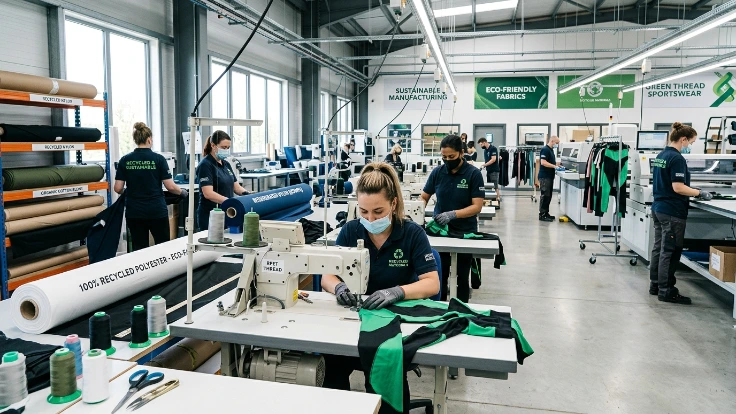

How Bulk Clothing Production Works After Sample Approval
The bulk clothing production process begins when the buyer and manufacturer have moved beyond product development and agreed on what should actually be manufactured.
That sounds obvious, but sample approval does not mean the factory simply presses a button and thousands of identical garments appear.
A successful bulk order requires a controlled sequence involving:
specification freeze → material procurement → production planning → fabric inspection → spreading and cutting → bundling → sewing → decoration → inline quality control → finishing → final inspection → packaging → shipment
Each stage depends on decisions made earlier.
If the final sample uses one fabric but bulk purchasing uses another, production can change.
If the grading chart is outdated, different sizes can be incorrect.
If artwork is revised after printing begins, finished pieces may need to be remade.
If packaging is only discussed after garments are complete, shipment can be delayed even though sewing has finished.
For private label brands, understanding what happens after sample approval is therefore critical.
The complete product-development system is covered in the Private Label Apparel Manufacturing Guide, while the Apparel Sampling Process explains what should happen before bulk manufacturing is authorized.
This guide begins at the next stage:
The sample is approved. What happens now?
Direct Answer: What Happens After a Clothing Sample Is Approved?
After a clothing sample is approved, the manufacturer normally freezes the production specification, confirms the purchase order and size breakdown, books fabric and trims, prepares patterns and markers, plans the production line, inspects incoming materials, cuts and bundles garment panels, completes sewing and decoration, performs inline quality checks, finishes the garments, conducts final inspection, packs the approved quantities and prepares the shipment.
A simplified sequence is:
Approved sample
↓
Final specification
↓
Material booking
↓
Production planning
↓
Fabric inspection
↓
Marker making and cutting
↓
Bundling
↓
Sewing and assembly
↓
Printing / embroidery / branding
↓
Inline QC
↓
Finishing
↓
Final inspection
↓
Packing
↓
Cartons
↓
Shipment
The International Labour Organization describes garment manufacturing through broadly similar stages, including input procurement, fabric inspection, grading and marking, laying and cutting, sewing and assembly, finishing, final quality control and packaging.
Bulk Clothing Production Process at a Glance
| Stage | Main Activity | Buyer Risk if Poorly Controlled |
|---|---|---|
| 1 | Final specification approval | Factory uses outdated requirements |
| 2 | Purchase order confirmation | Wrong quantity or size breakdown |
| 3 | Material booking | Fabric or trims unavailable |
| 4 | Pre-production planning | Workflow errors and delay |
| 5 | Incoming material inspection | Wrong fabric enters production |
| 6 | Marker making | Excess waste or pattern errors |
| 7 | Fabric spreading | Shade or tension problems |
| 8 | Cutting | Incorrect panels or sizes |
| 9 | Bundling | Size/panel mixing |
| 10 | Sewing | Construction defects |
| 11 | Decoration | Wrong logo/color/placement |
| 12 | Inline QC | Repeated defects go unnoticed |
| 13 | Finishing | Poor presentation |
| 14 | Final inspection | Shipment quality uncertainty |
| 15 | Packaging | Wrong size/SKU identification |
| 16 | Dispatch | Incorrect shipment documents or cartons |
The most important idea is that bulk production is a chain.
A mistake early in the process can continue through every later stage.
1. Freeze the Approved Product Specification
Before bulk production begins, the manufacturer needs one current production reference.
That should reflect the final approved:
- design
- pattern
- measurements
- grading
- fabric
- GSM where relevant
- color
- trims
- construction
- logo
- artwork
- labels
- packaging
A common manufacturing problem occurs when several versions remain active.
For example:
Buyer approves Sample V4.
The sewing department still has Sample V3.
The printing department receives Artwork V5.
The measurement sheet belongs to V2.
The finished order can then contain several interpretations of the same product.
A stronger system uses a specification freeze.
That means all major production requirements have been confirmed before bulk manufacturing proceeds.
What Does “Sample Approved” Actually Mean?
Approval should mean more than:
Looks good, proceed.
A stronger approval confirms that the relevant product elements are accepted.
For example:
- sample version
- fabric
- fit
- measurements
- color
- artwork
- logo size
- logo position
- trims
- labels
- packaging
This is why sample development and bulk production cannot be separated completely.
The approved sample becomes one of the key references used throughout manufacturing.
The Apparel Sampling Process explains this development-to-approval sequence in detail.
2. Confirm the Purchase Order
Once the product is approved, the commercial order must also be clear.
The purchase order or equivalent production confirmation should define:
- style
- quantity
- colors
- sizes
- size breakdown
- branding
- packing requirements
- destination
- agreed commercial terms
Suppose a buyer orders 1,000 leggings.
That is not enough information.
The factory may actually need:
| Size | Black | Navy | Total |
|---|---|---|---|
| XS | 80 | 40 | 120 |
| S | 150 | 80 | 230 |
| M | 200 | 120 | 320 |
| L | 130 | 90 | 220 |
| XL | 70 | 40 | 110 |
| Total | 630 | 370 | 1,000 |
Production planning depends on those numbers.
Changing the size breakdown after cutting has started may no longer be simple.
3. Book Bulk Fabric and Trims
The sample may use only a few metres of fabric.
Bulk production may require hundreds or thousands.
The manufacturer therefore needs to secure sufficient materials for the complete order.
Possible requirements include:
- body fabric
- lining
- rib
- mesh
- elastic
- zippers
- buttons
- snaps
- drawcord
- labels
- thread
- patches
- silicone transfers
- packaging
This stage is often called:
material booking
or:
material procurement
The purpose is to ensure that the materials used for production correspond with the approved product.
Why Material Booking Can Affect Lead Time
A manufacturer may have some materials in stock.
Others may need:
- knitting
- weaving
- dyeing
- custom color matching
- printing
- custom zipper production
- label manufacturing
- trim development
Therefore:
production lead time does not always begin when sewing begins.
Material procurement can be a major part of the timeline.
This is one reason buyers should ask separately about:
material lead time
and:
garment production time
4. Inspect Incoming Fabric and Materials
Bulk material should be checked before it is consumed.
Important fabric checks can include:
- correct fabric
- composition
- GSM
- color
- shade consistency
- width
- stretch
- finish
- visible defects
- quantity
Trims should also be checked.
Examples:
- zipper color
- zipper length
- elastic width
- label artwork
- thread color
- button finish
If incorrect material is discovered before cutting, it can still be isolated.
If discovered after the complete order has been manufactured, the consequence is much larger.
The Apparel Quality Control Checklist explains the wider incoming-material and production QC system.
5. Confirm Size Grading Before Cutting
Once fabric is cut, sizing mistakes become expensive.
The factory therefore needs the final graded patterns and approved size chart before bulk cutting begins.
This includes:
- base size
- grade rules
- measurements
- points of measurement
- tolerances
- full size range
The relationship is:
base fit approved
↓
pattern graded
↓
size set reviewed
↓
production patterns released
The Clothing Size Grading and Fit Development Guide explains why approving one medium sample does not automatically validate every other size.
6. Hold a Pre-Production Review
Before manufacturing begins, the production team should understand what it is making.
Factories may use a pre-production meeting or another internal production-review system.
Relevant departments can include:
- merchandising
- pattern
- cutting
- sewing
- printing
- embroidery
- quality control
- finishing
- packing
Important questions include:
Which sample is approved?
Which fabric is approved?
Which measurements control production?
Which logo file is current?
What defects require particular attention?
What is the production quantity?
What is the packaging requirement?
This may sound administrative.
In reality, it prevents expensive interpretation errors between departments.
Why Production Documentation Matters
The current ISO 9001:2026 quality-management framework emphasizes controlled processes, customer requirements, quality culture, risk management and continual improvement.
ISO 9001 is not a garment-production instruction manual.
However, its underlying principle is highly relevant:
repeatable output requires repeatable processes.
ISO states that the standard is used within quality-management systems across more than one million certified organizations globally.
For private label buyers, the lesson is not that every garment supplier must hold ISO certification.
The lesson is that quality should be managed systematically.
7. Marker Making
Once approved graded patterns exist, the factory needs to arrange those pattern pieces efficiently for cutting.
This arrangement is called a:
marker
The marker determines how pattern pieces are positioned across the fabric width.
The objective is to:
- fit required pieces correctly
- maintain grain direction
- respect pattern orientation
- reduce unnecessary fabric waste
- maintain size accuracy
Marker efficiency can materially affect fabric consumption.
For garments with expensive technical fabric, inefficient layouts can increase cost.
8. Fabric Relaxation and Spreading
Certain fabrics may need time to relax before cutting, especially after being stored or tightly wound.
The exact handling depends on the material.
The fabric is then spread or laid onto the cutting table.
The spreading process must control:
- tension
- alignment
- fabric direction
- layer consistency
- shade grouping
- defects
If stretch fabric is pulled excessively during spreading and then cut under tension, the cut panels may change dimensions after the tension is released.
This is one example of why bulk production requires technical handling beyond simply copying a sample.
9. Cutting the Garment Panels
The marker guides cutting.
Depending on the factory, cutting can use:
- manual cutting equipment
- straight-knife systems
- band knives
- automated cutting systems
The production requirement is the same:
each panel must correspond with the correct pattern and size.
Typical pieces may include:
- front
- back
- sleeve
- collar
- waistband
- gusset
- hood
- side panel
- lining
Cutting errors create downstream problems that sewing cannot reliably fix.
Cutting QC
Cutting checks can include:
- correct pattern
- correct size
- correct panel count
- notches
- grain direction
- symmetry
- fabric defects
- shade consistency
The International Labour Organization’s garment-production model describes marking, laying and cutting as distinct technical stages before garment assembly.
The ILO garment-sector production overview provides a useful simplified view of this workflow.
10. Number and Bundle Cut Panels
A bulk order may contain thousands of individual fabric pieces.
Factories therefore need a system to keep the correct pieces together.
Panels can be:
- numbered
- ticketed
- bundled
- separated by size/style/color
A bundle may then move through a defined sewing sequence.
This helps prevent problems such as:
- S front matched with M back
- panels from different shade lots combined
- wrong pocket attached to style
- wrong color mixed
Bundling sounds like a simple logistical step.
At production scale, it is essential.
11. Complete Decoration at the Correct Stage
Not all branding is applied after sewing.
Some decoration methods need to be completed on flat garment panels before assembly.
Examples can include:
- screen printing
- sublimation
- embroidery
- some heat transfers
Other applications may occur after part or all of the garment is sewn.
The sequence depends on:
- decoration method
- garment construction
- machinery
- artwork position
For example, an embroidered chest logo may be easier to apply accurately to a flat front panel before the garment is completely assembled.
A back print may also require panel-level processing.
For teamwear, sublimation often occurs before cut panels are sewn together.
Brands comparing decoration systems can review Screen Printing vs Sublimation.
12. Set Up the Sewing Line
Bulk sewing is not simply one operator making a complete garment from beginning to end.
Industrial garment production commonly divides assembly into operations.
For example, a T-shirt production sequence could involve different operations for:
- shoulder joining
- neck attachment
- sleeves
- side seams
- sleeve hem
- bottom hem
- label attachment
- final trimming
More complex products can require many additional operations.
The International Labour Organization notes that garment manufacturing consists of multiple operations carried out by different operators and workstations, which need to be synchronized to maintain productivity and quality.
13. First Bulk Pieces Should Be Checked Carefully
The first garments coming from the line are particularly valuable.
They answer:
Is the production line reproducing the approved product correctly?
This can reveal:
- measurement errors
- wrong stitch
- wrong seam
- incorrect trim
- logo placement problems
- machine setting problems
Correcting an issue after the first few pieces is very different from discovering it after 5,000 garments.
This is another reason QC should operate during production rather than only at the end.
14. Inline Quality Control
Inline QC checks garments or components while the order is still being manufactured.
Possible checks include:
- seam construction
- stitching
- measurements
- symmetry
- labels
- logo position
- trim function
The Apparel Quality Control Checklist explains this process in greater detail.
The key question is:
Is the defect isolated, or is the production process generating the same defect repeatedly?
A single skipped stitch may require repair.
Incorrect machine settings may create the same defect across hundreds of garments.
Inline QC helps distinguish between the two.
15. Monitor Measurements During Production
Size measurements should not be checked only once before bulk manufacturing.
Production garments should also be measured against:
- target dimensions
- approved grading
- tolerances
For example:
If the approved M half-chest target is 52 cm with an agreed ±1 cm tolerance, bulk garments should remain within the controlled requirement.
Measurement drift can occur because of:
- sewing
- pressing
- operator handling
- fabric behavior
- machine setting
Monitoring during production helps detect drift before the entire order is finished.
16. Complete Garment Assembly
As garments progress through the production line, all components come together.
This can include:
- body panels
- sleeves
- waistband
- cuffs
- pockets
- collars
- hoods
- zippers
- labels
- trims
The complexity varies dramatically.
A simple T-shirt may contain relatively few sewing operations.
A riding breech may contain:
- shaped panels
- waistband
- belt loops
- phone pocket
- knee grip
- lower-leg panels
A motorcycle garment can require even more technical construction.
Bulk manufacturing therefore needs to be planned according to the exact product rather than one generic production sequence.
17. Apply Remaining Branding and Trims
After assembly, some products still require:
- heat-transfer logos
- silicone branding
- patches
- snaps
- buttons
- drawcords
- decorative hardware
Each feature should be checked against the approved sample and specification.
For logos, QC may verify:
- dimensions
- location
- color
- orientation
- adhesion
- surface quality
For trims, QC may verify:
- function
- security
- appearance
18. Thread Trimming and Cleaning
Finished garments often require manual or semi-manual cleanup.
This can include:
- removing loose threads
- removing temporary marks
- spot cleaning
- checking sewing ends
- checking stains
This stage may seem cosmetic, but presentation strongly affects perceived product quality.
A technically correct garment with:
- loose threads
- chalk
- oil marks
- dust
can still appear poorly manufactured.
19. Washing or Special Finishing
Some garments undergo additional treatments before final inspection.
Depending on the product, this may include:
- garment washing
- enzyme washing
- softening
- finishing
- pressing
Not every garment requires these processes.
The finish should always correspond with the approved specification.
A washed hoodie and an unwashed performance jersey should not be treated as though they use identical finishing systems.
20. Pressing and Final Presentation
Pressing can improve:
- seam appearance
- shape
- presentation
- folding
However, inappropriate temperature or pressure can damage:
- synthetic fabrics
- prints
- transfers
- silicone
- sensitive trims
Factories should therefore use finishing procedures appropriate to the material.
21. Conduct Finished-Garment Quality Control
Once garments are complete, the factory can inspect finished units against the approved specification.
Checks may include:
- measurements
- seams
- stitching
- fabric defects
- stains
- trims
- logo
- labels
- function
- appearance
The exact inspection standard should be defined according to the buyer and product.
For a full buyer checklist, use the Apparel Quality Control Checklist.
22. Final Random Inspection and AQL
Larger apparel orders may use acceptance sampling rather than inspecting every item using the same final-lot procedure.
The current ISO 2859-1:2026 standard provides sampling schemes indexed by Acceptance Quality Limit, or AQL, for lot-by-lot inspection.
The third edition was published in January 2026 and replaced the previous 1999 edition and amendments.
Important:
AQL does not simply mean “the buyer allows X% defective garments.”
It is part of a statistical acceptance-sampling framework using factors such as:
- lot size
- inspection level
- sample size
- AQL
- acceptance number
- rejection number
The QC article linked above explains this distinction in more detail.
23. Verify Labels Before Packing
Before garments disappear into individual packaging, check:
- brand label
- size label
- care label
- composition information
- country-of-origin information where applicable
- hangtag
- SKU
- barcode
The label must match the garment.
An XL garment packed with an M label creates a customer problem even if the garment itself is perfectly manufactured.
24. Fold and Pack Individual Garments
Packing requirements vary by brand and sales channel.
Possible systems include:
- standard polybag
- branded polybag
- zip bag
- tissue
- hangtag
- size sticker
- SKU sticker
- barcode
The final packing method should already have been approved.
Do not leave packaging decisions until production is complete.
25. Verify the Final Assortment
A correct total quantity does not prove the order is correct.
Suppose the purchase order requires:
500 black
300 navy
200 grey
Total:
1,000 pieces.
If the factory packs:
600 black
250 navy
150 grey
the total is still 1,000.
The order is still wrong.
Final assortment checks therefore need to verify:
- style
- color
- size
- quantity
not only total pieces.
26. Pack Export Cartons
Individual garments are then organized into outer cartons.
Carton requirements may include:
- defined pieces per carton
- size assortment
- color assortment
- carton number
- shipping marks
- dimensions
- weight
Wholesale buyers may require precise carton organization because goods move directly into warehouse inventory systems.
27. Final Carton Audit
Before shipment, confirm:
- total cartons
- carton numbers
- quantities
- weights
- markings
- destination information
One incorrect carton can create discrepancies when the buyer receives the shipment.
Production should therefore end with a reconciliation between:
purchase order → finished garments → packed quantities → cartons
28. Prepare Shipping Documentation
Depending on the destination and shipping arrangement, international apparel orders may require commercial documentation such as:
- commercial invoice
- packing list
- transport documents
- customs/export documentation
Exact requirements depend on:
- country
- shipment type
- courier/freight method
- trade terms
Manufacturing completion and shipment readiness are not always the same date.
A product can be physically finished while logistics documentation is still being prepared.
Sample Approval Does Not Mean Changes Are Free
One of the most important rules in bulk manufacturing is:
changes become more expensive as production progresses.
Consider this sequence:
Before Material Booking
Changing color may still be relatively manageable.
After Fabric Dyeing
Changing color may require replacing material.
After Cutting
Changing measurements may require recutting panels.
After Sewing
Changing construction may require rebuilding garments.
After Printing
Changing artwork may mean replacing finished pieces.
This is why brands should avoid unnecessary revisions after production approval.
Use a Formal Change-Control Rule
If a change is genuinely necessary after approval, document:
- requested change
- affected styles
- affected quantities
- production stage
- additional cost
- additional time
- responsibility
- new approval
Do not assume a production change is accepted simply because it appeared in a message.
The manufacturer should confirm whether the change is still technically possible.
Bulk Production vs Sample Production
These are not identical environments.
| Sample Production | Bulk Production |
|---|---|
| One/few garments | Hundreds or thousands |
| More individual attention | Repetitive operations |
| Materials may be small quantities | Full material lots required |
| Manual adjustment easier | Standardization essential |
| Development focus | Consistency focus |
| Changes expected | Changes should be minimized |
This distinction explains why a beautiful sample alone is not enough.
The factory must have a system capable of reproducing it consistently at scale.
Why Bulk Fabric Can Differ From Sample Fabric
This is an important sourcing issue.
A sample may have been produced from:
- stock fabric
- development yardage
- previous dye lot
Bulk production may require a new material lot.
That can create potential differences in:
- shade
- hand feel
- stretch
- GSM
- finish
When material continuity matters, brands should confirm whether:
the bulk material is the same approved specification
and whether a bulk fabric swatch or lab dip needs approval.
What Production Updates Should a Private Label Brand Request?
Buyers do not need a photograph of every single sewing operation.
Useful production updates are more strategic.
For example:
Material Stage
Fabric or major trims received.
Cutting Stage
Bulk cutting begins.
Production Stage
Sewing/decoration underway.
QC Stage
Finished production entering inspection.
Packing Stage
Goods packed.
Shipment Stage
Cartons dispatched.
This gives the buyer meaningful visibility without disrupting factory workflow.
GHC Sportswear® shares production updates at key manufacturing stages so B2B buyers can follow the order as it progresses.
What Can Delay Bulk Clothing Production?
Common causes include:
Material Delay
Fabric, zipper or trim production takes longer than planned.
Sample Changes After Approval
Buyer requests additional revisions.
Custom Dyeing
Color approval or dye lot takes additional time.
Artwork Change
Print/embroidery files need revision.
Size Breakdown Change
The cutting plan has to be updated.
QC Failure
Part of the production requires correction or remake.
Packaging Delay
Custom bags, boxes or labels arrive late.
Shipping Disruption
Production is finished but logistics are delayed.
Brands should therefore separate:
manufacturing delay
from:
shipping delay
when evaluating lead time.
How Brands Can Reduce Bulk Production Delays
Before approval, confirm:
- final sample
- fabric
- color
- measurements
- size breakdown
- artwork
- trims
- labels
- packaging
- quantity
During production:
- respond to approval questions quickly
- avoid unnecessary specification changes
- keep one current document version
- confirm important changes in writing
The best way to speed up manufacturing is often not demanding that the factory sew faster.
It is reducing uncertainty before production begins.
Bulk Production and Lean Manufacturing
Garment factories perform many connected operations.
Poor coordination can create:
- waiting
- excess inventory
- unnecessary movement
- rework
- defects
- bottlenecks
The International Labour Organization’s guidance on lean manufacturing for ready-made garments describes lean manufacturing as a method of reducing production waste involving areas such as overproduction, unnecessary movement, defects, inventory and transportation.
For private label buyers, lean manufacturing does not mean demanding unrealistic production speed.
It means a well-organized production system should reduce unnecessary waste while maintaining product quality.
Production Efficiency Should Never Replace Quality Control
A factory can increase output by moving faster.
But if speed increases:
- defects
- measurement errors
- missed inspections
- rework
the apparent productivity gain may disappear.
Production efficiency and quality therefore need to operate together.
The ILO has also emphasized that garment production involves multiple operations that must be synchronized, planned and executed correctly to maintain both productivity and garment quality.
The strongest bulk manufacturing system is not:
maximum pieces per hour at any cost
It is:
consistent approved products produced efficiently.
Bulk Production Process by Product Type
Different products use different production routes.
Private Label T-Shirts
Typical priorities:
- fabric
- cutting
- neckline
- shoulder
- sleeve
- printing
- labels
- pressing
Activewear
Additional priorities:
- stretch handling
- flatlock/coverstitch
- waistband
- compression
- logo transfer
- seam recovery
Sports Uniforms
Additional priorities:
- sublimation
- panel artwork
- sponsor positions
- names
- numbers
- color consistency
Equestrian Apparel
Additional priorities:
- riding fit
- silicone grip
- pockets
- belt loops
- stretch panels
Motorcycle Apparel
Additional priorities:
- technical panels
- reinforcement
- closures
- armor pockets
- articulation
- riding posture
This is why a manufacturer should understand the specific category being produced.
What Happens When Production Fails QC?
The response depends on:
- defect type
- quantity affected
- production stage
- agreed quality requirement
Possible corrective actions include:
- repair
- rework
- replacement
- remake
- sorting
- reinspection
A serious defect should also trigger:
root-cause analysis
For example:
If 80 garments have the same logo placement error, simply repairing those 80 pieces does not explain why it happened.
The manufacturer should identify whether the cause was:
- wrong template
- outdated artwork
- operator instruction
- measurement method
- missing inline check
Fixing the process helps prevent recurrence.
After Production: Build a Reorder Record
One successful bulk order should make the next one easier.
Retain:
- final pattern
- grading
- measurements
- fabric
- GSM
- color
- trims
- artwork
- labels
- packaging
- QC notes
The reorder should not require the brand to rebuild the entire product from memory.
That production history becomes valuable intellectual and operational knowledge for both the brand and manufacturer.
Reorders Still Need Verification
Do not assume a reorder will automatically be identical.
Possible changes include:
- fabric lot
- raw material supply
- dye lot
- trim supplier
- machine
- production team
- season
Therefore, key variables should still be confirmed before repeat manufacturing.
A running style benefits from history, but quality control still matters.
Bulk Clothing Production Checklist for Buyers
Before production begins:
- final sample approved
- measurement chart approved
- grading approved
- fabric approved
- colors approved
- artwork approved
- trims approved
- labels approved
- packaging approved
- quantity confirmed
- size breakdown confirmed
During production:
- bulk material confirmed
- cutting started correctly
- first output reviewed
- inline QC active
- measurements monitored
- branding verified
Before shipment:
- final QC completed
- quantities verified
- size assortment verified
- colors verified
- packaging checked
- cartons audited
- shipping documents prepared
This is much stronger than asking:
“Is my order ready?”
What Private Label Buyers Should Ask Their Manufacturer
Before bulk production, ask:
- Has the final production sample been approved?
- Is bulk fabric the approved specification?
- Are all trims available?
- Is the final graded measurement chart being used?
- Has cutting started?
- Which decoration method will be applied at which stage?
- What inline QC checks are performed?
- How are production measurements monitored?
- How will final inspection be performed?
- How will garments be packed?
- How will quantity and assortment be verified?
- What information will be retained for the reorder?
The answers reveal whether the supplier has a structured manufacturing process.
How GHC Sportswear® Handles Bulk Clothing Production
GHC Sportswear® supports B2B buyers including:
- private label brands
- sportswear companies
- teams
- academies
- wholesalers
- distributors
- equestrian brands
- motorcycle apparel businesses
Projects can move from:
product concept → sample development → approval → bulk production → quality control → packaging → shipment
Depending on the order, manufacturing support can include:
- fabric sourcing
- custom patterns
- sizing
- printing
- embroidery
- sublimation
- silicone branding
- private labels
- packaging
- QC
- production updates
Buyers can review GHC Sportswear® manufacturing services and the broader custom product range.
Frequently Asked Questions About Bulk Clothing Production
What happens after a clothing sample is approved?
The manufacturer confirms the final production specification, books materials, prepares production patterns and markers, cuts the fabric, assembles garments, applies branding, performs quality checks, finishes the products, packs them and prepares shipment.
Does bulk production start immediately after sample approval?
Not always. Fabric, trims, labels and packaging may still need to be sourced or manufactured before cutting and sewing can begin.
What is a pre-production meeting?
It is a production review used to confirm the approved product, materials, measurements, construction, artwork, quantity and important quality requirements before manufacturing begins.
What is marker making in garment production?
Marker making arranges graded garment pattern pieces across the available fabric width to guide cutting and improve material utilization.
What happens during fabric spreading?
Fabric is laid in preparation for cutting while controlling direction, alignment, tension, layers and other material requirements.
Why are cut garment pieces bundled?
Bundling keeps the correct size, style, shade and garment panels together as they move through different sewing operations.
Is printing done before or after sewing?
It depends on the garment and decoration method. Some prints and embroidery are applied to flat panels before assembly, while other branding is applied later.
What is inline quality control?
Inline QC checks garments during production so repeated defects can be identified and corrected before the entire order is completed.
What is final random inspection?
It is an inspection of selected finished units from the production lot to evaluate conformity before shipment. Some buyers use statistical acceptance-sampling systems such as ISO 2859-1.
Is AQL the same as defect percentage?
No. AQL is used within a statistical acceptance-sampling framework and should not be interpreted simply as permission to manufacture a fixed percentage of defective products.
Can I change the design after sample approval?
Sometimes, but the feasibility and cost depend on the production stage. Changes become more difficult after materials are ordered, fabric is cut, branding is applied or garments are sewn.
Why can bulk production look slightly different from the original sample?
Possible reasons include different material lots, production processes or uncontrolled specifications. A strong manufacturing system reduces variation by controlling the approved fabric, measurements, colors, trims and workmanship.
What should a buyer check before shipment?
Check finished quality, measurements, branding, labels, size/color quantities, packaging and carton assortment against the approved order.
How does bulk production become easier on a reorder?
The manufacturer can reuse approved patterns, grading, specifications, artwork, labels and production history, subject to confirming that materials and other critical variables remain consistent.
Final Thoughts
Sample approval is not the end of clothing development.
It is the point where development turns into controlled manufacturing.
A strong bulk clothing production process follows a logical sequence:
freeze the specification
secure the materials
plan production
inspect incoming inputs
grade and cut accurately
assemble the garments
apply branding
check quality during production
finish the garments
inspect the final lot
pack the correct assortment
prepare shipment
The objective is not simply to produce more garments.
It is to reproduce the approved garment consistently at commercial scale.
That is the real difference between making one good sample and operating a reliable private label manufacturing program.
For the complete private label production framework, return to the Private Label Apparel Manufacturing Guide.
For the development stage before production, read the Apparel Sampling Process.
For sizing control, use the Clothing Size Grading and Fit Development Guide.
For the production inspection system, use the Apparel Quality Control Checklist.
Brands ready to move from an approved sample into custom production can contact GHC Sportswear® or message the manufacturing team on WhatsApp.
Email: info@ghcsportswear.com