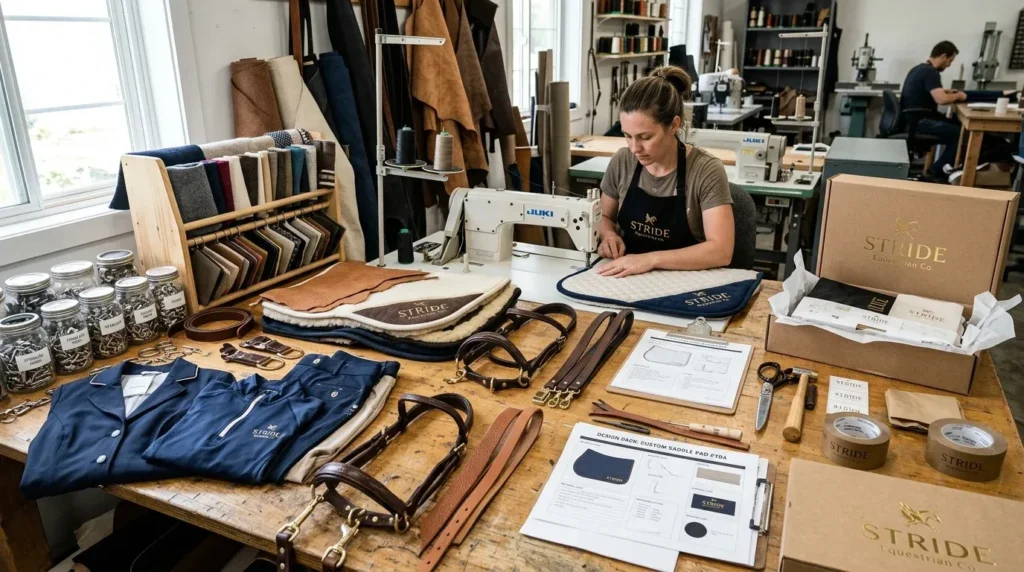
Custom Equestrian Gear Manufacturing Guide for Brands & Riding Schools
Custom equestrian gear manufacturing is not only about making products that look suitable for riders and horses. It is about producing gear that is functional, consistent, durable, safe to use, and ready for repeat orders. In the equestrian market, products are judged by both appearance and real performance. A riding jacket may look good in photos, but it must also allow movement in the saddle. A horse rug may look well designed, but it must also stay secure, resist wear, and fit correctly. A bridle may look premium, but poor stitching, rough edges, or weak hardware can damage trust immediately.
This guide is written for equestrian brands, riding schools, wholesalers, distributors, retailers, and private label businesses that want to understand how custom equestrian gear manufacturing works before placing bulk orders. It explains product planning, fabric and material selection, sampling, fit, quality control, branding, packaging, fulfillment, and supplier selection.
GHC Sportswear® supports B2B buyers across equestrian gear, horse tack, rider apparel, sportswear, and protective apparel categories. Buyers exploring the wider company can begin from the GHC Sportswear® homepage.
Custom Equestrian Gear Manufacturing: What It Includes
Custom equestrian gear manufacturing covers a wide product range. It may include rider clothing, horse tack, horse rugs, saddle pads, stable wear, team apparel, riding gloves, protective gear, branded merchandise, and private label collections.
For riders, equestrian gear must support comfort, control, and safety. For horses, products must avoid pressure, rubbing, poor fit, and material failure. For businesses, manufacturing must also support repeat production, branding consistency, scalable quantities, and reliable supply.
Common equestrian product categories include:
- Riding breeches
- Show jackets
- Riding shirts
- Base layers
- Stable jackets
- Riding gloves
- Saddle pads
- Horse rugs and blankets
- Bridles
- Reins
- Halters
- Lead ropes
- Girths
- Training gear
- Team apparel
- Branded club merchandise
- Private label equestrian collections
A strong manufacturing plan begins by defining which products belong in the first collection and which should be added later. Many new brands try to launch too many products at once. That usually creates sampling delays, sourcing confusion, and quality inconsistency. A better approach is to start with a focused range, prove the quality, and expand step by step.
Why Equestrian Manufacturing Needs More Control Than Basic Apparel
Equestrian products are not basic fashion items. They are used around animals, movement, outdoor environments, sweat, dirt, pressure, and regular washing. Some products touch the horse directly. Some support rider movement. Some must survive daily school use. Because of this, weak manufacturing becomes visible quickly.
The FEI Code of Conduct for the Welfare of the Horse states that tack must be designed and fitted to avoid the risk of pain or injury, which shows why equipment design and fitting are serious welfare considerations in equestrian sport. FEI Code of Conduct
Manufacturing mistakes in equestrian gear may cause:
- Product discomfort
- Poor rider movement
- Horse rubbing or pressure
- Short product lifespan
- Customer complaints
- Return requests
- Brand reputation damage
- Expensive rework
For this reason, custom equestrian gear manufacturing should follow a controlled process from idea to delivery. The buyer and manufacturer must agree on materials, measurements, branding, hardware, function, finishing, packaging, and inspection before bulk production begins.
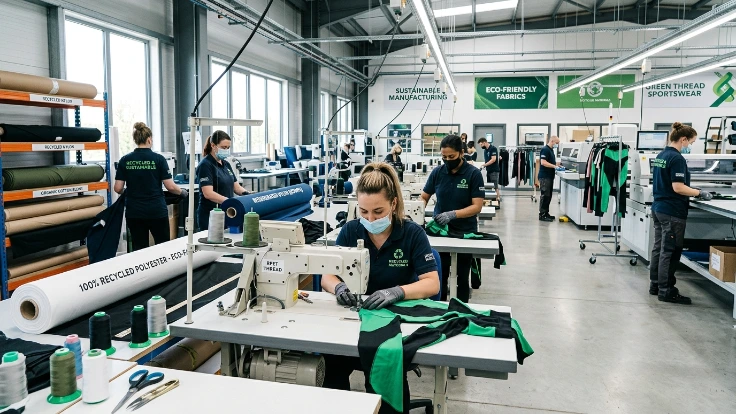
Equestrian Gear Manufacturing Process
A professional manufacturing process reduces confusion and makes production repeatable. The exact process can change depending on product type, but most equestrian gear follows the same basic structure.
| Stage | Purpose | Why It Matters |
|---|---|---|
| Product planning | Define product, use, buyer, and specs | Prevents confusion before sampling |
| Material sourcing | Select fabric, leather, trims, hardware, and padding | Affects comfort, durability, and cost |
| Sampling | Create and test the first product version | Finds problems before bulk production |
| Fit checking | Review size, shape, movement, and contact points | Reduces customer complaints |
| Branding setup | Add logos, labels, colors, packaging, and trims | Builds professional identity |
| Bulk production | Manufacture approved products consistently | Creates scalable supply |
| Quality control | Inspect measurements, stitching, hardware, and finish | Reduces defects and returns |
| Packing and fulfillment | Prepare goods for shipment or retail | Protects products and supports customer experience |
This process is important for riding schools and brands because they do not only need one good sample. They need the same product repeated across sizes, batches, and future reorders.
Product Planning Comes Before Sampling
Most production problems begin before the factory floor. They happen when the product idea is unclear. If the buyer does not define measurements, fabric, use case, branding, hardware, and finish, the manufacturer has to guess. Guessing creates delays.
Before sampling, buyers should prepare:
- Product type
- Target customer
- Use case
- Material preference
- Size range
- Color references
- Logo placement
- Packaging needs
- Quantity target
- Price target
- Delivery timeline
For example, a riding school jacket must be durable, practical, and easy to reorder. A premium riding brand may need refined fabric, shaped fit, special trims, and branded packaging. A saddle pad for daily use needs different material decisions from a show pad designed for presentation.
Clear planning makes sampling faster and reduces revisions.
Rider Apparel Manufacturing
Rider apparel is one of the largest custom equestrian gear categories. It includes breeches, jackets, riding shirts, base layers, gloves, vests, and stable wear. These products must support movement, comfort, and presentation.
Rider apparel should be designed around the actual riding position. A jacket that looks fine when standing may pull across the shoulders in the saddle. Breeches may feel comfortable at first but fail if the fabric stretches out, becomes transparent, or loses grip. A base layer may look simple, but it must manage sweat, layering, and comfort during training.
Important rider apparel checks include:
- Stretch and recovery
- Seat and knee durability
- Breathability
- Waistband comfort
- Seam placement
- Wash performance
- Colorfastness
- Logo durability
Buyers interested in wider rider and sportswear production can compare category options through the GHC Sportswear® women’s sportswear manufacturer page and the men’s sportswear manufacturer page.
Horse Tack and Equipment Manufacturing
Horse tack requires careful attention because it interacts directly with the horse. Bridles, reins, girths, halters, saddle pads, rugs, and related products must be comfortable, durable, and safe.
For detailed horse tack education, buyers should also read the Complete Horse Tack Guide. That guide explains saddle fit, bridle fit, bits, leather vs synthetic tack, maintenance, storage, and tack quality basics.
In manufacturing, horse tack buyers should check:
- Stitching strength
- Leather or synthetic material quality
- Hardware finish
- Smooth edges
- Adjustment points
- Size consistency
- Padding shape
- Contact areas
- Branding placement
- Packaging protection
The British Horse Society advises that tack should be correctly fitted and regularly inspected for wear, which is especially important for products used daily by riders, schools, and clubs. British Horse Society tack guidance
A good manufacturer should understand that horse tack is not judged only by appearance. It must perform under use.
Horse Rugs, Blankets, and Stable Gear
Horse rugs and blankets are strong B2B product categories because they are practical, seasonal, and often bought in multiple sizes. Riding schools, retailers, and wholesalers may need turnout rugs, stable blankets, fleece rugs, coolers, fly sheets, and branded rugs.
Key manufacturing requirements include:
- Strong outer fabric
- Breathable lining
- Secure straps
- Durable buckles
- Correct shaping
- Size consistency
- Reinforced stress points
- Easy washing
- Proper packing
Poorly fitted rugs can rub shoulders, slip sideways, restrict movement, or create discomfort. Weak straps or cheap buckles can fail quickly. For bulk buyers, these issues create returns and damage brand trust.
A strong rug program should include clear sizing, fabric testing, seasonal options, and stable repeat production.
Materials Used in Custom Equestrian Gear
Material selection depends on the product. Rider apparel often uses stretch performance fabrics. Horse tack may use leather, synthetic materials, webbing, padding, rubber grip, or metal hardware. Rugs may use durable woven fabrics, fleece, waterproof materials, breathable linings, and reinforced trims.
| Product Type | Common Materials | Main Requirement |
|---|---|---|
| Riding breeches | Polyester-spandex, nylon-spandex, grip panels | Stretch, recovery, durability |
| Riding shirts | Performance polyester, technical knits | Breathability and moisture control |
| Stable jackets | Softshell, fleece, padded woven fabrics | Warmth and movement |
| Bridles | Leather or synthetic leather | Strength and smooth finish |
| Halters | Webbing, synthetic straps, hardware | Durability and adjustability |
| Saddle pads | Quilted fabric, foam, fleece, mesh | Comfort and sweat management |
| Horse rugs | Woven outer fabric, fleece, lining, straps | Protection and fit |
Material decisions should never be based on price only. Cheap materials can increase replacement rates and reduce customer satisfaction. Smart sourcing improves long-term value.
Leather vs Synthetic Options
Many equestrian buyers ask whether leather or synthetic materials are better. The answer depends on the product and customer.
Leather is often chosen for premium tack because it has a traditional appearance, flexible feel, and long service life when maintained. Synthetic materials are easier to clean, lighter, more weather resistant, and often better for riding schools or beginner markets.
| Factor | Leather | Synthetic |
|---|---|---|
| Appearance | Traditional and premium | Practical and modern |
| Maintenance | Requires cleaning and conditioning | Easier to clean |
| Weather resistance | Sensitive to poor storage | Better in wet conditions |
| Cost | Usually higher | Often more affordable |
| Best market | Premium riders, brands, long-term use | Schools, beginners, utility gear |
A strong equestrian product range may include both materials. Brands can position leather products as premium and synthetic products as practical or school-focused.
Sampling for Equestrian Products
Sampling is essential in equestrian manufacturing. A sample lets the buyer check fit, material, construction, color, branding, hardware, and packaging before committing to bulk production.
A proper sample review should check:
- Measurements
- Material feel
- Stitching
- Hardware
- Stretch
- Fit
- Logo placement
- Product function
- Packaging
- Cleaning and washing behavior
For rider apparel, samples should be checked in movement. For horse tack, samples should be inspected for contact areas, edge finishing, adjustment holes, hardware strength, and stitching. For rugs, samples should be reviewed for fit, closure security, and strap placement.
Skipping sampling may save time at the beginning but often creates expensive production problems later.
Fit and Sizing in Equestrian Gear
Fit is one of the biggest differences between equestrian gear and general apparel. Rider products must work in riding positions. Horse products must fit different horse shapes. A product that fits badly will not be accepted, even if it looks good.
Rider apparel fit considerations include:
- Waist comfort
- Seat movement
- Shoulder mobility
- Sleeve length while riding
- Knee and calf fit
- Layering room
- Grip placement
Horse gear fit considerations include:
- Horse size
- Body shape
- Neck and shoulder movement
- Strap adjustment
- Pressure points
- Rubbing risk
- Stability during movement
For B2B buyers, sizing consistency is critical. If one batch fits differently from another, customers lose confidence. This is why sample approval, size charts, grading, and production records are important.
Branding and Private Label Equestrian Gear
Custom equestrian gear manufacturing often includes private label branding. This means products are manufactured with the buyer’s brand name, logo, labels, packaging, and design details.
Branding options may include:
- Woven labels
- Rubber patches
- Embroidery
- Printed logos
- Embossed leather
- Hang tags
- Custom packaging
- Branded storage bags
- Color-matched trims
Branding should be planned early. Logo size, placement, print method, label type, and packaging should be approved during sampling. Last-minute branding changes can delay production and create mistakes.
Equestrian brands that want a complete manufacturing partner should review the custom wholesale equestrian gear manufacturer page from GHC Sportswear®.
Printing and Embellishment for Equestrian Apparel
Rider apparel and equestrian teamwear often use embroidery, heat transfer, screen printing, sublimation, woven labels, patches, and branded trims. The right method depends on product type.
Embroidery works well on jackets, stable wear, and heavier garments. Heat transfer is useful for logos and names. Sublimation can be effective for teamwear and fully printed garments. Patches can add brand identity, but placement must be practical.
Poor embellishment creates problems such as peeling, cracking, thread pulling, or uncomfortable backing. A logo should not sit where it rubs the rider or interferes with stretch.
Packaging and Fulfillment
Packaging is not just a final step. It protects the product and shapes customer experience. A premium bridle in poor packaging looks less valuable. A saddle pad folded badly may arrive creased. A rug packed without clear labeling can confuse warehouse teams.
Good packaging should include:
- Product protection
- Size labeling
- Brand presentation
- Clean folding
- Barcode or SKU if needed
- Retail-ready packaging when required
- Bulk carton organization
- Moisture protection where needed
For B2B clients, packaging also supports fulfillment. Wholesalers and retailers need clear product identification. Riding schools may need grouped packing by size or product type. Private label brands may need fully branded packaging.
Quality Control in Equestrian Gear Manufacturing
Quality control is essential because equestrian gear is used in active environments. Weak stitching, broken hardware, poor fabric recovery, or inconsistent sizing can create serious customer dissatisfaction.
Quality checks should include:
- Material inspection
- Measurement checking
- Stitching review
- Hardware testing
- Logo placement
- Color consistency
- Packaging inspection
- Random batch checks
- Final product approval
BETA, the British Equestrian Trade Association, represents the equestrian manufacturing, wholesale, and retail trade and states that it has over 800 member companies across the industry, which shows the scale and structure of the equestrian trade market. BETA UK
For manufacturers and buyers, this means quality is not a small detail. It is a business requirement.
B2B Buyers: What to Ask Before Choosing a Manufacturer
Before choosing an equestrian gear manufacturer, buyers should ask practical questions.
| Question | Why It Matters |
|---|---|
| Can samples be developed before bulk? | Reduces production risk |
| Can materials be repeated later? | Supports reorders |
| Can branding and packaging be customized? | Supports private label |
| Are sizes consistent across batches? | Reduces returns |
| What quality checks are performed? | Protects brand reputation |
| Can the manufacturer handle multiple categories? | Supports growth |
| What is the production timeline? | Helps planning |
| Can products be packed for wholesale or retail? | Supports logistics |
Buyers should also check whether the manufacturer understands their target market. A riding school supplier, luxury equestrian brand, and wholesale distributor do not all need the same product strategy.
Manufacturing for Riding Schools
Riding schools need durable and practical gear. Their products are used repeatedly, often by beginners, instructors, and different riders. This increases wear and handling.
Riding schools may need:
- Saddle pads
- Stable jackets
- Instructor apparel
- Branded teamwear
- Rugs
- Gloves
- Riding shirts
- Training gear
- Halters and lead ropes
The priority is consistency. Products must be easy to reorder, easy to clean, and strong enough for daily use. Cost matters, but buying the cheapest product often increases replacement cost later.
For riding schools that also manage teams, events, or club apparel, GHC Sportswear® also supports custom sports uniforms manufacturing.
Manufacturing for Equestrian Brands
Equestrian brands need products that match their market position. A premium brand needs refined materials, consistent branding, careful packaging, and strong product presentation. A practical school-focused brand needs durability, easy maintenance, and affordable repeat supply.
Brands should decide:
- Who is the customer?
- What price level is the product?
- What materials match the market?
- What branding details are needed?
- Which products should launch first?
- What products can be added later?
A focused launch is usually better than a scattered product range. Start with products that fit your customer and expand after quality and demand are proven.
Manufacturing for Wholesalers and Distributors
Wholesalers and distributors need stable supply. Their customers expect products to be available again, in the same style and quality. Variation between batches creates problems.
A distributor should prioritize:
- Repeatable specs
- Strong packaging
- Clear carton labeling
- Size consistency
- Reliable production records
- Stable material sourcing
- Bulk order handling
- Communication
The American Horse Council’s 2023 Economic Impact Study reported major economic contributions from the U.S. equine sector, and American Horse Council communications note that the industry added $177 billion in total value and supported 2.2 million jobs. American Horse Council Economic Impact Study
That shows equestrian products operate inside a serious economic market, not a small hobby category.
Cross-Category Opportunities for Equestrian Businesses
Many equestrian businesses sell more than tack or rider apparel. They may also sell teamwear, gym wear, yoga wear, lifestyle apparel, or protective gear. Cross-category manufacturing helps brands expand without changing supplier every time.
For example, a riding school may need instructor jackets, branded hoodies, horse rugs, team uniforms, and rider base layers. An equestrian lifestyle brand may sell breeches, yoga-inspired leggings, softshell jackets, and casual apparel. A distributor may manage equestrian gear, sportswear, and motorbike products.
GHC Sportswear® supports multiple product categories, including women’s sportswear, men’s sportswear, women’s yoga wear, and custom wholesale motorbike gear.
How Custom Equestrian Gear Connects to Wider Services
A complete B2B manufacturing relationship is not only about stitching products. It may include product planning, material sourcing, sampling, branding, packaging, quality control, and fulfillment.
Buyers can review the wider manufacturing services offered by GHC Sportswear® here: GHC Sportswear® services.
A brand that needs only one product today may need multiple services later. This is why choosing a manufacturer with wider support is useful. A supplier that can handle development, branding, production, and packaging reduces communication gaps and helps scale product lines.
Common Mistakes in Custom Equestrian Gear Manufacturing
Common mistakes include:
- Starting without clear specs
- Choosing materials only by price
- Skipping samples
- Ignoring fit testing
- Adding branding too late
- Not checking stitching and hardware
- Forgetting packaging
- Not planning reorders
- Launching too many products at once
- Using one product design for every customer group
These mistakes create delays, returns, and customer complaints. A controlled production process prevents most of them.
Custom Equestrian Gear Manufacturing Checklist
| Step | What to Prepare |
|---|---|
| Product concept | Item type, customer, use case |
| Specification | Measurements, material, trims, hardware |
| Branding | Logo, label, packaging, color standard |
| Sampling | Prototype, fit sample, revised sample |
| Approval | Final sample confirmation |
| Bulk production | Quantity, size breakdown, timeline |
| Quality control | Measurements, stitching, hardware, finish |
| Packing | Retail or wholesale packaging |
| Delivery | Shipping plan and order handling |
| Reorder plan | Records for future production |
This checklist should be used before every custom equestrian gear order.
Product Range Planning for Equestrian Brands
One of the biggest decisions in custom equestrian gear manufacturing is deciding what to produce first. A new brand may want to launch everything at once: breeches, jackets, rugs, saddle pads, bridles, gloves, and stable wear. That sounds exciting, but it often creates too many decisions at the same time.
A better product range starts with a clear customer group. If the brand serves riding schools, the first products should be durable, easy to clean, and easy to reorder. If the brand serves competition riders, the first products should focus on fit, appearance, fabric performance, and discipline-specific detail. If the brand serves wholesalers, the product range should be simple, repeatable, and suitable for bulk handling.
A practical launch plan might look like this:
| Buyer Type | First Product Range | Why It Works |
|---|---|---|
| Riding school | Stable jackets, saddle pads, rugs, gloves | Practical daily-use items with repeat demand |
| Premium rider brand | Breeches, show shirts, jackets | High-value apparel with strong branding potential |
| Tack retailer | Bridles, reins, halters, saddle pads | Core products customers already understand |
| Wholesale distributor | Rugs, pads, teamwear, basic gear | Scalable items with clear sizing and volume demand |
| Club or academy | Team jackets, riding shirts, branded apparel | Builds identity and uniformity quickly |
A product range should not be chosen only because products are popular. It should be chosen because the buyer can manage quality, sizing, materials, packaging, and reorders. A small but controlled range is better than a large confusing range.
Equestrian Apparel Fit: Why Standard Apparel Logic Fails
Riding apparel cannot be developed like basic fashion apparel. A rider bends, sits, stretches, leans, grips, and moves differently from someone wearing casual clothing. That means fit has to be tested in realistic positions.
Breeches must remain comfortable in the seat and knee. Jackets must allow shoulder and arm movement while maintaining shape. Base layers must sit smoothly under outerwear. Gloves must allow rein feel without bunching or slipping. Even stable jackets should allow work around horses without restricting movement.
Fit problems often appear only during use. A shirt may fit well while standing but pull across the shoulders when holding reins. A jacket may look structured but ride up in the saddle. Breeches may feel flexible but lose recovery after washing. These issues should be found during sampling, not after bulk production.
For brands, fit becomes part of identity. If customers trust the fit, they return. If sizing changes between batches, they complain. That is why measurement charts, grading rules, and approved samples must be stored for every product.
Manufacturing Documentation: The Tech Pack
A tech pack is the instruction file for production. It tells the manufacturer what to make, how to make it, and how the final product should be checked. Without a proper tech pack, both buyer and factory rely too much on assumptions.
A good equestrian gear tech pack may include:
- Product description
- Technical drawings
- Measurements
- Size grading
- Fabric details
- Trim details
- Hardware details
- Stitching instructions
- Logo placement
- Label placement
- Packaging instructions
- Color references
- Sample notes
- Quality control points
For horse gear, the tech pack may also include strap lengths, buckle positions, padding thickness, reinforcement zones, and contact area notes. For rider apparel, it may include stretch direction, seam type, panel construction, and fit tolerance.
The tech pack does not need to be complicated, but it must be clear. Clear documentation reduces delays and protects both sides during production.
Lead Times and Production Planning
Custom equestrian gear production takes time. Buyers often underestimate how long sampling, approvals, material sourcing, production, inspection, packing, and shipping can take. Rushing the process increases mistakes.
A realistic production plan should include:
- Product discussion
- Quote and specification confirmation
- Material sourcing
- First sample
- Sample review
- Revisions if needed
- Pre-production approval
- Bulk production
- Final inspection
- Packing and shipping
The timeline depends on product complexity and order size. A simple riding shirt is usually faster than a rug with multiple layers, straps, buckles, and branded packaging. A bridle requires different material and hardware checks than a base layer.
Brands planning seasonal collections should start early. Equestrian demand can be seasonal, especially for rugs, jackets, and competition apparel. Late planning leads to missed selling windows.
Cost Factors in Custom Equestrian Gear Manufacturing
Cost depends on more than quantity. Buyers should understand what affects price before comparing quotes.
| Cost Factor | Why It Matters |
|---|---|
| Material type | Leather, technical fabrics, fleece, webbing, and hardware vary in cost |
| Product complexity | More panels, straps, padding, or trims increase labor |
| Branding | Embroidery, patches, labels, embossing, and packaging add steps |
| Sampling | More revisions increase development cost |
| Quantity | Larger orders usually reduce unit cost |
| Quality level | Better stitching, hardware, and finishing cost more |
| Packaging | Retail packaging costs more than simple bulk packing |
| Shipping | Weight and volume affect freight cost |
The cheapest quote is not always the best quote. If low cost causes returns, complaints, and replacements, the final cost becomes higher. B2B buyers should compare total value, not only first unit price.
How to Use This Pillar in the Website Cluster
This custom equestrian gear manufacturing pillar should link to the complete horse tack guide and later to supporting articles about specific products and problems. The complete horse tack guide explains the product education side, while this page explains the manufacturing and sourcing side.
Use this pillar for articles about:
- Custom equestrian apparel
- Riding school gear
- Horse rugs and blankets
- Saddle pads
- Private label equestrian brands
- Bulk horse gear
- Equestrian teamwear
- Rider apparel manufacturing
- Equestrian product development
- B2B equestrian sourcing
When a supporting article discusses a specific issue, such as leather tack cracking or saddle pad materials, it should link back to the Complete Horse Tack Guide. When it discusses production, sourcing, branding, bulk orders, or private label development, it should link to this manufacturing pillar.
This makes the website structure clear for users and search engines.
Why GHC Sportswear® Fits B2B Equestrian Buyers
GHC Sportswear® works with brands, wholesalers, distributors, riding schools, clubs, retailers, and private label businesses that need scalable product development and production.
Buyers can learn more about the company on the GHC Sportswear® about us page.
The advantage of working with a multi-category manufacturer is that buyers can build wider product ranges without starting from zero for every new category. Equestrian brands can develop horse gear, rider apparel, teamwear, lifestyle apparel, and related products with aligned quality and branding.
Need a Reliable Custom Equestrian Gear Manufacturer?
GHC Sportswear® supports B2B buyers with custom equestrian gear manufacturing, rider apparel, horse gear, private label product development, branded packaging, bulk production, and repeat supply.
We work with:
- Equestrian brands
- Riding schools
- Wholesalers
- Distributors
- Retailers
- Clubs and academies
- Private label startups
- Merchandise businesses
We support:
- Custom equestrian apparel
- Horse tack and gear
- Saddle pads, rugs, and blankets
- Branded stable wear
- Team apparel
- Private label collections
- Fabric and material sourcing
- Sampling and product development
- Printing, embroidery, and packaging
- Scalable bulk manufacturing
To discuss custom equestrian gear, wholesale production, or private label manufacturing, contact GHC Sportswear® here: Contact GHC Sportswear®.
WhatsApp: https://wa.me/ghcsportswear
Email: info@ghcsportswar.com
Final Thoughts
Custom equestrian gear manufacturing requires planning, product knowledge, material control, fit understanding, and repeatable production. It is not enough for gear to look good. It must work for riders, horses, schools, brands, retailers, and bulk buyers.
The strongest equestrian products are built through a clear system: product planning, material sourcing, sampling, fit checking, branding, manufacturing, quality control, packaging, and fulfillment. When these steps are controlled, brands reduce errors, improve customer trust, and build product ranges that can grow.
This pillar should support future articles about riding apparel, saddle pads, horse rugs, bridles, equestrian teamwear, private label equestrian brands, riding school gear, and bulk equestrian supply. It should also connect closely with the complete horse tack guide so readers can move between product education and manufacturing guidance.