History of the Olympic Games: 12 Strange Facts and Odd Moments
The history of the Olympic Games is usually told as a story of excellence, unity, discipline, and international pride. That is true — but it is not the whole story.
Behind the medals, ceremonies, national flags, and record-breaking performances, the Olympics also have a long history of strange events, chaotic races, unusual traditions, controversial moments, and rules that feel almost unbelievable today.
From athletes competing in ancient Greece to marathon runners taking shortcuts in cars, from tug of war medals to swimming races in open rivers, the Olympic Games have never been boring. The modern Olympics may now look highly organized, but the early years were often experimental, messy, and sometimes completely bizarre.
This guide explores some of the strangest facts and oddest moments in Olympic history — and why they still matter today for sports fans, teams, clubs, and brands that care about performance, identity, and sporting culture.
The Ancient Origins of the Olympic Games
The Olympic Games began in ancient Greece. The International Olympic Committee traces the first ancient Olympic Games to Olympia in 776 BC, where athletic contests were held as part of a religious festival connected to Zeus.
The ancient Olympics were very different from the modern event. There were no branded kits, no television coverage, no corporate sponsors, and definitely no social media debates about jersey design. Athletes competed for honor, recognition, and symbolic rewards rather than modern medals or endorsement deals.
One of the strangest facts about the ancient Games is that many athletes competed nude. This was connected to Greek ideas about the athletic body, strength, and physical excellence. Today, that would create a crisis for every uniform manufacturer, event organizer, and broadcast partner in the world.
The ancient Olympics also had fewer events at first. Over time, the Games expanded to include running, wrestling, boxing, pankration, equestrian events, and throwing disciplines. The IOC notes that ancient Olympic sports included running, long jump, shot put, javelin, boxing, pankration, and equestrian events.
The Modern Olympic Revival
The modern Olympic Games were revived in 1896 in Athens. According to Olympics.com, the Athens 1896 Games attracted athletes from 14 nations, with large delegations from Greece, Germany, France, and Great Britain.
Compared with today’s Olympic Games, the first modern Olympics were small. There were no massive athlete villages, no global streaming platforms, and no advanced sportswear systems. Yet the event created the foundation for the modern Olympic movement.
The 1896 Games also showed something important: sport was becoming international. Uniforms, flags, national colors, and team identity became increasingly important as the Olympics grew. Today, Olympic teamwear is one of the strongest examples of how apparel communicates performance, national pride, and visual identity.
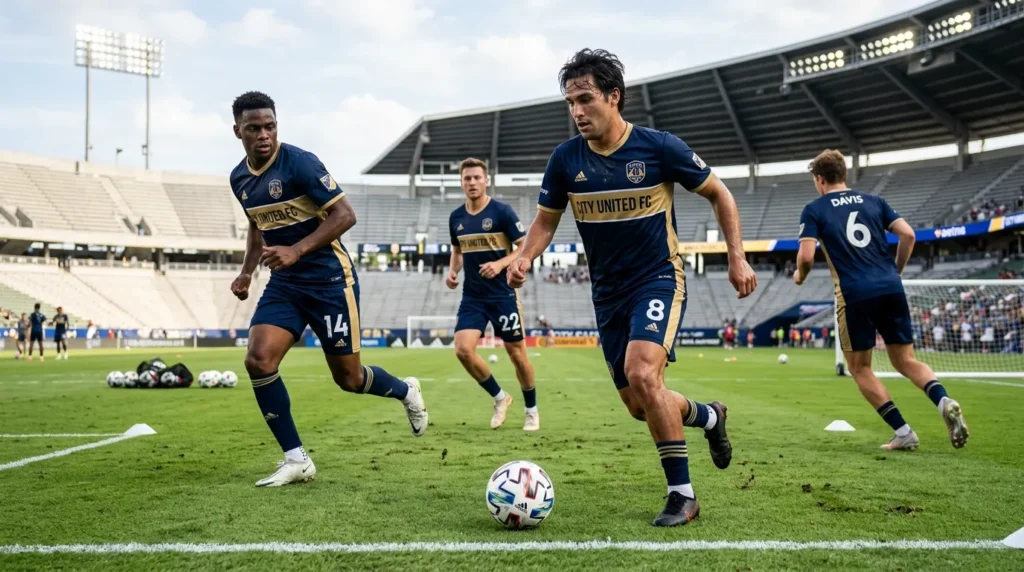
For teams, clubs, and academies building their own identity, the same principle applies at a smaller scale. A strong uniform is not just clothing; it represents belonging. That is why teams planning long-term kit design should also read the Custom Sports Uniforms Guide from GHC Sportswear®.
Strange Olympic Events That Actually Happened
Some Olympic events from the past feel surprising today. The early modern Olympics were still developing their format, so organizers experimented with sports that later disappeared.
| Strange Olympic Event | Years / Event Context | Why It Feels Strange Today |
|---|---|---|
| Live pigeon shooting | Paris 1900 | Animals were intentionally killed during competition |
| Tug of war | 1900–1920 | Now mostly seen as a school or picnic game |
| Swimming in the Seine | Paris 1900 | Athletes competed in open river conditions |
| Rope climbing | Early Olympic editions | Gym-style strength event |
| Club swinging | Early 20th century | Similar to rhythmic gymnastic movement with clubs |
One of the most shocking examples was live pigeon shooting at the 1900 Paris Olympics. Olympedia records live pigeon shooting events from 1900, and the event is widely remembered as one of the strangest and most controversial Olympic experiments.
Tug of war was also once an Olympic sport. Olympics.com notes that tug of war was contested at the Olympic Games from Paris 1900 to Antwerp 1920.
It sounds funny now, but tug of war required strength, coordination, strategy, and team discipline. In many ways, it was a pure team sport. The difference is that modern audiences are used to sports with professional leagues, advanced uniforms, and broadcast-friendly formats.
The Chaotic 1904 Olympic Marathon
If there is one Olympic race that sounds like it was written by a comedy writer, it is the 1904 St. Louis marathon.
Olympics.com describes the 1904 marathon as one of the strangest races in Olympic history. Fred Lorz was initially treated as the winner but had ridden part of the course in a car. Thomas Hicks, the eventual winner, was given brandy and strychnine sulphate during the race, which was legal at the time but sounds horrifying today.
The race was run in extreme heat, with poor organization and difficult road conditions. Modern athletes benefit from hydration systems, medical support, better footwear, performance apparel, and controlled race planning. The 1904 marathon shows how much sports science and athlete care have changed.
Imagine trying to explain that race to a modern marathon organizer:
“Did the winner run the full course?”
“Not exactly.”
“Was the other winner medically safe?”
“Also not exactly.”
Today, teams and athletes rely heavily on preparation, equipment, and performance systems. That includes uniforms. Poor apparel will not make a marathon as chaotic as 1904, but it can still create discomfort, overheating, chafing, and performance problems.
Olympic Medals Were Not Always Gold, Silver, and Bronze
One surprising fact in the history of the Olympic Games is that the medal system changed over time.
Olympics.com explains that the tradition of awarding gold, silver, and bronze medals for first, second, and third place began at the St. Louis 1904 Olympic Games.
Before that, early Olympic awards were different. The medals we now see as standard were not always part of the Olympic identity.
Another interesting fact: modern Olympic gold medals are not made entirely of gold. Olympics.com explains the history and design of Olympic medals, and modern Olympic medal rules require gold medals to be mostly silver with gold plating.
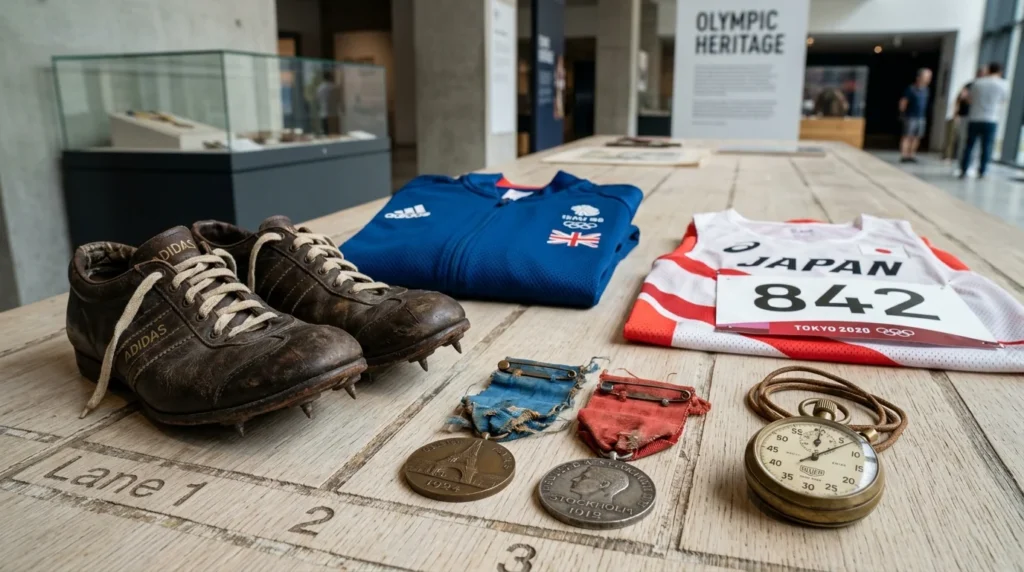
This is a useful reminder that symbols matter. A medal’s value is not only material. It represents achievement, status, and recognition. The same idea applies to team uniforms. The fabric itself matters, but the meaning behind the colors, logos, and design matters too.
Olympic Traditions Have Changed Over Time
Many Olympic traditions feel ancient, but some are surprisingly modern.
The Olympic torch relay is a good example. Olympics.com states that the modern Olympic torch relay was first used at the Berlin 1936 Summer Olympics.
Today, the torch relay is one of the most recognizable Olympic symbols. It represents continuity, ceremony, and global attention. But its modern origin is much more recent than many people assume.
The Berlin 1936 Games also introduced major developments in media and ceremony. Britannica notes that the 1936 Games introduced the torch relay and were also among the first Games to use major media innovations, including early television coverage.
This shows how the Olympics became more than sport. They became presentation, storytelling, identity, and visual culture. Uniforms became part of that visual culture. Olympic teams are remembered not only for performance but also for how they looked when they entered the stadium.
Odd Olympic Moments That Became Famous
The Olympics are full of moments that became famous because they were dramatic, confusing, emotional, or strange.
| Olympic Moment | Year | Why It Stands Out |
|---|---|---|
| Fred Lorz’s marathon shortcut | 1904 | He rode in a car for part of the marathon |
| Thomas Hicks winning under extreme conditions | 1904 | He received substances now seen as shocking |
| Blood in the Water match | 1956 | Hungary vs Soviet Union water polo became politically charged |
| Torch relay controversy | 1936 onward | Modern tradition began in a politically controversial Games |
| Live pigeon shooting | 1900 | One of the strangest discontinued events |
These stories remind us that the Olympics reflect the world around them. They are not isolated from politics, culture, technology, ethics, or social change.
That is why Olympic history is such a powerful content area. It connects sport with human behavior. It also gives teams and sports brands a deeper way to think about identity, presentation, and tradition.
For more unusual sports-history content, readers may also enjoy GHC Sportswear® articles such as Forgotten Olympic Sports and Forgotten Sports From History.
What Olympic History Teaches About Team Identity
The Olympics show that sport is never only about competition. It is also about identity.
Athletes represent countries, teams, values, and traditions. Their apparel helps communicate all of that visually. National colors, crests, patterns, ceremony uniforms, competition kits, and warm-up gear all become part of the story.
This is why sports uniforms matter at every level:
- Olympic teams use uniforms to represent nations.
- Professional clubs use uniforms to build fan loyalty.
- Academies use uniforms to create discipline and belonging.
- Schools use uniforms to organize teams clearly.
- Local clubs use uniforms to look professional.
- Brands use uniforms to build recognition.
A small academy may not have Olympic-level visibility, but the principle is the same. Matching uniforms create identity. Consistent design builds recognition. Better materials improve comfort and performance.
Teams, clubs, academies, and distributors that want to compare available categories can explore the GHC Sportswear® product range.
Olympic Uniforms and the Rise of Sportswear Culture
Modern Olympic uniforms are not just functional. They are designed for performance, national identity, media visibility, and sponsorship value. Athletes need apparel that supports movement, climate conditions, and sport-specific demands.
A sprinter needs lightweight, aerodynamic clothing. A basketball player needs breathable and flexible kit. A rower needs close-fitting apparel that supports movement. A cyclist needs technical fit and fabric. A ceremonial outfit must represent national identity.
This is where sportswear and sports uniforms overlap. The modern sports uniform is not only about color and number. It involves:
- fabric performance
- breathability
- stretch
- durability
- fit
- branding
- sponsor placement
- printing method
- comfort during movement
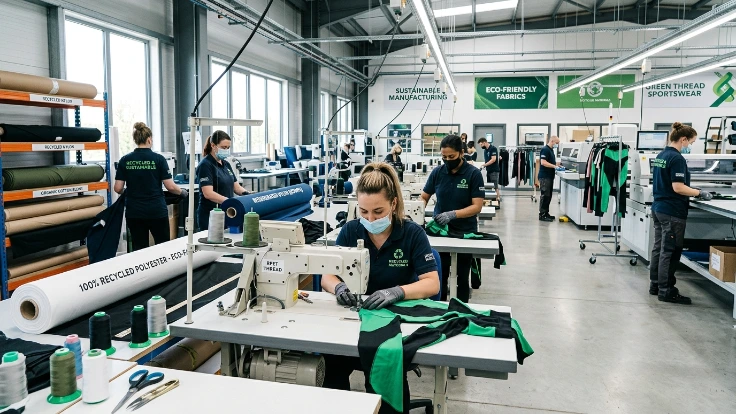
For teams planning custom kits, this is exactly why working with a custom wholesale sports uniforms manufacturer matters. Bulk uniform production should be planned around sport, fabric, design, and repeat ordering.
Strange Olympic Facts Quick Table
| Fact | What Happened | Lesson |
|---|---|---|
| Ancient athletes competed nude | Clothing was not part of early Greek competition | Sportswear evolved with culture |
| Tug of war was Olympic | It appeared from 1900 to 1920 | Sport definitions change |
| Live pigeon shooting happened | Paris 1900 included live birds | Ethics evolve over time |
| 1904 marathon was chaotic | Car ride, heat, and strange substances | Athlete safety matters |
| Gold medals are not solid gold today | Modern medals are symbolic more than material | Meaning can matter more than material |
| Torch relay began in 1936 | Now iconic, but modern in origin | Traditions can be created |
This is why Olympic history is so interesting. It shows that sport is always changing. What feels normal today may seem strange tomorrow.
Why Sports Brands Should Study Olympic History
Sports brands, uniform suppliers, and apparel manufacturers can learn a lot from Olympic history.
The Olympics show how sport connects with:
- visual identity
- national pride
- technical apparel
- athlete comfort
- media presentation
- ceremony
- storytelling
- tradition
A uniform is never just a uniform when it represents a group. This applies to Olympic teams, football clubs, rugby teams, basketball squads, school academies, and private sportswear brands.
For B2B buyers, the lesson is simple: design matters, but planning matters more. Fabric, fit, printing, sizing, and branding should be decided before production begins. Teams should not wait until the season is close to start thinking about uniforms.
If you are building a broader sportswear or apparel line, the Custom Apparel Manufacturing Guide explains how product planning, sampling, fabric sourcing, branding, packaging, and production connect across apparel categories.
Need Custom Sports Uniforms for Teams, Clubs, or Brands?
GHC Sportswear® works with sports teams, academies, clubs, schools, wholesalers, distributors, sportswear startups, and private label businesses that need custom sports uniforms and bulk teamwear production.
We support:
- football uniforms
- rugby uniforms
- basketball jerseys
- cricket uniforms
- baseball uniforms
- cycling kits
- rowing uniforms
- training kits
- warm-up apparel
- sponsor branding
- names and numbers
- sublimation and printing
- bulk uniform production
- private label teamwear
If your team or brand wants uniforms that represent identity and performance, GHC Sportswear® can support design, fabric selection, branding, sampling, and bulk production.
WhatsApp: https://wa.me/ghcsportswear
Email: info@ghcsportswar.com
Final Thoughts
The history of the Olympic Games is filled with excellence, but it is also full of strange facts, odd moments, and unexpected stories. Ancient athletes competed differently. Early modern organizers experimented with unusual sports. Marathon races became chaotic. Medal traditions changed. Ceremonies evolved. Uniforms became part of sporting identity.
That is what makes Olympic history so fascinating. It is not a perfect straight line. It is a human story filled with ambition, mistakes, creativity, controversy, and progress.
For athletes and teams today, the biggest lesson is that sport always evolves. Better planning, better equipment, better apparel, and stronger identity all shape the future of competition.
Whether it is the Olympics or a local academy season, the right uniform still matters. It tells people who you are before the game even begins.