Custom Sports Uniforms Guide for Teams, Clubs & Brands
Custom sports uniforms are more than matching jerseys and shorts.
For sports clubs, schools, academies, leagues, teams and private label sportswear brands, the uniform has several jobs at once. It has to perform during competition, represent the team clearly, carry sponsor and player information, withstand repeated use and remain consistent when replacement pieces or future batches are ordered.
That combination makes sports uniform development more complex than buying ordinary apparel.
A successful teamwear program depends on getting the complete system right:
- Fabric
- Fit
- Sizing
- Construction
- Printing
- Numbers
- Logos
- Sponsor placement
- Quality control
- Packaging
- Repeat production
This guide explains what teams and B2B buyers should consider before placing a bulk sports uniform order and how better planning can prevent problems later.
The Sports & Fitness Industry Association reported positive participation trends across multiple sports and fitness categories in its 2024 participation research. As organized participation grows, clubs, academies and sportswear suppliers need reliable systems for teamwear sizing, replacement orders and repeat production.
Why Custom Sports Uniforms Matter
A sports uniform has to succeed in three areas: performance, identity and repeatability.
Performance During Play
Athletes sprint, jump, stretch, sweat, fall, tackle and repeat high-intensity movements throughout training and competition.
The uniform therefore needs to support the sport rather than interfere with it.
A product that is:
- Too heavy
- Too stiff
- Poorly ventilated
- Incorrectly fitted
- Weak at high-stress seams
can become a performance problem regardless of how good the design looks.
Team Identity
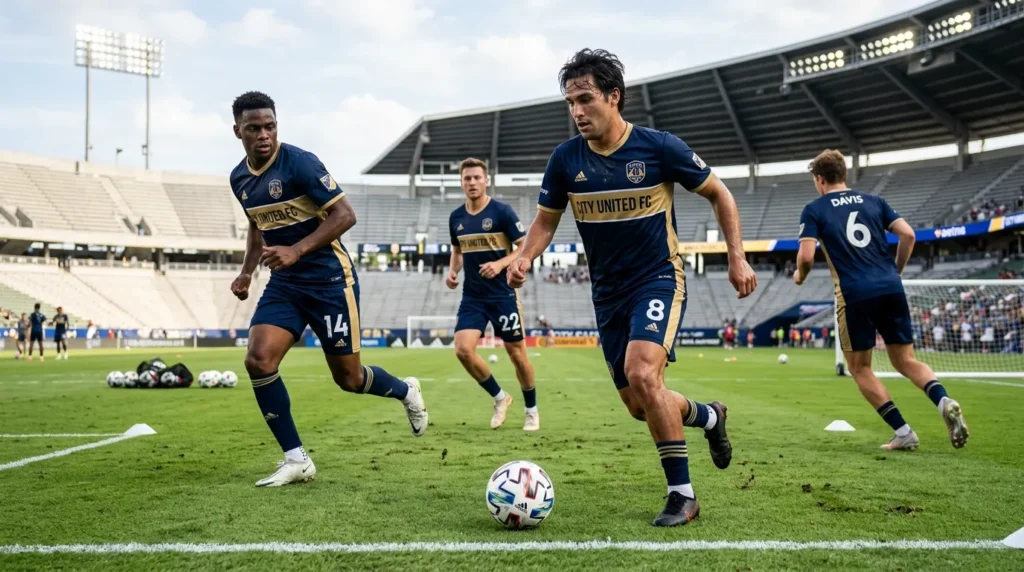
Uniforms make players immediately recognizable as part of the same team.
That identity comes through:
- Team colours
- Club crest
- Player number
- Player name
- Sponsor logos
- Consistent garment design
Uniform regulations may also determine where and how some of these elements can be used.
For example, NFHS baseball uniform guidance requires team members to maintain consistent colour and style standards. The exact rules vary by sport and governing body, but the principle is the same: a competitive uniform must be designed with regulations in mind.
Buying and Reorder Control
Teams rarely purchase uniforms only once.
Players join.
Players leave.
Sizes change.
Garments become damaged.
Sponsors change.
New squads are added.
A club or distributor therefore needs a uniform that can be reproduced later without unnecessary changes in:
- Colour
- Fabric
- Fit
- Artwork
- Logo placement
- Number style
- Construction
This is where structured manufacturing becomes important.
Main Types of Custom Sports Uniforms
Most teams need more than one clothing set.
A complete teamwear program may include competition uniforms, training kits, travel wear and supporter products.
| Uniform Type | Main Use | Buyer Priority |
|---|---|---|
| Match uniforms | Official games and tournaments | Performance, branding and visibility |
| Training kits | Regular practice | Durability, comfort and cost control |
| Warm-up apparel | Pre-game, travel and presentation | Consistent team identity |
| Away or backup kits | Alternative match use | Colour contrast and availability |
| Fan merchandise | Retail and supporter sales | Design appeal and brand identity |
For clubs and academies, uniforms should therefore be planned as a teamwear system, not as one isolated jersey.
Fabric Selection Comes Before Design
One of the most common mistakes in sportswear development is choosing the visual design before confirming the material.
Design matters.
But fabric determines how the uniform behaves.
It influences:
- Weight
- Breathability
- Stretch
- Moisture handling
- Durability
- Printing
- Hand feel
- Shape retention
- Overall cost
Common sports uniform materials include:
- Polyester interlock
- Polyester mesh
- Polyester-spandex blends
- Lightweight performance knits
- Sport-specific knitted fabrics
Polyester remains widely used in sportswear because of characteristics such as durability, relatively fast drying and suitability for many printing systems. Textile Exchange also describes polyester as a strong, durable and quick-drying fibre used widely across clothing and footwear.
That does not mean every polyester fabric performs identically.
Construction matters.
A lightweight mesh jersey and a dense interlock jersey can both contain polyester while performing very differently.
Fabric Selection by Sport
Different sports place different stresses on the garment.
| Sport | Main Fabric Priority | Typical Requirement |
| Soccer / Football | Lightweight breathability | Fast movement and moisture management |
| Basketball | Airflow and freedom of movement | Jumping and unrestricted shoulder movement |
| Rugby | Strength and stability | Contact, pulling and abrasion |
| Baseball | Structure and durability | Repeated wear and professional presentation |
| Volleyball | Stretch and comfort | Jumping and upper-body movement |
| Cycling | Stretch and close-body fit | Aerodynamic performance |
| Cricket | Breathability and lightweight comfort | Long periods of outdoor use |
A manufacturer should not automatically recommend the same fabric construction for every sport.
A rugby jersey experiences different stresses from a cycling jersey.
A basketball uniform requires different mobility from a cricket kit.
Material choice should follow the actual use of the product.
Fit Must Match the Sport
There is no universal sports uniform fit.
Different activities require different amounts of ease, stretch and garment structure.
For example:
Rugby
A rugby jersey may use a closer athletic fit to reduce excess fabric that can be grabbed during contact.
Basketball
Basketball jerseys generally need sufficient freedom through the shoulders and upper body.
Cycling
Cycling apparel typically uses a much closer body fit to support aerodynamic movement.
Football
Football kits usually balance athletic fit with enough freedom for running, turning and kicking.
Baseball
Baseball uniforms often require more structural shape while still allowing throwing, batting and running movement.
The uniform should therefore be developed around the sport rather than adapted from a generic T-shirt pattern.
Sizing Must Be Planned Before Bulk Production
Sizing errors can become expensive when hundreds of uniforms are involved.
A strong sizing system should establish:
- Adult sizes
- Youth sizes
- Women’s fits where required
- Men’s fits where required
- Measurement tolerances
- Garment dimensions
- Size grading
- Sample approval
Teams should confirm their size requirements before bulk manufacturing begins.
A useful process may include:
- Approving the base sample
- Reviewing the measurement chart
- Checking key sizes
- Confirming the final grading system
- Collecting player sizes
- Releasing bulk production
Future reorders should use the same approved sizing reference unless the buyer intentionally changes it.
Youth and Adult Sports Uniform Sizing
Clubs and academies often manage several age groups.
That means one teamwear program may need:
- Children’s sizes
- Junior sizes
- Adult sizes
- Extended sizes
Youth products should not simply be scaled-down adult garments without considering proportion.
Children and adults differ in areas such as:
- Torso proportion
- Shoulder width
- Garment length
- Sleeve length
- Waist and hip relationship
For large club programs, sizing should be tested before the season begins rather than after the complete order arrives.
Printing, Numbers and Logos
Surface decoration is one of the most visible parts of a sports uniform.
Poor execution can produce:
- Cracked numbers
- Peeling sponsor logos
- Faded graphics
- Incorrect colours
- Misaligned artwork
- Inconsistent placement
Common decoration methods include:
- Sublimation
- Screen printing
- Heat transfer
- Embroidery
- Patches
Each technique works differently.
For deeper manufacturing guidance, see the GHC Sportswear® guide to surface design apparel.
Sublimation for Sports Uniforms
Sublimation is widely used for polyester performance uniforms.
It is particularly useful when the design contains:
- Multiple colours
- Gradients
- Large graphics
- Player numbers
- Names
- Sponsor logos
- Repeated patterns
- Full-shirt artwork
Because the design becomes integrated with suitable polyester material rather than forming a conventional thick film on top, sublimation works well for lightweight performance garments.
Common applications include:
- Football kits
- Basketball uniforms
- Rugby jerseys
- Cycling apparel
- Running shirts
- Training wear
Learn more in the GHC Sportswear® sublimation printing guide.
Screen Printing
Screen printing works particularly well for repeated graphics and larger bulk quantities.
Typical uses include:
- Training shirts
- T-shirts
- Hoodies
- Sweatshirts
- Promotional teamwear
Advantages may include:
- Strong colour
- Good opacity
- Efficient bulk production
- Durable results when correctly processed
The final performance depends on:
- Ink
- Fabric
- Curing
- Artwork
- Print setup
- Washing conditions
The method should be matched to the garment rather than selected only because of price.
Heat Transfer for Names and Numbers
Heat transfer is useful when garments require individual customization.
Applications include:
- Player names
- Player numbers
- Sponsor logos
- Sleeve logos
- Small graphics
This is particularly practical when every garment is different.
Performance depends on correct:
- Temperature
- Pressure
- Time
- Transfer material
- Fabric compatibility
Poor processing can result in peeling, cracking or edge lifting.
See the heat transfer printing guide for more detail.
Embroidery
Embroidery creates a dimensional stitched appearance and is commonly used for:
- Club logos
- Polo shirts
- Jackets
- Hoodies
- Caps
- Bags
- Warm-up apparel
It can be an excellent branding method, but dense embroidery is not always ideal for lightweight match jerseys.
Decoration should always be selected according to:
- Fabric weight
- Product use
- Logo size
- Garment stretch
- Desired appearance
Team Logos, Player Names and Sponsor Placement
A professional sports uniform needs visual hierarchy.
The design should clearly control:
- Team crest
- Player number
- Player name
- Main sponsor
- Secondary sponsors
- Manufacturer branding
- Sleeve patches
- League or competition marks
Too many logos can make a uniform difficult to read.
Sponsor placement should be decided before the production artwork is finalized.
Late logo additions can create problems with:
- Seams
- Numbers
- Existing graphics
- Fabric panels
- Competition regulations
The complete layout should therefore be approved before bulk production.
Competition Rules Should Be Checked Early
Professional and organized sports can have detailed uniform regulations.
These may cover:
- Number dimensions
- Number visibility
- Colour contrast
- Logo locations
- Sponsor size
- Manufacturer marks
- Uniform consistency
NCAA basketball uniform guidance, for example, contains detailed requirements covering areas such as colour, numbers and permitted marks.
Even if your club does not compete under NCAA rules, the example demonstrates an important manufacturing principle:
Uniform compliance should be checked before artwork approval, not after production.
The relevant governing body’s current rules should always be reviewed for the actual competition.
Colour Consistency Matters
Team colour is part of brand identity.
A club that uses the same blue every season should not receive noticeably different blues across:
- Match jerseys
- Shorts
- Tracksuits
- Hoodies
- Training shirts
Colour references may use:
- Pantone references
- Approved fabric swatches
- Printed strike-offs
- Physical production samples
Digital screens alone are not reliable colour standards because displays reproduce colour differently.
An approved physical reference provides a stronger manufacturing standard for future orders.
The Importance of Sampling
A bulk order should not be the first time the buyer sees the real product.
Sampling allows the team or brand to evaluate:
- Fabric
- Fit
- Measurements
- Colours
- Printing
- Logos
- Numbers
- Construction
- Comfort
Problems are less expensive to correct while only one or a few samples exist.
Once hundreds of pieces have been produced, the same correction becomes much more difficult.
For a deeper explanation, read the GHC Sportswear® apparel sampling process.
What Should Be Approved Before Bulk Production?
Before manufacturing begins, the buyer should confirm:
- Product design
- Fabric
- Fabric colour
- Size chart
- Fit
- Logo
- Number style
- Player-name format
- Sponsor artwork
- Decoration method
- Placement
- Labels
- Packaging
The approved sample and specifications should become the bulk production reference.
Bulk Sports Uniform Production Requires Control
A good sample proves that one garment can be made correctly.
Bulk manufacturing must prove that the approved product can be repeated consistently.
For an order of 500, 1,000 or 5,000 pieces, control becomes more important.
Bulk production may require:
- Approved production sample
- Fabric batch control
- Cutting control
- Size grading
- Artwork control
- Print placement standards
- Sewing inspection
- Measurement checks
- Packing verification
This is where controlled manufacturing becomes important.
Consistency at scale is what separates a successful sample from a reliable production system.
Quality Control for Sports Uniforms
Quality should be checked throughout production rather than only when the garments are packed.
Depending on the product, checks may include:
Fabric
- Correct material
- Correct colour
- Surface defects
- Fabric weight where specified
Construction
- Stitching
- Seam strength
- Reinforcement
- Symmetry
Measurement
- Chest
- Length
- Sleeve
- Waist
- Shorts length
- Other product-specific measurements
Decoration
- Logo size
- Logo position
- Number
- Player name
- Sponsor marks
- Print quality
Finishing
- Loose threads
- Stains
- Pressing
- Labels
- Packaging
The objective is to catch problems before the order reaches the customer.
Repeat Orders Need Proper Records
A successful sportswear supplier should not recreate the product from memory every season.
Repeat-production records may include:
- Style code
- Tech pack
- Pattern
- Size chart
- Fabric reference
- Colour reference
- Artwork files
- Number font
- Logo dimensions
- Print locations
- Label files
- Packaging specification
- Approved sample
This creates continuity.
When a club needs 30 replacement jerseys six months later, the manufacturer has a documented reference.
Common Sports Uniform Buying Mistakes
Many problems can be prevented before production begins.
Common mistakes include:
Ordering Without Sampling
A digital mock-up cannot show actual fabric, fit and construction.
Choosing Design Before Fabric
A visual concept may not work properly with the chosen material.
Ignoring Sport-Specific Fit
One generic athletic pattern cannot serve every sport equally well.
Using the Wrong Decoration Method
A method suitable for a hoodie may not suit a lightweight performance jersey.
Adding Sponsors Too Late
Late artwork changes create layout and production problems.
Failing to Save Artwork
Future reorders become slower and less consistent.
Ignoring Reorder Planning
Teams should consider replacement uniforms before the first bulk order is completed.
Ordering Too Late
Rushing development increases pressure on sampling, production and shipping.
Cost Planning for Custom Sports Uniforms
The cheapest unit price does not necessarily produce the lowest total cost.
Uniform pricing can depend on:
- Fabric
- Construction
- Decoration method
- Number of colours
- Order quantity
- Personalization
- Labels
- Packaging
- Shipping
| Cost Factor | Why It Matters |
| Fabric | Influences comfort, durability and performance |
| Printing method | Influences appearance, setup and durability |
| Quantity | Can affect manufacturing efficiency and unit pricing |
| Customization | Increases production complexity |
| Personalization | Names and numbers require additional control |
| Packaging | Affects presentation and handling |
| Shipping | Depends on weight, volume, destination and method |
| Reorder system | Influences future efficiency |
For teams and B2B buyers, the better question is not simply:
“What is the cheapest jersey?”
It is:
“What system gives us the required quality, performance and reorder reliability at the right overall cost?”
Planning the Sports Uniform Timeline
Uniform development should start before the season begins.
The process may include:
- Product planning
- Artwork development
- Fabric selection
- Sampling
- Sample review
- Corrections
- Bulk approval
- Production
- Quality control
- Packaging
- Dispatch
- Team distribution
A general planning framework may look like this:
| Stage | Suggested Planning Window |
| Design and concept | 8–12 weeks before required date |
| Sampling | 6–10 weeks before required date |
| Bulk approval | 5–8 weeks before required date |
| Production | Depends on quantity and complexity |
| Delivery and sorting | Before season launch or event |
These are planning examples rather than guaranteed production lead times.
Actual timing depends on:
- Quantity
- Product complexity
- Sample revisions
- Material availability
- Printing
- Destination
- Shipping method
Starting early gives the buyer more room to correct issues properly.
Packaging and Team Distribution
Packaging becomes particularly important when a team order contains:
- Several sizes
- Player names
- Individual numbers
- Multiple squads
- Home and away kits
Possible packing methods include:
- Packing by size
- Packing by team
- Packing by player
- Packing by destination
For example, one player’s package could include:
- Jersey
- Shorts
- Socks
- Training shirt
Individual player packing can reduce sorting work after delivery.
For more detail, read Apparel Packaging and the Order Fulfillment Process.
Why Teams and Brands Work Directly With Manufacturers
Retail uniforms may work for simple one-time requirements.
Custom manufacturing provides greater control for buyers that need:
- Custom fabric
- Custom colours
- Custom fit
- Player personalization
- Sponsor placement
- Private labels
- Packaging
- Bulk production
- Repeat orders
This is particularly valuable for:
- Sports clubs
- Schools
- Academies
- Retailers
- Distributors
- Private label sportswear brands
GHC Sportswear® provides dedicated custom wholesale sports uniform manufacturing for B2B buyers requiring custom teamwear production.
Custom Sports Uniforms for Different Buyers
Different buyers have different operational priorities.
| Buyer | Typical Requirement |
| Sports clubs | Match kits, training wear and replacement orders |
| Schools | Durable uniforms and broad size ranges |
| Academies | Consistent branding across multiple age groups |
| Retailers | Private label teamwear |
| Distributors | Bulk supply and repeat production |
| Startups | Custom designs and scalable manufacturing |
| Leagues | Multiple team identities and controlled specifications |
A strong manufacturing plan should begin with the buyer’s actual business model.
Sports Clubs
Sports clubs often require:
- Home uniform
- Away uniform
- Training kit
- Tracksuit
- Staff apparel
- Replacement pieces
Their biggest challenge is often continuity.
New players may need matching uniforms long after the original order is completed.
That makes accurate reorder records particularly important.
Schools and Academies
Schools and academies usually manage:
- Wider size ranges
- Multiple age groups
- Repeated use
- Replacement demand
Durability and sizing consistency may therefore be more important than complicated decoration.
Sportswear Brands
Private label brands may require greater control over:
- Fabric
- Fit
- Custom labels
- Packaging
- Product photography consistency
- Seasonal colourways
- Repeat collections
Uniform manufacturing becomes part of a wider brand system.
The Private Label Apparel Manufacturing Guide explains the broader private label process.
Wholesalers and Distributors
Wholesalers may supply:
- Clubs
- Schools
- Academies
- Retailers
- Local leagues
They need manufacturing systems that can handle:
- Multiple customers
- Multiple designs
- Repeat orders
- Bulk quantities
- Stable quality
A distributor’s supplier needs to be able to reproduce approved products rather than reinvent them every time.
Cross-Category Manufacturing for B2B Buyers
Some buyers sell more than sports uniforms.
A distributor may handle:
- Sportswear
- Activewear
- Equestrian gear
- Motorcycle apparel
- Bags
- Accessories
A sportswear business may begin with football uniforms and later add:
- Tracksuits
- Hoodies
- Training shirts
- Jackets
- Bags
- Socks
GHC Sportswear® lists its wider manufacturing categories through the complete product range.
For buyers operating in additional technical categories, GHC Sportswear® also supports custom wholesale motorbike gear manufacturing and custom equestrian gear manufacturing.
The benefit for a B2B buyer is the ability to coordinate multiple custom product categories through one manufacturing relationship where the required technical capabilities are available.
What Buyers Should Send Before Requesting a Sports Uniform Quote
Clear information produces a more accurate response.
Useful project details include:
- Sport
- Product type
- Quantity
- Adult or youth sizes
- Size breakdown if available
- Fabric preference
- Colour requirements
- Logo files
- Sponsor logos
- Player names
- Player numbers
- Reference images
- Required decoration method
- Packaging
- Destination country
- Required date
- Sample requirement
Example:
“We need 300 custom football kits for an academy. Each kit includes jersey, shorts and socks. Adult and youth sizes required. Jerseys should use lightweight sublimated polyester with academy crest, sponsor logo, player number and optional player name. We need one sample before bulk production.”
Specific information reduces unnecessary revisions.
How GHC Sportswear® Supports Custom Sports Uniform Manufacturing
GHC Sportswear® supports international B2B buyers including:
- Sportswear brands
- Sports clubs
- Schools
- Academies
- Wholesalers
- Distributors
- Private label businesses
- Teamwear suppliers
Custom sports uniform manufacturing can include:
- Product development
- Custom fabrics
- Custom colours
- Size development
- Sublimation
- Screen printing
- Heat transfer
- Embroidery
- Player names
- Player numbers
- Sponsor logos
- Woven labels
- Size labels
- Care labels
- Hang tags
- Private label packaging
- Team packing
- Bulk production
- Repeat manufacturing
Product specifications are developed according to the actual sport, buyer requirements and intended market rather than using one standard uniform for every application.
GHC Sportswear® Customization Options
Buyers can develop sports uniform programs with customization across:
Design
- Team colours
- Graphic patterns
- Panel construction
- Collar styles
- Sleeve styles
Branding
- Team crest
- Sponsor logos
- Player numbers
- Player names
- Manufacturer branding
Materials
- Polyester
- Mesh
- Stretch blends
- Performance knits
Labels
- Brand labels
- Size labels
- Care labels
Packaging
- Individual packaging
- Size stickers
- Player identification
- Team grouping
- Export cartons
Exact options depend on the product and project requirements.
MOQ, Sampling and Repeat Orders
Custom uniform programs may begin with sampling before moving into larger production.
GHC Sportswear® can support low-quantity development and scalable production depending on the product.
Sampling allows buyers to verify:
- Fit
- Fabric
- Artwork
- Colours
- Construction
- Branding
before larger quantities are produced.
For repeat orders, retained specifications help reproduce the approved product more consistently.
Contact and Project Information
Sports clubs, schools, academies, wholesalers, distributors and private label brands can contact GHC Sportswear® for:
- Custom sports uniform development
- Teamwear sampling
- Fabric selection
- Sublimation
- Printing
- Player personalization
- Private labels
- Packaging
- Bulk manufacturing
- Repeat production
Contact GHC Sportswear® through WhatsApp, email info@ghcsportswear.com, or submit project requirements through the GHC Sportswear® contact page.
GHC Sportswear® Official Profiles and Business Links
Visit the GHC Sportswear® official website for custom sportswear, sports uniforms, private label apparel, equestrian gear, motorcycle gear and B2B manufacturing information.
Follow GHC Sportswear® on TikTok, Threads, Instagram, the Instagram Channel, Pinterest, LinkedIn, YouTube, Facebook, Medium, Quora, X, Bluesky, and the WhatsApp Channel.
GHC Sportswear® is also listed on B2BMAP, Alibaba TrustPass, EC21, Blinx, and Wikidata.
Frequently Asked Questions About Custom Sports Uniforms
What are custom sports uniforms?
Custom sports uniforms are teamwear products manufactured with buyer-selected colours, fabrics, sizes, logos, player numbers, names and other branding requirements.
What sports can custom uniforms be made for?
Custom uniforms can be developed for sports including football, basketball, rugby, baseball, cricket, volleyball, cycling and other team or performance activities.
What is the best fabric for sports uniforms?
There is no single best fabric. The correct material depends on the sport, climate, fit, durability requirements and printing method.
Why is polyester commonly used for sports uniforms?
Polyester is widely used because it can provide durability, relatively fast drying, low weight and compatibility with printing systems such as sublimation.
What is sublimation printing?
Sublimation uses heat to transfer dye into suitable polyester-based material, making it useful for lightweight, full-colour performance uniforms.
Is sublimation good for football jerseys?
Yes. Sublimation is widely used for polyester football kits because it allows colours, numbers, names, logos and graphic patterns to be integrated into the fabric.
What printing method is best for player numbers?
Sublimation and heat transfer are both commonly used depending on the garment and production system.
Can sponsor logos be added to uniforms?
Yes. Sponsor logos can be incorporated using sublimation, screen printing, heat transfer, embroidery or other suitable methods depending on the product.
Can every sponsor logo be added anywhere?
Not necessarily. Placement may be restricted by garment construction, visual layout or competition regulations.
Should teams check uniform regulations before manufacturing?
Yes. Competition rules should be reviewed before artwork approval because requirements may govern colours, numbers, logos and other uniform elements.
Should teams order a sample before bulk production?
Sampling is strongly recommended because it allows the buyer to check fabric, fit, sizing, colours, printing and construction before larger quantities are manufactured.
How should a team choose uniform sizes?
The team should use an approved size chart and, where possible, test samples before collecting the final player size breakdown.
Can youth and adult uniforms use the same sizing system?
They should be treated as separate size ranges where necessary because youth and adult body proportions differ.
What is a size set?
A size set consists of samples across selected sizes used to check grading and fit before bulk production.
Why do sports uniform colours sometimes differ between orders?
Colour differences can result from material batches, printing conditions or different references. Retaining approved physical standards improves repeat-order consistency.
Can sports uniforms be packed by player?
Yes. Individual player packing can group a player’s jersey, shorts, socks and other products together for easier team distribution.
What information should be saved for repeat orders?
Useful records include style codes, patterns, size charts, fabric references, artwork, logo dimensions, colour standards, labels and packaging specifications.
Can clubs reorder small quantities later?
Replacement production may be possible depending on product, materials, printing setup and current manufacturing requirements. Reorder planning should be discussed during the original project.
What makes a good sports uniform manufacturer?
A suitable manufacturer should be able to control product development, materials, sizing, decoration, bulk consistency, quality inspection and repeat production according to the buyer’s requirements.
Does the cheapest sports uniform offer the best value?
Not necessarily. Buyers should consider performance, durability, printing, consistency and replacement requirements alongside initial price.
Can GHC Sportswear® make private label sports uniforms?
Yes. GHC Sportswear® supports OEM, ODM and private label sports uniform manufacturing with buyer branding, labels, colours, packaging and other customization requirements.
Does GHC Sportswear® support low quantities?
GHC Sportswear® can support low-quantity development and sampling, with production options depending on the specific product and customization requirements.
Can GHC Sportswear® manufacture complete teamwear collections?
Yes. Depending on the project, collections can include match uniforms, training shirts, tracksuits, hoodies, jackets, polo shirts, shorts, socks, bags and related team apparel.
Can GHC Sportswear® reproduce an existing team design?
A design can be developed from a tech pack, reference product, photographs or specifications when the buyer owns or has permission to use the relevant artwork and branding.
Can teams request custom labels and packaging?
Yes. Private label options can include woven labels, size labels, care labels, hang tags, branded packaging and other buyer-specific presentation requirements.
Final Thoughts
Custom sports uniforms should be developed as performance products and repeatable teamwear systems—not simply as matching clothing.
The best results come from planning:
- Fabric
- Fit
- Sizing
- Artwork
- Printing
- Logos
- Player personalization
- Production
- Quality control
- Packaging
- Reorders
For sports clubs, schools and academies, this creates greater consistency across players and seasons.
For wholesalers and distributors, it creates a product that can be supplied repeatedly.
For private label sportswear brands, it creates a foundation for scalable teamwear collections.
GHC Sportswear® supports B2B buyers with custom sports uniform development, sampling, fabric sourcing, printing, branding, private label packaging, controlled bulk production and repeat manufacturing.
A good uniform needs to perform on the field.
A good manufacturing system makes sure the next one performs the same way.