Sports Invented by Accident: Surprising Origins of Famous Games
Sports invented by accident prove that some of the world’s most popular games did not begin with perfect planning, official committees, or professional stadiums. Many started with boredom, bad weather, improvised equipment, broken rules, family games, or creative people trying to solve a simple problem.
Basketball began because students needed an indoor winter activity. Pickleball started as a backyard family game made from mixed equipment. Table tennis grew from indoor social play. Skateboarding came from surfers trying to practice on land. Frisbee culture developed from people throwing pie tins and lids before the plastic disc became famous.
Not every origin story is a perfect accident. Some are legends, some are simplified, and some sports evolved over time through many people. But the wider point is true: many major sports began through improvisation, experimentation, or unexpected circumstances.
That is why sports invented by accident are so interesting. They show that sport is not only about rules and trophies. Sport is also about creativity, adaptation, culture, equipment, and identity.
For teams, clubs, academies, sportswear brands, wholesalers, distributors, retailers, and private label businesses, these origin stories offer a useful lesson. Great sports grow when people connect with them. Great apparel works the same way. It must fit real movement, real culture, real teams, and real customer needs.
GHC Sportswear® helps modern sports organizations and B2B buyers create custom sportswear, uniforms, activewear, teamwear, and private label apparel built for real athletic use.
Why Sports Invented by Accident Become So Popular
Sports invented by accident often become popular because they solve a real problem. They may be easier to play, more social, more exciting, or better suited to a specific environment than older games.
A new sport can grow when it has:
- Simple rules
- Easy equipment
- Social appeal
- Low entry barrier
- Fun movement
- Strong identity
- Adaptability
- Competitive potential
- Clear visual style
- Community support
Basketball solved the problem of winter indoor exercise. Pickleball solved the problem of bored families with limited equipment. Skateboarding helped surfers keep the feeling of riding when the waves were not right. Snowboarding came from the desire to surf or slide on snow in a new way.
The best sports invented by accident often begin casually, then become organized. Rules are written. Equipment improves. Apparel becomes more specific. Clubs form. Competitions begin. Brands enter the space.
This is why sport and sportswear grow together. Once a game becomes serious, players need better clothing, uniforms, shoes, protection, branding, and team identity.
GHC Sportswear® covers this practical side in Essential Sports Gear, where equipment and apparel are explained as part of performance and comfort.
Basketball: An Indoor Activity That Became a Global Sport
Basketball is one of the best-known sports invented by accident, although it was more of a creative solution than a random mistake.
In 1891, James Naismith was teaching at the International YMCA Training School, now Springfield College, in Massachusetts. He needed an indoor activity to keep students active during winter. Springfield College explains that the students were restless indoors, and Naismith created a new game using a soccer ball and peach baskets. You can read the school’s account of the birthplace of basketball.
The first version was simple. The goal was to throw the ball into a basket. There was no professional league, no global tournament, no NBA, no massive arenas, and no branded basketball uniforms.
It was a practical classroom solution.
Why basketball worked
Basketball worked because it was active, indoor-friendly, team-based, and easy to understand. It needed skill, passing, movement, coordination, and shooting. It could also be played in a gym, which made it useful during cold months.
Sportswear lesson
Basketball eventually created its own apparel needs: sleeveless jerseys, breathable shorts, moisture-wicking fabrics, clear numbers, team colors, sponsor marks, warm-up gear, and compression layers.
Modern basketball uniforms need comfort, airflow, stretch, and identity. Teams and academies can explore custom uniform production through the GHC Sportswear® sports uniforms page.
Basketball shows how a simple indoor solution can grow into a global sportswear category.
Frisbee: From Tossed Tins to Flying Disc Sports
Frisbee is another strong example of sports invented by accident because it grew from casual play before becoming connected to organized sports such as ultimate, disc golf, and freestyle disc.
The story is often connected to the Frisbie Pie Company of Bridgeport, Connecticut. College students and others reportedly tossed empty pie tins for fun. Later, Fred Morrison developed plastic flying discs, and Wham-O sold the Pluto Platter before renaming it Frisbee. TIME explains the move from pie tins and lids to the commercial flying disc in its article on how Frisbees got off the ground.
Why Frisbee became more than a toy
The flying disc was simple, portable, and social. People could play casually in parks, on beaches, at campuses, or in backyards. Over time, competitive formats developed.
Frisbee-based sports grew because they were easy to start but difficult to master.
Sportswear lesson
Disc sports require running, cutting, jumping, throwing, and outdoor endurance. Apparel must support movement and breathability. Teams also need clear uniforms for competition.
This connects with GHC Sportswear® guides on Moisture-Wicking Fabrics and Custom Team Uniforms Benefits, where comfort and team identity are explained for active sports.
Table Tennis: A Dinner-Table Game That Became Olympic Sport
Table tennis is one of the most surprising sports invented by accident because it began as a social indoor activity before becoming a fast Olympic sport.
The International Table Tennis Federation explains that table tennis began as a mild social diversion in England during the late 19th century, often with improvised equipment. You can read the ITTF’s history of table tennis origins.
Early players used whatever was available. Books could act as a net. Small objects could become balls. Household items could become paddles. What started as indoor entertainment developed into a serious sport requiring speed, reflexes, spin, timing, and precision.
Why table tennis worked
Table tennis became popular because it brought racket sport indoors. It needed less space than tennis and could be played socially or competitively.
The sport also became technical. Spin, serve rules, grip style, footwork, and reaction speed turned it into more than a casual parlor game.
Sportswear lesson
Table tennis apparel must allow quick arm movement, fast footwork, and indoor comfort. Lightweight shirts, breathable shorts, and flexible fabrics are important.
This also connects to sports with unusual rules. GHC Sportswear® explains table tennis serving and other rule oddities in Quirky Sports Rules.
Rugby: A Famous Rule-Breaking Origin Story
Rugby is often included in lists of sports invented by accident because of the famous William Webb Ellis story.
The popular story says that in 1823 at Rugby School in England, Webb Ellis picked up the ball during a school football game and ran with it. World Rugby describes this as a legend in its beginner history of rugby’s origins, while Rugby School also presents the story as part of its own tradition through its school history.
It is important to be accurate: historians debate the exact truth of the Webb Ellis story. Rugby did not appear fully formed in one moment. It developed through school football traditions, local rules, and later standardization.
Still, the story remains powerful because it captures the spirit of sports invented by accident: one unexpected action changed how a game could be played.
Why rugby grew
Rugby grew because handling, running, tackling, and territorial play created a different kind of game from association football. It became physical, strategic, and team-driven.
Sportswear lesson
Rugby apparel must handle pulling, contact, sweat, and durability. Jerseys need stronger construction than many non-contact sports. Fit is also important because loose fabric can be grabbed easily.
For B2B buyers, rugby shows why sport-specific apparel matters. One generic jersey does not work for every sport.
Ice Hockey: A Frozen Adaptation That Became a Major Winter Sport
Ice hockey is not easy to describe as a single accident. It developed from stick-and-ball games played on ice, especially in cold regions where frozen ponds, lakes, and rivers turned winter into a playing surface.
The sport grew in Canada and became strongly associated with winter culture. People adapted existing games to frozen conditions, using skates, sticks, and improvised pucks or balls.
That makes ice hockey part of the wider story of sports invented by accident through environment. The cold did not stop play. It changed the sport.
Why ice hockey grew
Ice hockey worked because it was fast, physical, and exciting. Frozen surfaces created speed. Small teams created constant movement. The game also developed strong local and national identities.
Sportswear lesson
Ice hockey requires protective gear, durable uniforms, team colors, and clear numbering. The sport’s physical nature makes apparel and equipment especially important.
GHC Sportswear® has also covered how unusual and forgotten sports evolved in Forgotten Sports from History, which connects old sporting traditions with modern apparel needs.
Beach Volleyball: A Casual Beach Game That Reached the Olympics
Beach volleyball is one of the clearest examples of casual play becoming elite competition. It began as a social beach activity and later developed into a serious sport.
Olympics.com notes that beach volleyball was a demonstration sport at Barcelona 1992 and officially joined the Olympic program at Atlanta 1996. You can read the Olympic overview of beach volleyball.
Why beach volleyball became popular
Beach volleyball worked because it combined athleticism, teamwork, sunshine, sand, and spectator-friendly action. It was easy to watch and exciting to play.
The sport also had strong visual identity. The beach setting, movement, and athletic style made it different from indoor volleyball.
Sportswear lesson
Beach volleyball apparel must suit heat, sand, sweat, jumping, diving, and outdoor conditions. Fabric choice and fit matter.
The sport also shows how casual activities can become professional competitions, which creates new apparel demand. Teams, sponsors, and event organizers need uniforms, training gear, and branded merchandise.
GHC Sportswear® helps buyers create custom team apparel that can support both performance and branding.
Snowboarding: Surfing on Snow Through Experimentation
Snowboarding belongs in the world of sports invented by accident because it grew from experimentation rather than a traditional sports system.
One important development was the Snurfer, created by Sherman Poppen in the 1960s. The Smithsonian’s Lemelson Center explains that Poppen commercialized the Snurfer in the mid-1960s and that the invention helped shape modern snowboarding. Their article on Sherman Poppen’s Snurfer gives useful historical context.
Snowboarding was influenced by surfing, skateboarding, skiing, and winter experimentation. It did not begin as a polished Olympic sport. It began with people finding new ways to slide down snow.
Why snowboarding worked
Snowboarding gave winter sport a different culture. It felt younger, freer, and more connected to board sports. Over time, equipment improved, resorts adapted, competitions formed, and snowboarding became an Olympic sport.
Sportswear lesson
Snowboarding needs warm, flexible, weather-resistant apparel. It also has strong lifestyle branding. Jackets, pants, gloves, base layers, and outerwear must combine function with identity.
For sportswear brands, snowboarding shows how a sport’s culture can shape clothing trends.
Skateboarding: Sidewalk Surfing That Became a Global Culture
Skateboarding is another strong example of sports invented by accident through experimentation. It grew from surfers in California who wanted a way to practice surf-like movement on land.
The Strong National Museum of Play explains that early skateboarding was tied to “sidewalk surfing” and attracted surfers who wanted to ride when they were not in the water. You can read its history of sidewalk surfing and skateboarding.
Why skateboarding became more than practicehttps://www.museumofplay.org/blog/sidewalk-surfing-the-gnarly-history-of-skateboarding-part-i-1940s-to-1972/
Skateboarding became its own culture. It developed tricks, parks, competitions, videos, fashion, music, and street identity. It no longer needed surfing to define it.
Sportswear lesson
Skateboarding shows how apparel becomes part of sport culture. Loose fits, durable fabrics, graphic T-shirts, hoodies, shorts, and streetwear-inspired pieces became connected to the sport.
For private label brands, skateboarding is a reminder that sportswear can cross into lifestyle fashion when culture is strong. GHC Sportswear® explores this crossover in Athleisure Sportswear.
Pickleball: Backyard Improvisation Turned Global Trend
Pickleball is one of the most modern examples of sports invented by accident. It began in 1965 on Bainbridge Island, Washington, when families needed something fun to play and improvised with available equipment.
USA Pickleball explains that the game was created by Joel Pritchard, Bill Bell, and Barney McCallum, using elements from badminton, table tennis, and tennis. Their official page on USA Pickleball history gives the basic timeline.
Pickleball grew because it was social, accessible, and easy for different ages to enjoy.
Why pickleball became popular
Pickleball has a low entry barrier. It is easier to learn than many racket sports, but still competitive enough for serious players. It also works well for community centers, schools, clubs, retirement communities, and recreational leagues.
Sportswear lesson
Pickleball apparel should support quick movement, comfort, sweat control, and social sports identity. It can sit between performance wear and active lifestyle clothing.
This connects naturally with GHC Sportswear® content on Weird Sports Names, because pickleball also has one of the most debated names in modern sport.
Kitesurfing: A Creative Mix of Kite Power and Board Riding
Kitesurfing developed through experimentation with kites, boards, wind, and water. It combines elements of surfing, wakeboarding, windsurfing, and kite flying.
Like many sports invented by accident, it grew because adventurous people tried combining tools from different activities. Over time, equipment became safer, more technical, and more widely available.
Why kitesurfing grew
Kitesurfing offers speed, freedom, air, water, and extreme movement. It appeals to people who enjoy board sports and outdoor challenge.
Sportswear lesson
Kitesurfing requires apparel that handles water, sun, wind, and movement. Rash guards, wetsuits, UV-protective tops, board shorts, and durable stitching all matter.
Sportswear brands can learn from kitesurfing that new sports often create new apparel needs.
Sports Invented by Accident: Comparison Table
| Sport | Accidental or Improvised Origin | What Helped It Grow |
|---|---|---|
| Basketball | Created as an indoor winter activity | Simple rules, teamwork, gym access |
| Frisbee | Grew from tossing tins and lids | Portable, social, easy to play |
| Table tennis | Indoor social game with improvised equipment | Small space, fast skill development |
| Rugby | Built around a famous rule-breaking legend | Physical play and school tradition |
| Ice hockey | Adapted stick-and-ball games to frozen surfaces | Speed, winter culture, strong teams |
| Beach volleyball | Casual beach version of volleyball | Sand setting, athletic action, spectators |
| Snowboarding | Board-sport experimentation on snow | Youth culture and equipment innovation |
| Skateboarding | Surfers practicing on land | Street culture and trick progression |
| Pickleball | Backyard game from mixed equipment | Accessibility and social play |
| Kitesurfing | Kite and board experimentation | Extreme appeal and outdoor freedom |
This table shows that sports invented by accident often grow when they are fun, adaptable, and easy for communities to adopt.
Sports Invented by Accident vs Planned Sports
Some sports are carefully designed. Others grow naturally from play, experiment, or adaptation.
| Planned Sports | Sports Invented by Accident |
|---|---|
| Usually created with rules first | Often begin with play first |
| May need organized structure early | Often start casually |
| Designed for a clear purpose | Evolve from problems or experiments |
| Equipment may be specific from the start | Equipment is often improvised |
| Growth can be formal | Growth is often community-driven |
| Branding comes later | Identity may grow from the origin story |
Both types can succeed. But sports invented by accident often have stronger storytelling because the origin feels human and relatable.
What Accidental Sports Teach Teams and Brands
Sports invented by accident teach several useful lessons for teams, clubs, academies, and apparel brands.
Start with real needs
Basketball began because students needed indoor activity. Good products also begin with real needs: comfort, movement, fit, durability, and identity.
Improvisation can become innovation
Pickleball, snowboarding, and skateboarding all show how creative experiments can become serious sports. Apparel brands should also test ideas, samples, and small collections before scaling.
Culture matters
Skateboarding became a culture, not just a sport. Snowboarding built its own identity. Pickleball became social and community-driven.
Sportswear must match culture, not only function.
Apparel grows with the sport
As sports become more organized, athletes need better clothing. Uniforms, training wear, warm-ups, compression layers, and branded apparel become part of the game.
GHC Sportswear® supports this growth through custom sportswear manufacturing, private label apparel, teamwear, and product development.
How Sports Origins Connect to Uniform Design
The origin of a sport often influences its apparel.
Basketball uniforms need movement and breathability. Rugby kits need durability. Snowboarding apparel needs weather protection. Skateboarding apparel needs durability and street style. Pickleball apparel needs comfort and easy movement. Beach volleyball apparel needs heat comfort and sand-friendly performance.
This is why sport-specific apparel matters.
Teams and brands should consider:
- Sport movement
- Weather conditions
- Contact level
- Fabric stretch
- Sweat control
- Team identity
- Sponsor placement
- Player numbers
- Wash durability
- Reorder consistency
GHC Sportswear® helps B2B buyers develop custom apparel that matches the sport instead of forcing one generic design across every category.
Related Sports Culture Stories
Sports invented by accident belong to a wider world of sports storytelling. Fans enjoy learning why sports have unusual names, strange rules, forgotten histories, and unexpected beginnings.
Related GHC Sportswear® articles include:
- Weird Sports Names
- Quirky Sports Rules
- Forgotten Sports from History
- Forgotten Olympic Sports
- Essential Sports Gear
- Athleisure Sportswear
These stories show that sport is built from creativity, culture, rules, equipment, and identity.
Practical Use Cases for B2B Sportswear Buyers
Sports teams
Teams can use origin stories and sport culture to create uniforms that feel connected to their identity instead of looking generic.
Clubs and academies
Clubs and academies can build apparel systems for training, competition, travel, and events across multiple sports.
Private label sportswear brands
Private label brands can create collections inspired by basketball, skateboarding, pickleball, snowboarding, beach sports, or outdoor activewear.
Retailers and wholesalers
Retailers and wholesalers can use growing sports trends to develop product lines for teams, gyms, clubs, schools, and recreational players.
Event organizers
Events can use custom shirts, hoodies, jerseys, caps, and sponsor-ready apparel to build stronger participation and memory.
Build Sport-Specific Apparel with GHC Sportswear®
Sports invented by accident show that great ideas often begin with simple problems, creative people, and improvised equipment. But once a sport grows, it needs better structure, better rules, better gear, and better apparel.
GHC Sportswear® works with:
- Sports teams
- Clubs
- Academies
- Schools
- Colleges
- Sportswear brands
- Retailers
- Wholesalers
- Distributors
- Private label businesses
- Event organizers
- Fitness brands
GHC Sportswear® can support:
- Custom sports uniforms
- Basketball uniforms
- Rugby kits
- Pickleball apparel
- Training shirts
- Tracksuits
- Hoodies
- Athletic shorts
- Gym wear
- Compression wear
- Custom logos
- Names and numbers
- Sponsor logo placement
- Private labels
- Bulk production
- Branding and packaging
Buyers can explore apparel categories on the GHC Sportswear® products page and learn more about custom production on the GHC Sportswear® services page.
For B2B buyers, the goal is not only to create apparel. The goal is to build sportswear that fits the game, supports athletes, represents the team, and can be produced consistently.
Contact GHC Sportswear® for custom sportswear manufacturing support:
WhatsApp: https://wa.me/ghcsportswear
Email: info@ghcsportswear.com
Contact page: GHC Sportswear® contact us
Conclusion
Sports invented by accident show that some of the best games began with simple ideas. Basketball started as an indoor winter solution. Frisbee grew from tossed tins and lids. Table tennis began as indoor social play. Rugby carries a famous rule-breaking legend. Ice hockey adapted play to frozen surfaces. Beach volleyball moved a court game onto sand. Snowboarding and skateboarding came from creative board-sport experimentation. Pickleball began as backyard family fun. Kitesurfing grew from combining wind, water, and boards.
These stories remind us that sport is shaped by creativity, environment, equipment, rules, and culture.
For teams, clubs, academies, brands, retailers, wholesalers, distributors, and private label businesses, the lesson is clear: sports grow when people enjoy them and identify with them. Apparel plays a major role in that identity.
GHC Sportswear® helps B2B buyers create custom sportswear that supports modern athletes, teams, and brands across many sports categories.
Related Blog:
Weird Sports Names: https://ghcsportswear.com/weird-sports-names/
Quirky Sports Rules: https://ghcsportswear.com/quirky-sports-rules/
Forgotten Sports from History: https://ghcsportswear.com/forgotten-sports-from-history/
Essential Sports Gear: https://ghcsportswear.com/essential-sports-gear/
Athleisure Sportswear: https://ghcsportswear.com/athleisure-sportswear/
Image Prompt:
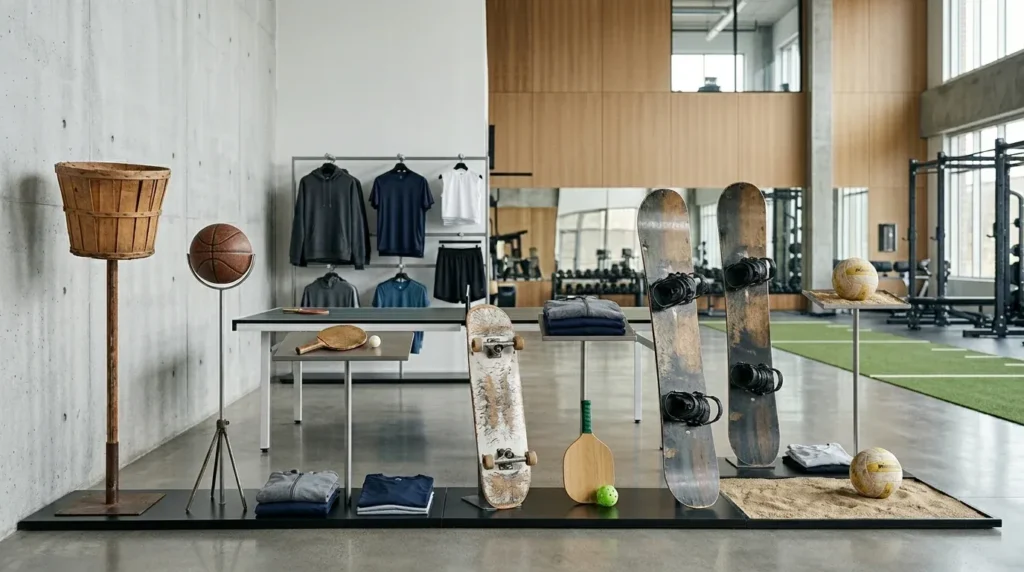
Realistic editorial commercial sports photography in a bright indoor training facility and studio hybrid scene, showing a visual timeline of sports invented by accident. Include a peach basket and vintage-style basketball, flying disc, table tennis paddle and ball on a small table setup, skateboard with worn wheels, pickleball paddle and perforated ball, snowboard leaning near winter gear, and beach volleyball placed on sand-textured flooring. Add modern custom sportswear pieces such as folded jerseys, training shirts, shorts, and hoodies with no visible brand logos. Use professional softbox lighting, sharp fabric texture, realistic equipment wear, clean composition, shallow depth of field, no animation, no illustration, no CGI, no cartoon style, no fantasy elements, no copyrighted logos.