Quirky Sports Rules: Strange Regulations That Actually Make Sense
Quirky sports rules are part of what makes sport interesting. Every game has rules that make perfect sense to experienced players but sound strange to new fans. Some rules protect fair play. Some stop teams from exploiting loopholes. Some preserve tradition. Some exist because the sport developed in a very specific culture.
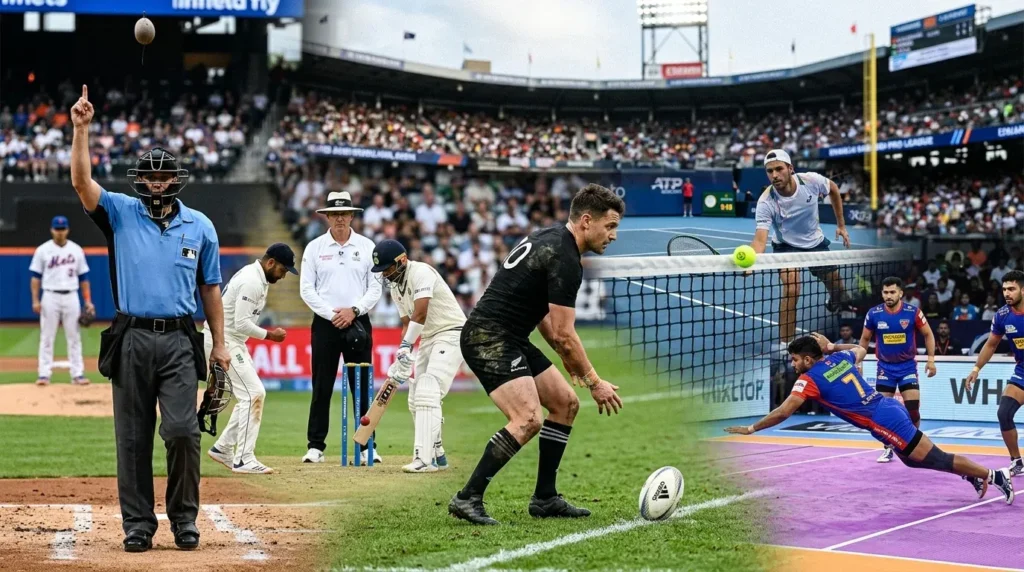
Baseball has the infield fly rule. Cricket has LBW. Rugby has restarts that confuse new viewers. Tennis has the service let. Table tennis has strict rules about how the ball must be tossed before a serve. Kabaddi even uses a continuous chant as part of the raid.
At first, these rules may look odd. But most quirky sports rules exist for a reason.
They help keep the game fair, structured, safe, or true to its identity. Without them, players could take unfair advantage, games would lose flow, or traditional sports would lose the details that make them unique.
For sports teams, clubs, academies, and apparel brands, rules also affect clothing. Uniforms must suit the sport’s movements, positions, equipment, visibility needs, and competition standards. A baseball uniform must show numbers clearly. Rugby kits need durability. Cricket apparel needs movement and comfort during long matches. Kabaddi clothing must handle pulling, raiding, tackling, and sweat.
GHC Sportswear® works with teams, clubs, academies, wholesalers, distributors, retailers, and private label brands that need sport-specific apparel designed for real use. Understanding the rules of each sport helps create better uniforms, training wear, and branded team apparel.
This article explores some of the most famous quirky sports rules, why they exist, and what they teach us about sport, fairness, and performance.
Why Quirky Sports Rules Exist
Most quirky sports rules are not random. They usually solve a problem.
A rule may exist to stop cheating, protect players, keep play moving, help officials make decisions, or preserve the structure of a traditional game. Some rules also developed because of old playing conditions, local customs, or equipment limitations.
Quirky sports rules often come from:
- Fair play concerns
- Player safety
- Match flow
- Historical tradition
- Equipment design
- Field layout
- Referee control
- Spectator clarity
- Tactical balance
- Sport-specific culture
A strange rule often becomes easier to understand when you ask one question: what problem was this rule created to prevent?
That is why rulebooks matter. They are not only technical documents. They show how each sport thinks.
This also connects to sportswear. A sport’s rules shape how athletes move, how numbers and logos must appear, what equipment they wear, and what kind of fabric is practical. GHC Sportswear® explains the importance of sport-specific apparel in its guide to essential sports gear.
Baseball’s Infield Fly Rule
The infield fly rule is one of the most famous quirky sports rules in baseball. Even many casual baseball fans find it confusing.
The basic idea is this: when there are runners on first and second, or the bases are loaded, with fewer than two outs, and a fair fly ball can be caught by an infielder with ordinary effort, the umpire can call an infield fly. The batter is automatically out, even if the ball is not caught.
MLB’s official glossary explains the infield fly rule as a way to stop the defensive team from intentionally letting a pop-up drop so they can turn an easy double or triple play.
Why this rule exists
Without this rule, an infielder could pretend to miss an easy pop-up. The runners, expecting the catch, would stay close to their bases. The ball could drop, and the defense could force out multiple runners.
The infield fly rule prevents that trick.
Why it feels quirky
It feels strange because the batter can be out even when nobody catches the ball. That is unusual in baseball, where outs are usually tied to a caught ball, tag, force play, or strikeout.
But the rule is fair because it protects base runners from a deliberate trap.
Sportswear lesson
Baseball also shows why clear player identification matters. Names and numbers need to be readable from a distance because positioning and decisions happen quickly. GHC Sportswear® covers this in its guide to designing a personalized baseball uniform.
Cricket’s LBW Rule
Cricket’s leg before wicket rule, usually called LBW, is one of the most debated quirky sports rules in the world. It can decide matches, create arguments, and confuse new fans.
The MCC’s Laws of Cricket explain leg before wicket in detail. In simple terms, a batter can be out LBW if the ball hits the batter’s body instead of the bat and, in the umpire’s judgment, would have hit the stumps, while meeting other conditions.
Those conditions include where the ball pitched, where it struck the batter, whether the batter offered a shot, and whether the ball would have gone on to hit the wicket.
Why this rule exists
LBW exists to stop batters from using their legs as a shield. Without this rule, a batter could simply block the stumps with the pad instead of using the bat.
The rule protects the balance between bat and ball.
Why it feels confusing
LBW is complicated because it depends on judgment. Umpires must think about line, impact, pitch, shot attempt, and projected path. Modern technology has made fans more aware of these details, but the rule still creates debate.
Sportswear lesson
Cricket involves long hours of play, repeated movement, and outdoor conditions. Apparel must support comfort, sweat control, and professional team identity. Sportswear buyers can explore related teamwear categories through the custom wholesale sports uniforms manufacturer page.
Table Tennis and the No-Spin Serve Toss
Table tennis looks simple to casual viewers, but the serve rules are very strict. One quirky sports rule says the ball must be thrown nearly vertically upward without spin before being struck.
The official table tennis service rule requires the ball to rest freely on the open palm before being projected upward, without spin, at least 16 cm before it is hit. A rule summary based on ITTF service requirements explains this legal table tennis serve clearly.
Why this rule exists
The rule exists to make the serve fair and visible. If players could hide the ball or spin it from the hand before contact, the receiver would have less chance to read the serve.
Table tennis already includes huge spin after contact. The rule stops players from gaining an unfair advantage before the point even starts.
Why it feels quirky
It feels odd because the rule controls what happens before the ball is actually in play. But in table tennis, the serve is so important that small details matter.
Sportswear lesson
Fast indoor sports need clothing that supports quick reactions, arm movement, and comfort. Lightweight performance tops, shorts, and moisture-wicking fabrics are important because players move quickly in short bursts.
For fabric performance, GHC Sportswear® has a useful guide on moisture-wicking fabrics.
Rugby’s 22-Metre Drop-Out
Rugby has many restart rules that can confuse new viewers. One of the most distinctive is the 22-metre drop-out.
World Rugby’s laws explain that a 22-metre drop-out is taken on or behind the defending team’s 22-metre line in specific restart situations.
Why this rule exists
The 22-metre drop-out helps restart play after certain in-goal situations. It gives the defending team a structured way to clear the ball and reset the match.
It also adds strategy. A strong drop-out can relieve pressure. A poor one can give the attacking team another chance.
Why it feels quirky
New fans may wonder why the game suddenly restarts from the 22-metre line instead of where the ball was last played. But in rugby, territory is part of the sport’s structure. Restart positions matter.
Sportswear lesson
Rugby apparel must handle contact, pulling, sweat, and repeated impact. Jerseys need strong stitching, durable fabric, and a fit that reduces easy grabbing. This is why rugby uniforms require different planning from basketball or baseball uniforms.
GHC Sportswear® supports custom teamwear for contact and field sports through its sports uniform manufacturing options.
Tennis and the Service Let
The tennis let rule is another simple but unusual rule. If a serve hits the net, strap, or band and still lands in the correct service box, the serve is replayed.
The ITF’s Rules of Tennis explain the service let rule and also mention “no let” alternatives used in some formats.
Why this rule exists
The rule exists because the ball touching the net can change its speed, angle, or bounce. If the serve still lands in, it may not be fair to count it as a normal serve.
So the point is reset for that serve.
Why it feels quirky
The ball goes in, but the serve does not count. That can feel strange to new fans. It can also frustrate players when lets happen repeatedly.
Sportswear lesson
Tennis apparel must support fast changes of direction, arm movement, heat comfort, and professional presentation. Modern tennis clothing often uses stretch fabrics, lightweight construction, and moisture control.
For buyers developing activewear, GHC Sportswear® has related performance apparel guidance in the custom sportswear manufacturing guide.
Kabaddi’s Continuous Chant Rule
Kabaddi has one of the most unique rules in world sport. During a raid, the raider must continuously chant “kabaddi” while trying to tag opponents and return safely.
Pro Kabaddi’s explanation of the sport notes that the raider must enter the opponent’s half, tag defenders, return safely, and continuously chant “kabaddi” during the raid. You can read their guide to understanding kabaddi.
Why this rule exists
The chant proves that the raider is controlling breathing during the raid. It adds endurance, pressure, and tradition to the sport.
Kabaddi is not only about speed or strength. It also tests timing, breath control, agility, and courage.
Why it feels quirky
In most sports, breathing is not part of the rulebook. In kabaddi, it is central to the raid.
That makes it one of the most memorable quirky sports rules in the world.
Sportswear lesson
Kabaddi apparel must support grabbing, pulling, sweat, floor movement, and flexibility. A weak uniform can tear or restrict movement. Strong stitching, breathable fabric, and practical fit are essential.
This is also why teams should not treat uniforms as decoration only. The sport’s rules and movements should decide the garment design.
Quadball and the Snitch Rule
Quadball, formerly known as quidditch, is inspired by the fictional game from the Harry Potter series but has developed into a real-world sport with its own rulebook and international structure.
The International Quadball Association provides the current quadball rulebook, which explains the rules and structure of the sport.
One of the most unusual elements is the flag runner or snitch-related phase of play. The sport includes a special role that changes match strategy and can create dramatic momentum swings.
Why this rule exists
The snitch-style element gives the sport a unique identity. It separates quadball from more traditional field games and creates a special late-game tactical layer.
Why it feels quirky
Most sports do not introduce a separate moving target or special role that can shift the outcome. That makes quadball feel unusual to fans of traditional team sports.
Sportswear lesson
New and niche sports still need proper uniforms. Clear team colors, flexible shirts, durable shorts, and sponsor-ready apparel help the sport look professional.
For newer sports teams and clubs, GHC Sportswear® can help create custom apparel even when the sport is less traditional.
The Eton Wall Game and Confusing Position Rules
The Eton Wall Game is one of the most unusual traditional sports still played. It is associated with Eton College in England and is played beside a long wall, with a scrum-like formation called a bully.
Eton College describes the Wall Game as a physical and unusual school sport with its own traditions and structure.
Why this game feels so unusual
The Eton Wall Game is difficult for outsiders because it does not follow the patterns most people expect from football, rugby, or field games. Space is narrow, movement is slow, and the rules are highly specific to the location.
Why it matters
Sports like this show how rules grow from place and tradition. The field, wall, school culture, and history all shape the game.
Sportswear lesson
Traditional sports and niche games often need custom apparel because off-the-shelf uniforms may not fit their movement or identity needs. Custom teamwear helps preserve tradition while making teams look organized.
This connects naturally with GHC Sportswear® articles on forgotten sports from history and forgotten Olympic sports.
Quirky Sports Rules Comparison Table
| Sport | Quirky Rule | Why It Exists | Why Fans Find It Strange |
|---|---|---|---|
| Baseball | Infield fly rule | Prevents unfair defensive trick plays | Batter can be out even if ball is dropped |
| Cricket | LBW | Stops batters blocking stumps with pads | Requires many judgment conditions |
| Table tennis | No-spin serve toss | Keeps serve fair and visible | Controls action before ball is hit |
| Rugby | 22-metre drop-out | Restarts play after in-goal situations | Territory-based restart can confuse new fans |
| Tennis | Service let | Replays a serve affected by the net | A serve lands in but does not count |
| Kabaddi | Continuous chant | Proves breath control during raid | Breathing becomes part of the rules |
| Quadball | Snitch-style phase | Adds unique tactical identity | Special role can change match flow |
| Eton Wall Game | Wall-based play structure | Preserves school tradition | Rules are hard for outsiders |
This table shows that quirky sports rules usually have a purpose, even when they sound strange at first.
Quirky Sports Rules vs Bad Rules
Not every strange rule is a bad rule. Some quirky sports rules are essential to the sport.
| Quirky Rule | Bad Rule |
| Has a clear purpose | Creates confusion without value |
| Protects fairness | Gives unfair advantage |
| Fits the sport’s identity | Feels random or outdated |
| Can be explained with logic | Cannot be justified clearly |
| Improves structure | Slows the game without benefit |
| Preserves tradition | Blocks the sport from growing |
The best quirky sports rules may confuse new fans at first, but they make sense once explained.
A bad rule creates frustration without improving the game.
What Quirky Sports Rules Teach Teams and Brands
Quirky sports rules teach a simple lesson: every sport has details that matter.
A team uniform should not be designed without understanding the sport. A football kit, cricket shirt, baseball jersey, rugby uniform, tennis outfit, and kabaddi kit all have different needs.
Rules affect apparel through:
- Number visibility
- Player identification
- Movement range
- Contact level
- Fabric durability
- Weather needs
- Sponsor placement
- Safety expectations
- Sweat management
- Team branding
For example, a baseball uniform needs readable numbers because field positions and player identification matter. A rugby jersey needs strong fabric because contact and grabbing are part of the game. A kabaddi uniform needs flexibility and tear resistance because raids involve tackling and pulling.
GHC Sportswear® helps B2B buyers create sport-specific apparel instead of using one generic uniform for every sport.
Strong Uniform Design Starts With the Sport
Good teamwear starts by asking what the sport actually requires.
Before ordering uniforms, teams and buyers should consider:
- How much contact happens?
- Does the sport require names and numbers?
- Are sponsor logos needed?
- Will the sport be played indoors or outdoors?
- Does the uniform need stretch?
- Does the fabric need moisture control?
- Will players slide, dive, tackle, or sprint?
- Does the team need home and away colors?
- Will the order need repeat production?
This is why custom sportswear manufacturing is useful. It allows buyers to match apparel to the sport’s rules, movements, and identity.
GHC Sportswear® supports teams and buyers through its GHC Sportswear® services page and product categories on the GHC Sportswear® products page.
Practical Use Cases for B2B Sportswear Buyers
Sports teams
Teams can use custom uniforms that match their sport’s specific rule requirements, including names, numbers, colors, and sponsor placement.
Clubs and academies
Clubs and academies often manage multiple sports. They need consistent branding but different uniform designs for each activity.
Schools and colleges
Schools need durable teamwear that works across sports while still following competition rules and identification needs.
Wholesalers and distributors
Distributors can supply sport-specific uniforms to clubs, academies, and teams with clear customization options.
Private label brands
Private label sportswear brands can build collections around sport-specific needs, such as baseball uniforms, cricket shirts, rugby kits, or training apparel.
Event organizers
Events need clear uniforms, volunteer shirts, team kits, sponsor logos, and merchandise that match the sport and event identity.
Internal Learning for Sportswear Buyers
If you are planning sportswear around rules, team identity, or performance, these related GHC Sportswear® guides can help:
- Custom team uniforms benefits explains how uniforms support team identity and presentation.
- Essential sports gear explains why proper gear matters for comfort and performance.
- Moisture-wicking fabrics explains how fabric choice affects sweat control.
- Personalized baseball uniform explains how names, numbers, colors, and logos work in baseball apparel.
- Forgotten sports from history shows how sports evolve over time.
- Strangest sponsorship deals in sports explains why sponsor placement and brand fit matter in sports marketing.
Build Rule-Ready Teamwear with GHC Sportswear®
Quirky sports rules show that every sport has its own identity. The same should be true for its apparel.
If you are creating uniforms, training wear, team kits, event apparel, or private label sportswear, GHC Sportswear® can help you build products that match the sport, support athletes, and present your brand professionally.
GHC Sportswear® works with:
- Sports teams
- Clubs
- Academies
- Schools
- Colleges
- Sportswear brands
- Retailers
- Wholesalers
- Distributors
- Private label businesses
- Event organizers
GHC Sportswear® can support:
- Custom sports uniforms
- Teamwear production
- Names and numbers
- Sponsor logo placement
- Tracksuits
- Training shirts
- Hoodies
- Performance T-shirts
- Athletic shorts
- Compression wear
- Custom logos
- Private labels
- Bulk production
- Branding and packaging
For B2B buyers, the goal is not only to create a good-looking uniform. The goal is to create sportswear that fits the rules, movement, identity, and real use of the sport.
Contact GHC Sportswear® for custom sportswear manufacturing support:
WhatsApp: https://wa.me/ghcsportswear
Email: info@ghcsportswar.com
Contact page: GHC Sportswear® contact us
Conclusion
Quirky sports rules may look strange at first, but most of them exist for a reason. Baseball’s infield fly rule protects runners from trick plays. Cricket’s LBW rule keeps batters from using pads unfairly. Table tennis service rules protect fairness. Rugby’s 22-metre drop-out controls restarts. Tennis lets replay unfair serves. Kabaddi’s chant rule adds breath control and tradition. Quadball’s snitch-style phase creates a unique tactical identity.
These rules make sports more interesting because they show how each game has its own logic.
For teams, clubs, academies, brands, wholesalers, distributors, retailers, and private label businesses, the lesson is clear: details matter. The rules of a sport affect how athletes move, how teams identify players, how uniforms are designed, and how apparel performs during real use.
GHC Sportswear® helps B2B buyers create custom sportswear that respects those details, supports athletes, and gives teams a professional identity.
Related Blog:
Custom Team Uniforms Benefits: https://ghcsportswear.com/custom-team-uniforms-benefits/
Essential Sports Gear: https://ghcsportswear.com/essential-sports-gear/
Personalized Baseball Uniform: https://ghcsportswear.com/personalized-baseball-uniform/
Forgotten Sports from History: https://ghcsportswear.com/forgotten-sports-from-history/
Strangest Sponsorship Deals in Sports: https://ghcsportswear.com/strangest-sponsorship-deals-in-sports/