Weird Sports Names: The Strange Origins Behind Famous and Unusual Games
Weird sports names make people stop and ask questions. Why is pickleball called pickleball when there are no pickles? Why did a fictional game like quidditch become a real-world sport and then change to quadball? Why does kabaddi sound like a chant? Why is buzkashi named after goat pulling? Why does pétanque refer to feet?
Sports names are not random. Many of them come from culture, language, location, equipment, old traditions, school history, or the way the game is played. Some names sound funny because they come from another language. Some sound strange because the sport itself is unusual. Some have origin stories that are debated even today.
That is what makes weird sports names interesting. They are not only labels. They are small pieces of sports history.
For teams, clubs, academies, sportswear brands, retailers, wholesalers, distributors, and private label businesses, these names also show how powerful identity can be. A sport’s name helps people remember it. A team’s uniform helps people recognize it. A brand’s logo helps customers trust it. In sport, names, colors, stories, and apparel all work together.
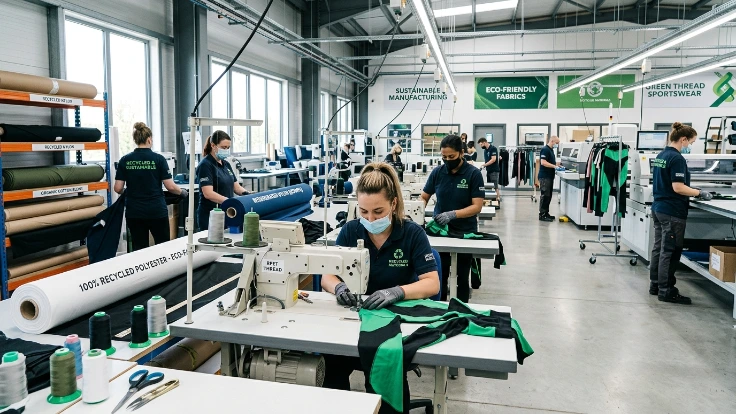
GHC Sportswear® helps modern teams and B2B buyers build that identity through custom sportswear, team uniforms, training wear, activewear, private label apparel, and sponsor-ready clothing.
This article explores some of the most famous weird sports names, the stories behind them, and what modern sportswear buyers can learn from the way sports build identity.
Why Weird Sports Names Matter
Weird sports names are memorable because they create curiosity. A name like football is direct. A name like pickleball is not. That mystery makes people ask about the sport, remember it, and talk about it.
A strong sports name can do several things:
- Make the sport easier to remember
- Show cultural origin
- Explain how the game is played
- Connect the sport to a place
- Preserve tradition
- Create a unique identity
- Help fans talk about it
- Make the sport stand out
This is similar to team branding. A club name, badge, uniform color, player number style, and sponsor placement all shape how people remember the team.
That is why custom uniforms matter. GHC Sportswear® explains this clearly in Custom Team Uniforms Benefits, where team identity, comfort, and professional presentation are connected to athletic culture.
Pickleball: One of the Most Debated Weird Sports Names
Pickleball is one of the most famous weird sports names because the name sounds playful and confusing at the same time.
The sport combines elements of tennis, badminton, and table tennis. It is played with paddles and a plastic ball on a smaller court. The name does not describe the equipment, the court, or the scoring. That is why people keep asking where it came from.
USA Pickleball explains that pickleball was founded in 1965 on Bainbridge Island, Washington, by Joel Pritchard, Bill Bell, and Barney McCallum. The most widely supported origin story says Joan Pritchard named the game after the “pickle boat” in rowing, where leftover rowers from different crews were placed together. The game also combined leftover elements from other sports, which made the name fit. You can read the official explanation from USA Pickleball’s history of the name.
The Pickles the dog story
Many people have heard another story: that pickleball was named after a dog called Pickles who chased the ball. It is a fun story, but USA Pickleball explains that the pickle boat explanation is the stronger original account.
The dog story became popular because it is easy to remember. It also sounds charming, which helped the sport’s name become even more memorable.
Why the name works
Pickleball is strange, but it is friendly. It does not sound intimidating. That helps the sport feel accessible.
This is a useful lesson for brands. A name does not always need to sound serious to become powerful. Sometimes a name works because it is easy to say, easy to remember, and different from everything else.
Quadball: From Fictional Quidditch to a Real Sport
Quidditch is another example often included in conversations about weird sports names. It began as a fictional sport in the Harry Potter universe. Later, fans created a real-world version played on the ground.
In recent years, many official organizations moved from “quidditch” to “quadball.” The International Quadball Association announced that the sport would adopt the new name worldwide, and its current rulebook uses quadball as the sport’s official name. The IQA explains this transition on its page about the change from quidditch to quadball.
Why the old name was unusual
Quidditch sounded unusual because it was invented for a fictional magical world. It had no normal sports meaning before the books. That made it perfect for fantasy, but complicated for a real sport that wanted to grow globally.
Why quadball makes more sense today
Quadball is more practical as a sport name. It refers to the structure of the sport, including multiple balls and player roles. It also helps the real-world sport build its own identity separate from its fictional origin.
Branding lesson
This is one of the best examples of how sports names can evolve. A sport may begin with one identity and later change to fit modern growth.
Teams and brands sometimes need the same thing. A logo, uniform, or apparel collection may start one way and later need a cleaner, more professional direction. GHC Sportswear® supports that process through custom sportswear development and product manufacturing services.
Kabaddi: A Sport Named Through Its Chant
Kabaddi has one of the most meaningful weird sports names because the name is directly connected to how the game is played.
In kabaddi, a raider enters the opponent’s half, tries to tag defenders, and returns safely. During the raid, the player must continuously chant “kabaddi” to show breath control.
Pro Kabaddi explains that the raider must chant “kabaddi” continuously during the raid, or the player is eliminated. You can read their simple guide to understanding kabaddi.
Why the name is unique
Most sports are named after a ball, field, action, location, or old word. Kabaddi is different because the name is also part of the sound of the game.
The chant creates rhythm, pressure, and tradition. It also makes the sport instantly recognizable.
What sportswear buyers can learn
Kabaddi is a physical sport involving speed, tackling, grabbing, balance, and sweat. The name may be traditional, but the apparel needs are modern.
A kabaddi uniform must support:
- Flexibility
- Strong stitching
- Breathability
- Moisture control
- Comfortable fit
- Durability under pulling
- Team identity
This connects with GHC Sportswear® resources on Moisture-Wicking Fabrics and Essential Sports Gear, which explain why the right materials matter in active sports.
Eton Fives: A School Name and a Hand-Based Game
Eton Fives is one of those weird sports names that sounds confusing until the origin is explained.
Eton Fives is a handball-style sport played in a three-walled court. It is strongly connected with Eton College in England. The word “Fives” refers to the hands, because players strike the ball with gloved hands.
The Eton Fives Association provides historical background through its guide to a brief history of Eton Fives.
Why the name sounds strange
To someone outside the UK school-sport tradition, “Fives” does not sound like a sport. It sounds like a number. But in this context, it refers to the player’s hand.
The name combines place and method: Eton plus hand play.
Why the name lasted
Eton Fives survived because it is tied to school culture, court design, and tradition. The name carries heritage.
This is similar to how clubs use founding years, city names, school colors, and traditional crests in uniforms. A strong identity gives a team or sport something to protect over time.
Shinty: A Scottish Name with Deep Sporting Roots
Shinty is one of the oldest and most culturally rich weird sports names. It is a traditional Scottish stick-and-ball game similar in some ways to field hockey and Irish hurling.
Britannica describes shinty as an outdoor Scottish game played with sticks and a small hard ball, with teams trying to hit the ball through the opponent’s goal. It notes that shinty likely originated in Scottish Highland clan games and is still played in Scotland. You can read more in Britannica’s guide to shinty.
Why the name is interesting
The exact origin of the word “shinty” is not completely simple. The sport has been known by different names in different places, including terms connected to Scottish Gaelic and regional traditions.
That is common with older sports. Names often develop through local speech, not official committees.
Apparel lesson
Traditional sports often need modern apparel without losing identity. A shinty team may want uniforms that respect heritage but still use modern fabrics, strong stitching, and proper branding.
This is also true for sports that have changed over time. GHC Sportswear® covers similar cultural evolution in Forgotten Sports from History and Forgotten Olympic Sports.
Buzkashi: A Name That Describes the Game Directly
Buzkashi may sound unusual to people unfamiliar with Central Asian sport, but the name is very direct.
Britannica defines buzkashi as a traditional equestrian game and explains the Persian meaning as “goat dragging.” In the sport, horse-mounted riders compete to gain control of a goat or calf carcass and carry it toward a target or goal area. You can read Britannica’s explanation of buzkashi.
Why the name feels bizarre
For modern international audiences, the name and sport can feel shocking because the central object is so unusual. But in its cultural context, buzkashi is connected to horseback skill, strength, tradition, and regional identity.
Why the name works
The name tells you what happens. It is not poetic. It is descriptive.
Many weird sports names become easier to understand when translated. The strangeness often comes from hearing the word without knowing the language or culture behind it.
Sepak Takraw: A Name Built from Two Languages
Sepak takraw is another strong example of weird sports names that make sense once translated.
The sport is a fast, acrobatic Southeast Asian game similar to volleyball, but players use their feet, head, knees, and chest instead of hands. Britannica describes sepak takraw as a Southeast Asian game using a woven rattan ball and notes that it is similar to volleyball but played without the hands. The name is often explained as combining “sepak,” meaning kick, with “takraw,” referring to the woven ball. You can read Britannica’s overview of sepak takraw.
Why the name is powerful
The name reflects the sport perfectly: kick plus ball. It is cultural and practical at the same time.
Sportswear lesson
Sepak takraw requires explosive movement, jumping, twisting, and flexibility. Apparel must allow full lower-body movement while staying breathable and secure.
This connects with modern activewear development, where stretch, fit, and fabric recovery matter. For buyers building performance clothing, GHC Sportswear® offers relevant support through its Custom Sportswear Manufacturing Guide.
Pétanque: A Name About the Feet
Pétanque is a French boules game where players throw metal balls toward a small target ball. The name comes from Provençal/Occitan wording often explained as “feet fixed” or “feet planted.”
That makes the name practical. It describes the player’s stance. Unlike some other boules games where players may move or run before throwing, pétanque is played from a fixed position.
Why this name is memorable
Pétanque sounds unusual to English speakers, but the meaning is simple once translated. The name tells players something important about the rule.
This is similar to how sports rules and names often connect. GHC Sportswear® explains unusual rule logic in Quirky Sports Rules, which covers sports regulations that sound strange but make sense when explained.
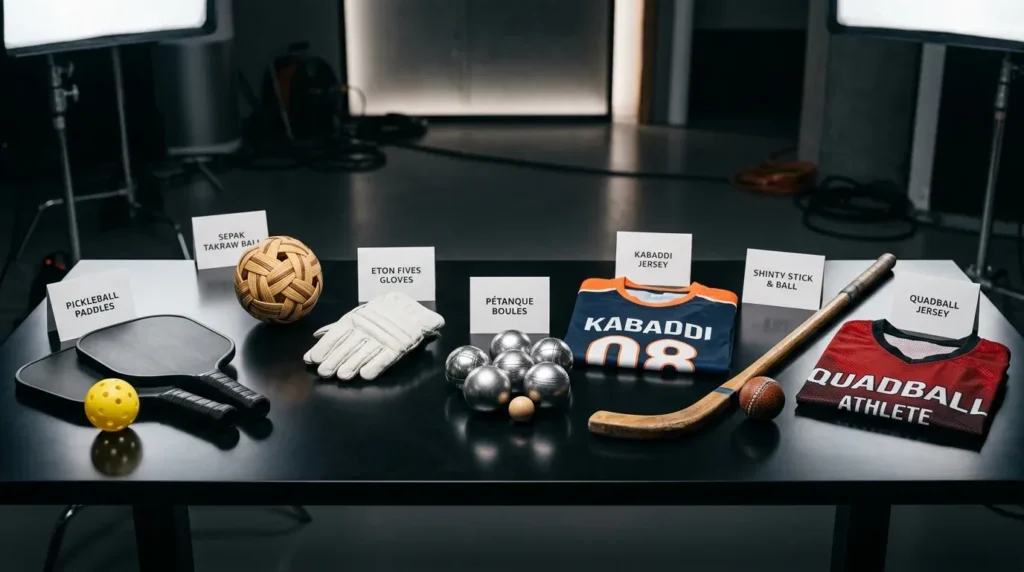
Weird Sports Names Comparison Table
| Sport | Why the Name Sounds Weird | What the Name Means or Suggests |
|---|---|---|
| Pickleball | No pickles are involved | Likely linked to the “pickle boat” rowing term |
| Quadball / Quidditch | Fictional origin and later rebrand | Quadball reflects the sport’s real-world structure |
| Kabaddi | Sounds like a chant | The name is tied to the raider’s continuous chant |
| Eton Fives | “Fives” sounds like a number | Refers to hand play and Eton College tradition |
| Shinty | Regional Scottish name | Connected to Scottish stick-and-ball tradition |
| Buzkashi | Unfamiliar Central Asian word | Persian meaning: goat dragging |
| Sepak Takraw | Two-language name | Kick plus woven ball |
| Pétanque | French regional term | Feet fixed or planted |
This table shows that weird sports names usually become less strange when their history is explained.
Weird Sports Names vs Generic Sports Names
Some sports names are simple. Others are unusual. Both can work.
| Generic Sports Names | Weird Sports Names |
|---|---|
| Usually describe the ball, field, or action directly | Often come from culture, language, or tradition |
| Easy for new fans to understand | More memorable and conversation-starting |
| Examples: basketball, football, volleyball | Examples: pickleball, kabaddi, buzkashi |
| Strong for clarity | Strong for identity |
| Less explanation needed | Better storytelling potential |
The best weird sports names create curiosity without making the sport impossible to understand.
What Weird Sports Names Teach Teams and Brands
Weird sports names teach an important branding lesson: identity sticks when there is a story behind it.
A team or sportswear brand can learn from this.
Strong identity comes from:
- A memorable name
- Clear colors
- Consistent logo use
- Recognizable uniforms
- A story people can repeat
- Apparel that fits the sport
- Professional presentation
- Reliable quality
A team with a strong name but weak uniforms does not look complete. A brand with good apparel but no story feels generic. The best sports identities combine both.
GHC Sportswear® helps B2B buyers create custom uniforms, gym wear, teamwear, activewear, yoga apparel, sportswear, and private label products that support brand identity from design to production.
How Sports Names Connect to Uniform Design
A sport’s name, history, and culture can influence how uniforms are designed.
For example:
- Pickleball apparel should feel accessible, comfortable, and social.
- Kabaddi uniforms need durability, flexibility, and moisture control.
- Sepak takraw apparel needs stretch and mobility.
- Shinty kits may need a balance of tradition and modern teamwear.
- Eton Fives apparel may use classic school-sport styling.
- Quadball uniforms need clear team identity for a growing modern sport.
Different sports need different apparel.
That is why one generic uniform does not fit every sport. Sport-specific apparel should consider movement, rules, climate, fabric, branding, and team identity.
Teams and buyers can explore custom sportswear categories on the GHC Sportswear® products page and production support on the GHC Sportswear® services page.
Related Sports Culture Stories
Weird sports names belong to a wider world of sports culture. Fans love strange rules, old sports, ghost stories, odd sponsorships, and unusual traditions because these stories make sport feel human.
GHC Sportswear® has covered several related sports-culture topics:
- Quirky Sports Rules explains why strange regulations often have practical reasons.
- Forgotten Sports from History explores old games that once mattered.
- Forgotten Olympic Sports looks at events that once appeared in the Olympic Games.
- Sports Ghost Stories covers haunted stadium folklore and cursed teams.
- Strangest Sponsorship Deals in Sports shows how unusual brand partnerships become memorable.
- Funniest Excuses for Skipping the Gym brings a lighter fitness angle to sports lifestyle content.
Together, these stories show that sport is not only about scores. It is about names, rules, culture, clothing, identity, and memory.
Practical Use Cases for B2B Sportswear Buyers
Sports teams
Teams can use name origin, local identity, and sport culture to create uniforms that feel more meaningful than basic apparel.
Clubs and academies
Clubs and academies can use storytelling to build pride across age groups. A clear name, badge, and uniform system helps young athletes feel part of something organized.
Private label sportswear brands
Private label brands can create collections inspired by unusual sports, old games, cultural sport names, or regional athletic traditions.
Retailers and wholesalers
Retailers and wholesalers can use sports culture topics to attract teams, clubs, and activewear buyers, then connect that interest to practical apparel solutions.
Event organizers
Events can use unusual sports names and cultural themes for custom merchandise, participant shirts, referee uniforms, and sponsor-ready apparel.
Build Sport-Specific Apparel with GHC Sportswear®
Weird sports names show that every sport has a story. But every sport also has practical apparel needs.
A name may make people curious, but the uniform must work in real use.
GHC Sportswear® works with:
- Sports teams
- Clubs
- Academies
- Schools
- Colleges
- Sportswear brands
- Retailers
- Wholesalers
- Distributors
- Private label businesses
- Event organizers
- Fitness brands
GHC Sportswear® can support:
- Custom sports uniforms
- Teamwear production
- Training shirts
- Tracksuits
- Hoodies
- Athletic shorts
- Gym wear
- Compression wear
- Yoga apparel
- Custom logos
- Names and numbers
- Sponsor logo placement
- Private labels
- Bulk production
- Branding and packaging
For B2B buyers, the goal is not only to create clothing. The goal is to create apparel that fits the sport, supports movement, represents the team, and strengthens brand identity.
Contact GHC Sportswear® for custom sportswear manufacturing support:
WhatsApp: https://wa.me/ghcsportswear
Email: info@ghcsportswear.com
Contact page: GHC Sportswear® contact us
Conclusion
Weird sports names are more than funny labels. They are stories about culture, language, history, place, rules, and identity.
Pickleball may come from rowing language. Kabaddi is connected to a chant. Buzkashi describes goat dragging. Sepak takraw combines cultural language around kicking and a woven ball. Eton Fives preserves a school tradition. Shinty carries Scottish sporting heritage. Pétanque describes a fixed-foot stance. Quadball shows how a fictional-inspired sport can grow into a real modern game with its own identity.
These weird sports names remind us that sport is built from stories.
For teams, clubs, academies, brands, retailers, wholesalers, distributors, and private label businesses, the lesson is clear: identity matters. A strong name gets attention. A strong uniform creates recognition. A strong apparel partner helps turn that identity into products athletes can actually wear.
GHC Sportswear® helps B2B buyers create custom sportswear that respects each sport’s movement, culture, and branding needs.
Related Blog:
Quirky Sports Rules: https://ghcsportswear.com/quirky-sports-rules/
Forgotten Sports from History: https://ghcsportswear.com/forgotten-sports-from-history/
Forgotten Olympic Sports: https://ghcsportswear.com/forgotten-olympic-sports/
Sports Ghost Stories: https://ghcsportswear.com/sports-ghost-stories/
Strangest Sponsorship Deals in Sports: https://ghcsportswear.com/strangest-sponsorship-deals-in-sports/
Funniest Excuses for Skipping the Gym: https://ghcsportswear.com/funniest-excuses-for-skipping-the-gym/