English vs Western Tack: Saddles, Bridles, Fit and Riding Differences Explained
Choosing between English vs Western tack is not simply a question of appearance.
The two traditions developed around different riding purposes, competition systems, working environments and rider positions. Those differences influence saddle construction, rigging, stirrups, bridles, reins, saddle pads and the way equipment is selected for particular disciplines.
English tack is strongly associated with disciplines such as:
- Dressage
- Show jumping
- Eventing
- Hunters
- Equitation
- General English schooling
Western tack is strongly associated with:
- Western pleasure
- Reining
- Ranch riding
- Cutting
- Roping
- Barrel racing
- Western trail riding
- Other stock-horse disciplines
But one point is more important than the style label:
Neither English nor Western tack is automatically better for a horse. Correct fit, appropriate design and correct use matter more.
The British Horse Society states that correctly fitted tack is crucial for a safe and comfortable ride and warns that a poorly fitting saddle can create pain, pressure points and lameness. It also notes that changes in weight, workload, age and season can alter saddle fit.
World Horse Welfare similarly warns that poorly fitting or poorly maintained saddles can create injury and welfare problems and recommends considering fit for both horse and rider throughout the year.
This means the useful comparison is not:
English = good for precision
Western = good for comfort
The better comparison is:
How does each tack system support its intended discipline, and does the individual equipment correctly fit the horse and rider?
GHC Sportswear® supports international equestrian brands, retailers, riding businesses, wholesalers and private label buyers through custom equestrian gear manufacturing, product development, saddle pads, horse rugs, riding apparel, selected tack accessories and coordinated equestrian collections.
What Is English Tack?
English tack refers to equipment associated with English riding traditions and disciplines.
A typical English setup may include:
- English saddle
- Girth
- Stirrup leathers
- English stirrup irons
- Saddle pad
- Bridle
- Bit
- Reins
- Optional breastplate
- Optional martingale
- Discipline-specific protective equipment
English saddles generally have a more compact structure than Western saddles and do not use the characteristic Western horn. AQHA historical material also distinguishes the English saddle from the Western saddle by the absence of the Western horn and related structural features.
However, “English saddle” is itself a broad category.
There are significant differences between:
- Dressage saddles
- Jumping saddles
- Close-contact saddles
- General-purpose saddles
- Endurance-oriented English designs
- Saddle-seat saddles
The saddle should therefore be selected for the discipline, horse and rider rather than simply because it is classified as English.
What Is Western Tack?
Western tack refers to equipment developed from Western riding and stock-horse traditions.
A typical Western setup may include:
- Western saddle
- Saddle pad or blanket
- Cinch
- Latigo or billet system
- Western stirrups
- Western headstall
- Bit or bosal depending on horse and discipline
- Split reins, romal reins or other discipline-appropriate reins
- Breast collar where needed
- Additional discipline-specific equipment
Most recognizable Western saddles include:
- Horn
- Pommel or swell
- Seat
- Cantle
- Skirts
- Fender
- Western stirrup
- Rigging system
AQHA information on Western saddles shows that different Western disciplines use different saddle designs, including variations in cantle height and other structural features.
A roping saddle, barrel saddle, trail saddle and reining saddle therefore should not be treated as identical equipment simply because all are Western.
English vs Western Tack: Quick Comparison
| Feature | English Tack | Western Tack |
|---|---|---|
| Saddle structure | Generally compact | Generally larger and more structured |
| Horn | Normally absent | Common on Western saddles |
| Saddle skirt | Minimal compared with Western | Larger skirt structure common |
| Stirrup system | Stirrup leather and iron | Fender and wider Western stirrup |
| Securing system | Girth and billets | Cinch with Western rigging |
| Saddle pad | Shaped or square English pad | Larger Western pad or blanket |
| Riding traditions | Dressage, jumping, eventing, hunter | Reining, ranch, roping, barrel, Western pleasure |
| Rein use | Often direct rein communication | Direct and/or neck reining depending on training and discipline |
| Bridle style | Often browband, cheekpieces and noseband | Often simpler headstall construction |
| Saddle weight | Generally lower | Generally higher |
| Decoration | Frequently restrained | Can include tooling, silver and decorative leatherwork |
| Fit requirement | Horse and rider specific | Horse and rider specific |
The final line is the most important.
Both require correct fit.
English vs Western Saddles: The Biggest Difference
The saddle is where the visual and structural differences are most obvious.
English Saddle Construction
A typical English saddle has:
- Tree
- Seat
- Pommel
- Cantle
- Panels
- Flaps
- Knee support depending on design
- Billets
- Stirrup bars
The rider sits relatively close to the horse compared with the more substantial structure of a Western saddle.
Different English disciplines change the saddle geometry.
Dressage Saddle
Common characteristics include:
- Straighter flap
- Longer rider leg position
- Deeper seat than many jumping saddles
- Design intended to support dressage position
Jump Saddle
Common characteristics include:
- More forward flap
- Space for shorter stirrups
- Rider position suited to jumping
General-Purpose Saddle
Designed as a compromise for riders participating in several activities.
The correct saddle depends on the intended job.
The BHS specifically includes tree width, wither clearance, pressure on the spine, evenness of weight across the back, shoulder freedom, saddle size and rider factors among issues relevant to saddle fitting.
Western Saddle Construction
A Western saddle usually has a larger visible structure.
Components may include:
- Tree
- Horn
- Fork or swell
- Seat
- Cantle
- Skirts
- Rigging
- Fender
- Stirrup
- Cinch system
The Western saddle evolved around riding environments where stability, working functionality and extended mounted activity were important.
The horn is particularly associated with Western saddle design and historically supports working applications such as roping. AQHA material notes this distinction when comparing English and Western saddle structures.
But it would be incorrect to assume that every rider using a Western saddle is roping cattle.
Today Western saddles are used across many recreational and competitive disciplines.
Is a Western Saddle Automatically More Comfortable for the Horse?
No.
This is an important misconception.
A Western saddle has a larger structure and often a larger contact area than an English saddle, but that does not automatically mean it distributes pressure correctly on every horse.
A saddle can still:
- Bridge
- Rock
- Pinch
- Restrict the shoulder
- Create concentrated pressure
- Sit incorrectly over the withers
- Be too long for the horse
- Fit the horse but not the rider
The University of Minnesota Extension advises that a saddle should fit the horse’s back to distribute rider weight without pinching or causing muscle soreness, and that saddle choice should take both discipline and horse-and-rider comfort into account.
The correct conclusion is:
A well-fitted Western saddle can be comfortable. A well-fitted English saddle can be comfortable. A poorly fitted version of either can create problems.
Saddle Fit Matters More Than Saddle Style
This should be the starting point for any English vs Western tack decision.
The British Horse Society recommends having a horse’s saddle checked at least twice a year by a Society of Master Saddlers qualified saddle fitter and notes that body shape can change with workload, weight, age and season.
World Horse Welfare also emphasizes that saddle fit should be considered throughout the year rather than treated as a permanent one-time decision.
Signs that tack may require professional review can include:
- Changed behaviour during saddling
- Reluctance to move forward
- Back sensitivity
- Uneven sweat patterns
- Saddle movement
- Rider imbalance
- Unexpected performance changes
- Visible pressure or rubbing
- Changes in horse shape
These signs are not a diagnosis by themselves.
Pain or behavioural changes can have many causes and may require assessment by an appropriate saddle fitter, veterinarian or other qualified equine professional.
English vs Western Saddle Fit
Although the equipment differs, the fundamental objectives are similar.
A saddle should:
- Suit the individual horse
- Allow appropriate spinal clearance
- Avoid harmful pressure points
- Allow shoulder movement
- Remain sufficiently stable
- Suit the rider
- Suit the intended work
- Remain in good condition
US Equestrian describes proper saddle fit as important to horse welfare, comfort and performance and emphasizes fitting both horse and rider.
That is a more useful buying principle than assuming one tack tradition is inherently superior.
Saddle Pads: English vs Western
The pad system is also visibly different.
English Saddle Pads
Common forms include:
- Square pads
- Shaped pads
- Dressage pads
- Jump pads
- Half pads
- Correction pads when professionally appropriate
English pads are generally designed around the smaller footprint of the English saddle.
Western Saddle Pads
Western pads are normally larger because the saddle structure is larger.
Common materials can include:
- Wool felt
- Wool blends
- Synthetic felt
- Woven blankets
- Foam combinations
- Technical layered constructions
Western pads may also be selected based on:
- Saddle shape
- Horse conformation
- Discipline
- Climate
- Workload
A thicker pad should not automatically be used to correct a badly fitting saddle.
Adding padding can change the relationship between saddle and horse and may worsen fit in some cases.
For businesses sourcing saddle pads, construction, filling, quilting, moisture management, durability and shape should be developed around the intended saddle system.
GHC Sportswear® supports custom saddle-pad development within its equestrian manufacturing programme.
English Bridles
A traditional English bridle commonly includes:
- Headpiece
- Browband
- Cheekpieces
- Noseband
- Throatlatch or related headpiece construction
- Bit
- Reins
There are many variations depending on:
- Dressage
- Jumping
- Eventing
- Showing
- Horse anatomy
- Bit choice
- Competition rules
Examples of noseband styles include:
- Cavesson
- Flash
- Drop
- Grackle or figure-eight designs
No style should be selected simply because it is fashionable.
The British Horse Society emphasizes checking bridle fit every time it is put on, particularly when equipment has been taken apart for cleaning. It also warns against using an over-tight noseband to hold a horse’s mouth closed.
Western Bridles and Headstalls
Western headgear often has a different appearance.
Common forms can include:
- Browband headstall
- One-ear headstall
- Two-ear headstall
- Bosal setup
- Bitless training arrangements
- Western bits with discipline-specific reins
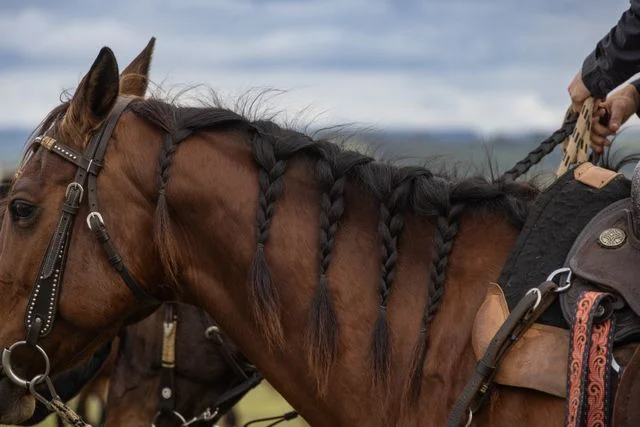
Western bridles often omit the conventional English-style noseband, although equipment varies considerably.
Rein styles can include:
- Split reins
- Romal reins
- Mecate systems
- Closed reins in selected contexts
The exact equipment should match:
- Horse training level
- Discipline
- Bit or bosal system
- Competition rules
- Rider experience
English vs Western Rein Use
One of the biggest oversimplifications is:
English riders use subtle reins. Western riders use stronger reins.
That is not a reliable distinction.
Both riding systems can use extremely subtle aids when the horse and rider are correctly trained.
The difference is more about the rein system and training tradition.
English Rein Communication
Many English disciplines commonly use:
- Two hands
- Direct rein aids
- A degree of rein contact depending on discipline
- Rein aids combined with seat and leg
Western Rein Communication
Western horses may also begin or work with direct rein aids.
More advanced Western horses in relevant disciplines may use neck reining, where the rein against the neck participates in directional communication.
AQHA instructional material distinguishes direct rein action from neck-rein use and discusses both within Western riding.
AQHA also emphasizes that the rider’s primary aids include the seat, legs and hands rather than treating the reins as the only control mechanism.
Therefore:
English vs Western riding is not a comparison between weak and strong rein pressure.
Good horsemanship in either style depends on appropriate, trained communication.
Bits: English vs Western
Both English and Western riding use many different bit designs.
English examples may include:
- Snaffles
- Pelhams
- Double-bridle combinations
- Gags in appropriate disciplines
- Bitless options
Western systems can include:
- Snaffles
- Curb bits
- Shanked bits
- Bosals
- Other discipline-specific equipment
A bit should not be judged simply by whether it belongs to English or Western tack.
Its action depends on factors such as:
- Mouthpiece
- Joint configuration
- Cheeks or shanks
- Leverage
- Curb action
- Rein attachment
- Fitting
- Rider hands
The BHS notes that bits place pressure on different areas of the horse’s mouth and head depending on design and stresses that even relatively mild equipment can become uncomfortable when used with rough hands.
Bridle Fit Matters More Than English or Western Style
World Horse Welfare’s evidence-based bridle-fit guidance identifies two central aims:
- Minimize unnecessary pressure
- Maximize stability
It also emphasizes that horses’ heads vary in shape and proportion and that no single bridle design will fit every horse.
This principle applies regardless of discipline.
A bridle should not:
- Pinch the ears
- Create concentrated poll pressure
- Interfere unnecessarily with facial structures
- Create unstable bit position
- Be excessively tight
- Rub or damage skin
The brand, price or riding tradition cannot compensate for incorrect fit.
English vs Western Riding Position
Tack design supports different riding positions.
English Position
English disciplines frequently place emphasis on:
- Rider balance
- Independent seat
- Leg position
- Close communication
- Discipline-specific upper-body position
The required position differs significantly between dressage and jumping.
A jumping rider shortens the stirrup and changes position over fences.
A dressage rider normally uses a longer leg position.
Western Position
Western riding commonly uses:
- Longer stirrup position
- Deeper seated stability depending on discipline
- More substantial saddle structure
- Position suited to the specific Western event
But Western disciplines also vary greatly.
Barrel racing position differs from:
- Western pleasure
- Reining
- Ranch riding
- Cutting
- Roping
There is no single universal “Western seat.”
English vs Western Tack by Discipline
| Discipline | Typical Tack Direction |
| Dressage | English |
| Show jumping | English |
| Eventing | English |
| Hunter | English |
| English equitation | English |
| Western pleasure | Western |
| Reining | Western |
| Ranch riding | Western |
| Cutting | Western |
| Roping | Western |
| Barrel racing | Western |
| Western trail | Western |
| Recreational trail | English or Western depending on rider and horse |
This table describes common practice, not an absolute rule for every recreational rider.
Is English Tack Better for Competition?
That question is too broad.
English tack is required in many English competition disciplines.
Western tack is required in many Western competition disciplines.
Competition equipment should follow the relevant governing body’s current rules.
This is important because rules may regulate:
- Bit type
- Rein configuration
- Saddle type
- Nosebands
- Protective equipment
- Decorations
- Age-related equipment
- Horse training stage
Competition buyers should check the current rulebook for their discipline rather than relying on general internet advice.
Is Western Tack Better for Trail Riding?
Not automatically.
Western saddles are widely used for trail riding because many riders value their stability, substantial structure and Western stirrup system.
However, riders also successfully trail ride using:
- English saddles
- Endurance saddles
- Australian-style saddles
- Other properly fitted designs
AQHA trail guidance specifically discusses tack fit whether the rider uses English or Western equipment.
The best trail saddle is therefore one that:
- Fits the horse
- Fits the rider
- Suits the terrain
- Suits the duration
- Allows balanced riding
- Remains secure
- Is correctly maintained
English vs Western Tack Materials
Both systems can use a wide variety of materials.
Leather
Traditional tack frequently uses leather for:
- Saddles
- Bridles
- Reins
- Stirrup leathers
- Cinch components
- Breastplates
- Straps
Advantages may include:
- Traditional appearance
- Repairability
- Flexibility with use
- Premium feel
- Long service life when properly maintained
Potential disadvantages include:
- Maintenance
- Moisture sensitivity
- Drying
- Cracking when neglected
- Weight depending on product
Read Leather vs Synthetic Horse Tack for a full material comparison.
Synthetic Materials
Synthetic tack can use:
- Coated webbing
- Nylon
- Polyester
- Synthetic leather
- Technical polymer components
- Molded materials
Potential advantages include:
- Easier cleaning
- Consistent colour
- Lower maintenance
- Weather resistance in selected materials
- Potential weight reduction
But “synthetic” does not automatically mean low quality, just as “leather” does not automatically mean premium quality.
Construction matters.
Hardware
Both English and Western tack may use:
- Stainless steel
- Brass
- Coated metal
- Nickel-plated components
- Specialty hardware
Hardware should be evaluated for:
- Strength
- Finish
- Edge quality
- Corrosion resistance
- Attachment
- Function
- Compatibility with leather or webbing
Decorative hardware should never compromise the functional component.
English vs Western Tack Maintenance
Maintenance depends heavily on material.
Leather Tack
A practical maintenance routine may include:
- Remove dirt after riding
- Allow damp equipment to dry naturally
- Inspect stitching
- Inspect buckle holes
- Inspect reins
- Check billets or rigging
- Use appropriate leather-care products
- Store away from excessive damp and heat
Synthetic Tack
Maintenance may be simpler, but equipment still needs:
- Cleaning
- Drying
- Hardware inspection
- Stitch inspection
- Webbing inspection
- Fastener inspection
No tack is maintenance-free.
World Horse Welfare specifically links saddle maintenance as well as fit to horse welfare.
English vs Western Tack Durability
Durability does not come from style alone.
It depends on:
- Material
- Stitching
- Hardware
- Leather thickness
- Webbing quality
- Reinforcement
- Maintenance
- Storage
- Frequency of use
- Horse behaviour
- Discipline
A poorly manufactured heavy Western bridle can fail faster than a well-made English bridle.
Likewise, an inexpensive English saddle should not automatically be assumed less durable than every premium-priced alternative.
For a broader buying framework, read Cheap Tack vs Quality Tack.
Cheap vs Premium English and Western Tack
Price should not be the only quality signal.
Premium tack may justify higher pricing through:
- Better leather selection
- Better hardware
- More skilled construction
- Improved finishing
- Better adjustability
- Better quality control
- Repair support
- Professional fitting services
But price itself cannot guarantee suitability.
The most expensive saddle in the tack room can still fit the horse poorly.
The more useful buying sequence is:
Fit → Function → Construction → Material → Durability → Price
Read Cheap vs Premium Saddles for the deeper saddle-cost comparison.
Why Saddle Slippage Can Occur in Either System
Both English and Western saddles can move when the underlying fit or riding system is incorrect.
Potential contributing factors can include:
- Saddle fit
- Horse conformation
- Rider asymmetry
- Incorrect girthing
- Pad choice
- Horse movement
- Tack condition
Adding another piece of equipment is not always the correct solution.
For example, a breastplate may help manage saddle movement in specific situations, but it should not be used to hide major saddle-fit problems.
Read Why Your Saddle Keeps Slipping for the dedicated troubleshooting guide.
English vs Western Tack for Beginners
Beginners should not choose tack based entirely on which style looks easier.
The better starting questions are:
- Which riding discipline are you learning?
- What tack does the instructor use?
- What equipment fits the horse?
- Is the horse properly trained for that riding style?
- Is the rider receiving qualified instruction?
An experienced school horse in correctly fitted English tack may be much more suitable than an unsuitable horse wearing a Western saddle.
The reverse can also be true.
The horse, instructor and fit matter more than visual style.
Does Western Tack Give Beginners More Security?
Western saddles often provide riders with a larger, more structured seat area than many English saddles.
Some beginners may therefore perceive more physical security.
However, a deeper or larger saddle should not be used as a substitute for:
- Balance
- Position
- Instruction
- Appropriate horse selection
The British Horse Society notes that an unbalanced rider can affect how the horse moves and that saddle fit must accommodate both rider and horse.
English Tack Does Not Automatically Mean More Freedom
English saddles are often described as allowing more rider movement.
That can be true within certain designs.
But a poorly selected English saddle can also place the rider:
- Behind balance
- Too far forward
- Against knee blocks
- In an unsuitable seat size
Similarly, a correctly selected Western saddle should place the rider in a balanced position for the intended discipline.
Again, fit overrides stereotype.
English vs Western Tack for Horse Comfort
A responsible horse-comfort comparison should consider:
Saddle
- Tree or structural width
- Wither clearance
- Back shape
- Saddle length
- Shoulder freedom
- Stability
Rider
- Weight distribution
- Seat size
- Balance
- Leg position
Pad
- Thickness
- Shape
- Material
- Moisture handling
Bridle
- Head shape
- Poll clearance
- Browband
- Noseband where used
- Bit position
- Stability
World Horse Welfare emphasizes that bridle design and fit can influence pressure around important structures on the horse’s head and that individual head shape means one design cannot fit every horse.
Horse comfort is therefore an individual fitting problem—not an English-vs-Western competition.
English vs Western Tack Comparison for Businesses
Retail buyers and equestrian brands have additional sourcing questions.
| Buying Issue | English Tack | Western Tack |
| Product variety | High | High |
| Saddle-pad shapes | English discipline-specific | Larger Western formats |
| Bridle construction | English configuration | Western headstall configurations |
| Rein options | Multiple English styles | Split, romal and other Western types |
| Leather colour | Black and brown common | Brown/tan ranges common, but many options |
| Decorative demand | Often restrained | Tooling/decorative options often broader |
| Competition specification | Discipline dependent | Discipline dependent |
| Hardware | Functional and decorative | Functional and decorative |
| Sizing | Horse specific | Horse specific |
| Private label potential | Strong | Strong |
Businesses should avoid treating “English tack” or “Western tack” as one SKU.
Each category contains multiple subcategories.
Building an English Tack Product Range
An English-oriented retail or private label collection might include:
- Saddle pads
- Ear bonnets
- Bridles
- Reins
- Halters
- Lead ropes
- Horse rugs
- Brushing boots
- Riding leggings
- Breeches
- Competition shirts
- Show jackets
- Base layers
- Gilets
- Riding socks
- Bags
Products can then be organized by use:
- Dressage
- Jumping
- Competition
- Training
- Stable
- Everyday riding
Building a Western Tack Product Range
A Western-oriented collection might include:
- Western saddle pads
- Saddle blankets
- Headstalls
- Reins
- Halters
- Lead ropes
- Breast collars
- Horse blankets
- Grooming accessories
- Western riding shirts
- Jackets
- Stable apparel
- Bags
The exact range should follow the target discipline.
A barrel-racing audience and a Western pleasure audience may require very different product specifications.
Matching Collections
One growing retail strategy is to build coordinated equestrian collections.
For example:
English collection
- Saddle pad
- Ear bonnet
- Base layer
- Breeches
- Riding socks
- Horse rug
- Bag
Western collection
- Saddle pad
- Blanket
- Riding shirt
- Jacket
- Halter
- Lead rope
- Bag
Matching can be created through:
- Colour
- Embroidery
- Piping
- Binding
- Rubber badges
- Woven labels
- Packaging
This creates a stronger private label identity than selling unrelated generic products.
Saddle Pad Construction for English and Western Markets
Saddle pads require more than visual customization.
Important sourcing variables include:
- Outer fabric
- Filling
- Lining
- Quilting
- Shape
- Spine design
- Binding
- Reinforcement
- Strap placement
- Embroidery
- Moisture handling
- Washing
English pads often use discipline-specific silhouettes.
Western pads typically require larger dimensions and different structural systems.
The manufacturing specification should therefore identify the intended saddle style.
Embroidery and Branding on Tack Products
Private label brands commonly use:
- Embroidery
- Woven patches
- Rubber badges
- Silicone branding
- Debossing
- Embossing
- Metal hardware branding
- Printed labels
Decoration should not interfere with:
- Horse contact surfaces
- Pressure zones
- Flexibility
- Structural stitching
- Tack adjustment
Read Surface Design Apparel for the wider branding and embellishment framework.
Leather Selection for Tack
Leather products may vary substantially by:
- Animal hide
- Tanning process
- Thickness
- Temper
- Surface finish
- Grain
- Coating
- Edge finishing
Brands should specify more than:
“Use premium leather.”
A technical sourcing specification may instead include:
- Leather type
- Approximate thickness range
- Colour
- Finish
- Flexibility
- Hardware
- Stitching
- Edge finish
- Product use
This improves repeatability.
Synthetic Tack Specification
Synthetic tack should also be technically defined.
Consider:
- Base material
- Webbing width
- Coating
- Thickness
- Tensile requirements
- Stitching
- Hardware
- Flexibility
- Cleaning
- Colour
- UV exposure where relevant
“Synthetic leather” alone is not enough information for a repeatable B2B product.
English vs Western Tack Safety Checks
Before riding, inspect key equipment.
Saddle
Check:
- Tree or structure
- Stitching
- Billets or rigging
- Girth or cinch
- Stirrup system
- Pad
- General condition
Bridle
Check:
- Headpiece
- Cheekpieces
- Reins
- Bit
- Buckles
- Stitching
- Noseband where applicable
Hardware
Check for:
- Cracks
- Sharp edges
- Corrosion
- Loose fittings
- Distortion
The BHS specifically recommends checking bridle fit each time the equipment is put on.
Tack Fit Should Change When the Horse Changes
A horse does not keep exactly the same body throughout life.
Changes can result from:
- Weight gain
- Weight loss
- Fitness
- Muscle development
- Age
- Injury
- Workload
- Season
BHS guidance explicitly notes that these factors can influence saddle fit.
This is especially important for:
- Competition horses
- Young horses
- Horses returning to work
- Horses changing disciplines
- Older horses
- Horses undergoing weight management
Equipment that fitted last year should not automatically be assumed to fit today.
Can One Horse Use Both English and Western Tack?
Yes, provided:
- The horse is appropriately trained
- Each saddle fits independently
- Bridles and bits are suitable
- The rider understands the relevant aids
- Equipment is appropriate for the activity
A horse does not require permanent classification as “English” or “Western.”
Many horses participate in multiple riding styles.
What matters is that each equipment setup is correctly fitted and correctly used.
Can You Mix English and Western Tack?
Some equipment combinations are possible, but mixing tack simply for appearance is not necessarily appropriate.
Consider:
- Equipment function
- Saddle rigging
- Pad compatibility
- Rein system
- Bit action
- Discipline rules
- Horse training
- Safety
In recreational riding, practical combinations may sometimes work.
In competition, rules may restrict equipment.
When unsure, ask a qualified instructor, fitter or relevant competition body.
English vs Western Tack for Riding Schools
Riding schools should consider:
- Horse fit
- Rider range
- Adjustability
- Durability
- Cleaning
- Maintenance
- Replacement parts
- Discipline
- Staff training
A single saddle should not be forced onto many different horses simply because the seat size is convenient.
Each horse should have suitable tack.
For schools operating larger inventories, a controlled identification system can include:
- Horse name
- Saddle number
- Bridle number
- Pad reference
- Inspection date
- Maintenance date
This reduces accidental equipment swapping.
Tack Inventory Management for Retailers
Retailers can structure tack inventory by:
Riding Style
- English
- Western
Discipline
- Dressage
- Jumping
- Eventing
- Reining
- Ranch
- Barrel
- Trail
Product
- Saddle pad
- Bridle
- Rein
- Halter
- Rug
- Boot
- Apparel
Material
- Leather
- Synthetic
- Textile
- Mixed construction
Price Level
- Entry
- Mid-market
- Premium
This structure makes sourcing and inventory decisions easier than keeping all equestrian products in one undifferentiated category.
Quality Control for Bulk Tack and Accessories
For B2B sourcing, quality checks may include:
- Product dimensions
- Material
- Stitching
- Reinforcement
- Symmetry
- Hardware
- Buckles
- Strap length
- Adjustment range
- Edge finish
- Logo placement
- Colour
- Packaging
For textile products such as saddle pads and horse rugs, checks may also include:
- Quilting
- Filling
- Lining
- Fabric weight
- Binding
- Shrinkage
- Colourfastness
- Embroidery
A structured approach reduces inconsistency between production runs.
Common English vs Western Tack Buying Mistakes
Choosing by Appearance
A Western saddle may look impressive but still fit poorly.
An English bridle may look refined but still create pressure.
Fit comes first.
Assuming More Padding Means More Comfort
Additional padding cannot automatically correct unsuitable saddle fit.
Buying by Horse Size Label Alone
Terms such as:
- Pony
- Cob
- Full
- Warmblood
are useful categories, but individual horse proportions vary.
World Horse Welfare’s bridle guidance specifically notes that no one design will fit every horse.
Assuming Expensive Means Correct
Price does not guarantee fit.
Ignoring Rider Fit
The saddle must also accommodate the rider correctly.
BHS guidance notes that incorrect rider fit can lead to uneven weight distribution and restrict the horse.
Using Equipment to Hide a Fit Problem
Extra pads, breastplates or other equipment should not automatically be used as substitutes for investigating saddle fit.
Ignoring Maintenance
Even correctly fitted tack can become unsafe when straps, stitching or hardware deteriorate.
Which Is Better: English or Western Tack?
Neither is universally better.
Choose English tack when:
- Your discipline requires it
- Your horse and rider are correctly fitted for it
- You prefer English riding
- The equipment supports the intended activity
Choose Western tack when:
- Your discipline requires it
- Your horse and rider are correctly fitted for it
- The equipment supports Western riding or work
- You prefer the Western system
Choose neither based solely on appearance.
The correct sequence is:
Discipline → Horse → Rider → Fit → Function → Material → Quality → Price
English vs Western Tack Decision Table
| Question | English May Suit | Western May Suit |
| Dressage? | Yes | No for conventional competition |
| Show jumping? | Yes | No for conventional competition |
| Eventing? | Yes | No |
| Reining? | No | Yes |
| Roping? | No | Yes |
| Western pleasure? | No | Yes |
| Recreational trail? | Possible | Possible |
| Rider prefers close-contact English system? | Yes | Less likely |
| Rider trains primarily in Western system? | Less likely | Yes |
| Horse fits only one of the saddles currently available? | Choose the correctly fitted option | Choose the correctly fitted option |
The final row matters more than visual preference.
English vs Western Tack for B2B Buyers
For equestrian brands and wholesalers, the sourcing decision should begin with the customer.
Define:
- Country
- Discipline
- Rider level
- Horse market
- Retail price point
- Material preference
- Product range
- Branding
- Packaging
- Order quantity
A European dressage brand may prioritize:
- Dressage saddle pads
- Competition shirts
- Breeches
- Ear bonnets
- Horse rugs
A North American Western retailer may prioritize:
- Western pads
- Headstalls
- Halters
- Riding shirts
- Stable accessories
There is no reason the sourcing system itself needs to be inconsistent.
Both ranges can use:
- Product specifications
- Approved samples
- Material controls
- Branding standards
- Quality inspections
- Packaging specifications
- Reorder records
How GHC Sportswear® Supports Equestrian Businesses
GHC Sportswear® has supported international B2B buyers since 2014 with custom manufacturing across sportswear, equestrian gear, private label apparel and related product categories.
Equestrian development can include products such as:
- Saddle pads
- Ear bonnets
- Horse rugs
- Stable rugs
- Cooler rugs
- Halters
- Lead ropes
- Selected tack accessories
- Riding leggings
- Breeches
- Jodhpurs
- Competition shirts
- Base layers
- Polos
- Riding jackets
- Gilets
- Hoodies
- Riding socks
- Bags
- Matching equestrian collections
Customization can include:
- Colours
- Fabric
- Filling
- Quilting
- Embroidery
- Silicone logos
- Rubber badges
- Heat transfer
- Woven labels
- Size labels
- Care labels
- Hang tags
- Private label packaging
GHC Sportswear® should not be interpreted as claiming that every saddle or every specialist tack component discussed in this educational guide is manufactured in-house.
Manufacturing availability depends on the actual product, technical requirements, materials, testing needs and buyer specification.
For projects within its manufacturing scope, GHC Sportswear® supports development from specification and sampling through bulk production and repeat-order planning.
Explore the Custom Equestrian Gear Manufacturer, Custom Equestrian Gear Manufacturing Guide and Complete Horse Tack Guide.
What B2B Buyers Should Send for an Equestrian Project
For accurate development, buyers should provide:
- Product type
- Intended discipline
- Target market
- Reference images
- Technical drawings if available
- Dimensions
- Material preference
- Colour
- Quantity
- Logo files
- Branding method
- Label requirements
- Packaging
- Testing requirements
- Destination
- Sample requirement
- Bulk timeline
Example:
“We need private label dressage and jumping saddle pads for the Netherlands. Outer fabric should have a premium matte finish, breathable lining, structured quilting, reinforced girth area, embroidered logo, custom woven labels and branded packaging. We need physical samples before bulk production.”
Clear specifications improve development accuracy.
Contact and Project Information
Equestrian brands, riding schools, retailers, wholesalers, distributors and private label businesses can contact GHC Sportswear® for:
- Custom equestrian product development
- Saddle pad sampling
- Horse rug development
- Riding apparel
- Matching collections
- Material selection
- Embroidery and branding
- Private labels
- Packaging
- Bulk manufacturing
- Repeat-order planning
Contact GHC Sportswear® through WhatsApp, email info@ghcsportswear.com, or submit requirements through the GHC Sportswear® contact page.
GHC Sportswear® Official Profiles and Business Links
Visit the GHC Sportswear® official website for custom sportswear, private label apparel, equestrian gear, motorcycle gear and B2B manufacturing information.
Follow GHC Sportswear® on TikTok, Threads, Instagram, the Instagram Channel, Pinterest, LinkedIn, YouTube, Facebook, Medium, Quora, X, Bluesky, and the WhatsApp Channel.
GHC Sportswear® is also listed on B2BMAP, Alibaba TrustPass, EC21, Blinx, and Wikidata.
Frequently Asked Questions
What is the main difference between English and Western tack?
English and Western tack differ mainly in saddle structure, riding traditions, rigging, stirrups, bridle design and rein systems. Both must be properly fitted to the individual horse and rider.
Is an English saddle lighter than a Western saddle?
English saddles are generally lighter and less structurally substantial than traditional Western saddles, although actual weight varies by model, materials and discipline.
Why do Western saddles have a horn?
The horn is associated with Western saddle development and has a functional role in working traditions such as roping. Modern Western saddles may be used for many disciplines where the horn is not actively used.
Do English saddles have horns?
Traditional English saddles do not have the characteristic Western saddle horn.
Is a Western saddle more comfortable for a horse?
Not automatically. Comfort depends on saddle fit, horse conformation, rider fit, padding, workload and correct use. A poorly fitted Western saddle can create pressure and discomfort just as a poorly fitted English saddle can.
Is an English saddle better for the horse’s back?
Not automatically. Saddle style alone does not determine back comfort. Correct fit and appropriate weight distribution are more important.
Which saddle is better for beginners?
The correct choice depends on the horse, riding school, discipline, instructor and saddle fit. Some beginners feel more secure in a Western saddle, but equipment cannot replace balance and instruction.
Can you trail ride in an English saddle?
Yes. Trail riding can be done in correctly fitted English, Western, endurance and other suitable saddles depending on the horse, rider and route.
Can the same horse be ridden English and Western?
Yes. A horse can work in both systems when appropriately trained and when each individual saddle and bridle setup fits correctly.
What is neck reining?
Neck reining is a directional aid commonly associated with Western riding in which the rein against the horse’s neck forms part of the cue. Western horses may also use direct rein aids depending on their training.
Do Western riders always neck rein?
No. Rein use depends on horse training, riding level, bit, discipline and competition rules.
Do English riders always maintain strong rein contact?
No. Rein contact varies according to discipline, exercise, horse and training. Good rein use in either system should be coordinated with seat and leg aids.
Are Western bridles heavier than English bridles?
Not necessarily. Bridle weight depends on leather, hardware, decoration and construction.
Why do many Western headstalls have no noseband?
Many Western traditions use headstall and bit systems without the conventional English-style noseband, although equipment varies by discipline and horse.
Is English tack more precise?
English disciplines often emphasize close-contact communication and direct rein systems, but high-level Western riding also depends on highly refined, subtle aids. Precision is a result of training, not simply equipment.
Does Western tack use stronger signals?
Not inherently. Good Western riding can use very subtle seat, leg and rein cues. AQHA instructional guidance discusses coordination of seat, leg and hand aids rather than relying only on rein force.
How often should saddle fit be checked?
The British Horse Society recommends having saddle fit checked at least twice a year by a suitably qualified saddle fitter, with additional attention when the horse’s weight, workload, age or body shape changes.
Can one bridle fit every horse?
No. World Horse Welfare notes that horses differ in head shape and proportion and that no one bridle style or make will fit every horse correctly.
What should I check when buying a saddle?
Check horse fit, rider fit, discipline, saddle length, width, stability, shoulder freedom, condition and professional fitting support.
Does a thicker saddle pad fix poor saddle fit?
Not necessarily. Adding thickness changes how the saddle sits and can sometimes worsen fit. Significant fit problems should be assessed rather than hidden with padding.
What is the difference between a girth and a cinch?
English saddles commonly use a girth attached to saddle billets. Western saddles normally use a cinch connected through Western rigging such as a latigo system.
Which is better: leather or synthetic tack?
Neither is universally better. Leather offers traditional feel, repairability and appearance, while synthetic materials may provide easier maintenance and weather resistance. Construction and intended use matter more than material label alone.
Is expensive tack always better?
No. Higher prices may reflect better materials or construction, but price cannot guarantee fit or suitability.
What English tack should a riding school stock?
Requirements depend on the horses and discipline but may include fitted saddles, bridles, girths, reins, saddle pads and appropriate protective equipment.
What Western tack should a retailer stock?
That depends on the target market. A ranch, reining, trail or barrel-racing customer may require different saddle pads, headstalls, reins and accessories.
Can English and Western tack be mixed?
Some combinations may be practical in recreational riding, but compatibility, horse training, equipment function and competition rules should be considered first.
Can GHC Sportswear® manufacture custom equestrian products?
Yes. GHC Sportswear® supports custom equestrian products within its manufacturing scope, including saddle pads, horse rugs, riding apparel, selected tack accessories, branding, private labels, packaging and bulk production.
Does GHC Sportswear® manufacture every saddle discussed in this article?
No such claim is made. Saddles are technically specialized fitted products, and manufacturing availability should be confirmed for the specific project. GHC Sportswear® focuses on the equestrian product categories it can technically develop and manufacture to the buyer’s specification.
Final Thoughts
The difference between English vs Western tack is deeper than visual style.
English and Western systems use different:
- Saddle structures
- Rigging
- Stirrup systems
- Pads
- Bridles
- Reins
- Riding traditions
But neither system automatically guarantees:
- Better comfort
- Better control
- Better performance
- Better horse welfare
Those outcomes depend on:
- Correct fit
- Rider balance
- Horse conformation
- Training
- Equipment quality
- Maintenance
- Appropriate use
English tack supports the requirements of English disciplines.
Western tack supports the requirements of Western disciplines.
The correct question is therefore not:
“Which tack style is better?”
It is:
“Which correctly fitted tack system best suits this horse, this rider and this job?”
For equestrian retailers and private label businesses, the same principle applies at scale.
Successful sourcing requires clearly defined product categories, suitable materials, controlled dimensions, consistent branding, approved samples and repeatable manufacturing.
GHC Sportswear® supports equestrian businesses with custom saddle pads, horse rugs, riding apparel, selected tack accessories, matching private label collections, branding, sampling, bulk manufacturing and repeat-order development.
The style may be English or Western.
The quality standard should remain consistent.