Life of a Badminton Shuttlecock: A Witty Court-Side Story
The life of a badminton shuttlecock is not easy. One minute it is resting peacefully inside a tube, perfectly shaped and full of confidence. The next minute, it is being launched into the air, smashed at ridiculous speed, blamed for every bad shot, inspected like a suspicious passport, and replaced the moment one feather looks tired.
If badminton had a silent employee of the month, the shuttlecock would win every time.
A badminton player gets applause for a sharp smash. A coach gets credit for tactics. A racket gets admired for control. A uniform gets noticed for style. But the shuttlecock? It does all the flying, spinning, slowing, diving, wobbling, surviving, and dramatic landing — then gets accused of being “too fast,” “too slow,” or “definitely broken” by the player who just missed the shot.
Welcome to the life of a badminton shuttlecock, the most underappreciated worker on the court.
This article takes a witty look at a day in the life of a badminton shuttlecock while also explaining real shuttlecock facts, court conditions, speed, drift, durability, player equipment, and why proper badminton apparel still matters around every rally.
Why the Life of a Badminton Shuttlecock Is So Dramatic
The life of a badminton shuttlecock is dramatic because badminton is not gentle. Badminton is fast, sharp, technical, and extremely demanding. A shuttlecock must fly accurately, slow down quickly, respond to spin, survive repeated impacts, and behave consistently enough for players to trust it.
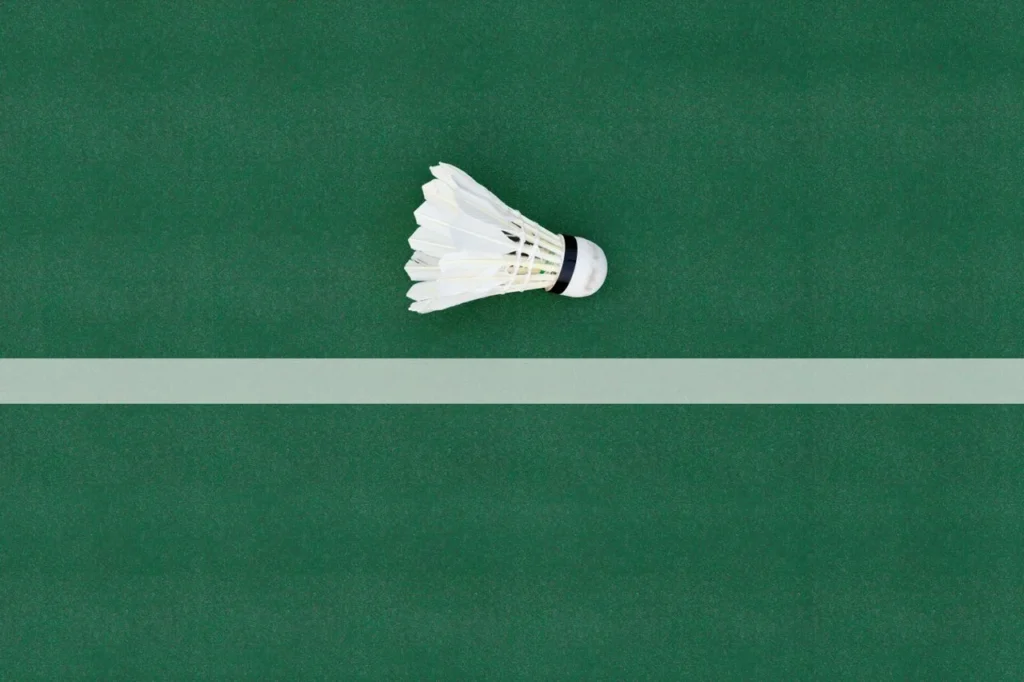
A standard feather shuttlecock is not just a toy. Traditional feather shuttlecocks are built with 16 feathers fixed into a base, with feather lengths controlled by badminton laws. The shape is designed to fly differently from a normal ball. It has high drag, meaning it slows down very quickly after impact.
That is why badminton feels unique. A shuttlecock can leave the racket at huge speed and then slow dramatically before landing. It is part missile, part parachute, part drama queen.
Reuters reported during the Paris Olympics that a shuttlecock usually weighs about five grams and that hundreds of tiny variables can affect its flight, including arena air-conditioning, open doors, spectators’ body heat, and hall size. In other words, the shuttlecock is not being difficult. It is just extremely sensitive.
Honestly, for something that weighs about as much as a small coin, it has a lot of responsibility.
Early Morning: Life Inside the Tube
The life of a badminton shuttlecock begins quietly. Before the match, it rests inside a tube with other shuttlecocks, standing upright like a team of tiny feathered soldiers waiting for selection.
Inside the tube, the mood is calm.
No smashes.
No net tape.
No frame hits.
No angry player asking, “Why is this shuttle wobbling?”
Then the tube opens.
A hand reaches in.
One shuttlecock is selected.
The others pretend not to be relieved.
Our hero enters the court.
This is the shuttlecock’s first big moment. Its feathers are still neat. The cork is clean. Its confidence is high. It believes today will be a controlled, elegant, respectful game of skill.
It is wrong.
The Warm-Up: False Hope Begins
During warm-up, the shuttlecock thinks life is beautiful.
Soft clears. Gentle drives. Easy lifts. Calm net shots. Players are smiling. Nobody is shouting. Nobody is blaming the shuttle. It floats across the net with dignity.
Shuttlecock thought: “This is fine. I am built for this. I am grace. I am flight. I am badminton poetry.”
Warm-up is the honeymoon phase in the life of a badminton shuttlecock.
The players are kind because the score is still zero. The racket strings are gentle because nobody is trying to win yet. The shuttlecock begins to believe it will have a peaceful career.
Then the match starts.
The First Smash: Reality Arrives Fast
The first smash changes everything.
The shuttlecock rises high. For one second, it feels important. The lights shine above. The opponent steps back. The racket comes down. The shuttlecock realizes too late that this is not a friendly lift.
Impact.
The shuttle flies like it has been fired from a tiny feather cannon.
Badminton smashes can reach extreme speeds. Reuters reported that smash speed can reach as high as 500 km/h in elite contexts, while Olympics.com has reported record-breaking badminton hit speeds even higher in controlled record conditions.
This is where the life of a badminton shuttlecock becomes extreme. The shuttle may leave the racket very fast, but because of its open feathered shape and high drag, it slows down quickly. Recent shuttlecock speed-decay research has reported that the initial speed can exceed 500 km/h and can reduce by half within only a few meters depending on shuttle properties.
Shuttlecock thought: “I was not informed this job involved aerospace physics.”
The Net Tape Incident
Sooner or later, every shuttlecock meets the net tape.
The player attempts a delicate net shot. The shuttlecock floats toward glory. It is about to land perfectly. The crowd is ready to appreciate touch, control, and finesse.
Then it hits the tape.
It rolls.
It pauses.
It considers both sides.
It drops.
The winner celebrates. The loser stares at the shuttlecock like it personally betrayed a family legacy.
This is a difficult moment in the life of a badminton shuttlecock. It did not choose the tape. It did not choose gravity. It simply obeyed physics.
But in badminton, physics gets blamed less often than the shuttle.
The Frame Hit: Pure Humiliation
No shuttlecock enjoys being hit by the racket frame.
A clean string-bed impact feels professional. It gives the shuttle direction, speed, and dignity. A frame hit, on the other hand, sends the shuttlecock on a strange diagonal journey that nobody requested.
One moment it is heading for a cross-court drop.
The next moment it is flying toward the ceiling, a side wall, or someone’s water bottle.
The player looks confused. The opponent looks offended. The shuttlecock looks emotionally damaged.
Shuttlecock thought: “Please hit the strings. That is literally their job.”
Frame hits are part of badminton life, but they are not good for shuttlecock confidence.
The Drift Problem: When the Air Has Opinions
One of the most underrated parts of the life of a badminton shuttlecock is drift. Drift means the shuttlecock does not fly exactly the same in every direction because of air movement inside the hall.
Reuters reported during the Paris Olympics that badminton players must learn to predict drift, and that variables such as air-conditioning, spectators, hall size, and even temperature changes can affect shuttle flight.
A former Olympian quoted by Reuters said, “In badminton you have to be so precise and top players adapt quickly.”
That quote explains why shuttlecock behavior matters so much. At high levels, players are not only playing the opponent. They are also reading the hall, air, temperature, side of court, and shuttle response.
Shuttlecock thought: “Finally, someone understands that I am complicated.”
For casual players, drift may feel like bad luck. For elite players, drift is tactical information.
The Blame Game
The life of a badminton shuttlecock includes a lot of blame.
If a player hits long, the shuttle is too fast.
If a player hits short, the shuttle is too slow.
If a shot goes wide, the shuttle drifted.
If a smash is returned, the shuttle did not cooperate.
If the player misses completely, the shuttle was “definitely wobbling.”
The shuttlecock hears everything.
Common court complaints include:
- “This shuttle is dead.”
- “This shuttle is flying weird.”
- “Too fast.”
- “Too slow.”
- “Change it.”
- “Look at the feathers.”
- “It was fine until that last rally.”
- “No, no, this one is gone.”
A badminton shuttlecock has no lawyer, no microphone, and no right of reply.
It simply waits for the next serve.
The Feather Inspection
At some point, a player picks up the shuttlecock and inspects the feathers like a diamond expert checking a rare stone.
One feather is slightly bent.
The player raises an eyebrow.
Another feather is slightly open.
The player rotates the shuttle.
A third feather looks tired.
That is it. Trial over.
The shuttlecock is declared unfit for elite service.
This is one of the harshest realities in the life of a badminton shuttlecock. It can survive smashes, drops, drives, clears, net tape, and frame shots — but one bent feather can end its match career.
Feather quality matters because shuttle shape controls flight. Small changes can affect stability, speed, and accuracy.
In badminton, symmetry is not vanity. It is survival.
Feather Shuttlecocks vs Synthetic Shuttlecocks
Not every badminton shuttlecock lives the same life. Feather shuttlecocks and synthetic shuttlecocks have different personalities.
| Type | Main Advantage | Main Drawback |
|---|---|---|
| Feather shuttlecock | More traditional flight feel and high-level control | Less durable and more sensitive |
| Synthetic shuttlecock | More durable and cost-effective for training | Different flight feel and speed behavior |
| Hybrid shuttlecock | Attempts to balance durability and flight | Performance varies by design |
Feather shuttlecocks are common in higher-level play because many advanced players prefer their feel and flight behavior. Synthetic shuttlecocks are common for training, schools, beginners, and recreational play because they usually last longer.
A research paper on shuttlecock velocity decay reported that plastic shuttlecocks can deform at high speeds and may not behave like feather shuttles at elite levels. That is why equipment choice depends on player level and use case.
For schools and clubs, synthetic shuttles can reduce cost. For serious competition, feather shuttles are often preferred.
The Mid-Match Crisis
Halfway through the match, the shuttlecock has changed.
The feathers are no longer perfect. The cork has taken impact. The shape has suffered. The confidence is lower. It has seen things.
It has been smashed.
It has been sliced.
It has hit tape.
It has been blamed unfairly.
It has landed on sweaty wooden flooring.
It has heard one player say, “This shuttle is finished,” while the other player says, “No, it is fine.”
This is the political phase of the life of a badminton shuttlecock.
Both players now negotiate its future.
One wants it replaced.
One wants it kept.
The shuttlecock wants retirement with dignity.
When the Shuttlecock Becomes a Training Tool
Not every old shuttlecock goes straight to the bin.
Some retired match shuttles become training shuttles. They may no longer be good enough for tournament rallies, but they can still serve in drills.
Old shuttlecocks can be used for:
- Multi-shuttle feeding
- Beginner practice
- Net drills
- Serve practice
- Footwork drills
- Reaction training
- Warm-up exercises
This is the second career in the life of a badminton shuttlecock.
It is not glamorous, but it is useful. A shuttlecock that once flew in serious rallies may later help a beginner learn timing. That is not failure. That is legacy.
The Sustainability Question
The life of a badminton shuttlecock also raises a real sustainability issue. Shuttlecocks wear out. Feather shuttles may have short match lives. Clubs, academies, and tournaments can go through many tubes over time.
That does not mean players should stop using quality shuttlecocks. It means clubs should think more carefully about purchasing, storage, reuse, and disposal.
Better shuttlecock habits include:
- Store shuttlecocks properly
- Avoid crushing tubes
- Use correct speed shuttles for conditions
- Reuse worn shuttles for training where possible
- Separate usable training shuttles from waste
- Avoid unnecessary shuttle changes
- Buy according to player level and use case
- Consider synthetic shuttles for beginner training
- Dispose of worn shuttles responsibly
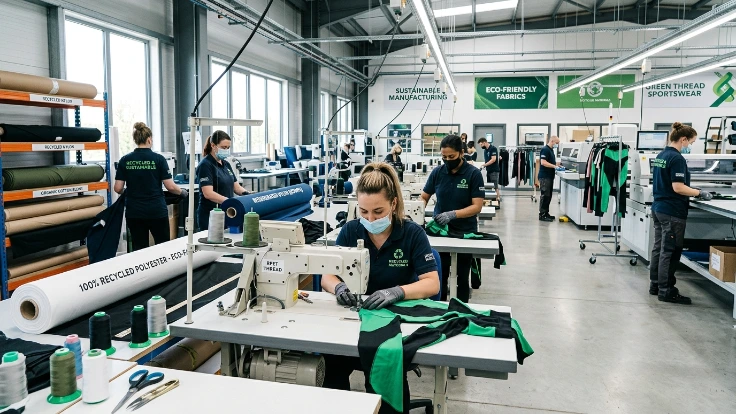
Sustainability in badminton does not stop at the shuttle. It also includes apparel choices, packaging, durable uniforms, recycled polyester options, and responsible production planning.
GHC Sportswear® explains this wider topic in Sustainable Sportswear Manufacturing and Sustainable Sports Clothing Certifications.
What Players Can Learn from the Life of a Badminton Shuttlecock
The life of a badminton shuttlecock teaches players several useful lessons.
Respect equipment
Badminton equipment is not random. Shuttle quality, racket string tension, shoes, grip, and apparel all affect the game.
Read conditions
A shuttlecock may fly differently depending on temperature, humidity, hall airflow, and court side.
Stop blaming everything
Sometimes the shuttle is damaged. Sometimes the player just missed.
Both truths can exist.
Choose the right gear
A serious player needs proper footwear, breathable apparel, a suitable racket, and a shuttlecock that matches the level and conditions.
GHC Sportswear® explains the footwear side in Proper Footwear in Badminton and apparel planning in Badminton Dress Codes.
The Shuttlecock and the Uniform: A Surprisingly Strong Connection
A shuttlecock and a badminton uniform may seem unrelated, but they are part of the same performance environment.
The shuttlecock demands speed, precision, reaction, and movement. The uniform must help the player meet those demands.
A player chasing a fast shuttle needs:
- Lightweight shirt
- Breathable fabric
- Shoulder mobility
- Quick-dry performance
- Shorts or skort that allow lunges
- Non-marking badminton shoes
- Sweat control
- Comfortable fit
- Team identity
This is why badminton apparel cannot be generic.
GHC Sportswear® covers this in Materials Revolutionizing Badminton Apparel, Customizing Your Badminton Uniform, and Badminton Fashion Do’s and Don’ts.
When the shuttle flies fast, the player needs apparel that does not slow them down.
Fun Shuttlecock Personality Types
Every badminton player has met these shuttlecocks.
| Shuttlecock Type | Personality | Court Behavior |
| The Fresh Hero | Confident and perfect | Flies cleanly and proudly |
| The Drama Spinner | Overreacts to every hit | Wobbles after frame contact |
| The Speed Demon | Too quick for comfort | Keeps flying long |
| The Lazy Floater | No urgency | Drops short too often |
| The Net Magnet | Loves tape | Always finds the cord |
| The Veteran | Feathers slightly tired | Still useful for drills |
| The Mystery Shuttle | Nobody understands it | Blamed for everything |
| The Training Legend | Retired but loyal | Helps beginners improve |
This is why the life of a badminton shuttlecock feels almost human. Every shuttle seems to have a mood.
Practical Shuttlecock Tips for Clubs and Academies
Clubs and academies should manage shuttlecocks properly because equipment cost can add up.
Useful practices include:
- Match shuttle inventory by level
- Use feather shuttles for advanced match play
- Use synthetic or older shuttles for beginner drills
- Store tubes in stable conditions
- Avoid exposing shuttles to extreme heat or dampness
- Train players not to step on shuttles
- Collect damaged shuttles separately
- Use old shuttles for feeding drills
- Check speed before serious play
- Keep spare tubes courtside
Good shuttle management saves money and improves training quality.
B2B Lesson: Every Detail in Badminton Matters
The life of a badminton shuttlecock proves that badminton is a detail-heavy sport. A five-gram object can change a rally, frustrate a player, force tactical adjustments, and decide whether a shot lands in or out.
If the shuttlecock matters this much, apparel matters too.
For B2B buyers, details include:
- Fabric weight
- Breathability
- Fit
- Stretch
- Logo placement
- Sponsor visibility
- Dress-code compliance
- Size grading
- Printing method
- Wash durability
- Packaging
- Reorder planning
Badminton teams do not need random sportswear. They need apparel designed around how the sport is actually played.
Build Badminton Apparel Around the Real Game
GHC Sportswear® helps teams, clubs, academies, schools, colleges, retailers, wholesalers, distributors, private label businesses, and sportswear brands create badminton apparel that supports real court movement.
GHC Sportswear® can support:
- Custom badminton uniforms
- Badminton match shirts
- Badminton training tops
- Badminton shorts
- Badminton skirts and skorts
- Tracksuits
- Warm-up jackets
- Hoodies
- Team polos
- Sublimation printing
- Heat transfer names and numbers
- Sponsor logo placement
- Moisture-wicking fabrics
- Mesh panels
- Recycled polyester options
- Private labels
- Branding and packaging
- Bulk production
- Reorder planning
Buyers can explore product categories through the GHC Sportswear® products page and manufacturing support through the GHC Sportswear® services page.
Strong CTA: Give the Shuttlecock a Better-Dressed Opponent
The shuttlecock is already doing its job. It is flying, spinning, slowing, diving, and surviving every rally.
Now the player’s uniform should do its job too.
If your club, academy, school, retailer, wholesaler, distributor, or private label brand needs custom badminton apparel, send GHC Sportswear® your design idea, logo files, team colors, sponsor requirements, size range, fabric target, quantity, and reference images.
GHC Sportswear® can help you develop badminton apparel that looks professional, supports movement, and matches the real demands of the sport.
Contact GHC Sportswear® for custom badminton apparel manufacturing:
WhatsApp: https://wa.me/ghcsportswear
Email: info@ghcsportswear.com
Contact page: GHC Sportswear® contact us
FAQ: Life of a Badminton Shuttlecock
What is the life of a badminton shuttlecock like?
The life of a badminton shuttlecock is intense. It starts in a tube, enters warm-up, faces smashes, drops, net shots, drift, frame hits, and eventually becomes either a training shuttle or waste.
How fast can a badminton shuttlecock travel?
Elite badminton smashes can reach extremely high speeds. Reuters reported smash speeds reaching as high as 500 km/h in elite contexts, while record-setting hits have been reported higher in controlled conditions.
Why does a badminton shuttlecock slow down so quickly?
A shuttlecock slows quickly because its open feathered or skirted shape creates high aerodynamic drag. This gives badminton its unique flight behavior.
Why do players change shuttlecocks during matches?
Players change shuttlecocks when the feathers, shape, speed, or flight become inconsistent. Small feather damage can affect accuracy and stability.
Are feather or synthetic shuttlecocks better?
Feather shuttlecocks are often preferred for higher-level play because of their traditional flight feel. Synthetic shuttlecocks are usually more durable and cost-effective for training or beginners.
What does shuttlecock flight teach about badminton apparel?
Fast shuttlecock movement demands quick player movement. That means badminton apparel should be lightweight, breathable, moisture-wicking, and flexible enough for lunges, jumps, and smashes.
Conclusion
The life of a badminton shuttlecock is fast, dramatic, and unfairly blamed. It begins in a quiet tube, enjoys a short warm-up, survives smashes, tape clips, drift, frame hits, and player complaints, then eventually retires into training duty or the recycling conversation.
But the shuttlecock is not just a funny object. It is the center of badminton. Its speed, drag, shape, and flight behavior define how the sport feels.
The shuttlecock reminds us that badminton is a game of details. A tiny object can change the rhythm of a rally. A slight drift can affect tactics. A bent feather can change flight. A poor uniform can affect movement. Wrong shoes can affect court safety.
That is why players and teams should respect the full badminton kit.
GHC Sportswear® helps B2B buyers create custom badminton apparel that supports the player chasing the shuttle: breathable shirts, movement-friendly shorts and skorts, tracksuits, warm-up apparel, sponsor-ready uniforms, private labels, and performance-focused teamwear.
The shuttlecock may be the unsung hero of badminton.
But with the right uniform, the player can look ready to chase it.