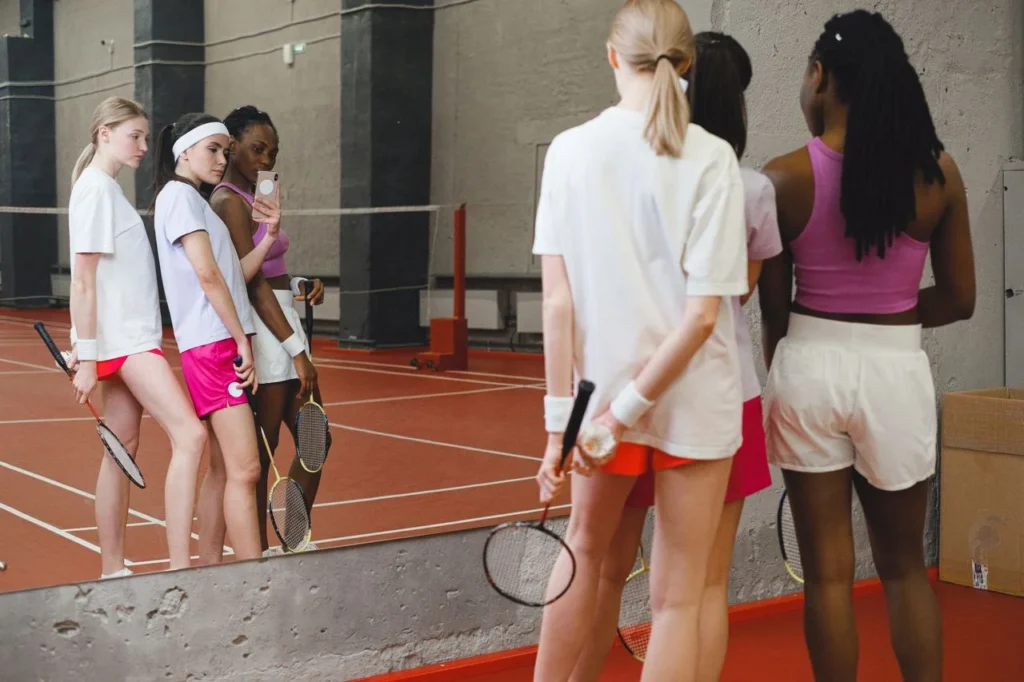
Badminton Fashion Do’s and Don’ts: Court Style, Comfort, and Uniform Rules
Badminton fashion do’s and don’ts are not only about looking good on the court. They are about comfort, movement, safety, confidence, team identity, and competition readiness. Badminton is fast, technical, and physically demanding. Players need clothing that supports lunges, jumps, smashes, quick footwork, sweat control, and long indoor rallies.
A badminton outfit can look stylish, but if it traps heat, restricts the shoulder, causes slipping, or violates tournament rules, it fails. A proper badminton look should combine sportswear function with clean court presentation.
That is why badminton fashion do’s and don’ts matter for casual players, school teams, clubs, academies, corporate leagues, tournament players, retailers, wholesalers, distributors, and private label sportswear brands.
Badminton has become more performance-driven, more professional, and more brand-conscious. Modern teams want custom shirts, sponsor-ready layouts, matching shorts or skorts, breathable fabrics, and identity-focused uniforms. At the same time, courts and tournaments still expect players to follow proper dress codes.
The Badminton World Federation player code says players should wear “clean and acceptable badminton sports clothing.” That simple standard explains the goal: badminton fashion should be smart, functional, and suitable for the sport.
GHC Sportswear® helps B2B buyers create custom badminton uniforms, teamwear, training apparel, and private label sportswear that combine performance, comfort, branding, and professional presentation.
Why Badminton Fashion Do’s and Don’ts Matter
Badminton fashion do’s and don’ts matter because apparel affects how players feel and move. A player who feels restricted, overheated, or uncomfortable will not focus fully on the match. Badminton is too fast for clothing distractions.
A good badminton outfit supports:
- Fast footwork
- Deep lunges
- Shoulder rotation
- Overhead smashes
- Sweat control
- Indoor court comfort
- Team identity
- Sponsor presentation
- Tournament compliance
- Player confidence
The sportswear market also shows why apparel choices are becoming more serious. Grand View Research valued the global sportswear market at USD 399.4 billion in 2025 and projected it to reach USD 890.4 billion by 2033. That growth reflects rising sports participation, fitness culture, and demand for performance apparel.
For badminton teams and brands, this means one thing: badminton fashion is now part of a larger performance sportswear business. The best uniforms must look professional and perform properly.
Do: Choose Breathable, Moisture-Wicking Fabrics
The first rule in badminton fashion do’s and don’ts is simple: choose breathable performance fabric.
Badminton is usually played indoors, where heat and sweat can build quickly. Players need clothing that helps manage moisture and airflow.
Good badminton fabrics include:
- Polyester
- Recycled polyester
- Polyester mesh
- Polyester-spandex
- Lightweight microfiber
- Breathable technical knits
Textile Exchange reported that polyester made up 59% of global fiber production in 2024. Polyester remains dominant in performance sportswear because it is lightweight, durable, quick-drying, and suitable for printing methods such as sublimation.
Major sportswear brands also build their performance messaging around sweat control. Nike explains that Dri-FIT helps manage sweat so athletes stay drier, while adidas describes AEROREADY as moisture-managing apparel designed to move sweat away from the skin.
For badminton players, the lesson is clear: fabric matters.
GHC Sportswear® explains this in Moisture-Wicking Fabrics and Materials Revolutionizing Badminton Apparel.
Best fabric choices
| Fabric | Best Use | Why It Works |
|---|---|---|
| Polyester | Match shirts and team uniforms | Lightweight, durable, quick-drying |
| Polyester mesh | Ventilation panels | Helps improve airflow |
| Polyester-spandex | Performance fits | Supports stretch and recovery |
| Recycled polyester | Sustainable teamwear | Better material responsibility |
| Cotton blends | Casual club apparel | Soft but not ideal for intense match play |
For serious badminton fashion, fabric should come before color.
Don’t: Wear Heavy or Restrictive Clothing
One of the biggest badminton fashion mistakes is wearing clothing that is too heavy, too tight, or not designed for movement.
Avoid:
- Heavy cotton match shirts
- Stiff trousers
- Tight sleeves
- Thick hoodies during play
- Denim or casual pants
- Poorly fitted shorts
- Non-stretch garments that restrict lunges
Heavy cotton absorbs sweat and can become uncomfortable during long rallies. Tight shirts may restrict shoulder movement during smashes. Poorly fitted shorts can affect lunges and recovery steps.
A badminton outfit should never fight the athlete’s movement.
This is why modern uniforms have evolved from formal clothing to performance sportswear. GHC Sportswear® explains that full journey in Evolution of Badminton Uniforms.
Do: Wear Proper Non-Marking Badminton Shoes
No badminton fashion do’s and don’ts guide is complete without footwear.
Shoes are not just part of the outfit. They affect grip, safety, stability, and court protection. Many indoor badminton courts require non-marking shoes because ordinary shoes can damage or mark the floor.
Proper badminton shoes should include:
- Non-marking indoor sole
- Strong grip
- Lateral support
- Cushioning
- Lightweight structure
- Secure heel fit
- Breathable upper
- Stable base
Running shoes are not ideal for badminton because they are mainly designed for forward motion. Badminton requires sideways movement, sharp stopping, fast lunges, and sudden direction changes.
GHC Sportswear® explains this in detail in Proper Footwear in Badminton.
Simple footwear rule
If the shoe is made for outdoor running, casual walking, or fashion, it is probably not the best choice for badminton.
Don’t: Wear Running Shoes or Casual Sneakers on Court
This is one of the most common badminton fashion mistakes.
Running shoes may feel comfortable, but they usually do not provide the lateral support needed for badminton. Casual sneakers may look stylish, but they often lack grip, cushioning, and court-safe soles.
Wearing the wrong shoes can lead to:
- Slipping
- Poor footwork
- Court damage
- Reduced agility
- Heel movement
- Ankle instability
- Faster fatigue
Badminton footwear should be selected for the court first and the outfit second.
A great badminton outfit is incomplete without proper shoes.
Do: Follow Badminton Dress Codes
Another important rule in badminton fashion do’s and don’ts is to follow the dress code.
Casual games are usually relaxed, but clubs, schools, academies, and tournaments may have specific clothing expectations. Professional-level badminton can include rules for player names, country names, advertising, logo placement, and uniform consistency.
Badminton dress codes may cover:
- Shirt style
- Shorts, skirts, or skorts
- Team colors
- Player names
- Sponsor logos
- Country names
- Non-marking shoes
- Doubles pair uniform consistency
- Advertising placement
- Clean clothing standards
Before ordering uniforms, teams should check tournament rules or club requirements.
GHC Sportswear® has a full guide on Badminton Dress Codes, including BWF-related clothing guidance, footwear expectations, sponsor placement, and team uniform planning.
Don’t: Ignore Tournament and Sponsor Rules
A design can look excellent and still create problems if it ignores regulations.
Common rule-related mistakes include:
- Sponsor logos placed incorrectly
- Player names missing or unreadable
- Country or club name in the wrong position
- Doubles partners wearing mismatched outfits
- Shirt design too busy for readable branding
- Non-approved advertising size
- Wrong footwear for indoor courts
- Uniform not matching event standards
For B2B buyers, this matters before sampling. A uniform should be designed around the rules, not corrected after production.
If you are producing badminton apparel for tournaments, always confirm dress code requirements before bulk order approval.
Do: Use Team Identity Clearly
Badminton fashion should support team identity. A custom uniform helps players look organized, professional, and connected.
A strong team badminton outfit should include:
- Team colors
- Club or academy logo
- Sponsor placement
- Matching shorts or skorts
- Consistent typography
- Clean player-name layout
- Optional warm-up jacket
- Matching tracksuit or hoodie
A unified look helps teams appear more serious. It also gives sponsors a better platform and helps players feel part of a group.
GHC Sportswear® explains the value of this in Custom Team Uniforms Benefits.
Don’t: Overcrowd the Uniform with Logos
Sponsor logos can add value, but too many logos can ruin the design.
Avoid:
- Oversized sponsor marks
- Too many chest logos
- Sleeve logos that clash
- Low-contrast text
- Poor logo spacing
- Busy patterns behind sponsor marks
- Player names placed over graphics
A good badminton shirt needs visual hierarchy. The viewer should quickly understand the team name, player identity, and main sponsor.
For professional-looking badminton fashion, clean space is as important as graphics.
Do: Customize Your Badminton Uniform Properly
Custom badminton apparel is one of the best ways to improve court style, but customization should be planned carefully.
Good customization includes:
- Correct fabric selection
- Good fit
- Clean team colors
- Professional logo placement
- Durable print method
- Sponsor-ready layout
- Comfortable shorts or skorts
- Matching warm-up apparel
- Size range planning
- Reorder consistency
GHC Sportswear® explains this process in Customizing Your Badminton Uniform.
Best customization methods
| Method | Best Use |
| Sublimation | Full-color polyester badminton shirts |
| Heat transfer | Names, numbers, sponsor logos |
| Screen printing | Simple bold graphics |
| Embroidery | Jackets, polos, thicker apparel |
| Woven labels | Private label branding |
| Rubber badges | Premium off-court apparel |
For full-color badminton designs, sublimation is often a strong choice because it keeps the garment lightweight and allows detailed graphics. GHC Sportswear® explains this in Sublimation Printing.
Don’t: Copy Copyrighted Designs or Characters
Creative badminton fashion is good. Copying copyrighted designs is not.
Avoid using:
- Cartoon characters
- Anime characters
- Movie superhero logos
- Famous brand graphics
- National federation logos without permission
- Professional team designs
- Trademarked patterns
Instead, create original artwork. A team can still use bold colors, mascot-inspired designs, abstract graphics, or superhero-style themes without copying protected characters.
For inspiration, GHC Sportswear® has creative guides such as Quirky Badminton Uniforms and badminton superhero uniform ideas.
Do: Keep Accessories Functional
Accessories can improve badminton fashion when they serve a purpose.
Useful badminton accessories include:
- Sweatbands
- Wristbands
- Headbands
- Sports socks
- Compression sleeves
- Hair ties
- Support braces
- Small towels
- Team bags
These accessories can support sweat control, comfort, and team identity.
A clean wristband or headband can look good and help manage sweat during rallies. Matching socks or team towels can also improve presentation.
Don’t: Overdo Accessories
Too many accessories can distract the player and look unprofessional.
Avoid:
- Excessive wristbands
- Loose jewelry
- Long necklaces
- Large watches
- Distracting headwear
- Heavy accessories
- Items that interfere with racket movement
Badminton requires fast reactions. Anything that distracts the hand, wrist, head, or footwork should be avoided.
Fashion should support the game, not interrupt it.
Do: Choose the Right Fit
Fit is central to badminton fashion do’s and don’ts. A uniform can have premium fabric and strong colors, but if the fit is wrong, players will not feel comfortable.
A good badminton fit should allow:
- Full shoulder movement
- Easy arm rotation
- Comfortable neckline
- No pulling across the chest
- No restriction during lunges
- Secure waistband
- Proper short/skort length
- Breathability around the body
Fit options may include:
- Regular fit
- Athletic fit
- Slim performance fit
- Women’s-specific fit
- Youth sizing
- Modest fit
- Custom sleeve length
- Custom neckline
For schools, clubs, and academies, one generic fit may not work for every player. Better sizing creates better comfort and a more professional look.
Don’t: Sacrifice Comfort for Style
One of the worst badminton fashion mistakes is choosing a uniform only because it looks good in a mockup.
A badminton outfit should be tested for:
- Shoulder movement
- Sweat comfort
- Fabric feel
- Short or skort movement
- Wash durability
- Logo durability
- Size consistency
- Player feedback
A uniform that photographs well but feels bad during play will not help the team.
Style matters, but comfort wins the match.
Do: Consider Sustainable and Certified Materials
Sustainability is becoming more important in badminton apparel. Teams and brands are asking for recycled polyester, certified fabrics, better packaging, and responsible sourcing.
Textile Exchange data shows polyester dominates global fiber production, and most polyester remains fossil-based. That makes recycled polyester and better sourcing decisions important, especially for buyers who want stronger sustainability positioning.
Sustainable badminton fashion may include:
- Recycled polyester
- Certified recycled content
- OEKO-TEX® STANDARD 100 tested fabrics
- Organic cotton for off-court apparel
- Durable garment construction
- Lower-waste production planning
- Responsible packaging
- Long-term reorder systems
OEKO-TEX® describes STANDARD 100 as a label for textiles “tested for harmful substances,” which can help brands communicate safer textile testing.
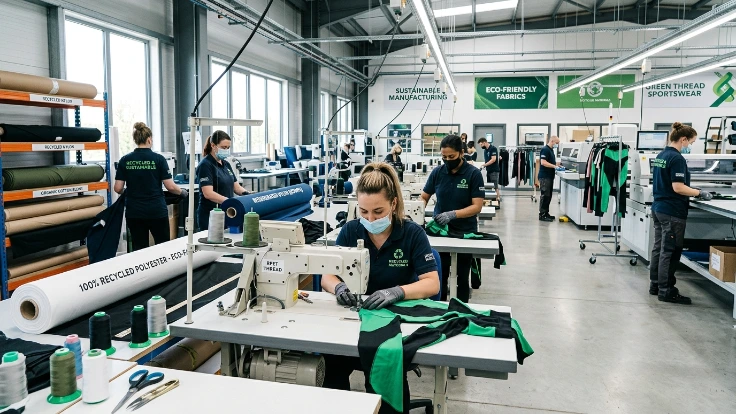
GHC Sportswear® explains this topic in Sustainable Sportswear Manufacturing and Sustainable Sports Clothing Certifications.
Don’t: Use Vague Sustainability Claims
Sustainability should be backed by proof.
Avoid vague claims like:
- 100% eco-friendly
- Completely green
- Planet-saving fabric
- Chemical-free textile
- Fully sustainable uniform
Instead, use careful, accurate language:
- Recycled polyester option available
- OEKO-TEX® STANDARD 100 tested fabric available on request
- Recycled-content documentation available where applicable
- Sustainable packaging options available
- Durable construction for longer use
For private label brands, accurate sustainability wording protects trust and reduces greenwashing risk.
Badminton Fashion Do’s and Don’ts Table
| Do | Don’t |
| Choose breathable fabrics | Wear heavy or restrictive clothing |
| Use non-marking badminton shoes | Wear running shoes on indoor courts |
| Follow dress codes | Ignore sponsor and tournament rules |
| Build team identity | Overcrowd shirts with logos |
| Use proper customization | Copy copyrighted graphics |
| Keep accessories functional | Wear distracting accessories |
| Choose the right fit | Sacrifice comfort for style |
| Consider certified materials | Make vague sustainability claims |
| Test samples before bulk | Approve designs without player feedback |
| Plan reorders | Use one-off colors with no continuity |
This table is the basic foundation of smart badminton fashion.
Common Badminton Fashion Mistakes
Here are the mistakes that teams and buyers should avoid before production:
- Choosing design before fabric
- Selecting running shoes for indoor badminton
- Ignoring non-marking shoe rules
- Using heavy cotton for match uniforms
- Poor shoulder fit
- Shorts that restrict lunges
- Sponsor logos placed over busy graphics
- Copying protected designs
- Overusing accessories
- No women’s fit option
- No youth sizing
- No modest fit option where needed
- No sample approval
- Weak print method
- No wash testing
- No reorder plan
The best badminton fashion is not random. It is planned.
Fashion Faux Pas: Realistic Examples to Avoid
Instead of relying on unverified viral stories, here are realistic badminton fashion mistakes that often happen in teams, clubs, and events.
The too-bright uniform
Bright colors can work, but if neon tones clash with lighting or make sponsor marks unreadable, the uniform becomes a problem.
The overloaded sponsor shirt
A shirt with too many sponsor logos can look messy and reduce the value of every logo.
The wrong-shoe situation
A team arrives in stylish sneakers, but the court requires non-marking badminton shoes. The look may be good, but the shoes are not court-ready.
The weak seam problem
A player lunges, and poorly stitched shorts fail during movement. This is not only embarrassing; it shows poor production planning.
The costume-style design
A team wants a creative kit, but the design looks like a costume instead of a sports uniform. Creative apparel still needs professional sportswear structure.
GHC Sportswear® can help buyers avoid these mistakes through fabric selection, pattern planning, print method guidance, and sample approval before bulk production.
Badminton Fashion for Different Buyer Types
Casual players
Casual players need comfort, breathability, non-marking shoes, and simple athletic clothing.
School teams
School teams need durable, affordable, easy-to-reorder uniforms with school colors and comfortable sizing.
Clubs
Clubs need match shirts, training tops, shorts, skorts, tracksuits, sponsor layouts, and consistent branding.
Academies
Academies need full apparel systems across age groups, training levels, tournaments, and staff clothing.
Corporate teams
Corporate badminton teams need clean, professional uniforms that represent the company without looking too formal.
Retailers
Retailers need badminton apparel that combines style, performance, packaging, and repeatable sizing.
Wholesalers and distributors
Wholesalers need scalable production, consistent fabrics, clear customization options, and reorder reliability.
Private label brands
Private label brands need custom labels, unique designs, fabric documentation, packaging, and production consistency.
Strong CTA: Build Badminton Fashion That Performs
Badminton fashion should not be guesswork. A good court outfit starts with the right fabric, fit, footwear awareness, dress-code planning, and branding system.
Send GHC Sportswear® your:
- Team logo
- Sponsor logos
- Color palette
- Design idea
- Fabric target
- Quantity
- Size range
- Competition level
- Player-name requirements
- Packaging needs
- Reference photos
- Tech pack if available
- Sustainability requirements
GHC Sportswear® can help you turn badminton fashion ideas into production-ready uniforms with breathable fabrics, clean graphics, sponsor-ready layouts, and bulk-order consistency.
Build Custom Badminton Uniforms with GHC Sportswear®
GHC Sportswear® works with teams, clubs, academies, schools, colleges, retailers, wholesalers, distributors, private label businesses, and sportswear brands.
GHC Sportswear® can support:
- Custom badminton uniforms
- Badminton match shirts
- Badminton training tops
- Badminton shorts
- Badminton skirts and skorts
- Tracksuits
- Warm-up jackets
- Hoodies
- Team polos
- Sublimation printing
- Heat transfer names and numbers
- Sponsor logo placement
- Moisture-wicking fabrics
- Mesh panels
- Recycled polyester options
- Private labels
- Branding and packaging
- Bulk production
- Reorder planning
Buyers can explore product categories through the GHC Sportswear® products page and manufacturing support through the GHC Sportswear® services page.
Contact GHC Sportswear® for custom badminton apparel manufacturing:
WhatsApp: https://wa.me/ghcsportswear
Email: info@ghcsportswear.com
Contact page: GHC Sportswear® contact us
FAQ: Badminton Fashion Do’s and Don’ts
What are the main badminton fashion do’s and don’ts?
The main badminton fashion do’s and don’ts include choosing breathable fabrics, wearing non-marking shoes, following dress codes, using clean team branding, avoiding heavy clothing, and avoiding distracting accessories.
What should I wear for badminton?
Wear a lightweight sports shirt, shorts or skort, comfortable socks, and non-marking badminton shoes. Competitive players should follow tournament or club dress codes.
Can badminton uniforms be customized?
Yes. Badminton uniforms can be customized with team colors, club logos, sponsor marks, player names, private labels, and unique graphics.
Is cotton good for badminton?
Cotton can be comfortable for casual or off-court apparel, but it is not ideal for intense match play because it absorbs sweat and can become heavy.
What shoes should I wear for badminton?
Wear non-marking badminton shoes or indoor court shoes with good grip, lateral support, cushioning, and secure fit.
Can badminton uniforms have sponsor logos?
Yes. Badminton uniforms can have sponsor logos, but tournament players should check size, placement, and advertising rules before production.
Conclusion
Badminton fashion do’s and don’ts are about more than court style. They cover comfort, performance, footwear, dress codes, fabric selection, customization, team identity, sponsor placement, and sustainability.
Do choose breathable fabrics. Do wear non-marking shoes. Do follow dress codes. Do build team identity. Do use proper customization. Do test samples before bulk production.
Do not wear heavy clothing. Do not use running shoes on court. Do not ignore sponsor rules. Do not overcrowd logos. Do not copy copyrighted designs. Do not sacrifice comfort for style.
The best badminton fashion looks professional and plays properly.
GHC Sportswear® helps B2B buyers create custom badminton uniforms and teamwear that combine style, comfort, performance, and production-ready branding.