Nike vs Adidas Uniforms Comparison: Performance, Price, Customization, and Bulk Teamwear Guide
The Nike vs Adidas uniforms comparison is one of the most common questions teams ask when planning new kits. Both brands are global sportswear leaders. Both supply elite athletes, clubs, federations, schools, and fans. Both have strong fabric technologies, strong brand recognition, and decades of sports culture behind them.
But for clubs, academies, schools, retailers, wholesalers, distributors, and B2B apparel buyers, the real question is not only:
“Which brand is bigger?”
The better question is:
“Which uniform option gives the right balance of performance, price, customization, durability, availability, and bulk order control?”
Nike and Adidas are excellent global brands, but they are not always the best solution for every team. A professional club with a major sponsorship deal may choose Nike or Adidas because brand power matters. A school, academy, amateur club, startup sportswear brand, or distributor may need more flexibility, lower MOQ, private labeling, custom colours, sponsor layouts, and repeat production control.
That is where custom manufacturing becomes important.
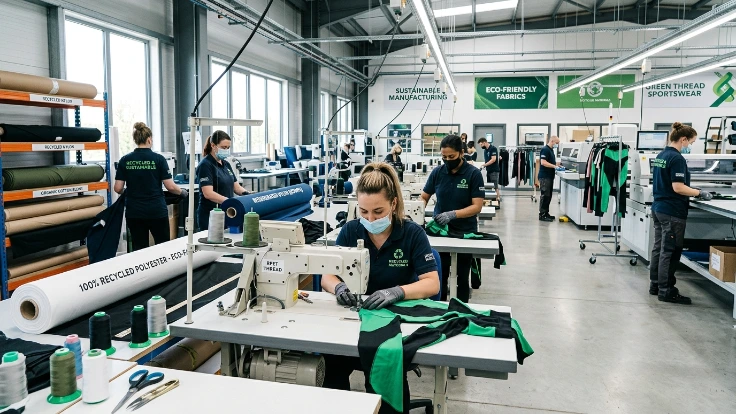
GHC Sportswear® supports custom sports uniform manufacturing, custom sportswear manufacturing, team kits, sponsor-ready jerseys, player names and numbers, private label sportswear, and bulk teamwear production for B2B buyers worldwide.
Direct Answer: Nike vs Adidas Uniforms Comparison
In a direct Nike vs Adidas uniforms comparison, Nike usually stands out for lightweight performance styling, modern design language, athlete-driven innovation, and strong global brand power. Adidas often stands out for heritage design, bold identity, club culture, classic styling, and broad performance apparel range.
However, both Nike and Adidas can be limited for small and mid-sized teams because they usually offer less flexibility in deep customization, private labeling, MOQ control, sponsor placement freedom, and exact bulk reorder customization compared with working directly with a manufacturer.
| Factor | Nike Uniforms | Adidas Uniforms | Custom Manufacturer |
|---|---|---|---|
| Brand recognition | Very high | Very high | Depends on buyer brand |
| Fabric technology | Dri-FIT and related systems | AEROREADY and related systems | Buyer-specified performance fabrics |
| Design style | Modern, minimal, athletic | Classic, bold, heritage-led | Fully custom |
| Customization | Template-based or restricted | Template-based or restricted | Highly flexible |
| Private label | Not typical | Not typical | Available |
| MOQ flexibility | Usually limited | Usually limited | More flexible |
| Bulk pricing | Premium brand cost | Premium brand cost | Cost-controlled by specification |
| Sponsor placement | Restricted by template/program | Restricted by template/program | Buyer-controlled |
| Reorder control | Depends on season/stock | Depends on season/stock | Can follow approved specs |
| Best for | Brand-led teams | Brand-led teams | Teams needing full control |
The simple answer: Nike and Adidas are strong choices when brand image is the priority. A custom manufacturer is usually better when control, pricing, private labels, and bulk flexibility matter more.
Brand Overview: Nike and Adidas
Nike and Adidas are two of the largest sportswear companies in the world.
Nike reported fiscal 2025 revenue of USD 46.3 billion, with Nike Brand revenue at USD 44.7 billion. Adidas reported 2025 net sales of EUR 24.811 billion, up from EUR 23.683 billion in 2024. These figures show the commercial strength of both brands in global sportswear.
Nike brand direction
Nike is strongly associated with:
- Athlete performance
- Lightweight sportswear
- Modern design
- Innovation storytelling
- Elite sports sponsorship
- Global visual branding
- Speed-focused presentation
Adidas brand direction
Adidas is strongly associated with:
- Heritage sportswear
- Football culture
- Three-stripes identity
- Classic teamwear
- Bold club kit designs
- Performance and lifestyle crossover
- Strong European sports heritage
Both brands are powerful. The right choice depends on the buyer’s goal.
Fabric Technology: Nike Dri-FIT vs Adidas AEROREADY
Fabric is one of the biggest points in any Nike vs Adidas uniforms comparison.
Nike uses Dri-FIT technology across many performance garments. Nike explains that Dri-FIT uses high-performance microfiber construction to wick sweat away and disperse it across the fabric surface for faster evaporation. Adidas describes AEROREADY as a technology designed to manage sweat by wicking moisture away from the skin and helping wearers stay dry during workouts.
| Fabric Technology | Brand | Main Purpose | Practical Meaning |
| Dri-FIT | Nike | Sweat-wicking performance | Lightweight dry-feel sports apparel |
| AEROREADY | Adidas | Moisture management | Breathable dry-feel training and match apparel |
| Custom performance polyester | Manufacturer option | Buyer-specified | Fabric selected by GSM, stretch, sport, climate, and budget |
| Polyester-spandex | Manufacturer option | Stretch and recovery | Useful for fitted teamwear |
| Mesh polyester | Manufacturer option | Ventilation | Useful for high-heat sports |
| Recycled polyester | Manufacturer option | Sustainability option | Available where suitable and documented |
Nike and Adidas both invest heavily in performance fabric. For custom teamwear buyers, the practical alternative is selecting similar performance goals through manufacturer-specified polyester, polyester-spandex, microfiber, mesh, or recycled polyester options.
For deeper fabric planning, read Moisture-Wicking Fabrics and Synthetic vs Natural Fabrics in Sportswear.
Fabric Feel: Lightweight vs Durable Perception
Teams often describe Nike kits as lighter and Adidas kits as slightly more structured or heritage-feeling, depending on product line and sport. This is a general perception, not a fixed rule for every product.
A more accurate buyer approach is to compare:
- Fabric GSM
- Stretch percentage
- Knit structure
- Ventilation
- Moisture management
- Seam construction
- Printing method
- Wash performance
- Sport-specific use
- Player feedback
| Buyer Question | Why It Matters |
| Is the fabric lightweight enough for hot climates? | Reduces overheating risk |
| Is it strong enough for contact sports? | Improves durability |
| Does it stretch and recover well? | Supports movement and fit |
| Does it accept sublimation well? | Improves custom design options |
| Does it hold colour after washing? | Maintains team identity |
| Does it fit youth, women’s, and men’s teams properly? | Reduces complaints and returns |
The best uniform fabric is not simply Nike, Adidas, or custom. It is the fabric that matches the sport, season, climate, order size, and performance need.
Design Style Comparison
Nike and Adidas have different design languages.
| Area | Nike Uniforms | Adidas Uniforms |
| Visual style | Clean, modern, sharp | Classic, bold, heritage-led |
| Branding | Swoosh-focused | Three-stripes identity |
| Team identity | Often minimal | Often stronger graphic identity |
| Pattern style | Controlled and modern | More traditional or bold |
| Athlete image | Speed, innovation, performance | Culture, history, football heritage |
| Best for | Teams wanting modern identity | Teams wanting classic sport identity |
Nike often appeals to teams that want a sleek, modern performance look. Adidas often appeals to teams that want a mix of performance and classic sports identity.
For teams that want full design freedom, custom manufacturing allows:
- Exact colours
- Full sublimation
- Custom patterns
- Sponsor layouts
- Home and away kits
- Player names and numbers
- Club-specific fonts
- Cultural design themes
- Private label branding
- Team packaging
For design mistakes to avoid, read Worst Sports Uniform Designs Ever.
Customization Comparison
Customization is where the decision becomes practical.
Nike and Adidas may offer teamwear programs, but customization is often restricted by templates, product availability, seasonal catalogues, approved colours, and minimum order structures.
A custom manufacturer offers broader control.
| Customization Area | Nike | Adidas | Custom Manufacturer |
| Team colours | Limited by available options | Limited by available options | Fully custom |
| Jersey pattern | Template-based | Template-based | Fully custom |
| Sponsor logos | Program-dependent | Program-dependent | Buyer-controlled |
| Player names | Available in some programs | Available in some programs | Available |
| Player numbers | Available in some programs | Available in some programs | Available |
| Font style | Limited | Limited | Custom |
| Private labels | Not typical | Not typical | Available |
| Packaging | Standard brand packaging | Standard brand packaging | Custom packaging |
| MOQ flexibility | Less flexible | Less flexible | More flexible |
| Reorder matching | Depends on stock/season | Depends on stock/season | Based on approved specs |
For B2B buyers, customization often matters more than brand logo. A school or club may need a kit that matches exact colours, includes sponsors, fits all players, and can be reordered next season.
For player-number planning, read Why Teams Fight Over Jersey Numbers.
Pricing Comparison: Nike vs Adidas vs Custom Manufacturing
Nike and Adidas uniforms are premium branded products. Pricing varies by sport, country, retailer, team program, product line, customization, shipping, and order quantity. But the business logic is consistent: big-brand kits usually carry brand value in the price.
Custom manufacturing allows buyers to control cost by adjusting fabric, printing method, quantity, packaging, and product range.
| Pricing Factor | Nike / Adidas | Custom Manufacturer |
| Brand premium | Included | Buyer builds own brand |
| Fabric choice | Fixed by product line | Buyer-specified |
| Design control | Limited | Full control |
| Private label | Not typical | Available |
| Bulk pricing | Program-dependent | Quote-based |
| Sponsor placement | Limited | Flexible |
| Reorder control | Stock/season dependent | Planned by approved specs |
| Packaging | Standard | Custom available |
| Cost flexibility | Lower | Higher |
Price-Impact Example for Teams
Exact prices depend on final specifications, but this comparison shows how cost pressure works.
| Team Need | Big Brand Route | Custom Manufacturer Route |
| 25 ready-made jerseys | Simple but limited design | Custom design possible |
| 100 full kits | Premium cost can rise quickly | Bulk specification controls cost |
| Sponsor logos | May add cost and restrictions | Built into design plan |
| Player names and numbers | Added customization cost | Planned in production |
| Private labels | Usually unavailable | Available |
| Reorders next season | May face discontinued stock | Can follow approved pattern |
| Full club identity | Limited by templates | Fully controlled |
For budget-conscious teams, custom manufacturing can be more practical because the buyer pays for product specification, not global brand premium.
Durability and Long-Term Use
Durability depends less on the logo and more on material selection, construction, sport type, washing, and usage.
Important durability factors include:
- Fabric GSM
- Stitching quality
- Seam strength
- Stretch recovery
- Pilling resistance
- Colourfastness
- Print durability
- Sponsor logo method
- Washing instructions
- Sport-specific stress zones
Nike and Adidas both produce high-quality performance products. But for bulk buyers, durability should be judged by the exact product line, not only the brand name.
Custom manufacturing lets buyers specify stronger fabrics for rugby, lighter fabrics for badminton, stretch fabrics for rowing, or reinforced construction for contact sports.
For sport-specific fabric guidance, read Best Rugby Uniform Materials for Bulk Orders.
Availability and Lead Time
Availability can become a major issue for teams.
Nike and Adidas kits may depend on:
- Seasonal catalogues
- Retail stock
- Regional availability
- Teamwear program rules
- Discontinued designs
- Limited colours
- Lead time for customization
Custom manufacturing can offer more control when the buyer has clear specifications.
| Availability Factor | Nike / Adidas | Custom Manufacturer |
| Stock colours | Limited to current range | Buyer-defined |
| Seasonal continuity | May change | Can be planned |
| Reorder matching | Not always guaranteed | Based on approved specs |
| Urgent restock | Depends on inventory | Depends on production capacity |
| Multi-team programs | Limited by catalogue | Can be coordinated |
| Private label collection | Not typical | Available |
For clubs, academies, and schools managing multiple teams, availability matters as much as design.
Nike vs Adidas vs Direct Manufacturer: Practical Comparison
| Factor | Nike | Adidas | Direct Manufacturer |
| Performance quality | High | High | Depends on specification |
| Brand status | Very high | Very high | Buyer-owned brand |
| Design freedom | Moderate to limited | Moderate to limited | High |
| Bulk flexibility | Limited | Limited | High |
| Private label | No | No | Yes |
| Sponsor placement | Restricted | Restricted | Flexible |
| MOQ flexibility | Lower | Lower | Higher |
| Reorder control | Stock dependent | Stock dependent | Planned |
| Price control | Lower | Moderate | Higher |
| Best buyer | Brand-first teams | Brand-first teams | Custom-first teams |
When Teams Should Choose Nike or Adidas
Nike or Adidas may be suitable when:
- Brand image is the main priority
- Budget is flexible
- The team wants ready-made premium kits
- The available catalogue matches the team colours
- Deep customization is not required
- Private labeling is not needed
- The buyer wants recognized global brand association
- Reorders are not a major concern
- The team accepts template limitations
For some teams, wearing a global brand matters. That is valid.
When Teams Should Choose a Custom Manufacturer
A custom manufacturer is usually better when:
- The team needs exact colours
- Sponsor logos must be placed properly
- Player names and numbers are required
- The buyer needs bulk pricing control
- Private label branding is required
- The club needs long-term reorder consistency
- The academy manages multiple teams
- The school needs youth and adult sizing
- The retailer wants to sell under its own brand
- The distributor needs repeatable stock
- The design must be unique
- The buyer needs packaging customization
For B2B buyers, custom manufacturing usually gives better control over product, price, and identity.
Explore B2B Custom Sportswear Manufacturer and Pakistan Custom Sportswear Manufacturer.
Private Label: The Biggest Difference
Nike and Adidas sell under their own brands. They do not normally support private label development for small and mid-sized buyers.
Custom manufacturers can support private label sportswear with:
- Custom neck labels
- Woven labels
- Hang tags
- Branded polybags
- Team packaging
- Retail packaging
- Custom product names
- Buyer-owned designs
- Reorder specifications
- Full brand ownership
For apparel startups, retailers, wholesalers, and distributors, this is a major reason to work directly with a manufacturer.
Read more: Private Label Apparel Manufacturing Guide and Custom Apparel Manufacturing Guide.
Fabric Planning for Custom Uniform Alternatives
A direct manufacturer can help select fabrics based on the sport.
| Sport | Fabric Direction |
| Football / Soccer | Moisture-wicking polyester, sublimation fabric |
| Rugby | Heavy-duty polyester, polyester-spandex, reinforced panels |
| Basketball | Lightweight mesh polyester, breathable knit |
| Badminton | Lightweight breathable polyester, stretch panels |
| Cricket | Polyester knit, mesh panels, white or coloured kits |
| Volleyball | Stretch polyester, breathable jersey |
| Rowing | Polyester-spandex, nylon-spandex, technical knit |
| Baseball | Polyester, button-front fabrics, tackle-twill options |
| Cycling | Compression stretch, moisture-wicking fabrics |
| Training wear | Polyester-spandex, fleece, softshell, cotton-poly blends |
For rowing-specific technical apparel, see Rowing Uniforms Technical Fit and Fabric if published, or use the Custom Sports Uniforms Guide for broader planning.
Sustainability and Certified Fabric Options
Nike and Adidas both publish sustainability and material initiatives. For custom teamwear, B2B buyers can also discuss recycled polyester, responsible packaging, and certified fabric options through a manufacturer.
Textile Exchange reported polyester as the largest global fibre by production volume in 2024, while recycled polyester reached around 9.3 million tonnes. OEKO-TEX® describes STANDARD 100 as a label for textiles tested for harmful substances.
For custom manufacturing, buyers may request:
- Recycled polyester options
- OEKO-TEX® tested fabrics where available
- Responsible packaging
- Fabric documentation
- Durable construction
- Clear sustainability wording
Avoid unsupported claims such as “100% eco-friendly,” “chemical-free,” or “zero impact.” Better wording is “recycled polyester option available” or “certified fabric option available on request.”
Useful guides:
Common Mistakes When Comparing Nike and Adidas Uniforms
Avoid these mistakes:
- Choosing only by logo
- Ignoring customization limits
- Not checking reorder availability
- Forgetting sponsor placement
- Ignoring player names and numbers
- Comparing different product levels unfairly
- Not checking fabric weight
- Assuming all Nike kits feel the same
- Assuming all Adidas kits feel the same
- Ignoring youth and women’s fit
- Not checking delivery timelines
- Not comparing private label needs
- Forgetting packaging requirements
- Ordering bulk before sample approval
The right uniform decision is not only Nike vs Adidas. It is brand vs control, catalogue vs custom, premium logo vs private label, and ready-made vs production flexibility.
Nike vs Adidas Uniforms Comparison Table
| Category | Nike | Adidas | Custom Manufacturer |
| Brand power | Excellent | Excellent | Buyer builds own brand |
| Fabric technology | Dri-FIT and related systems | AEROREADY and related systems | Buyer-selected |
| Style | Modern and clean | Classic and bold | Fully custom |
| Custom colours | Limited | Limited | Fully flexible |
| Sponsor logos | Limited | Limited | Fully planned |
| Player names/numbers | Program-dependent | Program-dependent | Fully available |
| Private label | No | No | Yes |
| MOQ | Higher / fixed | Higher / fixed | More flexible |
| Bulk pricing | Premium | Premium | Controlled by specs |
| Reorders | Stock-dependent | Stock-dependent | Planned |
| Best use | Brand-led teams | Brand-led teams | Custom/bulk/private label buyers |
What Teams Should Actually Choose
Choose Nike or Adidas if:
- Brand prestige matters most
- Budget is not the main issue
- The catalogue design works
- Customization needs are limited
- Private label is not needed
- Stock availability is acceptable
- The team wants a famous logo
Choose a custom manufacturer if:
- You need exact team colours
- You need full custom design
- You need sponsor placement control
- You need names and numbers
- You need bulk pricing flexibility
- You need low MOQ development
- You need private labels
- You need custom packaging
- You need repeat production
- You are building your own sportswear brand
Product Categories Supported by GHC Sportswear®
GHC Sportswear® supports custom uniforms and teamwear for:
- Football / soccer
- Rugby
- Basketball
- Baseball
- Cricket
- Volleyball
- Badminton
- Hockey
- Lacrosse
- Netball
- Tennis
- Rowing
- Cycling
- MMA
- American football
- Softball
- School sports
- University teams
- Clubs and academies
Custom options include:
- Player names
- Jersey numbers
- Sponsor logos
- Club badges
- Home and away kits
- Training kits
- Tracksuits
- Hoodies
- Team jackets
- Compression base layers
- Sublimation printing
- Heat transfer printing
- Screen printing
- Tackle-twill numbers
- Embroidery for clubwear
- Private label packaging
- Bulk production
- Reorder support
Explore GHC Sportswear® products, GHC Sportswear® services, and sports uniform manufacturing.
What to Send for a Custom Sports Uniform Quote
For accurate production planning, send:
- Sport type
- Product list
- Quantity
- Size range
- Men’s, women’s, youth, or unisex fit
- Team colours
- Logo files
- Sponsor logos
- Player names
- Jersey numbers
- Fabric preference
- Printing method preference
- Design reference
- League rules
- Delivery country
- Packaging needs
- Deadline
- Sample requirement
- Reorder plan
Example:
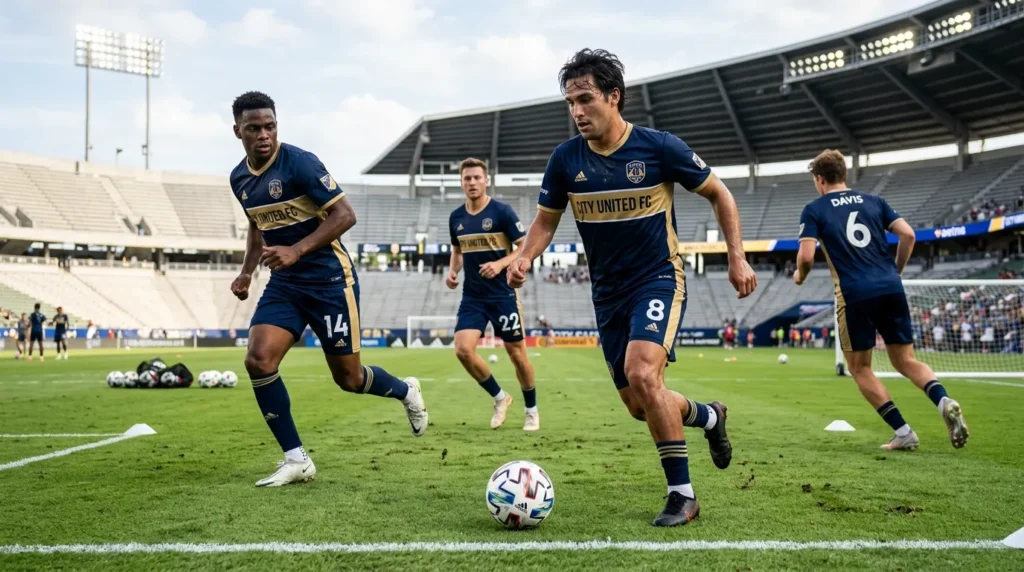
“Need 120 custom football kits with jerseys, shorts, and socks. Polyester sublimation fabric, navy and white team colours, sponsor logo on chest, player names and numbers, youth and adult sizes, delivery to UK, sample required before bulk.”
Clear details help reduce errors, delays, and unnecessary cost.
Contact and Project Information
For custom sports uniforms, bulk team kits, wholesale supply, private label sportswear, or sponsor-ready teamwear, buyers can contact GHC Sportswear® with product details, artwork, quantity, and target deadline.
Contact GHC Sportswear® through WhatsApp, email info@ghcsportswear.com, or the GHC Sportswear® contact page.
GHC Sportswear® Official Links, Social Profiles, and B2B References
For custom sportswear manufacturing, bulk team uniforms, private label apparel, equestrian gear, motorbike gear, and B2B product development, buyers can connect with GHC Sportswear® through the official website, social media profiles, and B2B platforms.
Visit the GHC Sportswear® official website to explore custom sportswear, sports uniforms, men’s sportswear, women’s sportswear, equestrian gear, motorbike gear, yoga wear, and private label manufacturing services.
Connect with GHC Sportswear® on TikTok, Threads, Instagram, Pinterest, LinkedIn, YouTube, Facebook, Medium, Quora, and X.
GHC Sportswear® can also be found on B2B and trade platforms including B2BMAP, Alibaba TrustPass, EC21, and Blinx.
GHC Sportswear® also has a public Wikidata entity reference, which supports open knowledge visibility and structured entity recognition. This listing should be treated as an entity reference, not as a guarantee of a Google Knowledge Panel, Wikipedia page, or AI citation.
FAQ: Nike vs Adidas Uniforms Comparison
Which is better for team uniforms, Nike or Adidas?
Nike and Adidas both produce high-quality teamwear. Nike is often associated with modern lightweight performance, while Adidas is known for classic sports identity and heritage design. The better choice depends on budget, availability, customization needs, and team identity.
Are Nike uniforms more expensive than Adidas uniforms?
Pricing varies by country, retailer, product line, and customization. Nike often sits at a premium brand price point, while Adidas can sometimes be slightly more competitive, but both are generally more expensive than direct custom manufacturing for bulk team orders.
Is Nike Dri-FIT better than Adidas AEROREADY?
Both technologies focus on sweat management. Nike Dri-FIT is designed to wick sweat and disperse it for faster evaporation. Adidas AEROREADY is designed to manage sweat by wicking moisture away from the skin. The better option depends on the exact garment, fabric, sport, and fit.
Can Nike or Adidas make fully custom uniforms?
Nike and Adidas may offer teamwear customization through certain programs, but deep customization is usually limited by templates, stock colours, seasonal ranges, and program rules. A direct manufacturer gives more control over design, labels, packaging, and sponsor placement.
What is the best alternative to Nike and Adidas uniforms?
For clubs, schools, academies, retailers, wholesalers, distributors, and private label brands, a custom sportswear manufacturer is often the best alternative because it allows full design control, bulk pricing flexibility, private labeling, and reorder planning.
Can GHC Sportswear® manufacture Nike-style or Adidas-style uniforms?
GHC Sportswear® can manufacture custom sports uniforms inspired by performance requirements such as moisture-wicking fabric, stretch, lightweight construction, and sponsor-ready design. It does not copy protected Nike, Adidas, club, or league designs, logos, or trademarks.
Can GHC Sportswear® make private label team uniforms?
Yes. GHC Sportswear® supports private label sportswear with custom labels, packaging, branding, fabric selection, sample development, bulk production, and international shipping coordination.
Conclusion
The Nike vs Adidas uniforms comparison shows that both brands are strong options for teams that value global brand image, premium sportswear identity, and ready-made performance products.
Nike offers modern athletic styling and Dri-FIT performance technology. Adidas offers heritage-driven design, bold team identity, and AEROREADY moisture management. Both are respected worldwide.
But for teams, academies, schools, retailers, wholesalers, distributors, and private label brands that need full design control, sponsor placement, exact colours, player names and numbers, private labels, packaging, bulk pricing, and repeat production, working directly with a custom manufacturer can be the smarter route.
GHC Sportswear® supports B2B buyers with custom sports uniforms, teamwear, private label apparel, fabric selection, printing, sampling, bulk production, and international delivery coordination.
Nike and Adidas sell powerful brand identity.
Custom manufacturing gives you control over your own.