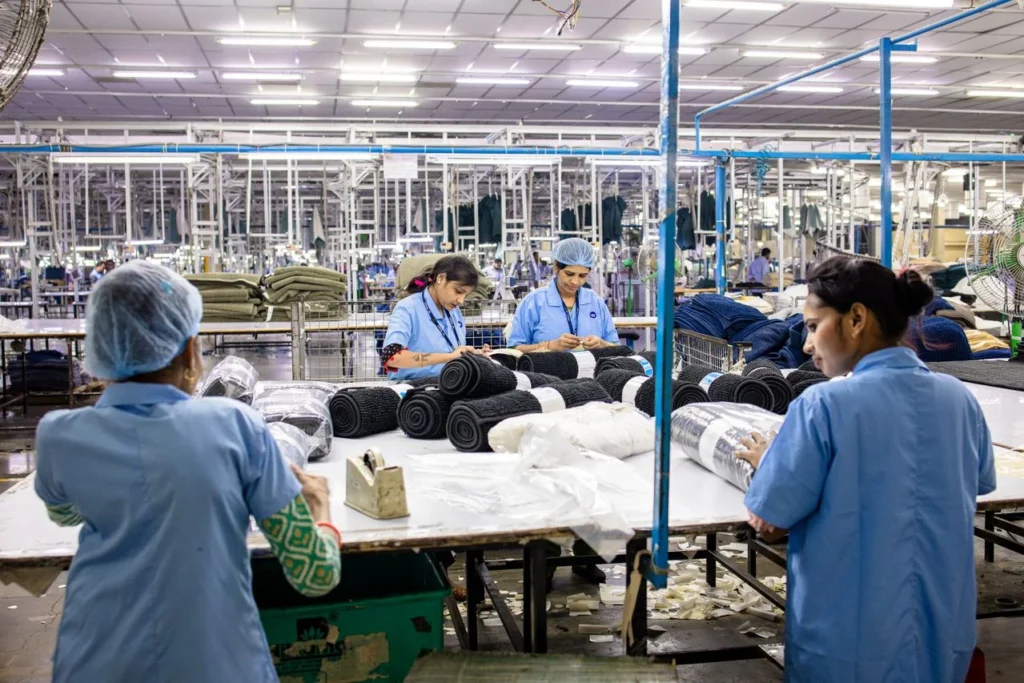
Custom Sportswear Manufacturer: Ultimate Guide to Choosing the Right Partner
Choosing the right custom sportswear manufacturer is one of the most important decisions for any sportswear brand, gym owner, sports team, academy, wholesaler, retailer, distributor, or private label startup. The manufacturer you choose affects product quality, fit, fabric performance, branding, pricing, delivery timelines, customer satisfaction, and long-term business growth.
A good custom sportswear manufacturer does more than stitch garments. The right partner helps you select fabrics, develop patterns, create samples, test fit, choose branding methods, manage size charts, prepare bulk production, control quality, and plan repeat orders. The wrong partner can create delays, poor sizing, weak fabrics, bad stitching, color mismatch, printing problems, and unhappy customers.
This guide explains how to choose the right custom sportswear manufacturer in a practical, B2B way. It covers what to check, what to ask, what mistakes to avoid, and why GHC Sportswear® is a strong manufacturing partner for teams, brands, gyms, academies, wholesalers, distributors, and private label businesses.
For a wider production roadmap, read the Custom Sportswear Manufacturing Guide by GHC Sportswear®.
Direct Answer: What Is a Custom Sportswear Manufacturer?
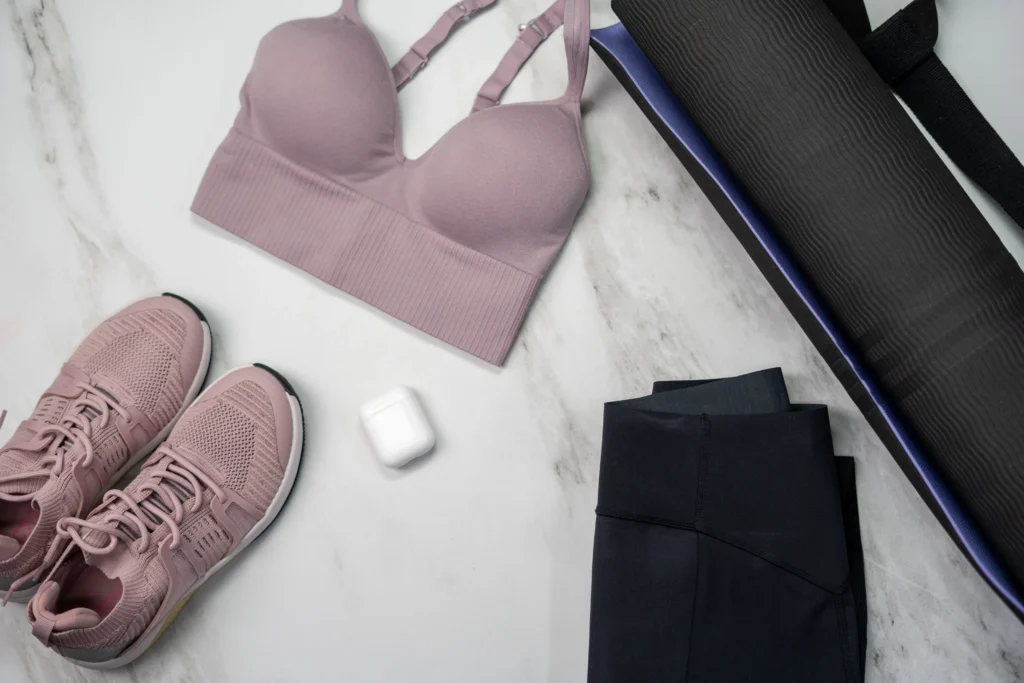
A custom sportswear manufacturer is a production partner that develops and manufactures sportswear based on buyer requirements. This can include fabric selection, sizing, custom colors, logos, printing, embroidery, labels, packaging, sampling, and bulk production.
A custom sportswear manufacturer may produce:
- gym wear
- activewear
- yoga wear
- tracksuits
- compression wear
- sports bras
- leggings
- hoodies
- training kits
- team uniforms
- private label sportswear
- men’s sportswear
- women’s sportswear
- plus-size activewear
- custom branded apparel
For businesses, the goal is not only to “find a factory.” The goal is to find a manufacturing partner that understands product development, brand identity, fit, performance fabrics, quality control, and repeat production.
Why Choosing the Right Custom Sportswear Manufacturer Matters
Custom sportswear is competitive because buyers expect comfort, performance, style, and brand identity at the same time. A customer may compare your product against major fitness brands, local activewear labels, teamwear suppliers, and online marketplaces. If your fabric feels cheap, the stitching fails, the fit is inconsistent, or the print cracks, your brand loses trust.
A strong custom sportswear manufacturer helps protect your business in five key areas:
| Area | Why It Matters |
|---|---|
| Fabric quality | Affects comfort, sweat control, durability, and customer reviews |
| Fit and sizing | Reduces returns, complaints, and inconsistent customer experience |
| Branding | Supports logo visibility, private label identity, and product value |
| Sampling | Helps fix problems before bulk production |
| Quality control | Protects consistency across repeat orders |
This is especially important for private label sportswear brands. A startup may only get one chance to impress early customers. If the first production run fails, it becomes harder to build trust.
For private label planning, read the Private Label Apparel Manufacturing Guide.
Key Takeaways Before Choosing a Manufacturer
Before you contact any custom sportswear manufacturer, be clear about what you need. The best production results happen when the buyer gives clear direction.
You should know:
- product category
- target customer
- fabric preference
- fit style
- quantity range
- logo placement
- color requirements
- packaging needs
- budget level
- sample requirements
- delivery location
- repeat order plan
A manufacturer can guide you, but unclear instructions slow down the process. “I want gym wear” is not enough. “I need women’s nylon-spandex leggings with high-waist support, squat-proof fabric, private label branding, and bulk production after sample approval” is much better.
1. Check the Manufacturer’s Product Specialization
Not every clothing factory understands sportswear. Sportswear is different from basic fashion because it must perform during movement, sweat, stretching, washing, and repeated use.
A good custom sportswear manufacturer should understand:
- stretch fabrics
- moisture-wicking materials
- compression construction
- activewear seams
- sports uniform printing
- sublimation
- embroidery
- private label branding
- athletic fit
- size grading
- movement-based comfort
- plus-size fit needs
If a factory mostly produces casual shirts, it may struggle with sports bras, compression tights, team uniforms, or performance leggings.
GHC Sportswear® works across sportswear and teamwear categories, including custom men’s sportswear manufacturing, custom women’s sportswear manufacturing, and custom women’s yoga wear manufacturing.
2. Review Fabric Knowledge and Material Options
Fabric choice can make or break a sportswear product. A manufacturer should be able to explain which materials suit your product category and why.
Common sportswear fabrics include:
- polyester-spandex
- nylon-spandex
- cotton-poly fleece
- polyester mesh
- interlock fabric
- compression knit
- moisture-wicking polyester
- brushed fleece
- soft yoga fabric
- breathable mesh panels
Textile Exchange’s Materials Market Report 2025 reports that polyester remains the most widely produced fiber globally, showing why synthetic performance fibers remain important in apparel production. However, fabric choice should still be based on product purpose, not only popularity.
For example:
| Product | Fabric Direction | Reason |
| Gym T-shirt | Polyester or cotton-poly blend | Sweat control and comfort |
| Leggings | Nylon-spandex or polyester-spandex | Stretch, opacity, recovery |
| Sports bra | Nylon-spandex with lining | Support and movement control |
| Football jersey | Polyester performance fabric | Sublimation and durability |
| Hoodie | Cotton-poly fleece | Comfort and structure |
| Compression shorts | High-recovery synthetic blend | Support and stretch |
| Yoga top | Soft stretch fabric | Comfort and flexibility |
For a deeper comparison, read Synthetic vs Natural Fabrics in Sportswear.
3. Ask About Customization Options
A custom sportswear manufacturer should offer more than basic logo printing. True customization includes product shape, fabric, size range, colors, trims, labels, packaging, and branding techniques.
Customization may include:
- custom fabric selection
- custom color matching
- sublimation printing
- screen printing
- heat transfer
- embroidery
- silicone badges
- woven labels
- neck labels
- hang tags
- packaging
- size charts
- pattern adjustments
- private label branding
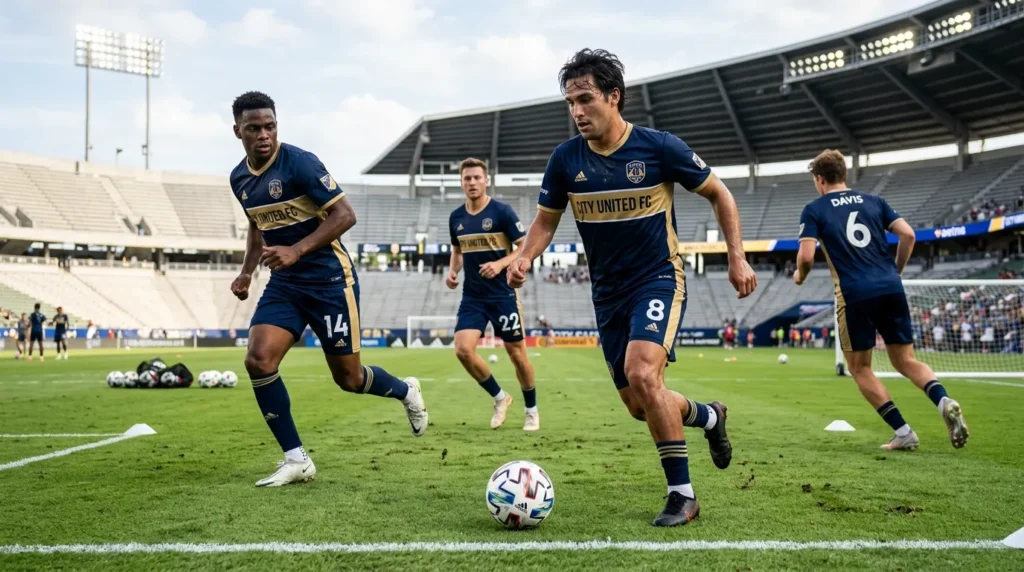
For teamwear, names, numbers, sponsor logos, and club colors must be planned carefully. For activewear brands, logo placement, label quality, fabric hand feel, and packaging can strongly affect perceived value.
Teams and clubs can read the Custom Sports Uniforms Guide for more detail on uniforms, printing, sizing, and bulk teamwear.
4. Understand MOQ Before You Start
MOQ means minimum order quantity. It is one of the first questions buyers ask.
Some manufacturers only accept large bulk orders. Others support samples, small starting quantities, or low MOQ production. For new brands, low MOQ can reduce risk because it allows testing before committing to larger orders.
GHC Sportswear® supports MOQ as low as 1 for sampling and custom development, which helps startups, small teams, and new private label brands test products before scaling.
MOQ depends on:
- product type
- fabric availability
- color requirements
- branding method
- size range
- custom trims
- printing technique
- packaging
- production complexity
A simple gym T-shirt may be easier to produce in small quantity than a fully customized sports bra with special fabric, custom elastic, and private label packaging.
5. Evaluate Sampling Process
Sampling is where serious manufacturing begins. A sample helps you confirm fabric, fit, stitching, branding, size, color, and comfort before bulk production.
A reliable custom sportswear manufacturer should offer a clear sampling process.
Sportswear Sampling Checklist
| Sampling Area | What to Check |
| Fabric | Stretch, opacity, weight, moisture feel |
| Fit | Chest, waist, hips, length, shoulders |
| Stitching | Seam strength and finishing |
| Branding | Logo size, placement, color, durability |
| Movement | Squat, stretch, run, lift, twist |
| Wash test | Shrinkage, color, logo, shape |
| Packaging | Labels, tags, polybags, presentation |
| Size chart | Measurements match buyer expectations |
Do not skip sampling to save time. A rejected sample is cheaper than a failed bulk order.
For broader development steps, read the Custom Apparel Manufacturing Guide.
6. Check Quality Control Standards
Quality control is what separates serious manufacturers from random suppliers. A manufacturer should inspect fabric, stitching, measurements, branding, packing, and final appearance.
ISO explains that ISO 9001 is a globally recognized quality management standard that helps organizations improve performance, meet customer expectations, and show commitment to quality. Even if a buyer does not require ISO certification, the same principle applies: a manufacturer should have a clear quality system.
Quality checks should include:
- fabric inspection
- cutting accuracy
- stitching inspection
- measurement checks
- logo placement review
- print quality
- embroidery quality
- seam strength
- size consistency
- packaging inspection
- final pre-shipment review
A strong manufacturer should not treat quality as something checked only at the end. Quality must be controlled from fabric selection to packing.
7. Confirm Branding and Private Label Support
If you are building a brand, private label support is essential. Your sportswear should look like your product, not a generic factory item.
Private label support may include:
- custom neck labels
- woven labels
- printed inner labels
- hang tags
- care labels
- barcode stickers
- branded polybags
- custom packaging
- branded size labels
- logo placement
- product photography support
Private label branding matters because customers judge the full experience. A good garment with weak labels and poor packaging can feel less premium. A clean private label presentation helps build trust.
GHC Sportswear® supports private label sportswear and activewear development for startups, gyms, retailers, wholesalers, and fitness apparel brands.
8. Compare Pricing Properly
Low price is not always good pricing. A very cheap quote may hide weak fabric, poor stitching, limited QC, unclear packaging, or unreliable timelines.
When comparing manufacturer prices, check what is included.
Price Comparison Table
| Price Factor | Must Be Clarified |
| Fabric | Type, GSM, stretch, quality |
| Branding | Printing, embroidery, labels, badges |
| Sampling | Sample cost and revision process |
| Packaging | Basic or branded packaging |
| MOQ | Per design, per color, per size |
| Shipping | Estimated after final weight |
| Duties/taxes | Usually destination-country responsibility |
| Reorders | Future pricing and fabric availability |
A proper quote should be clear. If a manufacturer gives one number without explaining fabric, branding, size range, and packaging, the buyer should ask for details.
At GHC Sportswear®, production invoice and shipping invoice are handled clearly. Shipping is usually calculated after final packed weight and shipment dimensions.
9. Check Communication and Response Quality
A manufacturer’s communication style is a strong signal. If the supplier gives vague answers before payment, communication may get worse during production.
A reliable manufacturer should answer:
- What fabric do you recommend?
- What is the MOQ?
- What is the sample cost?
- What is the sampling timeline?
- What branding methods are available?
- What files are needed for logos?
- Can you make private labels?
- Can you produce plus sizes?
- What is the expected bulk lead time?
- How is quality checked?
- How is shipping handled?
Good communication reduces mistakes. It also helps buyers feel more confident during sampling and production.
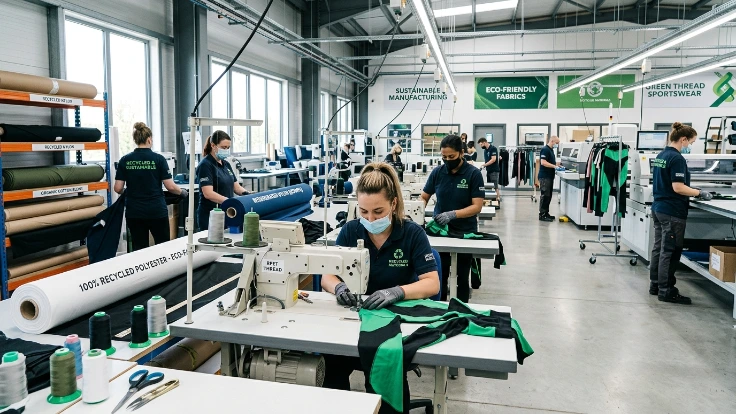
10. Review Sustainability and Responsible Sourcing Claims
Sustainability is important, but buyers should avoid vague claims. “Eco-friendly” is not enough. Ask what the manufacturer can actually provide.
A serious manufacturer should be able to discuss:
- recycled polyester options
- cotton blend options
- fabric sourcing
- waste reduction
- durable product development
- responsible packaging
- long-lasting garment construction
- compliance documents when required
- buyer-specific sustainability requirements
The OECD’s Due Diligence Guidance for Responsible Supply Chains in the Garment and Footwear Sector helps enterprises identify, avoid, and address negative impacts in garment and footwear supply chains. This is useful for brands that want stronger sourcing practices.
Sustainability should be connected to real production decisions, not only marketing language.
For more on material choices, read Sustainable Sportswear Manufacturing.
11. Confirm Production Capacity
A custom sportswear manufacturer should match your order size. Some buyers need 20 sample units. Others need 500 units. Some need ongoing wholesale production.
Before choosing a manufacturer, ask:
- Can they handle small starting orders?
- Can they scale to bulk production?
- Can they repeat the same fabric?
- Can they manage multiple sizes?
- Can they produce multiple colors?
- Can they handle seasonal reorders?
- Can they support private label packaging?
- Can they ship internationally?
Production capacity should match your business stage. A startup does not need the same system as a major distributor, but it still needs reliability.
12. Check Product Category Range
A manufacturer with a broad sportswear range can help brands expand over time.
For example, a startup may begin with leggings and sports bras, then add hoodies, tracksuits, gym tops, compression shorts, and teamwear.
GHC Sportswear® can support multiple categories, including:
- men’s sportswear
- women’s sportswear
- women’s yoga wear
- sports uniforms
- gym wear
- compression clothing
- tracksuits
- hoodies
- sports bras
- activewear sets
- teamwear
- private label apparel
Buyers can explore the GHC Sportswear® product range to review available categories.
13. Look for Fit and Size Range Flexibility
Fit is one of the most common reasons apparel brands receive complaints. Sportswear fit is even more important because the garment must work during movement.
A good custom sportswear manufacturer should understand:
- standard sizing
- plus-size sizing
- men’s fit
- women’s fit
- youth sizing
- athletic fit
- relaxed fit
- compression fit
- sports-specific fit
Size range matters for inclusive activewear and teamwear. A sports team may include athletes of many body types. A private label brand may need XS to 4XL. A gym may need both men’s and women’s cuts.
For inclusive fit development, read Plus-Size Custom Sportswear.
14. Review Sports Bra and Women’s Activewear Capability
Women’s activewear requires careful product development. Sports bras, leggings, yoga tops, and gym sets need proper fabric, fit, stretch recovery, opacity, and support.
A manufacturer should understand:
- sports bra support levels
- high-waist leggings
- squat-proof fabric
- waistband stability
- compression level
- strap comfort
- plus-size support
- fabric recovery
- activewear sets
- yoga wear softness
If your brand plans to produce women’s activewear, check whether the manufacturer has relevant experience.
For more detail, read Sports Bra Myths and Custom Yoga Apparel.
15. Understand Printing and Decoration Methods
Branding methods affect appearance, durability, price, and product feel.
Common sportswear branding methods include:
| Branding Method | Best Use |
| Sublimation | Polyester teamwear, jerseys, all-over prints |
| Screen printing | Bold logos and simple graphics |
| Heat transfer | Names, numbers, logos, small runs |
| DTF | Flexible logo placement, but quality depends on application |
| Embroidery | Premium branding, polos, hoodies, jackets |
| Woven labels | Private label identity |
| Silicone badges | Premium activewear branding |
For team uniforms, sublimation is often preferred because the design becomes part of the fabric and supports full-color graphics, names, numbers, and sponsor logos.
For hoodies, tracksuits, and premium activewear, embroidery, silicone badges, or woven labels may create a stronger brand feel.
Custom Sportswear Manufacturer Comparison Checklist
Use this checklist before choosing a supplier.
| Question | Good Sign | Warning Sign |
| Do they understand sportswear fabrics? | They explain fabric options clearly | They only say “good quality fabric” |
| Do they offer samples? | Clear sampling process | Push bulk order without sample |
| Can they customize branding? | Labels, packaging, logos available | Only basic logo print |
| Do they support size range? | Standard and plus-size options | Limited sizing |
| Is pricing clear? | Explains fabric, branding, MOQ | Vague quotation |
| Do they check quality? | QC before shipment | No quality process explained |
| Can they scale? | Sample to bulk support | Only one order size |
| Do they communicate well? | Clear answers | Slow or vague replies |
| Do they understand private label? | Brand-focused support | Generic product only |
| Do they ship globally? | Clear shipping options | No export experience |
Common Mistakes When Choosing a Custom Sportswear Manufacturer
Many buyers make avoidable mistakes when selecting a manufacturer.
Avoid these mistakes:
- choosing only the cheapest supplier
- skipping samples
- not checking fabric details
- ignoring size charts
- approving poor logo placement
- not testing stretch and opacity
- forgetting packaging
- not asking about reorders
- choosing a factory without sportswear experience
- not confirming MOQ per design or color
- asking for unrealistic delivery timelines
- sending unclear tech packs or logo files
A good manufacturer can help guide the process, but the buyer must also be organized.
What Information Should You Send to a Manufacturer?
To get an accurate quote, send clear details.
Buyer Information Checklist
| Detail | Example |
| Product type | Leggings, sports bras, team jerseys |
| Quantity | 50 pcs, 100 pcs, 500 pcs |
| Fabric preference | Nylon-spandex, polyester mesh, fleece |
| Size range | XS–XXL, plus sizes, youth sizes |
| Colors | Pantone code or reference image |
| Logos | AI, PDF, SVG, PNG files |
| Branding | Embroidery, sublimation, labels |
| Packaging | Basic polybag or custom packaging |
| Delivery country | USA, UK, France, Ireland, Australia |
| Sample need | 1 sample before bulk |
| Reference images | Existing product or inspiration |
The more accurate your information, the more accurate the quote.
Why GHC Sportswear® Is a Strong Custom Sportswear Manufacturer
GHC Sportswear® supports B2B buyers that need custom sportswear manufacturing, private label apparel, team uniforms, gym wear, yoga wear, compression clothing, tracksuits, hoodies, and activewear production.
GHC Sportswear® offers:
- custom design support
- MOQ as low as 1 for sampling
- fabric selection guidance
- sportswear manufacturing experience
- private label branding
- custom labels and packaging
- sublimation, screen printing, heat transfer, DTF, embroidery, and badges
- men’s and women’s sportswear categories
- teamwear and uniforms
- plus-size activewear support
- sampling before bulk production
- global shipping support
- B2B-focused production process
GHC Sportswear® works with teams, clubs, academies, gyms, wholesalers, distributors, retailers, private label startups, and sportswear brands.
Buyers can also review the GHC Sportswear® services page for broader production support.
Frequently Asked Questions About Custom Sportswear Manufacturers
What is the best custom sportswear manufacturer for startups?
The best custom sportswear manufacturer for startups is one that supports sampling, low MOQ, private label branding, fabric guidance, and bulk production after product approval. Startups should avoid manufacturers that force large orders before samples.
What should I ask a custom sportswear manufacturer before ordering?
Ask about MOQ, sample cost, fabric options, size range, branding methods, private labels, packaging, production time, quality control, shipping, and reorder availability.
Can GHC Sportswear® make private label sportswear?
Yes. GHC Sportswear® supports private label sportswear, including custom labels, branding, packaging, fabric selection, samples, and bulk production for brands and startups.
What is the best fabric for custom sportswear?
The best fabric depends on the product. Polyester is common for teamwear, nylon-spandex is popular for leggings and sports bras, cotton-poly fleece works well for hoodies, and polyester-spandex is useful for gym wear and compression apparel.
Do I need a sample before bulk sportswear production?
Yes. Sampling is strongly recommended before bulk production. A sample helps check fit, fabric, stitching, logo placement, color, comfort, and wash performance.
Can custom sportswear manufacturers make plus-size activewear?
Yes, but the manufacturer must understand size grading, fit, support, fabric recovery, waistband stability, and movement testing. Plus-size activewear should not be made by simply enlarging smaller patterns.
What is the difference between custom sportswear and private label sportswear?
Custom sportswear focuses on product design, fabric, fit, and branding based on buyer requirements. Private label sportswear includes custom labels, tags, packaging, and brand identity so the product is sold under the buyer’s brand.
Need a Custom Sportswear Manufacturer for Your Brand?
GHC Sportswear® works with sportswear brands, gyms, teams, clubs, academies, wholesalers, distributors, retailers, and private label startups that need custom sportswear manufacturing.
We support:
- custom gym wear
- custom activewear
- private label sportswear
- men’s sportswear
- women’s sportswear
- yoga wear
- sports bras
- leggings
- compression wear
- tracksuits
- hoodies
- team uniforms
- training kits
- custom labels
- branded packaging
- sampling
- bulk production
- global shipping
If you need a custom sportswear manufacturer that can support fabric selection, design, sampling, branding, packaging, and bulk production, GHC Sportswear® can help turn your idea into a professional product.
To discuss custom sportswear manufacturing, contact GHC Sportswear® here: Contact GHC Sportswear®.
WhatsApp: https://wa.me/ghcsportswear
Email: info@ghcsportswear.com
Final Thoughts
Choosing the right custom sportswear manufacturer is not only about price. It is about product quality, fabric performance, fit, branding, communication, sampling, quality control, production capacity, and long-term reliability.
The right manufacturer should help you make better decisions before production starts. They should explain fabric options, guide you through sampling, support custom branding, manage size consistency, and check quality before shipment.
For startups, a manufacturer with low MOQ and sampling support can reduce risk. For teams and academies, a manufacturer with uniform experience can improve consistency. For private label brands, a manufacturer with labeling, packaging, and repeat production support can help build a stronger business.
GHC Sportswear® supports buyers who need custom sportswear, private label activewear, teamwear, gym wear, women’s sportswear, men’s sportswear, yoga wear, compression apparel, and bulk production.
A strong product starts with the right manufacturing partner. Choose carefully, test properly, and build sportswear that customers trust.