Apparel Branding: How Strong Branding Builds Trust, Value and Loyalty
Strong apparel branding turns a garment into a recognizable product with a clear identity.
Without a brand system, a hoodie is compared with other hoodies mainly through price, fabric and appearance. With consistent branding, the same product can communicate a specific market position, quality expectation, design language and customer experience.
Branding is therefore much more than placing a logo on the chest.
It includes:
- Product quality
- Fit consistency
- Fabric selection
- Colour control
- Logo placement
- Labels and tags
- Packaging
- Product naming
- Photography
- Customer communication
- Retail presentation
- After-sales experience
- Repeat-order consistency
Each element tells the customer what the business represents.
“A brand promise becomes credible only when the physical product delivers it repeatedly.”
For startups, branding helps create recognition. For established labels, it protects reputation. For wholesalers and distributors, it improves product positioning. For private label businesses, it creates an asset that competitors cannot copy simply by offering a lower unit price.
GHC Sportswear® supports international apparel brands through product planning, apparel sampling, fabric and trim sourcing, controlled manufacturing, custom branding, private labels, packaging and bulk production.
Direct Answer: What Is Apparel Branding?
Apparel branding is the complete system used to make clothing recognizable, consistent and commercially distinctive.
It combines five connected layers:
- Strategic identity — target market, positioning and brand promise
- Visual identity — logo, colours, typography and design language
- Physical identity — fabrics, fit, labels, trims, stitching and packaging
- Commercial identity — product names, SKUs, pricing structure and retail presentation
- Customer experience — product consistency, communication, delivery and after-sales support
A logo can identify a garment, but the complete experience determines whether customers trust the brand and purchase again.
WIPO explains that trademarks help establish a relationship of trust, support loyal clientele and strengthen business goodwill.
Why Apparel Branding Matters More Than Ever
Consumers can compare products from local stores, global brands, marketplaces, social platforms and direct-to-consumer websites within minutes.
That creates two challenges:
- Customers have more alternatives.
- Weakly differentiated products are easier to replace.
NIQ’s 2026 Consumer Outlook reported that 95% of surveyed consumers considered trust critical when choosing a brand. NIQ also describes brand trust as a central factor in cautious purchasing decisions.
This does not mean branding can compensate for poor quality. It means branding helps customers understand what quality, service and experience they should expect.
Strong apparel branding reduces uncertainty by creating familiar signals:
- Recognizable logo
- Reliable sizing
- Consistent fabric feel
- Clear product descriptions
- Professional labels
- Repeatable packaging
- Predictable quality
- Transparent care information
- Responsive customer service
Trust grows when these signals remain consistent over time.
The Apparel Branding Equation
A practical brand model is:
Brand strength = Recognition × Consistency × Product proof × Customer experience
If any component is weak, the brand loses value.
| Brand Component | Weak Execution | Strong Execution |
|---|---|---|
| Recognition | Logo changes between products | Stable visual identity |
| Consistency | Different fit and colours each order | Repeatable specifications |
| Product proof | Claims exceed performance | Claims match tested product |
| Customer experience | Unclear information and support | Reliable communication |
| Presentation | Generic labels and packaging | Coordinated brand system |
| Reorders | Product changes unexpectedly | Approved references retained |
Branding works when customers can recognize the product and trust what that recognition represents.
Branding Is an Asset, Not Decoration
International standards treat brands as assets that can be evaluated and valued.
ISO 20671-1 provides principles and an integrated framework for brand evaluation, while ISO 20671-2 addresses implementation and reporting. ISO 10668 provides requirements for monetary brand valuation.
These standards do not mean every clothing business must conduct a formal brand valuation. They show that a brand can create measurable commercial value through areas such as:
- Recognition
- Reputation
- Customer preference
- Legal protection
- Consistent quality
- Market position
- Future earnings potential
- Business relationships
For apparel businesses, the physical garment is the product. The brand is the system that gives the product identity and commercial meaning.
What Apparel Branding Actually Includes
1. Brand Name
The brand name should be:
- Distinctive
- Easy to recognize
- Relevant to the target market
- Suitable for labels and packaging
- Searchable online
- Available for legal protection
- Usable across future categories
- Practical in intended export markets
Before committing to a name, businesses should search relevant trademark databases and seek appropriate legal guidance.
The WIPO Global Brand Database allows users to search international trademarks and participating national and regional trademark collections.
A domain name or social-media handle does not automatically create trademark ownership.
2. Logo System
A professional apparel brand normally needs more than one logo file.
Useful versions include:
- Primary logo
- Secondary logo
- Wordmark
- Symbol or emblem
- Horizontal version
- Vertical version
- Single-colour version
- Reversed version
- Embroidery-ready version
- Small-scale label version
- Rubber-patch version
- Social-media icon
A complex logo may look effective on a website but fail when reduced to a 20 mm woven label or small embroidery.
The logo system should therefore be developed for real product applications.
3. Brand Colours
Brand colours should be defined using appropriate references.
Depending on the application, this may include:
- Pantone reference
- CMYK values
- RGB values
- HEX values
- Embroidery thread reference
- Fabric lab dip
- Sublimation test
- Rubber-patch colour
- Woven-label yarn reference
- Packaging print reference
A digital colour displayed on a screen will not always reproduce identically on dyed fabric, sublimation paper, embroidery thread, rubber or cardboard.
Colour consistency requires physical approval, not only a digital screenshot.
4. Typography
Typography appears on:
- Neck labels
- Care labels
- Packaging
- Hang tags
- Product names
- Size stickers
- Websites
- Catalogues
- Social media
- Retail displays
- Team names and numbers
The typography system should remain readable at different sizes and across different production methods.
Thin lettering may disappear during embroidery. Small text may become unreadable on woven labels. Highly detailed fonts may be unsuitable for heat transfer or silicone moulding.
5. Product Design Language
A recognizable apparel brand often repeats selected design features across its range.
Examples include:
- Signature seam lines
- Repeated panel shapes
- Branded neck tape
- Consistent zipper pullers
- Recognizable pocket construction
- Signature quilting
- Standard logo positions
- Specific rib patterns
- Consistent colour blocking
- Repeated trims
- Branded hardware
- Custom packaging style
These features help create recognition even when the main logo is subtle.
Apparel Branding Is Built Into the Product
Brand identity should be considered during product development, not added after production is complete.
A strong brand system connects:
| Product Area | Branding Decision |
| Fabric | Feel, weight, finish and performance |
| Fit | Athletic, relaxed, compression or regular |
| Colour | Approved brand palette |
| Construction | Seam and panel identity |
| Logo | Method, size and placement |
| Labels | Material, information and positioning |
| Trims | Zippers, pullers, buttons and badges |
| Packaging | Folding, polybag, box and inserts |
| Product data | Style name, SKU and barcode |
| Photography | Consistent product presentation |
When these areas conflict, the brand feels disconnected.
For example, a premium positioning can be weakened by:
- Rough care labels
- Cheap-looking packaging
- Unstable sizing
- Crooked embroidery
- Weak zipper pullers
- Colour variation
- Poor stitching
- Inaccurate product descriptions
Customers experience the complete garment, not the logo in isolation.
The Brand Consistency Framework
Consistency does not require every garment to look identical.
It means every product follows the same brand logic.
A useful framework has four levels.
Level 1: Visual Consistency
Control:
- Logo version
- Logo size
- Logo placement
- Brand colours
- Typography
- Graphic style
- Photography
- Packaging design
Level 2: Product Consistency
Control:
- Fit
- Fabric quality
- Stitching
- Trim quality
- Measurements
- Construction
- Wash performance
- Finishing
Level 3: Information Consistency
Control:
- Product names
- Fibre composition
- Care instructions
- Size information
- Country-of-origin information
- Product descriptions
- Claims
- SKU data
- Barcode data
Level 4: Experience Consistency
Control:
- Ordering
- Delivery
- Packaging
- Customer support
- Returns
- Reorders
- Wholesale communication
- Product availability
Customers may forgive one isolated issue. Repeated inconsistency becomes the brand reputation.
How Consistency Builds Trust
Trust is built through predictable experience.
A customer purchases one product and receives:
- Accurate sizing
- Good fabric
- Clean finishing
- Correct colour
- Reliable packaging
The next purchase should provide a comparable standard.
NIQ reports that consumers reward brands that consistently deliver value and reliability, while failure to meet expectations can make customers more open to alternatives.
Consistency removes questions such as:
- Will this size fit like the previous one?
- Will the colour match the website?
- Will the print survive washing?
- Will the fabric feel different?
- Will the zipper work properly?
- Will the packaging arrive professionally?
Every reliable answer increases confidence.
Apparel Branding and Perceived Value
Branding changes how a product is evaluated.
Weakly differentiated products are commonly compared through:
- Lowest price
- Basic specifications
- Delivery cost
- Immediate availability
Strongly branded products can also be evaluated through:
- Identity
- Reputation
- Design
- Quality history
- Community
- Service
- Exclusivity
- Reliability
- Product experience
NIQ found that 62% of global respondents were willing to try a new brand because of a lower price, but 16% said they avoided the cheapest option because they did not trust its quality.
This demonstrates the balance brands must manage.
Price can attract attention. Trust helps justify the purchase.
Price Competition vs Brand Value
| Market Position | Customer Question |
| Generic product | Which option is cheapest? |
| Weak brand | Is this different from other products? |
| Recognized brand | Can I trust the expected quality? |
| Strong specialist brand | Does this brand understand my exact needs? |
| Premium brand | Is the full experience worth the price? |
Branding does not create permission to charge any price. It creates a stronger basis for explaining value.
Logo Placement Must Be Controlled
Logo placement is one of the most visible parts of apparel branding.
Common positions include:
- Left chest
- Right chest
- Centre chest
- Upper back
- Lower back
- Sleeve
- Hood
- Trouser thigh
- Trouser calf
- Waistband
- Neck
- Hem
- Sock cuff
- Bag panel
A production file should define placement from fixed measurement points.
For example:
- 80 mm below shoulder seam
- 70 mm from centre front
- 25 mm above pocket opening
- Centred between sleeve seams
- 40 mm above lower hem
“Place logo on left chest” is not precise enough for repeatable bulk manufacturing.
Logo Placement Control Sheet
| Field | Required Information |
| Logo reference | Approved artwork file |
| Method | Embroidery, print, patch or transfer |
| Finished size | Width and height |
| Colour | Approved reference |
| Position | Measured from defined seams |
| Orientation | Horizontal, vertical or angled |
| Garment sizes | Same or graded placement |
| Tolerance | Acceptable variation |
| Sample | Approved physical reference |
Placement should be checked during sampling and again during first-piece production approval.
Choosing the Right Branding Method
Different branding methods create different appearances, costs and performance characteristics.
| Method | Main Strength | Main Limitation |
| Embroidery | Premium texture and durability | Can add stiffness or weight |
| Sublimation | Permanent full-colour polyester design | Requires suitable polyester fabric |
| Screen printing | Strong colour and repeat production | Setup requirements for multiple colours |
| Heat transfer | Flexible for logos, names and numbers | Performance depends on film and fabric |
| DTF printing | Detailed graphics and small quantities | Wash and stretch performance must be checked |
| Woven patch | Detailed premium badge | Edge and attachment quality matter |
| Rubber patch | Modern dimensional branding | Mould and attachment approval required |
| Silicone print | Flexible raised branding | Requires material compatibility |
| Tackle twill | Strong teamwear appearance | Adds layers and stitching |
| Heat-transfer neck label | Soft internal branding | Must survive washing |
For deeper comparisons, read Screen Printing vs Sublimation, Sublimation Printing and Heat Transfer Printing.
Labels Are Part of Brand Architecture
Labels communicate identity, size, composition, care and origin.
A complete label system may include:
- Main brand label
- Size label
- Care label
- Fibre-composition label
- Country-of-origin label
- Heat-transfer neck label
- Woven side label
- Hem label
- Product identification label
- Hang tag
- Barcode sticker
- Packaging label
Main Brand Label
The main label should reflect the brand position.
Options include:
- Woven damask
- Printed satin
- Cotton label
- Heat-transfer label
- Rubber label
- Leather or synthetic patch
- Embroidered patch
Important factors include:
- Size
- Fold type
- Edge softness
- Colour accuracy
- Attachment
- Wash durability
- Skin comfort
- Placement
Care and Composition Labels
Branding must not replace legally required product information.
For products marketed in the United States, FTC guidance states that most textile labels must identify fibre content, country of origin and the manufacturer or another responsible business. The FTC Care Labeling Rule also requires applicable garments to carry care instructions.
In the European Union, textile products covered by Regulation (EU) No 1007/2011 must be labelled or marked with their fibre composition.
Requirements differ by destination market, product category and material. Brands should confirm applicable legal requirements before production.
Label Information Checklist
| Information | Purpose |
| Brand name | Product identity |
| Size | Customer selection |
| Fibre composition | Material transparency and compliance |
| Care instructions | Product maintenance |
| Country of origin | Market requirement |
| Manufacturer/importer identity | Market-dependent requirement |
| Style or SKU | Inventory control |
| Batch reference | Traceability |
| Certification claim | Only where documented |
A branded label that contains inaccurate information creates commercial and compliance risk.
Packaging Extends the Brand Experience
Packaging is the first physical brand contact for many online customers.
Apparel packaging may include:
- Branded polybag
- Recyclable mailer
- Product box
- Tissue paper
- Hang tag
- Size sticker
- Barcode
- Thank-you card
- Care card
- Product insert
- QR code
- Wholesale carton marks
Packaging should protect the garment and support the intended position.
Packaging by Market Position
| Brand Position | Packaging Direction |
| Entry-level sportswear | Clean, efficient and clear |
| Team uniforms | Sorted by player, team or size |
| Premium activewear | Refined presentation and branded inserts |
| E-commerce | Protective, compact and easy to fulfil |
| Wholesale | SKU, barcode and carton accuracy |
| Equestrian collection | Coordinated product and care information |
| Motorcycle gear | Strong protection and technical documentation |
Excessive packaging does not automatically create a premium impression. Accuracy, material quality and presentation matter more than unnecessary layers.
Product Naming and SKU Structure
Brand consistency also depends on how products are named and tracked.
A business should avoid unclear internal descriptions such as:
- Blue shirt
- New hoodie
- Black tracksuit
- Sample number two
- Premium legging
A controlled naming structure might include:
Brand + collection + product + fit + colour + season
Example:
Apex Training Jersey – Athletic Fit – Navy – 2027
SKU Example
ATJ-NV-M-027
This might represent:
- ATJ: Apex Training Jersey
- NV: Navy
- M: Medium
- 027: Style or season code
A structured SKU system supports:
- Inventory
- Reorders
- Wholesale catalogues
- Barcodes
- Returns
- Production records
- E-commerce
- Warehousing
GS1 GTIN standards provide a global method for uniquely identifying products that are priced, ordered or invoiced.
Branding for Retail and Omnichannel Sales
The same product identity should remain consistent across:
- Website
- Marketplace
- Retail store
- Catalogue
- Social media
- Packaging
- Invoice
- Warehouse
- Wholesale order form
- Product label
The product name, colour, size, image, barcode and description should refer to the same item.
Incorrect digital product data can create:
- Wrong fulfilment
- Duplicate listings
- Customer confusion
- Inventory mismatch
- Returns
- Retailer disputes
Brand consistency is therefore partly a data-management discipline.
Trademarks and Brand Protection
A logo becomes commercially valuable when customers associate it with a specific source and experience.
WIPO describes a trademark as a sign that enables customers to recognize the product of a particular company.
Trademark planning may include:
- Brand name
- Logo
- Symbol
- Slogan
- Product-line name
- Distinctive packaging
- Certain shapes or colour combinations, subject to law
Businesses expanding internationally may consider the WIPO Madrid System, which provides a centralized route for seeking trademark protection across its member jurisdictions. As of 2026, the system covered 133 countries through 117 members. Each designated jurisdiction still applies its own law when deciding protection.
Trademark registration, company registration, domain ownership and social-media usernames are separate matters.
Brands should obtain appropriate professional advice for target markets.
Branding Claims Must Match Evidence
Brand language should be accurate.
Potentially risky claims include:
- Sustainable
- Eco-friendly
- Organic
- Recycled
- Waterproof
- Antibacterial
- UV protective
- Certified
- Made in a particular country
- Medical grade
- Professional grade
- Safety approved
- Carbon neutral
A brand should retain evidence for material, performance, origin and certification claims.
For example:
- Recycled content should be supported by relevant documentation.
- Waterproof claims should match the product’s tested construction and limitations.
- Certification logos should only be used within the approved scope.
- Country-of-origin claims should follow destination-market rules.
- Protective apparel claims should correspond with applicable standards and testing.
Strong branding is built on proof, not exaggerated language.
Private Label Apparel Branding
Private label manufacturing allows a business to sell products under its own brand identity.
A private label programme may include:
- Custom product design
- Existing product customization
- Brand labels
- Size labels
- Care labels
- Hang tags
- Custom packaging
- Logo application
- Colour development
- Product naming
- Barcode and SKU setup
- Collection coordination
- Repeat-order records
Private Label Development Levels
| Level | Description |
| Basic branding | Existing product with logo |
| Label customization | Logo plus custom labels and tags |
| Colour customization | Custom brand colourways |
| Product customization | Adjusted fit, panels, trims and features |
| Full OEM development | Product developed from tech pack or sample |
| Brand ecosystem | Coordinated products, packaging and data |
The correct level depends on budget, quantity, market position and business stage.
For the full process, read the Private Label Apparel Manufacturing Guide.
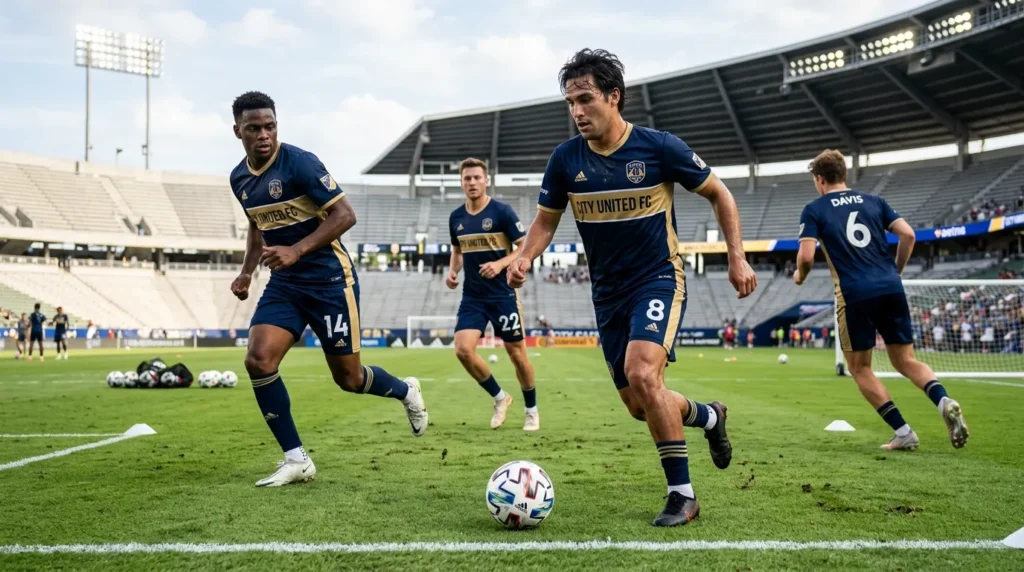
Branding for Sports Uniforms
Teamwear branding has additional complexity.
It may include:
- Club badge
- Sponsor logos
- Player names
- Player numbers
- League marks
- School name
- Academy identity
- Captain mark
- National or regional colours
- Manufacturer mark
Control is needed for:
- Logo hierarchy
- Sponsor visibility
- Name spelling
- Number accuracy
- Colour contrast
- Placement
- League regulations
- Size-specific scaling
- Reorder consistency
A team uniform may contain more branded elements than a standard retail garment.
Read the Custom Sports Uniforms Guide and Why Teams Fight Over Jersey Numbers for related planning.
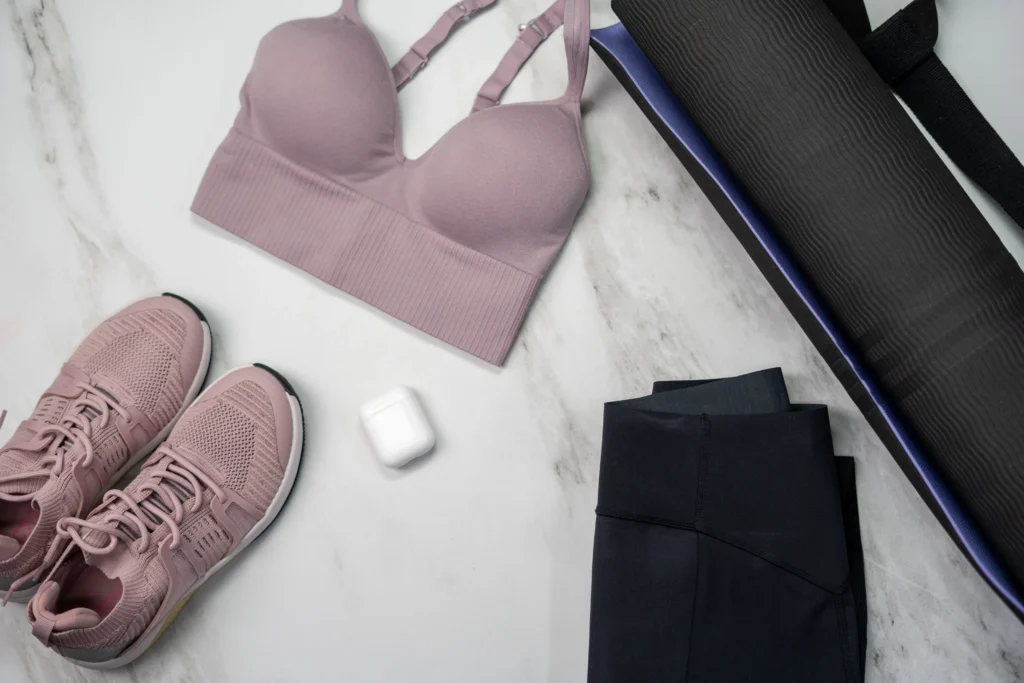
Branding for Activewear and Yoga Wear
Activewear branding should account for stretch and movement.
Important considerations include:
- Logo elongation
- Heat-transfer flexibility
- Waistband placement
- Seam interference
- Skin comfort
- Wash durability
- Opacity
- Minimalist branding
- Matching-set consistency
A rigid badge may be unsuitable for highly stretched leggings. A large print may affect breathability. A waistband logo may distort when worn.
Branding must be tested on the finished garment under real movement.
Branding for Equestrian Apparel and Gear
Equestrian branding may appear on:
- Riding leggings
- Breeches
- Competition shirts
- Jackets
- Saddle pads
- Ear bonnets
- Horse rugs
- Halters
- Bags
- Tack accessories
The branding system should consider:
- Rider position
- Saddle-contact areas
- Embroidery thickness
- Horse comfort
- Competition presentation
- Wash performance
- Matching collections
- Retail packaging
Read the Custom Equestrian Gear Manufacturing Guide.
Branding for Motorcycle Apparel
Motorcycle apparel branding may include:
- Embroidery
- Reflective graphics
- Rubber patches
- Leather patches
- Screen printing
- Heat transfers
- Sleeve branding
- Back emblems
- Custom zipper pullers
- Interior labels
Branding must not compromise:
- Protective zones
- Seam construction
- Armour pockets
- Visibility
- Movement
- Abrasion-resistant panels
- Product compliance
Read the Custom Motorcycle Gear Manufacturing Guide.
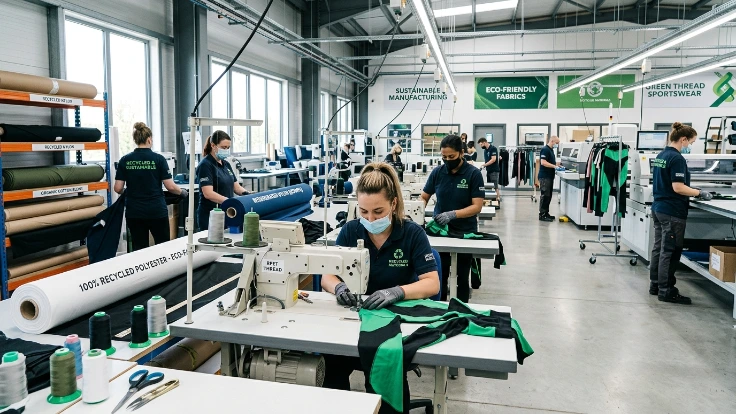
Why Branding Depends on Manufacturing
A brand guide may define perfect colour, logo and layout standards.
Production must reproduce them.
Common manufacturing failures that damage branding include:
- Logo placed differently across sizes
- Embroidery density distorting fabric
- Incorrect thread colour
- Sublimation shade variation
- Labels sewn unevenly
- Packaging stickers applied incorrectly
- Wrong zipper puller
- Mixed trim colours
- Crooked patches
- Different fabric feel in reorders
- Size variation
- Poor finishing
This is why branding must connect with controlled manufacturing.
Brand Control Across Production
| Manufacturing Stage | Branding Control |
| Product planning | Define identity and placement |
| Sourcing | Approve colours and components |
| Sampling | Test physical branding |
| Pre-production | Lock final references |
| Cutting | Control panel orientation |
| Printing | Verify artwork and colour |
| Embroidery | Verify size, density and thread |
| Sewing | Control labels and patches |
| Finishing | Check appearance and cleanliness |
| Packing | Verify tags, stickers and presentation |
| Reorder | Follow retained specifications |
Brand consistency is a manufacturing result.
The Brand Standards Manual
A growing apparel business should maintain a brand standards manual.
Visual Standards
Include:
- Logo files
- Clear-space rules
- Minimum size
- Approved colours
- Prohibited logo changes
- Typography
- Graphic style
- Photography direction
Product Standards
Include:
- Standard logo placements
- Label specifications
- Brand neck tape
- Zipper puller
- Patch construction
- Packaging
- Fit direction
- Product naming
- Colour naming
Production Standards
Include:
- Finished branding dimensions
- Position tolerances
- Colour approval method
- Embroidery stitch references
- Print method
- Attachment method
- Wash requirements
- Sample approval
- QC checkpoints
Commercial Standards
Include:
- SKU format
- Barcode ownership
- Product descriptions
- Wholesale presentation
- Claims policy
- Trademark usage
- Approved retailer materials
A brand manual should be practical enough for designers, manufacturers, marketers and retailers to use.
Apparel Brand Consistency Audit
Brands can audit each product using the following checklist.
| Audit Area | Question |
| Logo | Is the approved version used? |
| Placement | Is position within tolerance? |
| Colour | Does it match the approved reference? |
| Fabric | Does it meet the brand quality level? |
| Fit | Is it consistent with the size standard? |
| Labels | Are all labels correct and aligned? |
| Packaging | Does it follow the brand system? |
| Product name | Is naming consistent everywhere? |
| SKU | Does the code match the product? |
| Claims | Can every claim be supported? |
| Photography | Does the image match the delivered item? |
| Reorder | Does it match the previous approved production? |
A product should not reach the market simply because the logo is present.
It should represent the full brand standard.
Common Apparel Branding Mistakes
Treating the Logo as the Whole Brand
A logo identifies the product. It does not define the complete experience.
Changing Visual Identity Too Often
Frequent logo, colour or packaging changes reduce recognition.
Inconsistent Product Quality
Brand loyalty disappears when repeat purchases feel different.
Poor Label Quality
Rough, fading or inaccurate labels weaken customer perception.
Using Too Many Branding Methods
Every available branding method does not need to appear on one garment.
Inconsistent Logo Placement
Small placement differences become obvious across a collection.
Ignoring Packaging
Generic presentation can weaken an otherwise strong product.
Copying Competitors Too Closely
A brand that looks interchangeable remains easy to replace.
Making Unsupported Claims
Claims without evidence create legal and trust risks.
Failing to Protect the Brand
Using a name without appropriate availability checks can create future disputes.
Losing Reorder References
A second order that differs from the first damages customer confidence.
Brand Recognition vs Brand Loyalty
Recognition and loyalty are not the same.
| Stage | Customer Response |
| Awareness | I have seen this brand. |
| Recognition | I know which brand this is. |
| Consideration | I may compare this brand. |
| Trial | I purchased once. |
| Trust | The product met expectations. |
| Preference | I would choose it again. |
| Loyalty | I repeatedly purchase and recommend it. |
Branding creates recognition.
Product performance creates trust.
Consistent experience creates loyalty.
Measuring Apparel Branding Performance
Branding should be measured through commercial and operational indicators.
Market Indicators
- Branded search volume
- Direct website traffic
- Social profile growth
- Repeat visitors
- Email subscribers
- Retail enquiries
- Wholesale leads
Customer Indicators
- Repeat-purchase rate
- Return-customer revenue
- Product reviews
- Referral rate
- Customer complaints
- Return reasons
- Net promoter or satisfaction measures
Product Indicators
- Logo-placement defects
- Colour mismatch
- Label errors
- Packaging errors
- Fit consistency
- Reorder match rate
- First-pass quality
- Branding-related returns
Commercial Indicators
- Average selling price
- Discount dependency
- Wholesale reorder rate
- Retail sell-through
- Customer acquisition cost
- Customer lifetime value
A strong brand is visible in both customer behaviour and production consistency.
Apparel Branding for B2B Buyers
Branding serves different business buyers in different ways.
Apparel Startups
Need:
- Clear identity
- Small initial collection
- Flexible sampling
- Brand labels
- Packaging
- Product consistency
Private Label Businesses
Need:
- Complete brand ownership
- Custom labels
- Custom products
- SKU structure
- Repeat production
- Scalable supply
Wholesalers
Need:
- Reliable products
- Clear packaging
- Barcode readiness
- Consistent reorders
- Retail-friendly presentation
Distributors
Need:
- Market differentiation
- Product documentation
- Stable quality
- Territory planning
- Predictable supply
Sports Clubs and Academies
Need:
- Badge control
- Sponsor placement
- Names and numbers
- Team colours
- Reorder accuracy
- Size records
The branding system should be designed around the business model.
How GHC Sportswear® Supports Apparel Branding
GHC Sportswear® has supported international B2B buyers since 2014 with custom sportswear, team uniforms, private label apparel, equestrian gear, motorcycle apparel and related products.
Branding and manufacturing support can include:
- Product concept review
- Tech-pack discussion
- Fabric and trim direction
- Sample development
- Logo-method selection
- Embroidery
- Sublimation
- Screen printing
- Heat transfer
- DTF printing
- Woven labels
- Printed labels
- Rubber patches
- Silicone branding
- Branded neck tape
- Hang tags
- Custom zipper pullers
- Private label packaging
- Size labels
- Care labels
- SKU and packing discussion
- Bulk manufacturing
- Quality control
- Reorder planning
Supported product categories include:
- Football uniforms
- Basketball uniforms
- Rugby uniforms
- Baseball uniforms
- Cricket uniforms
- Tracksuits
- Hoodies
- Jackets
- Polo shirts
- T-shirts
- Compression clothing
- Yoga wear
- Leggings
- Gym wear
- Men’s sportswear
- Women’s sportswear
- Equestrian apparel
- Saddle pads
- Horse rugs
- Motorcycle apparel
- Bags
- Socks
- Private label collections
Explore the GHC Sportswear® product range and custom manufacturing services.
What Buyers Should Send for a Branded Apparel Project
For accurate development, buyers should provide:
- Brand name
- Product category
- Target customer
- Reference images
- Tech pack
- Estimated quantity
- Fabric preference
- Colour references
- Size range
- Logo files
- Brand guidelines
- Branding methods
- Label artwork
- Hang-tag artwork
- Packaging requirement
- Product claims
- Destination market
- Sample requirement
- Bulk timeline
- Reorder plan
Preferred logo formats include:
- AI
- EPS
- SVG
- Editable PDF
- High-resolution transparent PNG where vector artwork is unavailable
Example enquiry:
“We need 300 private label activewear sets for the UK market. Women’s sizes XS–2XL, nylon-spandex fabric, black and deep burgundy colourways, silicone waistband logo, heat-transfer neck label, woven care label, branded polybag and hang tag. Physical sample approval required before bulk.”
Clear branding details reduce revisions and improve production accuracy.
Contact and Project Information
Brands, clubs, retailers, wholesalers and private label businesses can contact GHC Sportswear® for:
- Brand-development manufacturing support
- Logo and application review
- Fabric and trim sourcing
- Apparel sampling
- Private labels
- Custom packaging
- Sports uniforms
- Activewear
- Equestrian gear
- Motorcycle apparel
- Bulk manufacturing
- Repeat-order planning
Send the project details through WhatsApp, email info@ghcsportswear.com, or use the GHC Sportswear® contact page.
Connect with GHC Sportswear®
Follow GHC Sportswear® for custom apparel, sportswear development, private label manufacturing, equestrian gear, motorbike apparel and B2B production updates.
Connect on TikTok, Threads, Instagram, the Instagram Channel, Pinterest, LinkedIn, YouTube, Facebook, Medium, Quora, X, Bluesky, and the WhatsApp Channel.
GHC Sportswear® is also listed on B2BMAP, Alibaba TrustPass, EC21, Blinx, and Wikidata.
Frequently Asked Questions
What is apparel branding?
Apparel branding is the system used to give clothing a recognizable identity through product design, quality, logo use, colours, labels, packaging, product data and customer experience.
Is apparel branding only about adding a logo?
No. A logo is one element. Apparel branding also includes fit, fabric, product quality, colours, labels, trims, packaging, photography, communication and repeat-order consistency.
Why does branding build trust?
Branding creates recognizable signals. When those signals repeatedly deliver the same quality, fit and experience, customers become more confident about purchasing again.
Does strong branding allow a company to charge more?
Strong branding can support higher perceived value and reduce direct price comparison, but pricing must still be justified by product quality, positioning, service and customer demand.
What is the best branding method for apparel?
The best method depends on the fabric, product, design, quantity, wash requirements and desired appearance. Options include embroidery, sublimation, screen printing, heat transfer, DTF, woven patches and rubber badges.
Which logo files should be sent to a manufacturer?
Vector files such as AI, EPS, SVG or editable PDF are preferred. A high-resolution transparent PNG can support review but may not replace vector artwork for production.
What should an apparel brand guide contain?
It should contain logo versions, colours, typography, placement rules, label specifications, packaging standards, product naming, SKU structure, approved branding methods and production tolerances.
Why does logo placement vary during production?
Variation can result from vague instructions, missing measurement references, inconsistent templates, operator handling or poor first-piece approval.
What labels does private label apparel need?
Depending on the product and market, labels may include a brand label, size label, fibre-composition label, care label, country-of-origin label and manufacturer or importer identification.
Are apparel labelling requirements the same worldwide?
No. Requirements differ by market. The United States, European Union, United Kingdom and other destinations have their own rules covering composition, care, origin and responsible-business information.
Can a brand use the registered symbol without a registered trademark?
Trademark-symbol use is governed by relevant law. Businesses should obtain appropriate advice and use the registered symbol only where legally supported.
What is private label apparel branding?
Private label branding means products are manufactured for sale under the buyer’s own brand, using its logo, labels, packaging, colours and product identity.
How can brands maintain colour consistency?
Use approved colour references, fabric lab dips, print strike-offs, embroidery thread references, shade bands, physical samples and bulk-production checks.
How can branding remain consistent across different products?
Use a brand standards manual, controlled logo files, approved colours, standard labels, product templates, packaging rules and retained production references.
What is a GTIN?
A GTIN is a GS1 identification number used to uniquely identify products that are priced, ordered or invoiced.
Should a clothing brand register its trademark internationally?
International protection depends on the brand’s markets and business plans. The WIPO Madrid System provides a centralized application and management route for eligible businesses seeking protection in multiple member jurisdictions.
Can GHC Sportswear® support complete private label branding?
Yes. GHC Sportswear® supports logo applications, labels, tags, patches, packaging, fabric and trim selection, sampling, custom sportswear, equestrian products, motorcycle apparel, controlled bulk production and reorder planning.
Final Thoughts
Strong apparel branding transforms clothing into a recognizable commercial identity.
The logo creates recognition.
The product creates proof.
Consistency creates trust.
Reliable experience creates loyalty.
Brands lose value when the logo, colours, fit, fabric, labels, packaging and product information change unpredictably. They build value when every part of the product supports the same promise.
For startups, branding creates differentiation.
For retailers, it improves presentation.
For wholesalers, it supports resale.
For sports clubs, it creates identity.
For private label businesses, it creates a long-term commercial asset.
For manufacturers, it provides a clear standard that production must reproduce.
GHC Sportswear® supports apparel brands with product development, fabric and trim sourcing, sampling, custom labels, logo applications, packaging, private label manufacturing, quality control and scalable bulk production.
A strong brand is not the logo customers notice once.
It is the consistent experience they recognize every time.