Custom Sportswear vs Off-the-Rack: Which Is Better for Teams & Brands?
Choosing between custom sportswear vs off-the-rack activewear is an important decision for teams, clubs, gyms, academies, private label brands, retailers, wholesalers, and fitness businesses. Both options can work, but they solve different problems.
Off-the-rack sportswear is ready-made. It is available quickly, usually in standard sizes, and can be useful for casual wear, urgent needs, or small one-time use. Custom sportswear is made according to buyer requirements, including fabric, fit, color, logo, branding, sizing, labels, and packaging. It takes more planning, but it gives better control.
For serious teams and brands, the real question is not only “which one is cheaper?” The better question is: which option supports your goal?
If you need quick gym clothes for personal use, off-the-rack may be enough. If you need uniforms for a team, branded apparel for a gym, private label activewear, sponsor logos, consistent sizing, custom colors, or repeat production, custom sportswear is usually the stronger option.
GHC Sportswear® works with teams, clubs, academies, gyms, wholesalers, distributors, retailers, sportswear startups, and private label brands that need custom sportswear, teamwear, gym wear, activewear, yoga wear, compression clothing, sports bras, tracksuits, and bulk production.
For a complete production roadmap, read the Custom Sportswear Manufacturing Guide by GHC Sportswear®.
Direct Answer: Custom Sportswear vs Off-the-Rack
Custom sportswear is better when you need branding, team identity, specific sizing, performance fabrics, sponsor logos, private labels, repeat production, or product control. Off-the-rack sportswear is better when you need something fast, simple, affordable, and ready to use without customization.
For teams, gyms, academies, brands, and B2B buyers, custom sportswear usually provides stronger long-term value. For casual individual use or emergency needs, off-the-rack sportswear may be more convenient.
Quick Comparison Table: Custom Sportswear vs Off-the-Rack
| Factor | Custom Sportswear | Off-the-Rack Sportswear |
|---|---|---|
| Fit | Developed around buyer size range and product need | Standard sizes only |
| Branding | Logos, colors, names, numbers, labels, packaging | Limited or no branding |
| Fabric | Buyer can select fabric direction | Fabric already fixed |
| Design | Fully customizable | Pre-made design |
| Team identity | Strong | Limited |
| Durability | Can be specified by use case | Depends on brand and price |
| MOQ | May require sample or bulk planning | No MOQ for retail purchase |
| Cost | Higher upfront planning | Lower initial cost |
| Lead time | Requires production time | Immediately available |
| Best for | Teams, brands, gyms, private label, bulk orders | Casual users, urgent needs, temporary use |
What Is Custom Sportswear?
Custom sportswear is athletic apparel made according to specific buyer requirements. The buyer can choose product type, fabric, sizing, colors, logo placement, printing method, labels, packaging, and other details.
Custom sportswear can include:
- gym T-shirts
- training tops
- sports bras
- leggings
- compression shorts
- tracksuits
- hoodies
- team uniforms
- basketball jerseys
- football kits
- rugby uniforms
- cycling kits
- yoga sets
- private label activewear
- plus-size sportswear
- branded gym merchandise
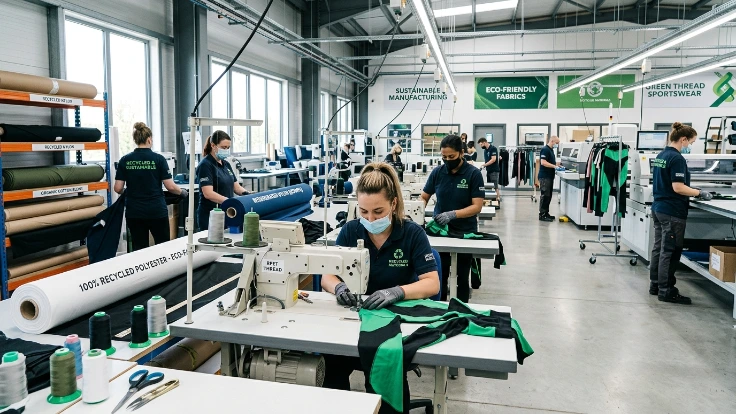
A custom sportswear manufacturer helps turn a product idea into a real garment through fabric selection, sampling, fit testing, branding, and bulk production.
For buyers comparing suppliers, the Custom Sportswear Manufacturer Guide explains what to check before choosing a production partner.
What Is Off-the-Rack Sportswear?
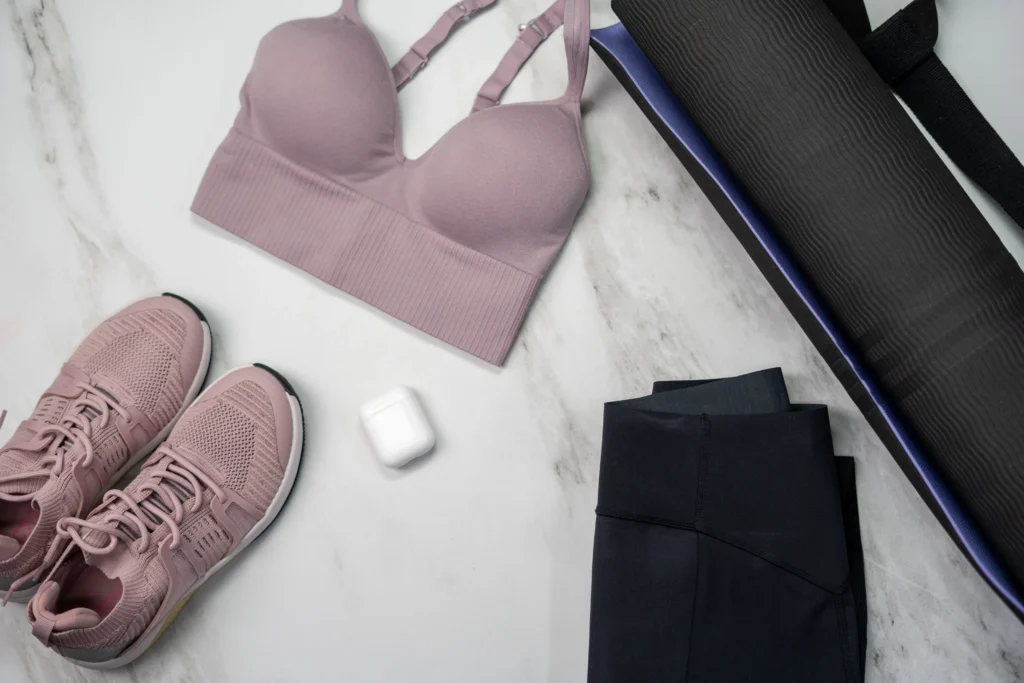
Off-the-rack sportswear is ready-made activewear available in retail stores, online shops, marketplaces, and sports outlets. It is produced in standard sizes and standard designs before the customer buys it.
Off-the-rack sportswear can include:
- basic gym shirts
- ready-made leggings
- sports bras
- shorts
- hoodies
- tracksuits
- running tops
- training pants
- casual activewear
- retail team-style jerseys
The main benefit is convenience. You can buy it immediately and use it quickly. The main limitation is lack of control. You cannot fully control fit, fabric, color, logo placement, team identity, labels, packaging, or future reorder consistency.
This is why off-the-rack works well for casual users but often becomes limiting for teams, clubs, gyms, and brands.
Why the Decision Matters for Teams and Brands
The decision between custom sportswear vs off-the-rack affects performance, presentation, branding, and long-term cost.
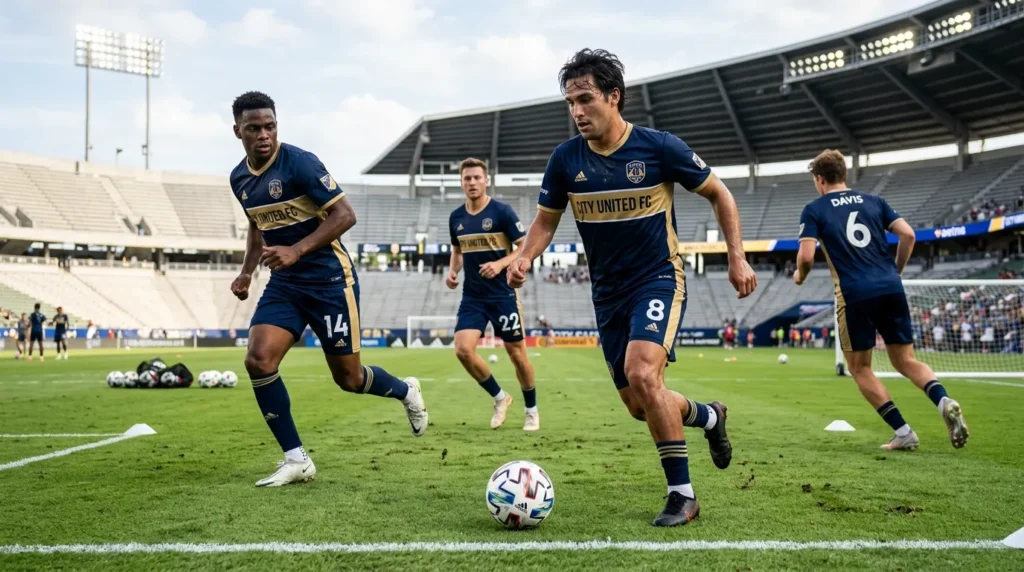
For a team, sportswear is part of identity. Matching uniforms make players look organized and help create unity. For a gym, branded apparel can become member merchandise and marketing. For a private label brand, sportswear is the product itself. For a wholesaler, consistency and repeat production are essential.
Sports clothing also affects comfort. Research published in Sports Medicine – Open explains that sports clothing can influence thermoregulation, comfort, and performance during exercise in heat. This makes fabric and garment design more important than many buyers realize. You can read the study here: The Role of Sports Clothing in Thermoregulation, Comfort, and Performance During Exercise in the Heat.
A cheap off-the-rack shirt may be acceptable for light casual use. But if athletes are training hard, playing matches, representing sponsors, or building a brand, sportswear must do more than look acceptable.
Custom Sportswear Advantage 1: Better Fit Control
Fit is one of the biggest reasons buyers choose custom sportswear. Off-the-rack products use standard sizing. That may work for some people, but it rarely fits every athlete or customer perfectly.
Custom sportswear allows buyers to plan:
- men’s fit
- women’s fit
- youth sizes
- plus-size options
- athletic fit
- relaxed fit
- compression fit
- team size ranges
- longer length options
- wider waistband options
- sport-specific movement needs
Fit matters because athletes move constantly. Poor fit can cause shirts to ride up, shorts to restrict movement, waistbands to roll, leggings to become transparent, or seams to rub.
For inclusive sizing and real movement-based activewear, read Plus-Size Custom Sportswear.
Fit Comparison
| Fit Area | Custom Sportswear | Off-the-Rack |
| Size range | Can be planned for buyer market | Limited to available retail sizes |
| Body types | Can include inclusive sizing | May not support all bodies |
| Movement | Can be tested by sport | Generic fit |
| Compression | Can be controlled | Fixed by product |
| Team consistency | Easier to organize | Sizes may sell out |
| Reorders | Same pattern can be repeated | Style may disappear |
For teams and brands, fit consistency is not optional. It affects user comfort and customer trust.
Custom Sportswear Advantage 2: Stronger Team Identity
Custom sportswear gives teams control over visual identity. This includes colors, logos, names, numbers, sponsor placement, and design layout.
A strong team kit can help with:
- player unity
- fan recognition
- sponsor visibility
- social media content
- academy discipline
- club professionalism
- tournament presentation
- merchandise sales
Off-the-rack apparel cannot create the same identity unless it is later customized, and even then, options are limited. The product may not match the exact team color, logo position, number style, or sponsor layout.
For sport-specific team kit planning, read the Custom Sports Uniforms Guide and the custom wholesale sports uniforms manufacturer page.
Custom Sportswear Advantage 3: Fabric Selection
Fabric is a major difference between custom sportswear vs off-the-rack. With off-the-rack products, the fabric is already chosen. With custom sportswear, buyers can select fabric based on activity, climate, budget, support, and product category.
Common custom sportswear fabrics include:
- polyester-spandex
- nylon-spandex
- polyester mesh
- cotton-poly fleece
- compression knit
- interlock fabric
- moisture-wicking polyester
- soft yoga fabric
- recycled polyester options
- breathable mesh panels
The Textile Exchange Materials Market Report 2025 reported that polyester remained the most widely produced fiber globally, accounting for 59% of global fiber production in 2024. Polyester remains important in sportswear because it supports durability, quick drying, sublimation printing, and performance applications.
For a deeper fabric guide, read Synthetic vs Natural Fabrics in Sportswear and Moisture-Wicking Fabrics.
Fabric Selection Table
| Product Type | Better Fabric Direction | Why |
| Football jersey | Polyester performance fabric | Printing, sweat control, durability |
| Gym T-shirt | Polyester-spandex or cotton-poly | Comfort and movement |
| Leggings | Nylon-spandex | Stretch recovery and opacity |
| Sports bra | Nylon-spandex with lining | Support and comfort |
| Hoodie | Cotton-poly fleece | Structure and softness |
| Compression shorts | High-recovery synthetic blend | Support and shape retention |
| Yoga top | Soft stretch fabric | Flexibility and comfort |
| Tracksuit | Interlock or fleece | Shape and durability |
Custom sportswear gives buyers the ability to match fabric with product purpose. Off-the-rack sportswear does not.
Custom Sportswear Advantage 4: Branding and Private Label Control
For businesses, branding is one of the strongest custom sportswear benefits. Custom sportswear allows buyers to create apparel under their own identity.
Branding options may include:
- screen printing
- sublimation
- embroidery
- heat transfer
- DTF
- silicone badges
- woven labels
- custom neck labels
- hang tags
- care labels
- branded polybags
- retail packaging
Off-the-rack sportswear may allow limited logo printing, but it usually cannot offer full private label control. The garment may already carry another brand’s label, style identity, or packaging.
For startups and private label buyers, custom sportswear is the better choice because the product can be built around your brand from the beginning. The Private Label Apparel Manufacturing Guide explains labels, MOQ, sampling, packaging, and private label production planning.
Custom Sportswear Advantage 5: Better Long-Term Value
Off-the-rack sportswear can be cheaper upfront. But cheap does not always mean better value.
Long-term value depends on:
- durability
- fit
- branding
- fabric quality
- reorder availability
- size consistency
- customer satisfaction
- replacement frequency
If a team buys cheap off-the-rack apparel and then struggles with inconsistent sizes, discontinued colors, weak fabric, or poor logo placement, the cost can rise over time. Custom sportswear may require more planning, but it can create a more stable product system.
This is especially important for teams and gyms that need reorders every season or every few months.
Off-the-Rack Advantage 1: Immediate Availability
Off-the-rack sportswear is useful when speed matters. If someone needs a basic workout outfit today, ready-made activewear is the practical option.
Off-the-rack works well for:
- personal gym use
- casual workouts
- emergency purchases
- temporary apparel needs
- one-time events
- small individual purchases
- budget shopping
- testing general style preferences
The biggest advantage is convenience. There is no sampling process, no production lead time, and no need to prepare logo files or size charts.
However, convenience comes with limits. You get what is available, not what is ideal.
Off-the-Rack Advantage 2: Lower Initial Cost
Off-the-rack sportswear is usually cheaper at the beginning because it is mass-produced. The buyer does not pay for custom pattern development, sampling, custom labels, color matching, logo setup, or private packaging.
This makes off-the-rack useful for casual buyers or short-term use.
But B2B buyers should look beyond initial price. If the product does not represent the team or brand properly, it may not be the right solution.
Cost Comparison
| Cost Factor | Custom Sportswear | Off-the-Rack |
| Initial price | Higher | Lower |
| Branding cost | Included or added by method | Usually extra if possible |
| Sampling | Required for serious production | Not required |
| Bulk value | Better for teams and brands | Limited control |
| Reorder consistency | Stronger when planned | Style may be discontinued |
| Brand value | High | Low |
| Long-term identity | Strong | Weak |
For businesses, the cheapest option is not always the most profitable option.
Off-the-Rack Limitation 1: Limited Branding
Off-the-rack sportswear is usually designed for general retail customers. It does not carry your team identity, sponsor logo, private label, club colors, or custom packaging.
Some buyers add logos later through printing or embroidery, but that can create problems:
- logo placement may not fit the garment
- fabric may not accept the print well
- colors may not match the brand
- seams may interfere with branding
- the product may already have another logo
- future stock may not match
Custom sportswear avoids these issues because branding is planned before production.
Off-the-Rack Limitation 2: Standard Sizes Do Not Fit Everyone
Standard sizing is one of the biggest weaknesses of off-the-rack sportswear. A size medium from one brand may fit differently from another. Some products may run slim, short, loose, long, or inconsistent.
For teams, this creates problems because athletes have different body types. A standard retail size range may not cover everyone comfortably.
This is especially important for women’s activewear, sports bras, plus-size sportswear, and compression clothing. These products need correct support, stretch, and fit.
For sports bra-specific guidance, read Sports Bra Myths. For compression and support products, read Compression Clothing.
Off-the-Rack Limitation 3: Reorder Risk
Teams and brands often need repeat orders. Off-the-rack sportswear creates reorder risk because retail products can be discontinued, colors can change, sizes can sell out, and fabric quality can vary between batches.
This is a serious problem for:
- sports teams
- academies
- clubs
- gyms
- wholesalers
- retailers
- private label brands
- tournament organizers
Custom sportswear allows better production documentation. Fabric, colors, logos, sizes, and patterns can be recorded for future orders. This makes seasonal reorders easier.
Custom Sportswear vs Off-the-Rack by Buyer Type
| Buyer Type | Better Option | Reason |
| Casual gym user | Off-the-rack | Fast and affordable |
| Sports team | Custom sportswear | Identity, sizing, numbers, sponsors |
| Gym business | Custom sportswear | Branded merchandise and member apparel |
| Private label brand | Custom sportswear | Full brand control |
| Retailer | Custom sportswear | Product differentiation |
| Wholesaler | Custom sportswear | Repeatable bulk supply |
| School team | Custom sportswear | Consistent uniforms |
| Academy | Custom sportswear | Professional identity |
| One-time personal event | Off-the-rack | Quick solution |
| Performance athlete | Custom sportswear | Fit and fabric control |
When Should You Choose Custom Sportswear?
Choose custom sportswear when you need:
- team identity
- branded gym apparel
- sponsor logos
- player names and numbers
- specific colors
- private label branding
- custom packaging
- long-term reorders
- inclusive sizing
- performance fabric selection
- product differentiation
- bulk production
- higher perceived value
Custom sportswear is the stronger choice for teams, organizations, gyms, clubs, academies, brands, wholesalers, and retailers.
For product trends and future-focused planning, read Performance Wear Trends 2026.
When Should You Choose Off-the-Rack Sportswear?
Choose off-the-rack sportswear when you need:
- immediate purchase
- no customization
- casual use
- temporary apparel
- low upfront cost
- one or two pieces
- no branding
- quick replacement
Off-the-rack can be practical, but it is rarely the best choice for serious team identity or brand development.
Manufacturing Quality Matters
If you choose custom sportswear, quality control must be part of the process. A good manufacturer should check fabric, stitching, measurements, branding, packing, and final product consistency.
ISO explains that ISO 9001 is the international standard for quality management systems and provides a framework that helps organizations deliver consistent products and services. While not every buyer requires ISO certification, the principle is important: manufacturing needs a quality system.
For apparel buyers, quality control should include:
- fabric inspection
- measurement checks
- stitch review
- logo placement review
- print or embroidery quality
- size consistency
- packaging inspection
- final pre-shipment review
Custom sportswear gives buyers more control, but only if the manufacturer manages quality properly.
Responsible Sourcing and Supply Chain Thinking
Custom sportswear also allows buyers to ask better sourcing questions. B2B buyers may want to know about materials, packaging, durability, production process, and supply chain responsibility.
The OECD’s Due Diligence Guidance for Responsible Supply Chains in the Garment and Footwear Sector helps businesses understand how to identify and address negative impacts in garment and footwear supply chains.
For serious brands, this matters because sourcing is part of brand trust. Customers and business partners increasingly expect better product transparency, especially in sportswear and fashion.
Custom Sportswear Planning Checklist
Before ordering custom sportswear, prepare these details:
| Detail | What to Prepare |
| Product type | T-shirts, leggings, jerseys, hoodies, tracksuits |
| Quantity | Sample quantity and bulk quantity |
| Size range | Youth, adult, men’s, women’s, plus-size |
| Fabric | Polyester, nylon, cotton blend, mesh, fleece |
| Fit | Athletic, relaxed, compression, oversized |
| Colors | Pantone codes or reference images |
| Logos | AI, PDF, SVG, PNG files |
| Branding method | Sublimation, embroidery, screen print, labels |
| Packaging | Basic polybag or branded packaging |
| Delivery country | Needed for shipping estimate |
| Timeline | Sample approval and bulk production schedule |
| Reorder plan | Future production needs |
The clearer the buyer is, the more accurate the manufacturer’s quote and production plan can be.
Common Mistakes When Comparing Custom Sportswear vs Off-the-Rack
Avoid these mistakes:
- choosing only by cheapest price
- ignoring long-term reorders
- using off-the-rack for serious team branding
- not checking fabric suitability
- skipping samples for custom orders
- failing to test size range
- placing logos after buying random garments
- ignoring sponsor visibility
- not planning extra pieces for teams
- forgetting packaging for private label products
- assuming all polyester or nylon fabrics perform the same
- ignoring wash durability
The best choice depends on your goal. A casual buyer needs convenience. A brand needs control. A team needs identity. A wholesaler needs consistency.
How GHC Sportswear® Supports Custom Sportswear Buyers
GHC Sportswear® helps teams, clubs, academies, gyms, wholesalers, distributors, retailers, private label startups, and sportswear brands develop custom apparel based on real business needs.
We support:
- custom sportswear
- gym wear
- activewear
- yoga wear
- sports bras
- leggings
- compression wear
- tracksuits
- hoodies
- team uniforms
- football kits
- basketball jerseys
- rugby uniforms
- cycling kits
- men’s sportswear
- women’s sportswear
- plus-size sportswear
- private label apparel
- custom labels
- branded packaging
- sampling
- bulk production
- global shipping
Buyers can explore more categories through the GHC Sportswear® product range.
GHC Sportswear® also explains broader production support on the services page.
Frequently Asked Questions About Custom Sportswear vs Off-the-Rack
What is the main difference between custom sportswear and off-the-rack sportswear?
Custom sportswear is made according to buyer requirements such as fabric, fit, logo, colors, labels, packaging, and size range. Off-the-rack sportswear is ready-made and sold in standard designs and sizes.
Is custom sportswear better than off-the-rack?
Custom sportswear is better for teams, gyms, brands, academies, and businesses that need identity, branding, consistent sizing, better fabric control, and repeat orders. Off-the-rack is better for quick casual use.
Is off-the-rack sportswear cheaper?
Off-the-rack sportswear is usually cheaper upfront because it is mass-produced. However, custom sportswear may offer better long-term value for teams and brands because it supports identity, durability, reorders, and private label control.
Can custom sportswear improve team identity?
Yes. Custom sportswear helps teams use consistent colors, logos, names, numbers, sponsor placement, and kit design. This creates stronger team identity and professional presentation.
Can GHC Sportswear® make custom sportswear for brands?
Yes. GHC Sportswear® supports custom sportswear, private label activewear, teamwear, gym wear, yoga wear, compression wear, sports bras, tracksuits, labels, packaging, sampling, and bulk production.
Should startups choose custom sportswear or off-the-rack?
Startups should choose custom sportswear if they want to build a real private label brand. Off-the-rack may help with early market observation, but it does not provide full product control or private label identity.
Do custom sportswear orders require samples?
Yes, samples are strongly recommended before bulk production. Sampling helps check fabric, fit, stitching, logo placement, comfort, sizing, and wash performance.
Need Custom Sportswear for Your Team or Brand?
GHC Sportswear® works with teams, clubs, academies, gyms, wholesalers, distributors, retailers, private label startups, and sportswear brands that need custom sportswear manufacturing.
We can help with:
- custom team sportswear
- custom activewear
- gym wear
- yoga wear
- compression clothing
- sports bras
- leggings
- tracksuits
- hoodies
- sports uniforms
- private label sportswear
- custom labels
- branded packaging
- sampling
- bulk production
If you are comparing custom sportswear vs off-the-rack for your team or brand, GHC Sportswear® can help you choose the right fabric, fit, branding method, size range, and production plan.
To discuss custom sportswear manufacturing, contact GHC Sportswear® here: Contact GHC Sportswear®.
WhatsApp: https://wa.me/ghcsportswear
Email: info@ghcsportswear.com
Final Thoughts
The choice between custom sportswear vs off-the-rack depends on your goal. Off-the-rack sportswear is fast, simple, and useful for casual or urgent needs. Custom sportswear requires more planning, but it provides stronger control over fit, fabric, branding, sizing, durability, packaging, and repeat production.
For individuals, off-the-rack may be enough. For teams, gyms, academies, wholesalers, retailers, private label startups, and sportswear brands, custom sportswear is usually the better long-term choice.
A serious team needs identity. A serious brand needs product control. A serious buyer needs consistency. Custom sportswear gives you all three.
GHC Sportswear® helps B2B buyers develop custom sportswear that supports performance, comfort, branding, and long-term production value.